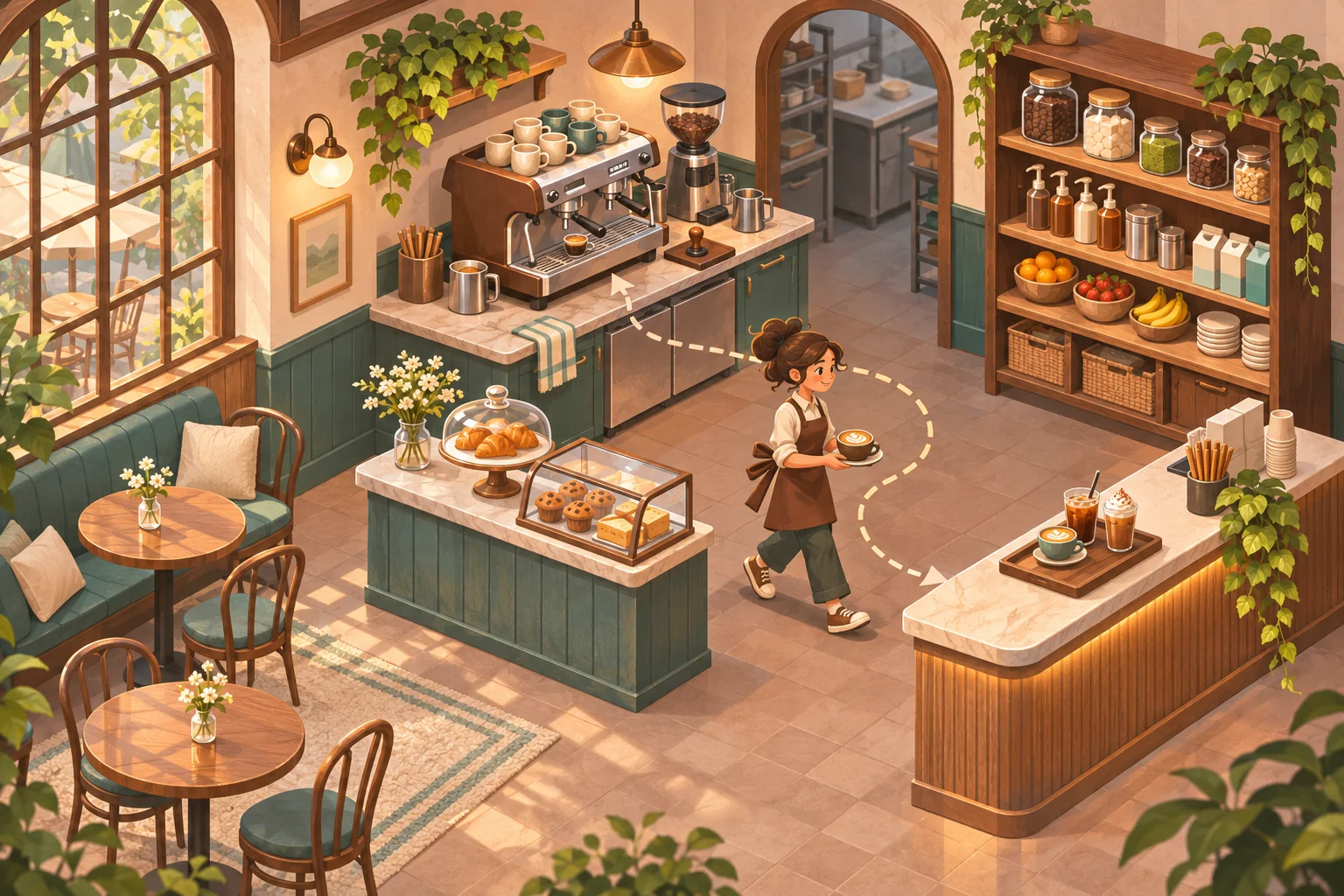
A cafe-management game can put product design at the center of its business loop. Let players combine a drink base, a flavor and a finishing choice, then decide what to stock and how to price it. Customers should respond to those recipe choices, so the menu the player invents becomes part of the shop's identity.
Start with one customer profile and one three-part drink. Compare a category-only order rule with a rule that reads the drink's component tags. This fixed model checks whether recipe design affects a matching order; it does not forecast real customer demand or prove the cafe economy is balanced.
Turn recipe choices into customer-facing product traits
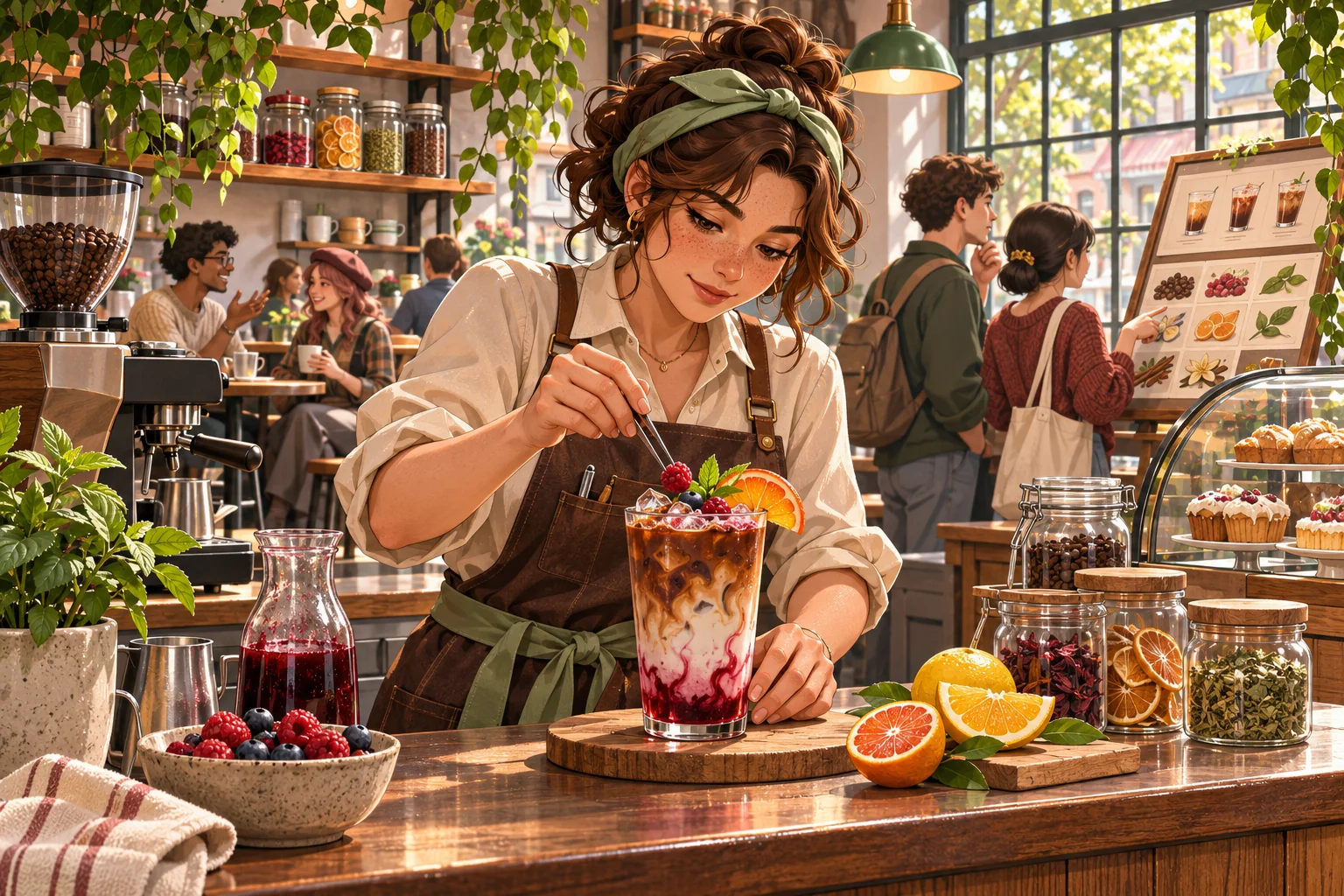
Build each drink from a base, flavor and finish. An iced coffee with berry syrup and a low-sugar finish has three visible traits: iced, berry and low sugar. Keep ingredients, preparation time and price separate from these taste tags so the customer-matching rule is easy to inspect.
Give each customer brief one or more requested traits. A guest looking for an iced berry drink prefers the iced and berry tags; a customer asking for a lighter option also values low sugar. Score matching traits and show the reason an item is recommended before the player confirms a menu or order.
Connect the product builder to the shop day: design a drink, choose how many portions to prepare, set a price, open the cafe, then review orders and feedback. Hold customer preferences, recipe and price fixed while checking the first matching rule. Add seasonal ingredients or staff skills after players can see why a custom product sells.

Make one custom drink match an order
A customer requests iced and berry flavors and prefers a low-sugar finish. The player creates an iced coffee with berry syrup and low sugar. Under the first rule, the shop checks only the broad coffee category. The recipe earns one category point, below the two-point threshold for a match.
Change only the matching rule: score the product's explicit traits. Iced, berry and low sugar all match the same customer brief, so the drink earns three points and clears the two-point threshold. Keep the customer, recipe, price, stock and threshold unchanged.
This deterministic comparison verifies that product attributes can affect the order recommendation. It does not tell whether real players understand the taste system, whether guests would buy the drink or whether the menu creates a satisfying business strategy. Those require playtests and market-simulation tuning.

Ask AI to prototype a player-designed cafe menu
Show the drink's base, flavor and finish tags beside each customer preference.
Change only category-only versus component-tag matching while keeping recipe and customer fixed.
Create an original cafe-management game prototype built around player-designed drinks. Each drink has a base, flavor and finish. Make one iced coffee with berry syrup and a low-sugar finish. A customer requests iced and berry and prefers low sugar. Compare category-only matching (one coffee-category point) with component-tag scoring (one point for each matching trait; match threshold 2). Keep customer, recipe, price and stock fixed. Show why the drink matches or misses. Do not claim this deterministic rule check predicts real demand or proves economic balance.
Build the shop's identity from products players create
Player-designed products are meaningful when their ingredients and traits shape what the shop can sell. Begin with a few recipe components and clear customer preferences, then connect menu design to preparation, pricing and feedback. Test how those decisions feel across several cafe days before expanding the catalog or tuning demand.
Prototype a cafe management game with SEELE's AI game maker
Frequently asked questions
How can player-designed products affect cafe management?
Give recipes visible traits that connect to customer requests. A drink's base, flavor and finish can influence which guests order it, how much stock the player prepares and which products define the cafe menu. Keep the matching reason visible. Show each requested trait and which drink component satisfies it.
How many choices should a first drink builder include?
Start with a small set of bases, flavors and finishes that create noticeably different products. A short recipe builder is easier to balance and explain than a large ingredient catalog. Add more options after players understand how each trait affects orders.
Does recipe matching prove that a cafe menu will sell?
No. It verifies that chosen product traits match a specified customer profile under fixed rules. It cannot predict real preferences, player comprehension, sales volume or business balance. Playtest the menu with players and tune demand across multiple in-game days. Repeat across multiple menu combinations to check edge cases.