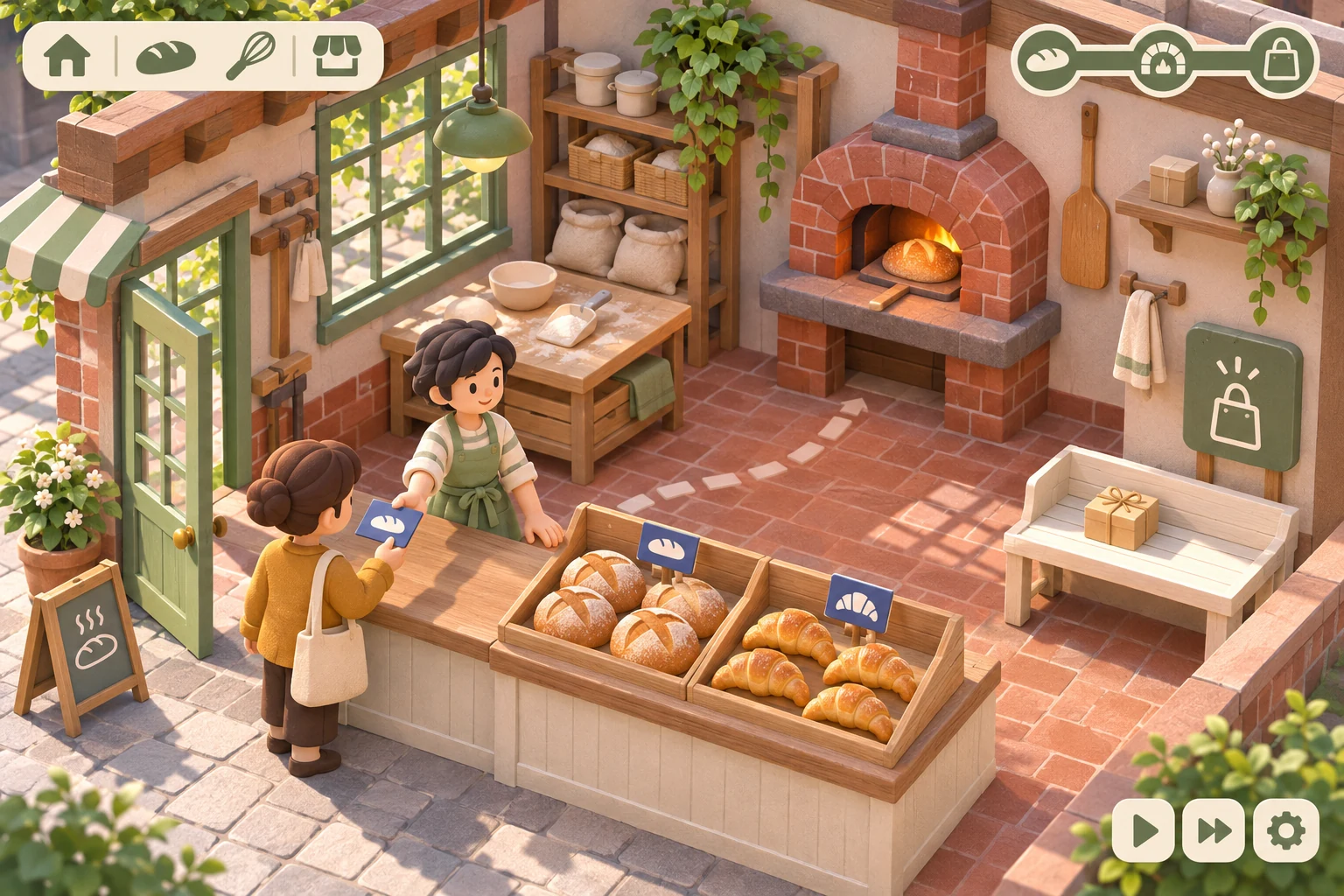
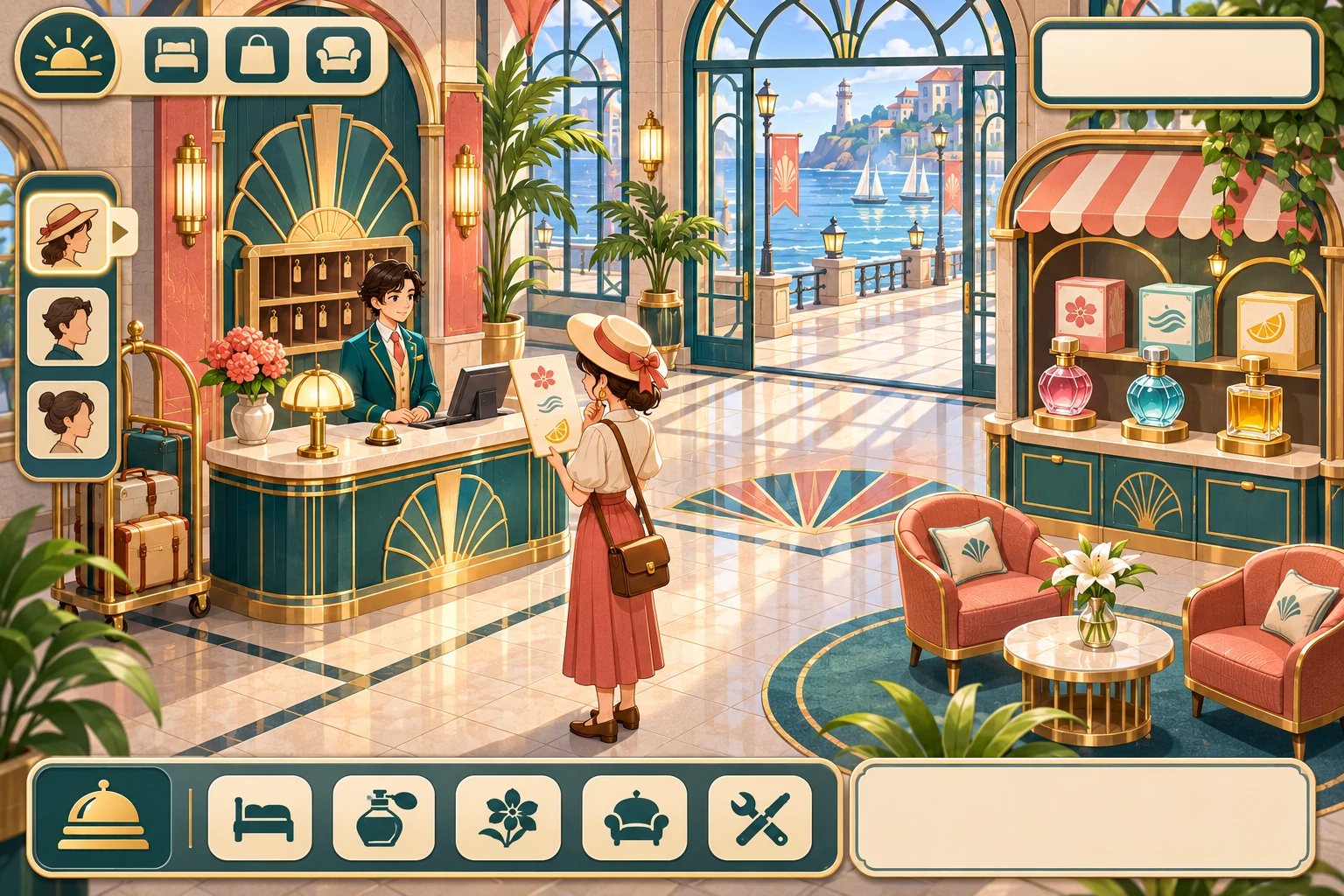
At fictional Lantern Quay, the hotel shop gives each guest a small say in what goes on the shelf. A guest can request a cedar scent in an amber bottle, while another likes the same blend in a paper wrap. The player chooses what to make before arrivals, then sees whether those package choices deserve separate stock. This small decision can change both the shelf plan and how much purchase money remains tied up at closing.
Connect guest preferences to one daily shop plan
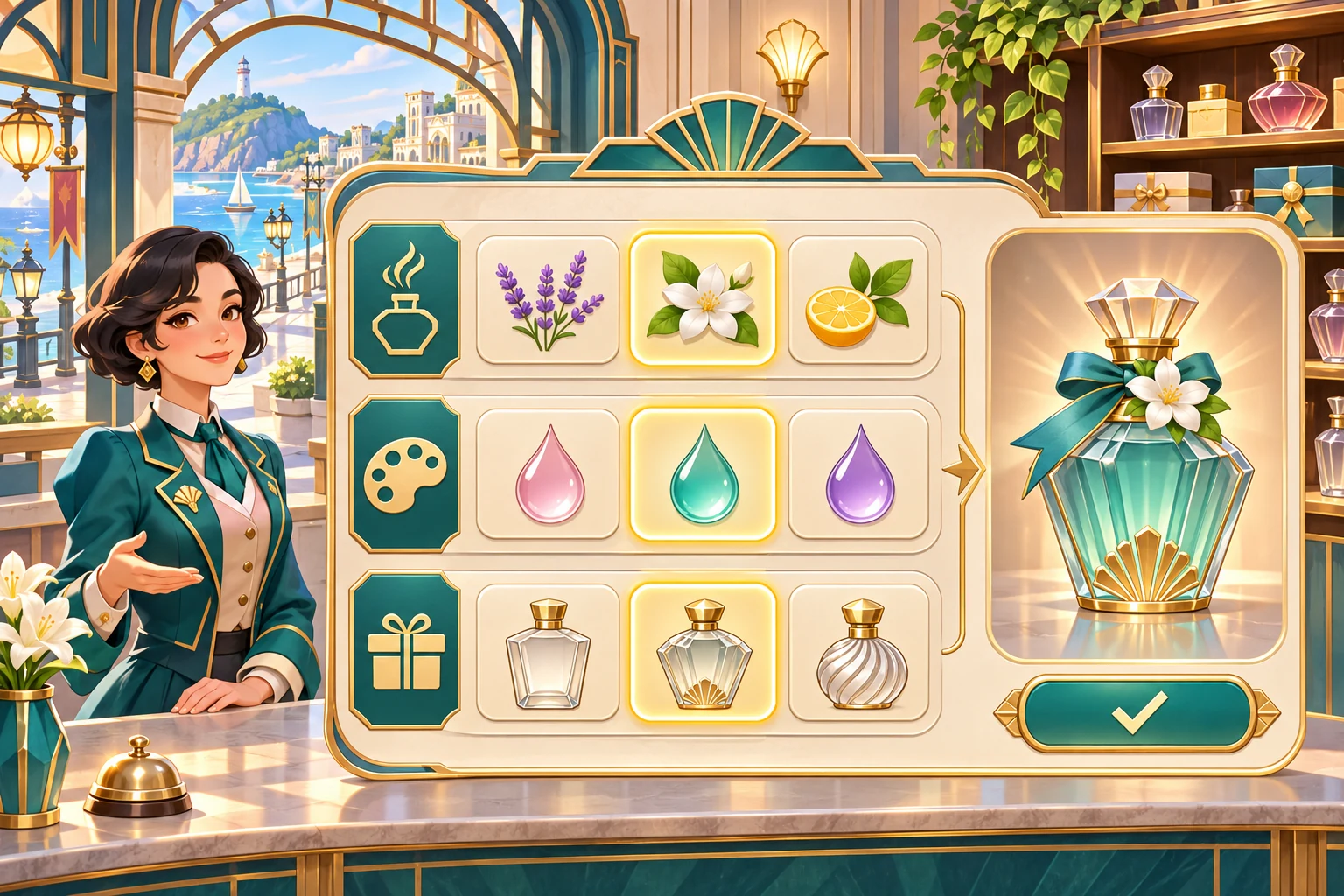
Keep the first playable loop to one day. At check-in, each guest card records a scent, a color, and a package preference. Before the shop opens, the player chooses a small assortment and spends a fixed budget to make it. During the day, guests buy a matching item if it is on the shelf. At closing, show units sold, the stock left on display, and any requests the shop could not meet.
Treat the setting and demand figures as a design fixture for the prototype, not a forecast. Hold arrivals, preference cards, prices, and starting money constant between runs. That way, the player can see the effect of the stock rule instead of mistaking a quieter day for a better plan.
Decide whether packaging creates a new stock identity
A fully separate SKU uses all three attributes: scent, color, and package. Two items with the same cedar-and-amber blend but different wraps occupy two stock records. The alternative is to share inventory when scent and color match, while treating package as a presentation choice. The guest still sees the requested wrap, but either version draws from the same underlying units.
In the revised rule, a product is an authored definition with a stable scent-and-color identity; package is a guest-facing variant. In Godot, a Resource can hold the authored product data, while the shop state tracks shelf slots and units made. Keep those responsibilities separate so changing a bottle style does not silently duplicate inventory.
Replay the same arrivals and count the leftovers
For a local test fixture, use five preference lines totaling eight guests: two cedar-and-amber guests want glass, two want paper, one citrus-and-amber guest wants a box, two citrus-and-teal guests want glass, and one rose-and-teal guest wants paper. Prepare two units of each of those five exact product variants. Give the shop four display slots, one slot per distinct stock identity, and process each preference line in the listed order.
With package-specific stock, the fifth identity cannot be displayed. Seven requests match the four displayed identities, one displayed citrus unit remains unsold, and the rose request is missed. With package variants sharing scent-and-color inventory, all four grouped identities fit. All eight guests find a product and two units remain unsold across the shelf. The result exposes a real tradeoff: grouping serves more preferences but still leaves budget in stock. Show the unmet request and leftover units separately; neither is the same as revenue.
Give the AI one hotel shop and a measurable stock rule
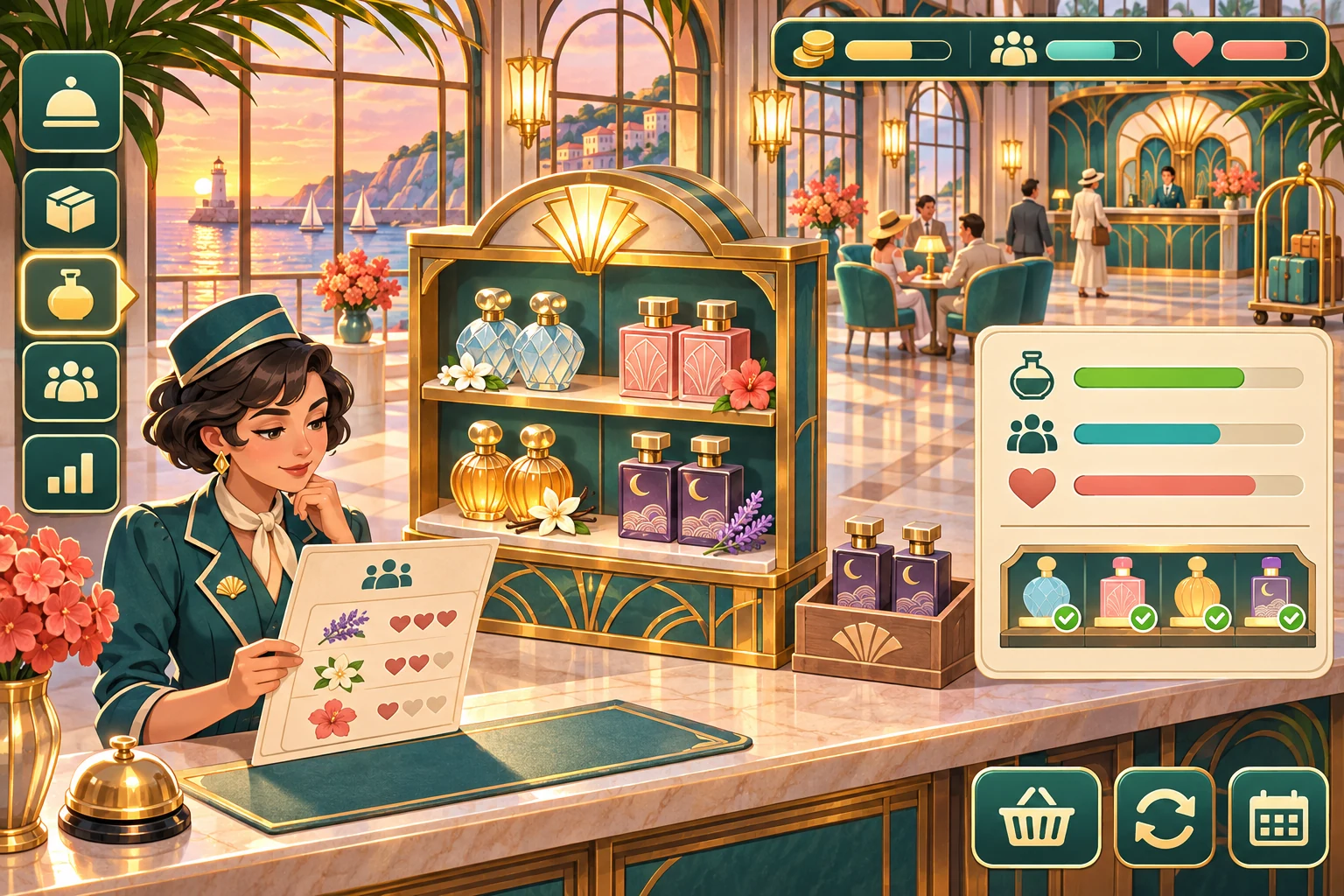
Create a one-day hotel management game set in fictional Lantern Quay. At check-in, give each of eight guests a preference for scent, color, and package using this fixed list: cedar/amber/glass twice, cedar/amber/paper twice, citrus/amber/box once, citrus/teal/glass twice, and rose/teal/paper once. Let the player prepare two units of each exact variant with four display slots. Compare a baseline where all three attributes define a separate stock identity with a revised rule where package variants share stock when scent and color match. Process the same guests in order. Report satisfied guests, missed requests, shelf slots used, and unsold units separately. Keep all guest cards, arrivals, prices, and starting money fixed between runs.
If changing package unexpectedly changes demand or price, hold both fixed and rerun the exact same guest list. Confirm that the revised inventory has four groups, serves all eight guests, and leaves two units unsold.
FAQ
Should packaging always share inventory with the product inside?
Only if the distinction is visual or cosmetic in your game. If packaging changes ingredients, durability, price, or the guest’s choice, model it as a separate product identity. Make the rule visible on the stock card before the player buys materials.
How can I make leftover stock feel like a useful decision?
Show how many units remain, their purchase cost, and whether they can carry over to the next day. If stock expires or uses shelf space, explain that before the player commits the budget. Avoid presenting unsold units as a loss until the game has defined what happens to them.
What should the first shop prototype measure?
Keep arrivals and guest preferences fixed, then compare requests served, shelf slots used, units sold, and units left. These outcomes reveal whether assortment planning matters without adding pricing or marketing systems to the first test. Track each measure separately so stock does not get mistaken for cash earned.