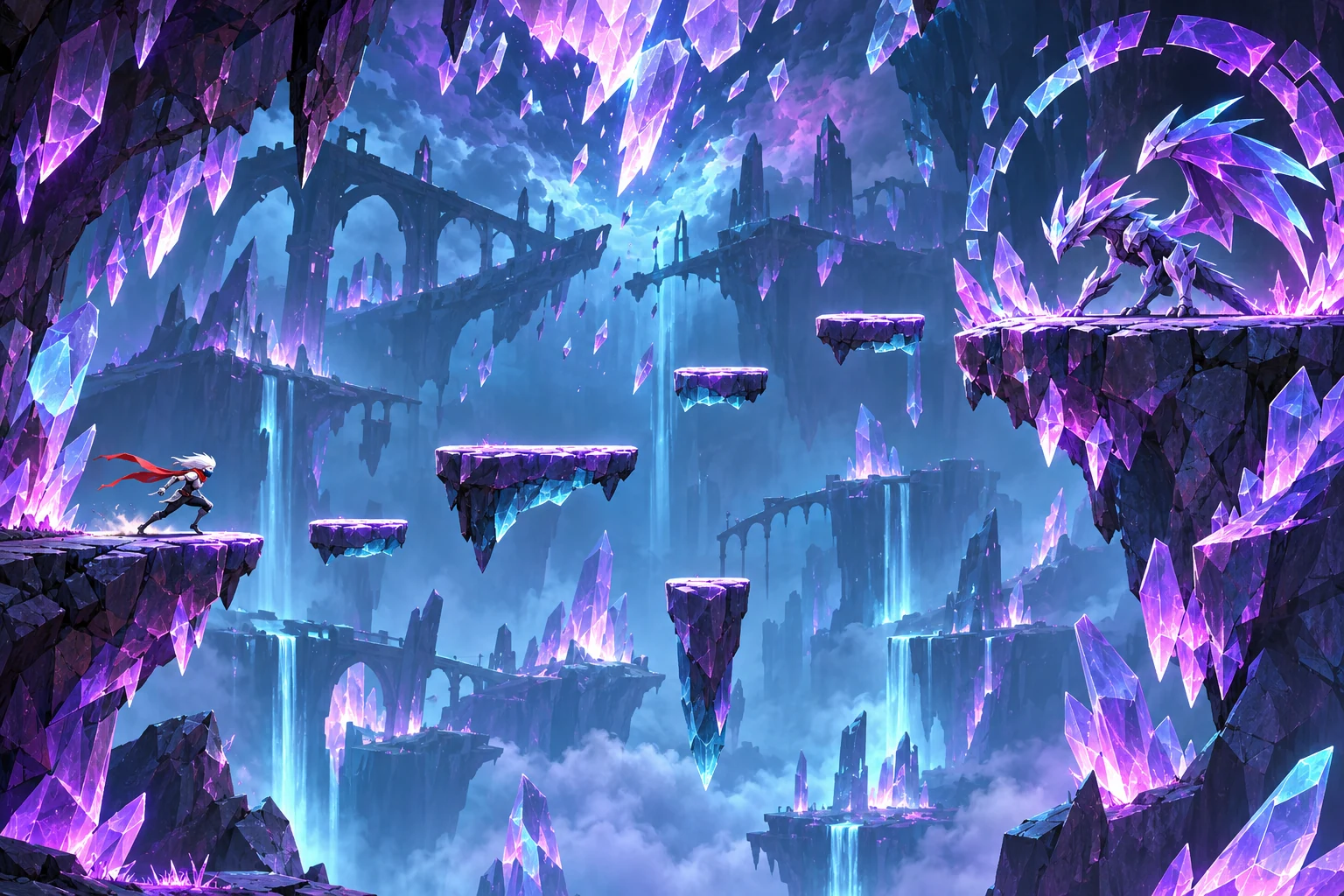
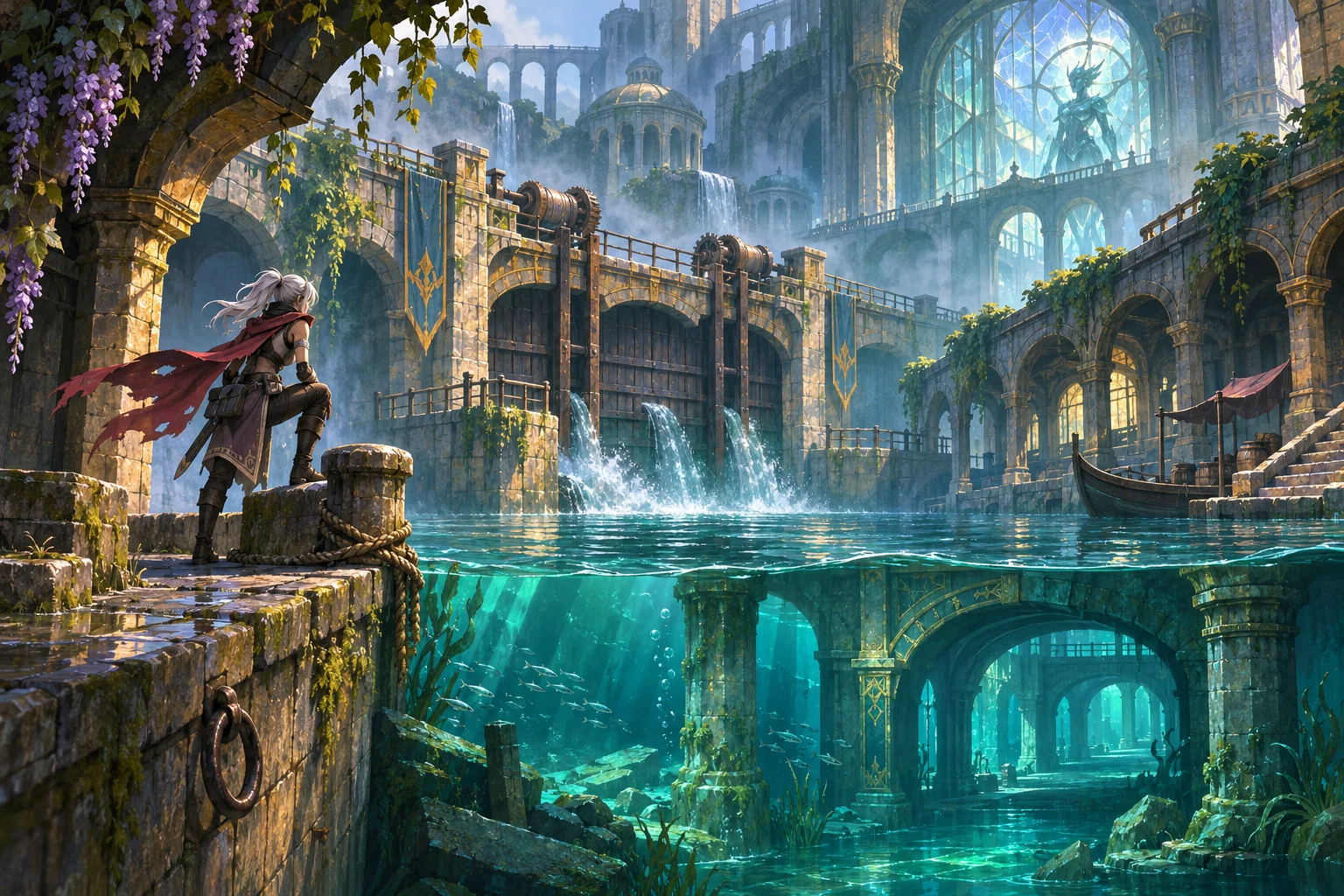
A cinematic platformer can make boss victories change how the player explores. Instead of returning to an unchanged level, the world reacts: a gate falls, a bridge appears or a landmark shifts. The player sees the transformation and can follow the new route. Start with one boss and three connected landmarks so the consequence is easy to read.
Preview the route before the boss encounter
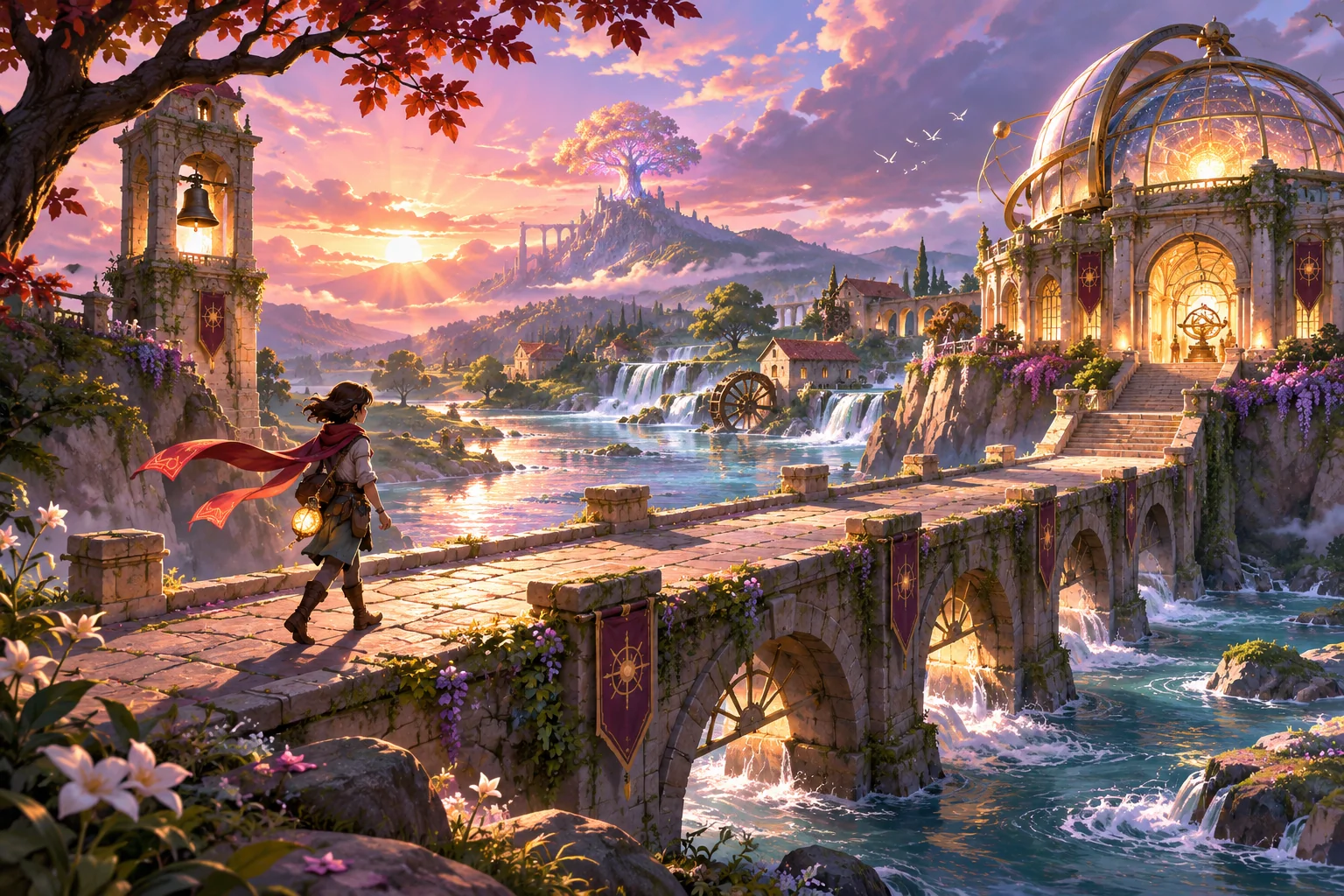
Use a village, a bell tower arena and an observatory across a river. The village connects to the arena, but a raised river gate blocks the observatory route. Show the blocked path on the map before the fight. The boss is not just a combat obstacle; defeating it changes what the player can reach afterward.
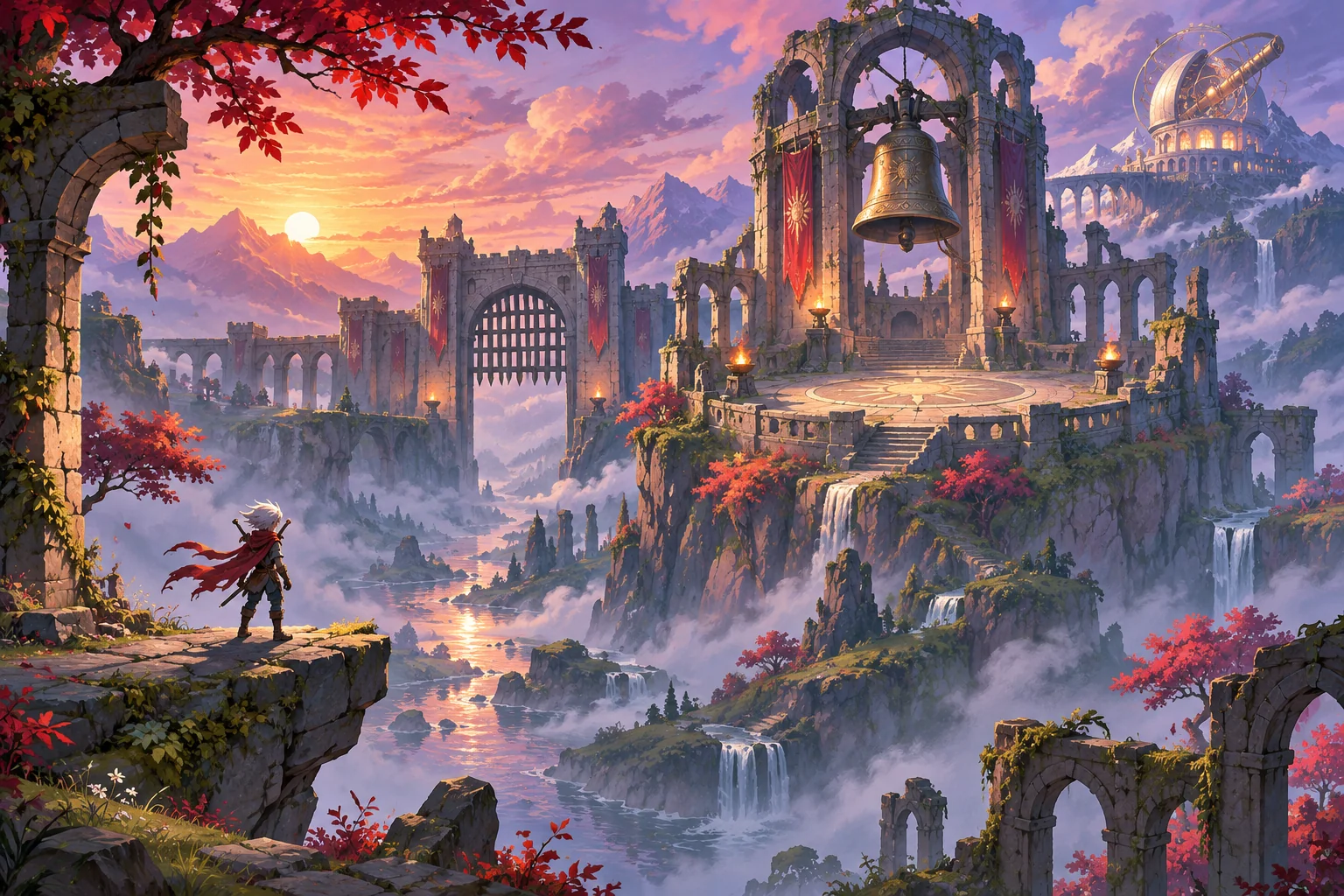
Keep the first traversal map small and label landmarks clearly. Let the player move from the village to the arena, then stop at the blocked gate. This gives the boss encounter a concrete world goal beyond reducing a health bar.
Let the victory persistently reshape the world
When the bell boss falls, its tower mechanism lowers a causeway from the arena to the observatory. The player remains in the arena; the boss flag changes the route graph and the observatory becomes reachable. Preserve that flag after scene changes and reloads. Do not move the player automatically through the new route or reset collected story details.
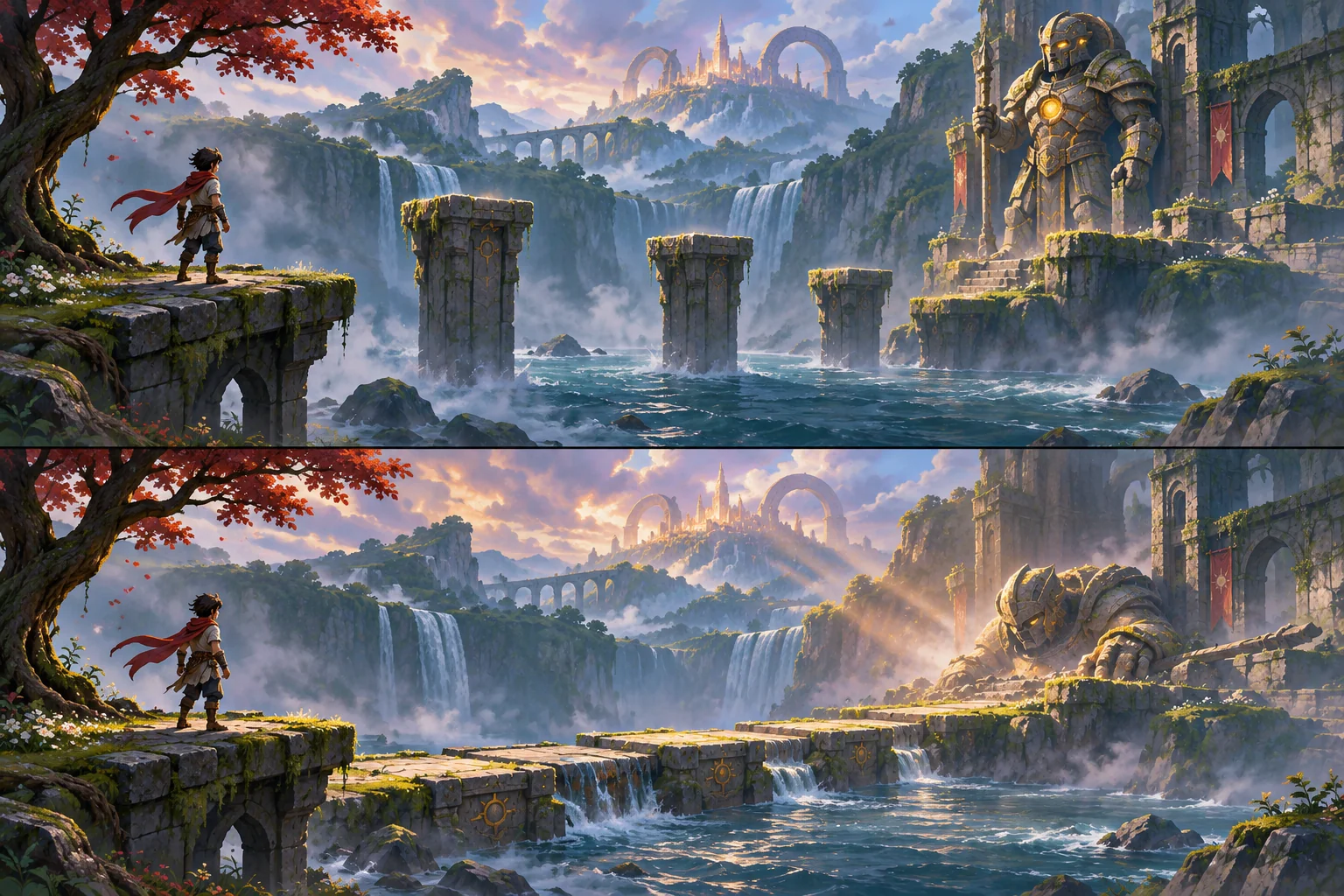
Show a short visual cue, then update the route map and nearby scenery. Keep the new crossing visible so the player can understand why exploration has opened. If the world changes more than one path, name each change in the post-boss summary.
Replay reachability before and after the boss
The local graph check uses village, arena and observatory landmarks. Before the boss flag, the village connects to the arena, but no available edge reaches the observatory. After the boss is defeated, the causeway edge connects arena to observatory. With the start unchanged, reachability changes from false to true.
| State | Village → arena | Arena → observatory | Goal reachable? |
|---|---|---|---|
| Before boss | Open | Blocked | No |
| After bell boss | Open | Causeway open | Yes |
This deterministic check validates one route-state change only. It does not simulate combat, platform physics, animation timing, camera work or a full cinematic story. Add those systems after the boss flag and changed route behave consistently.
Build one changing landmark before adding bosses
Ask an AI game maker for a small platformer with a village, bell tower arena, river gate and observatory. The gate blocks the goal route until the bell boss is defeated. Defeating the boss permanently lowers a causeway from the arena, and the player can then reach the observatory without losing position or story state. Add a reset to replay both states.
Once the first transformation works, add another boss that changes a different landmark. Change one route or world flag at a time. The player should be able to explain what changed and where to explore next.
Create a cinematic platformer prototype with three landmarks: village, bell tower arena and observatory across a river. The village connects to the arena, but the observatory is unreachable while the river gate is raised. When the bell boss is defeated, permanently lower a causeway from the arena to the observatory. Keep the player’s position and story progress unchanged, update the route map and let the player traverse to the observatory. Add a reset to compare before and after states. Treat this map and boss effect as prototype rules; leave combat and platform physics simple.
Start a cinematic platformer prototype in SEELE
Frequently asked questions
How does a boss defeat change the world?
Tie the victory to a persistent world flag that changes a landmark or route. The player sees a new path or altered environment and can explore it afterward. Keep the change visible and connected to the boss’s location. across the transformed map.
Why keep the player’s position after the transformation?
It helps the player understand that the world changed around them rather than loading a separate level. Preserve location and completed story state, then let the player choose how to use the new route. Keep this state through every scene change.
What should the first prototype test?
Check that the observatory is unreachable before the boss and reachable afterward with the same starting point. This verifies route state only, not boss balance, animation, platform movement or a finished cinematic sequence. Replay both states with a reset button.