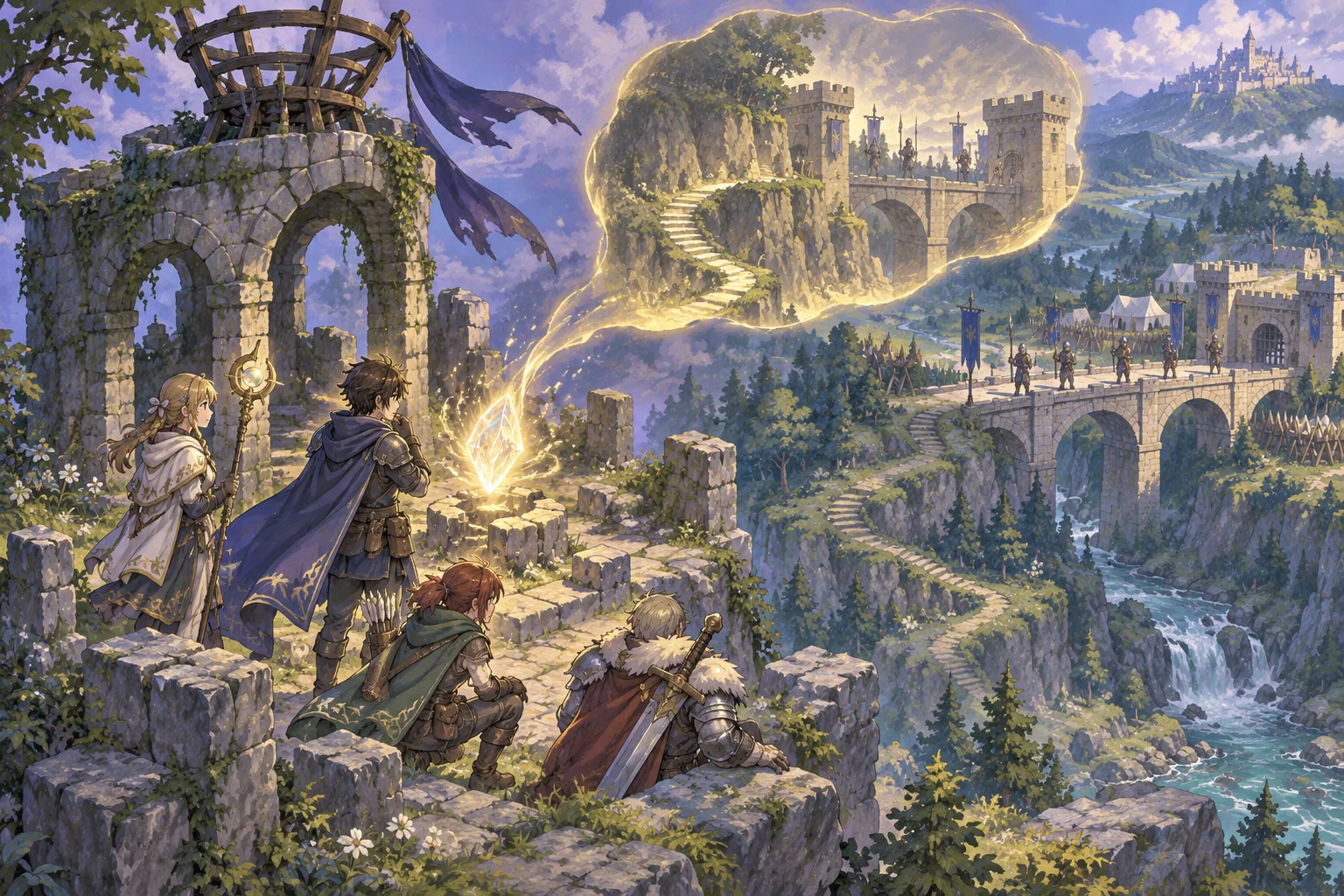
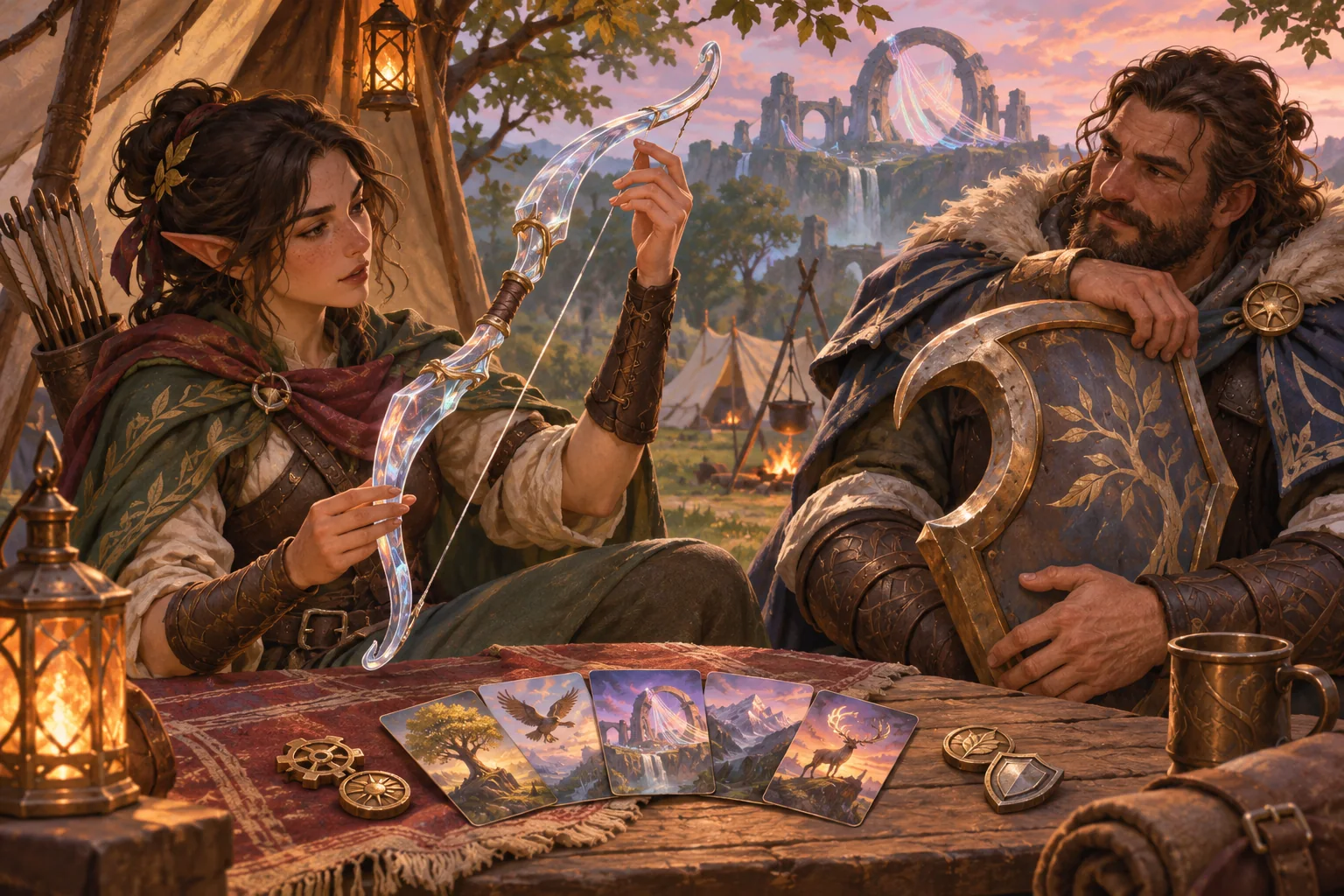
A relationship RPG can make exploration matter when discoveries change both the map and the people traveling through it. In fictional Hollow Atlas, a recovered memory gives the player a choice between helping a companion remember or opening a new route.
Treat each memory as a one-use resource. Return Lantern Promise to Lio: Bond rises from 1 to 2 and a remembrance scene opens. Or spend it at the Echo Gate: the route shrinks from three map steps to one, but Bond stays at 1.
Turn each discovery into a visible choice
Show which companion a memory belongs to and which locations it can affect. Every find should promise a concrete consequence.
Keep the decision legible: return it to a person or spend it at a place. Show both outcomes before the player commits.

Let one memory change either a route or a bond
Returning Lantern Promise moves Lio’s Bond from 1 to 2 and opens a remembrance scene. Spending it at the Echo Gate consumes it and shortens the route.
Make the memory one-use. Otherwise players can keep both benefits and the decision has no cost. The rule should be visible before use.

Replay both outcomes from the same starting state
Start with Lantern Promise in inventory, Lio at Bond 1 and a three-step route. Return it: Bond 2, scene open, no shortcut.
Spend it at the gate: one-step shortcut, Bond remains 1, scene stays closed. This paper replay checks rule outcomes; it does not measure player reactions.

Revise the rule when both benefits survive
The first paper version let the player return and spend the same memory. That removed the tradeoff. Change the rule so each memory can be used once.
Replay each option from the identical state. Confirm one benefit occurs and the other outcome stays unavailable. Record the corrected rule and reset the example.
Create Hollow Atlas, a relationship RPG where collecting lost memories changes both exploration and bonds. Each memory is one-use. Return Lantern Promise to Lio: Bond rises from 1 to 2 and a remembrance scene opens. Or spend it at the Echo Gate: reduce a three-step route to one step while Bond stays 1. The first paper rule allowed both uses; revise it to one use, replay both branches from the same state, and confirm the unavailable outcome stays closed. Add reset; do not claim player testing.
SEELE’s official page describes a general workflow: generate a playable first version from a prompt, test it in a browser and refine it with follow-up prompts. Check whether the memory choice and consequences are clear; Hollow Atlas is fictional.
Prototype memory-driven exploration in SEELE
Frequently asked questions
How can relationships guide exploration?
Connect each memory to a companion and a place. The player can return it to someone or spend it to open a route. Show the consequences before the choice so exploration and relationships stay linked. This makes the cost of exploration clear before the player acts.
How do I keep a memory system consistent?
Give each memory one use and a visible consequence. Define the Bond range and name which scene or route changes. A small rule set makes it easier to compare choices and find loopholes. Replay the same state to confirm that limitation.
How can I check a relationship-versus-exploration choice?
Replay both branches with the same inventory and Bond value. Confirm that one option improves the relationship and the other opens a route. This is a rule check, not a player study or narrative-quality result. Keep the starting state and both results in the review notes.