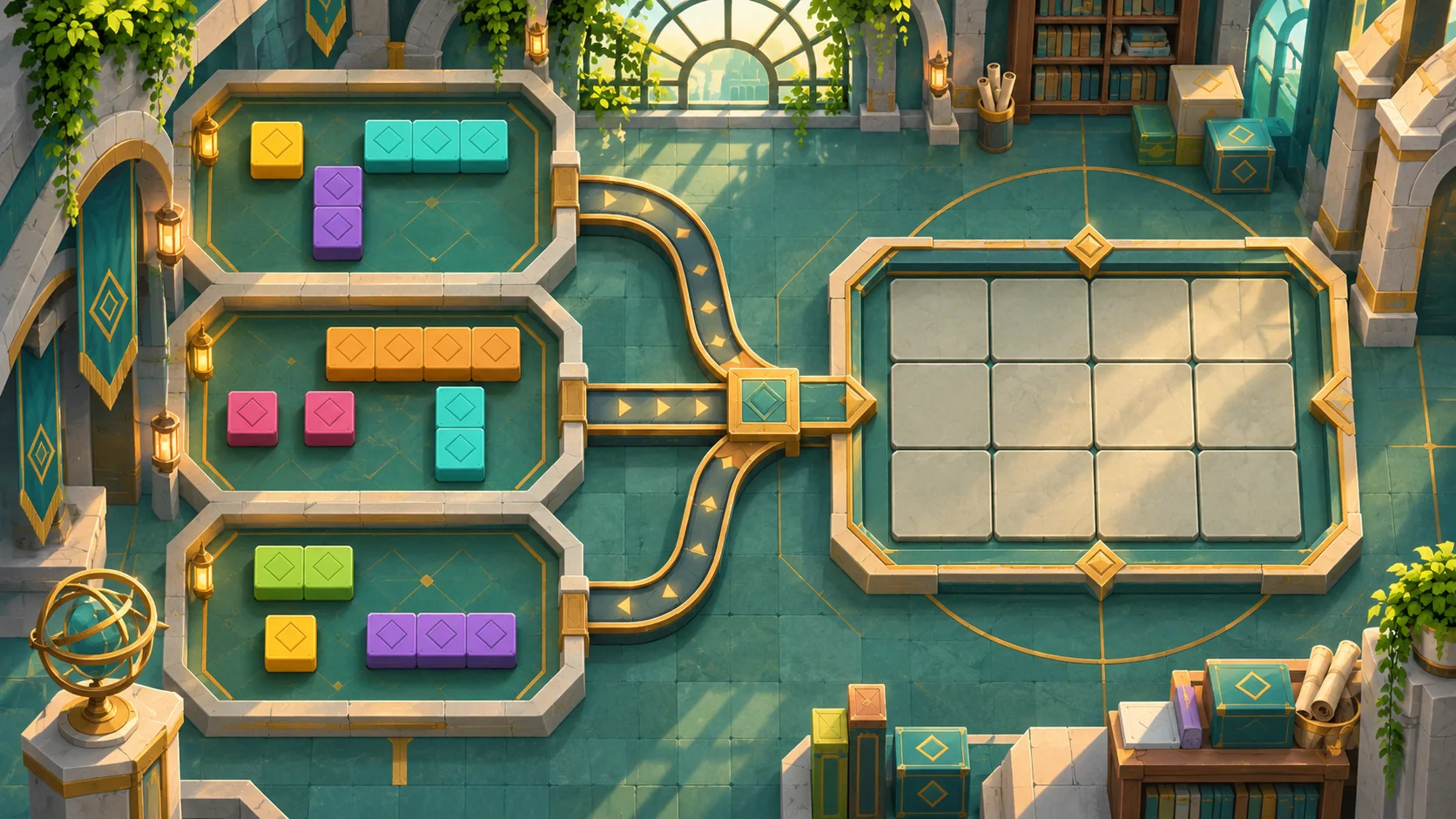
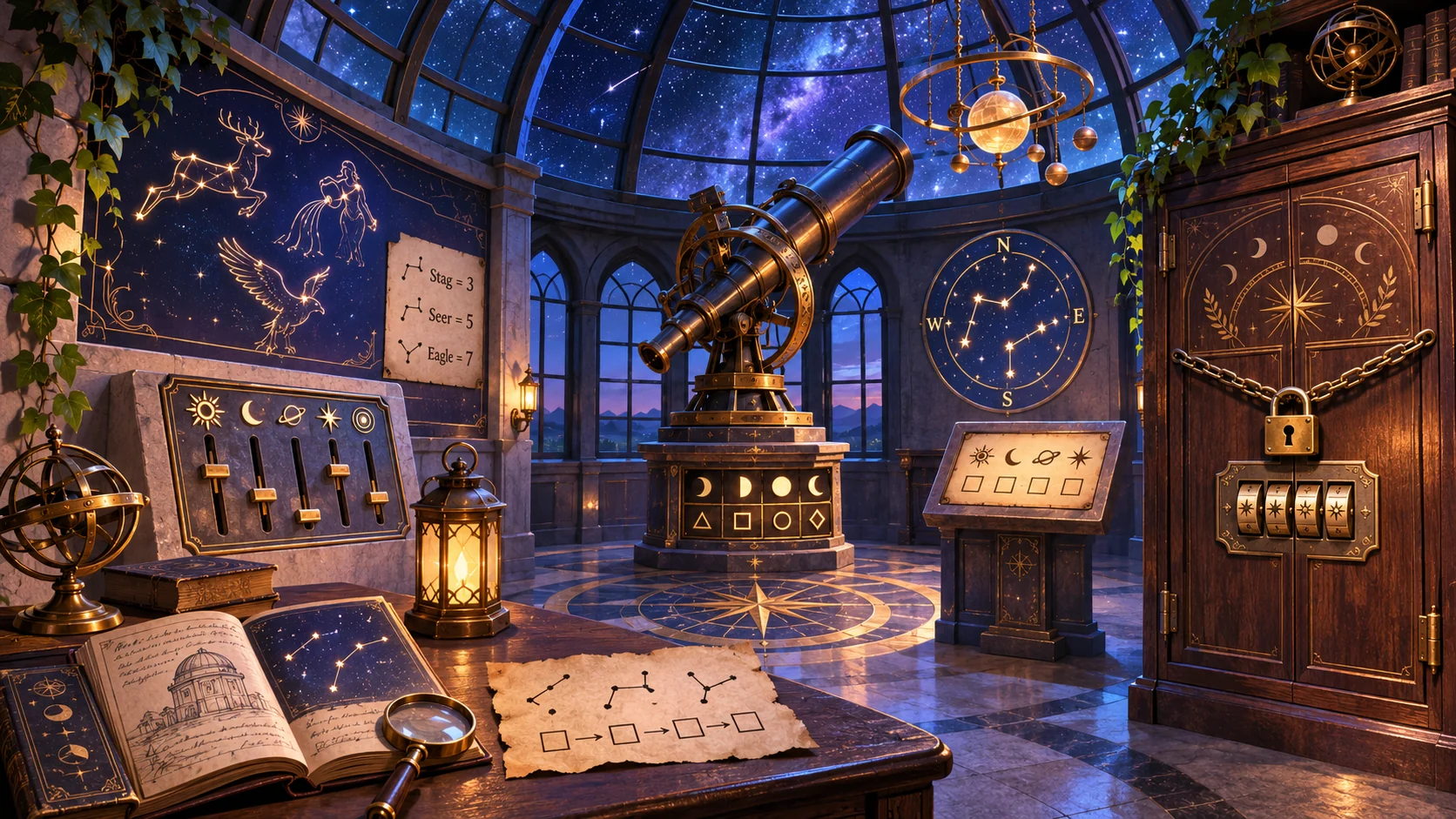
In fictional Clockwork Hall, two players solve three rooms together. Each room records one agreed sigil: bell, key, then mirror. The final chamber reads that run’s decision log and asks the team to place the same three sigils in the same order. Keep rooms, choice rules, and the finale fixed while comparing a solution assembled from recorded choices with a hard-coded bell-key-mirror sequence. This makes the co-op payoff traceable: players can see earlier collaboration become the final answer.
Make each room add one shared decision
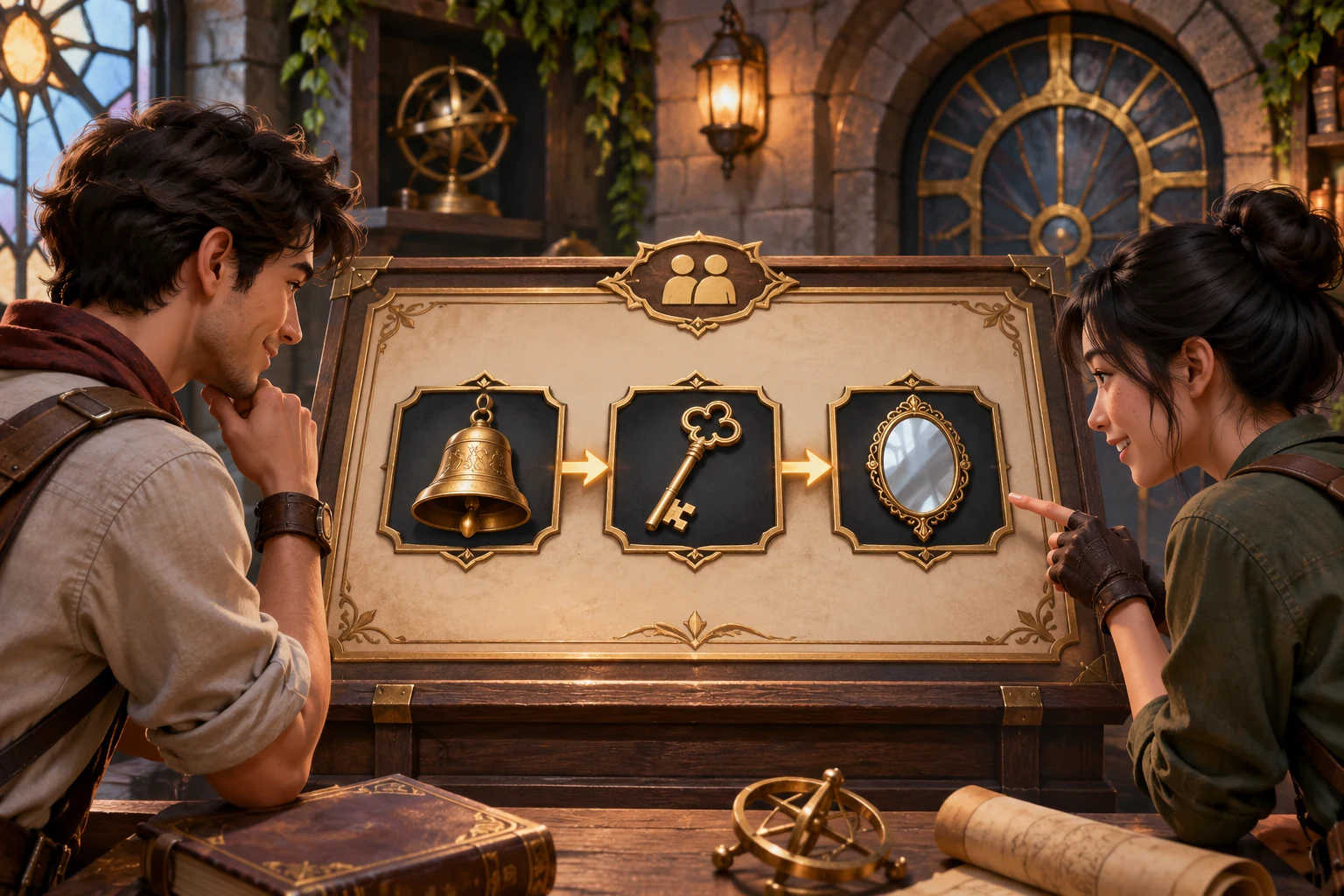
Give each of the first three rooms a distinct decision: choose the bell in the sound room, the key in the lock room, and the mirror in the reflection room. Let either player propose a sigil, then require a shared confirmation before the room records it. Keep the room order and available sigils constant so the final puzzle depends on the team’s choices rather than a changed level layout.
Store each confirmed choice with its room index in a run-level decision log. Show both players the growing sequence after each exit. The log should retain order, because bell-key-mirror and key-mirror-bell are different answers. Godot Resources can hold authored room and sigil definitions; the current run’s decisions belong in changing game state.
Build the finale from the decision log
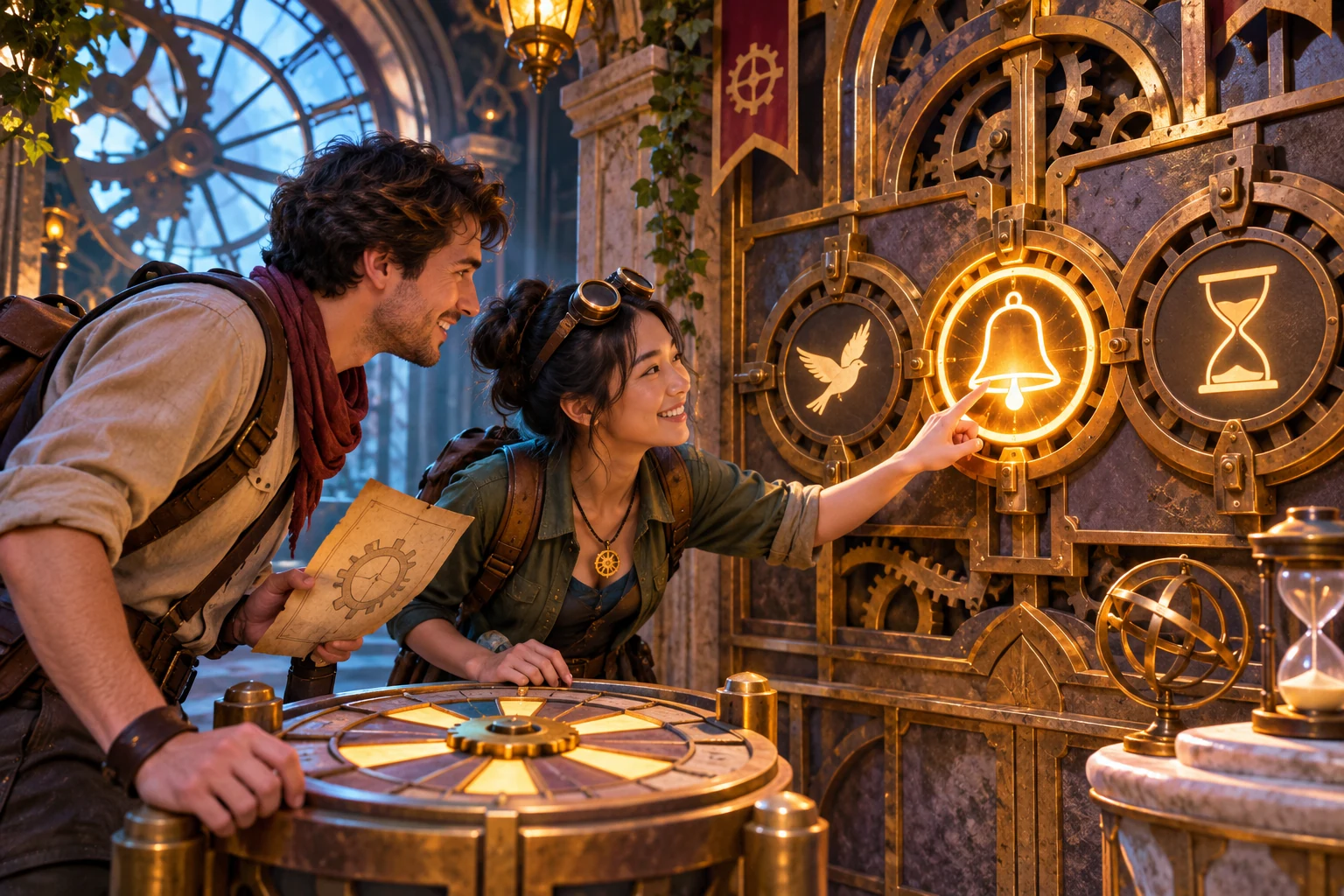
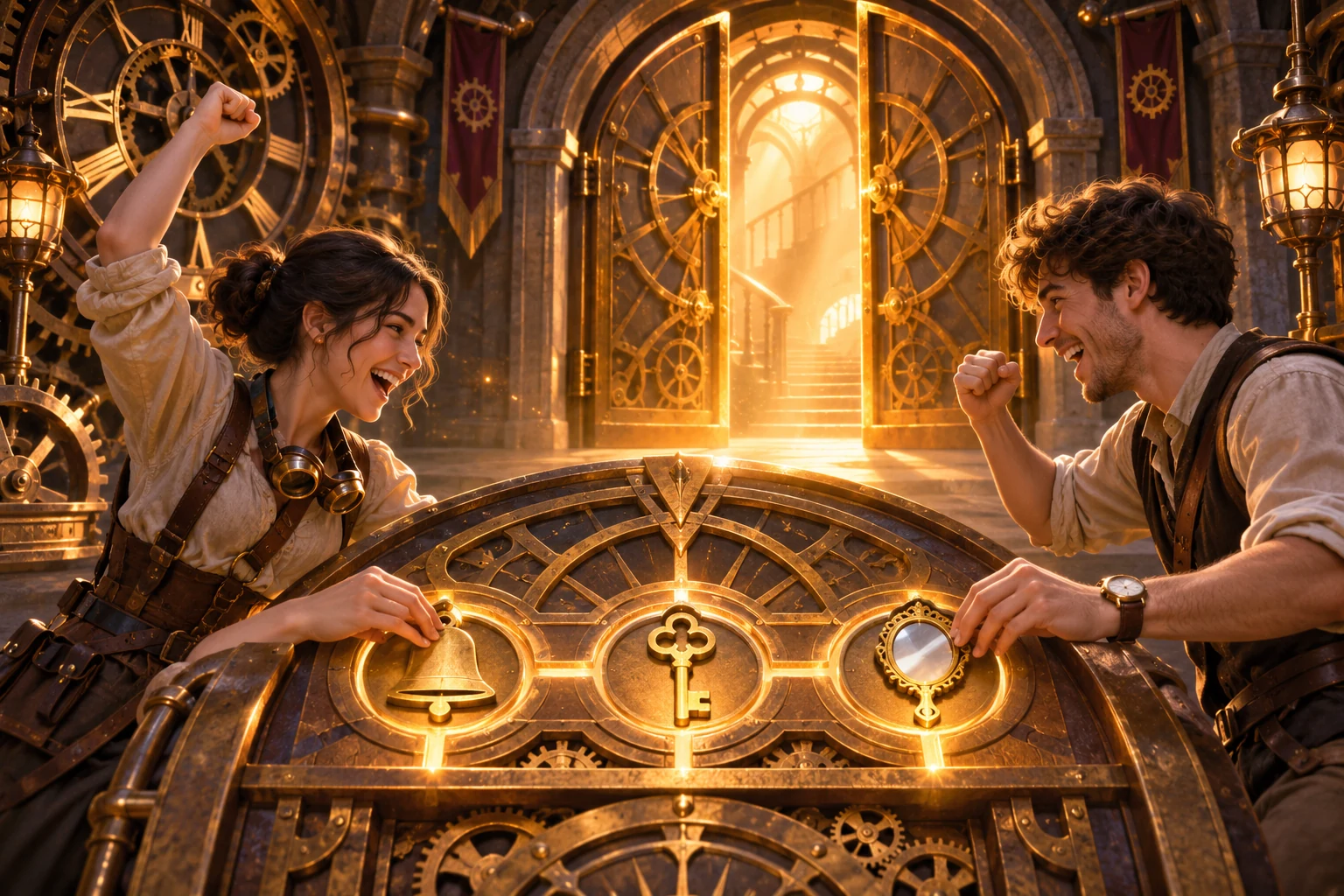
In the final chamber, display three matching slots and let players place the recorded sigils in order. Read the expected sequence from the completed run log, then compare it with the team’s submitted arrangement. Open the exit only when all three positions match. Give immediate feedback for a misplaced sigil so players can reason together without being told to repeat a fixed walkthrough.
A hard-coded bell-key-mirror solution is a useful control, but it should not replace the run data. It opens the door after the default route even if the team made different earlier choices. The log-driven version changes its expected answer to match the choices that were actually confirmed, making the finale a consequence of play.
Test two different co-op runs
Keep two players, three rooms, one choice per room, and three final slots fixed. In run A, record bell-key-mirror and submit bell-key-mirror; the log-driven door opens. In run B, record key-mirror-bell and submit key-mirror-bell; the log-driven door opens again, while a hard-coded bell-key-mirror door stays closed. Report the three recorded choices, submitted final sequence, and exit state for each run.
This small fixture checks both persistence and order. Confirm that one choice is added per room, the log resets for a new run, and the finale reads the current run rather than stale data. Clockwork Hall and its puzzle outcomes are fictional examples; the test establishes only that the stated sequence rule works in a local prototype.
Give the AI a fixed co-op sequence test
Create a cooperative escape-room game in fictional Clockwork Hall for two players. Keep three earlier rooms in this order: sound, lock, reflection. Each room offers the bell, key, and mirror sigils, and the team confirms exactly one choice per room. Store confirmed choices in an ordered run-level decision log. The final room has three slots and opens only when the submitted sequence matches the current run’s recorded choices. Show the choices, submitted sequence, and exit state. Do not hard-code one winning sequence.
Run two fixtures with the same rooms and players: record and submit bell-key-mirror, then record and submit key-mirror-bell. Both log-driven runs should open. A fixed bell-key-mirror control should fail on the second run. Reset the log between runs and report each choice in order.
FAQ
How can earlier puzzle choices affect an escape-room finale?
Store each confirmed choice in a run-level sequence and use that sequence as the finale’s expected answer. The ending then reflects what players did in earlier rooms instead of checking one fixed walkthrough code, so a replay with different decisions can produce a valid, different solution.
How do you make a puzzle sequence cooperative?
Let players discuss or propose an option, then make the room record one shared, confirmed decision. Show the same ordered log to both players so they can plan the final solution together, compare what each room contributed, and catch a missing or repeated choice before entering the finale.
What should a test of a choice-built final puzzle measure?
Record every earlier choice, the sequence submitted in the finale, and whether the exit opens. Replay at least two different sequences to confirm the finale reads the current run and preserves order. Also reset the log between runs so old decisions cannot affect a new team attempt.