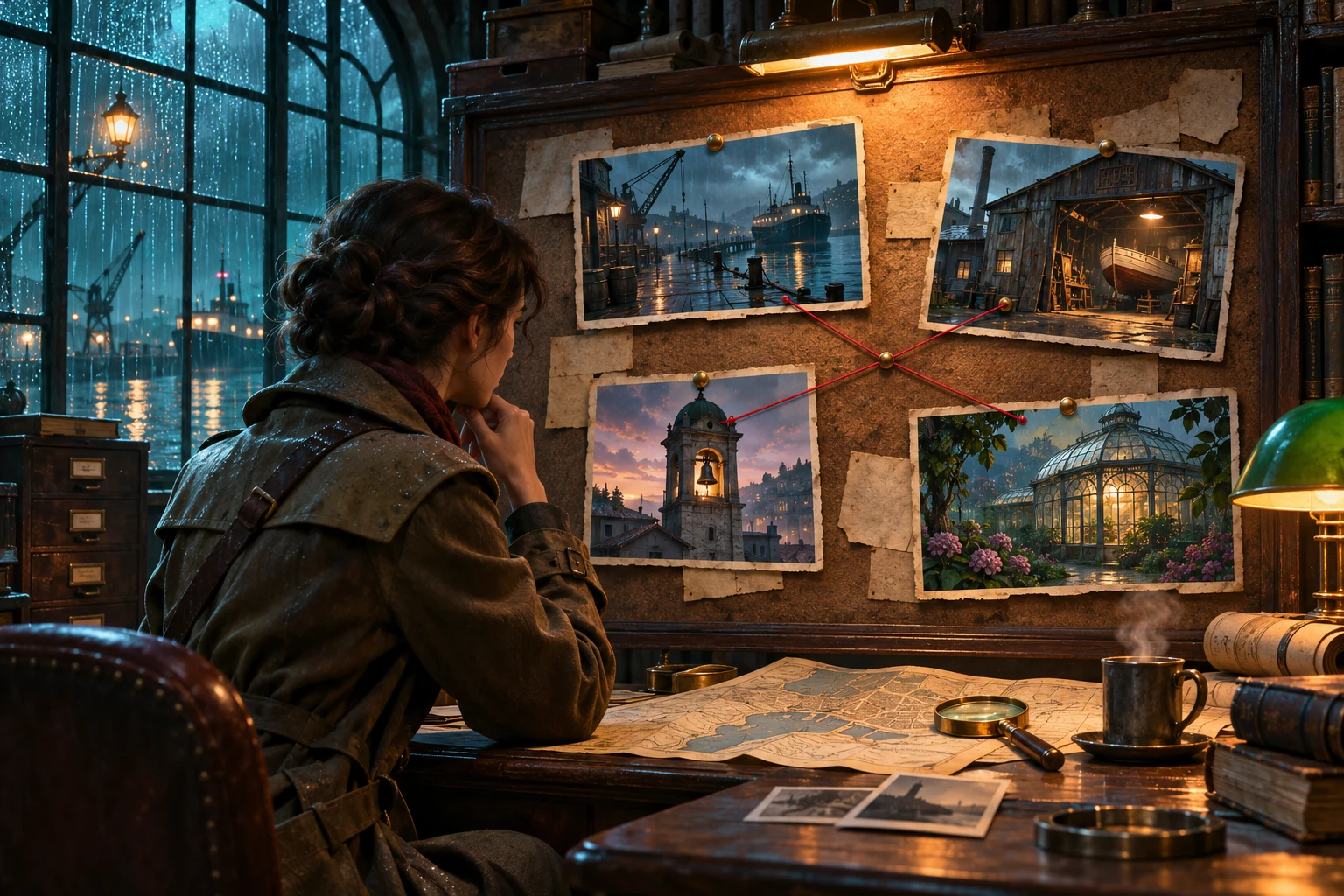
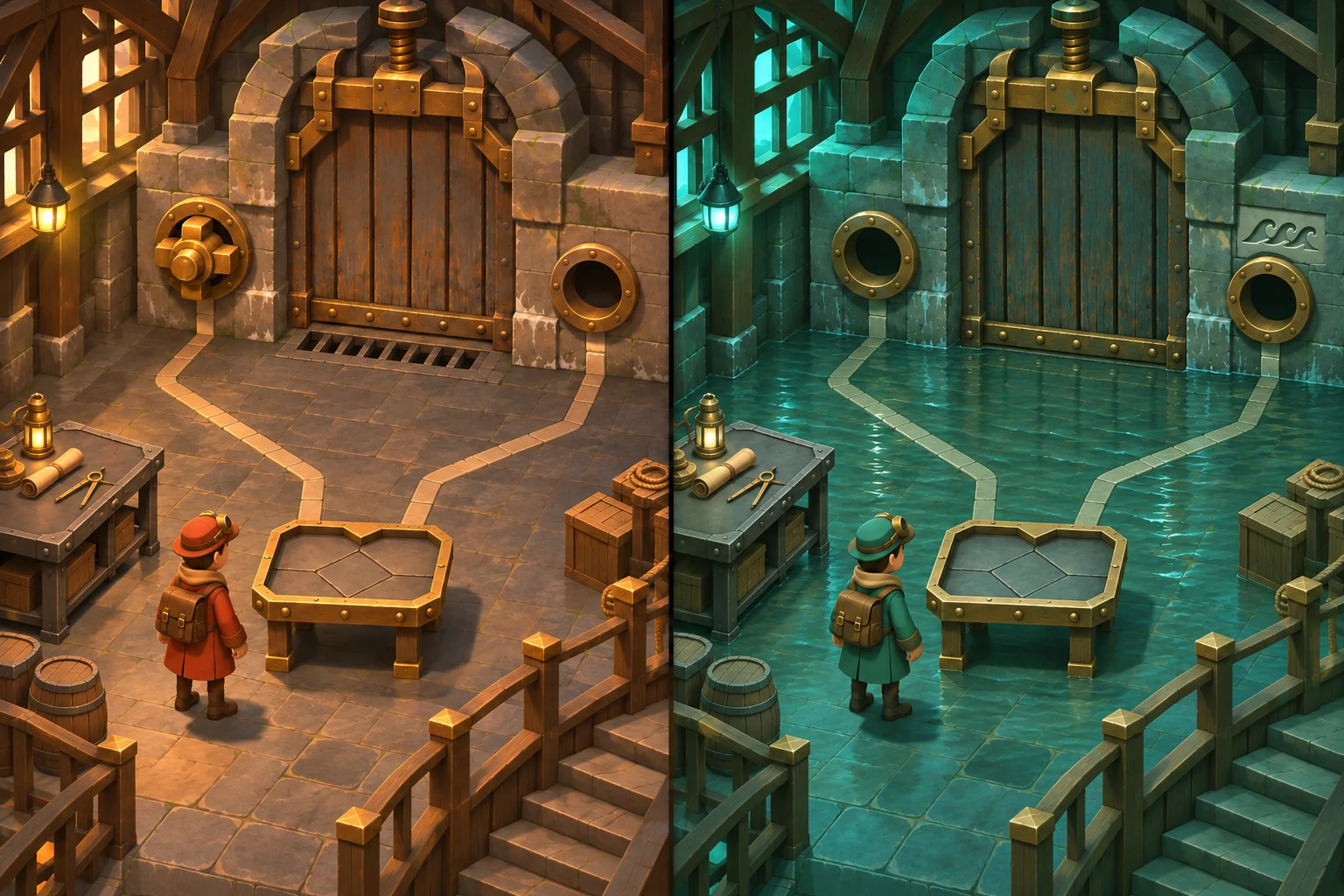
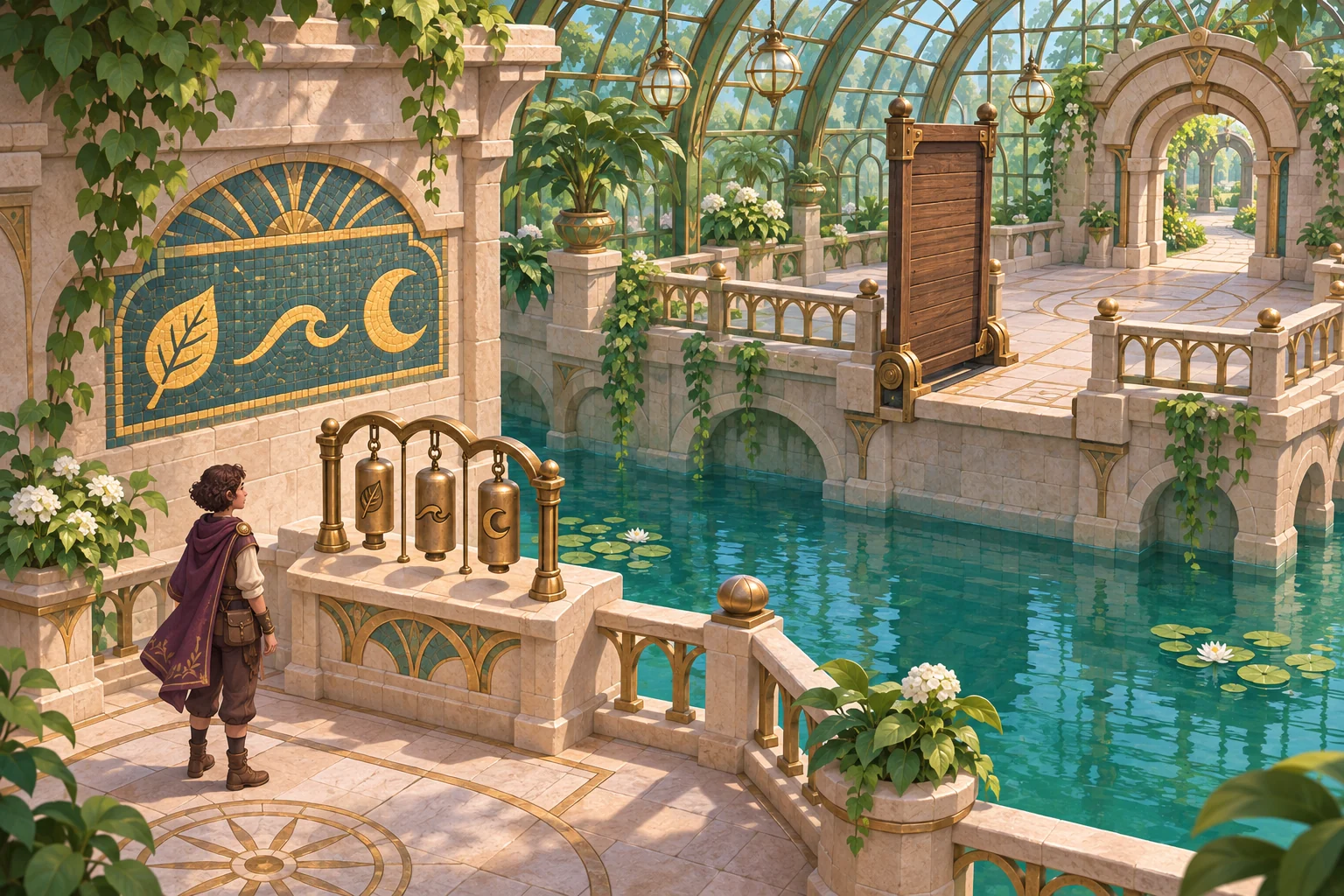
The explorer finds a wave on the east door of the entry room. The mapmaker can sketch where that door might go, but the exit does not open on a guess. In the fictional escape room Tideglass Archive, players build the map by comparing clues from both sides of each link. This gives the explorer something to verify and the mapmaker a clear reason to keep an unfinished route visible.
Give each player a different job
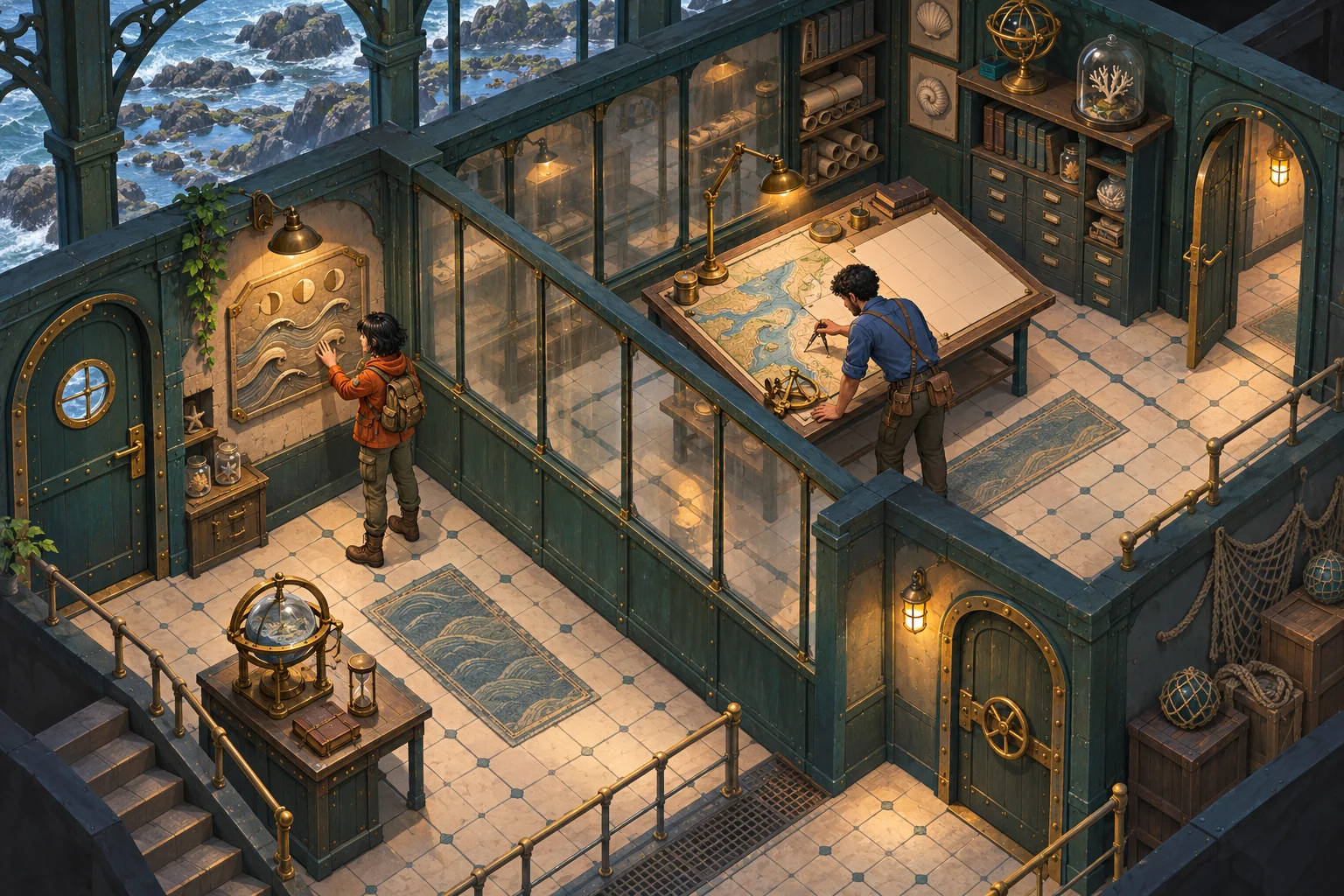
Start with three cards: Entry, Pump, and Exit. Fix north at the top of the board for the first version. The explorer inspects a plate and sends its room, direction, and icon to a shared notebook. The mapmaker places room cards and proposes a connection. Use separate input sets on one device for the first test, and show each new notebook entry to both players.
| Link | First plate | Matching plate |
|---|---|---|
| Entry to Pump | Entry east, wave | Pump west, wave |
| Pump to Exit | Pump north, lantern | Exit south, lantern |
Place the first plate where the explorer starts and let the mapmaker expose a viewing panel in the neighboring room by placing its card. The panel lets the explorer inspect the matching plate before the route is confirmed. Keep this inspection reachable while the final exit is locked, or the team can get stuck needing proof from a room it cannot see.
Give guesses their own visual state
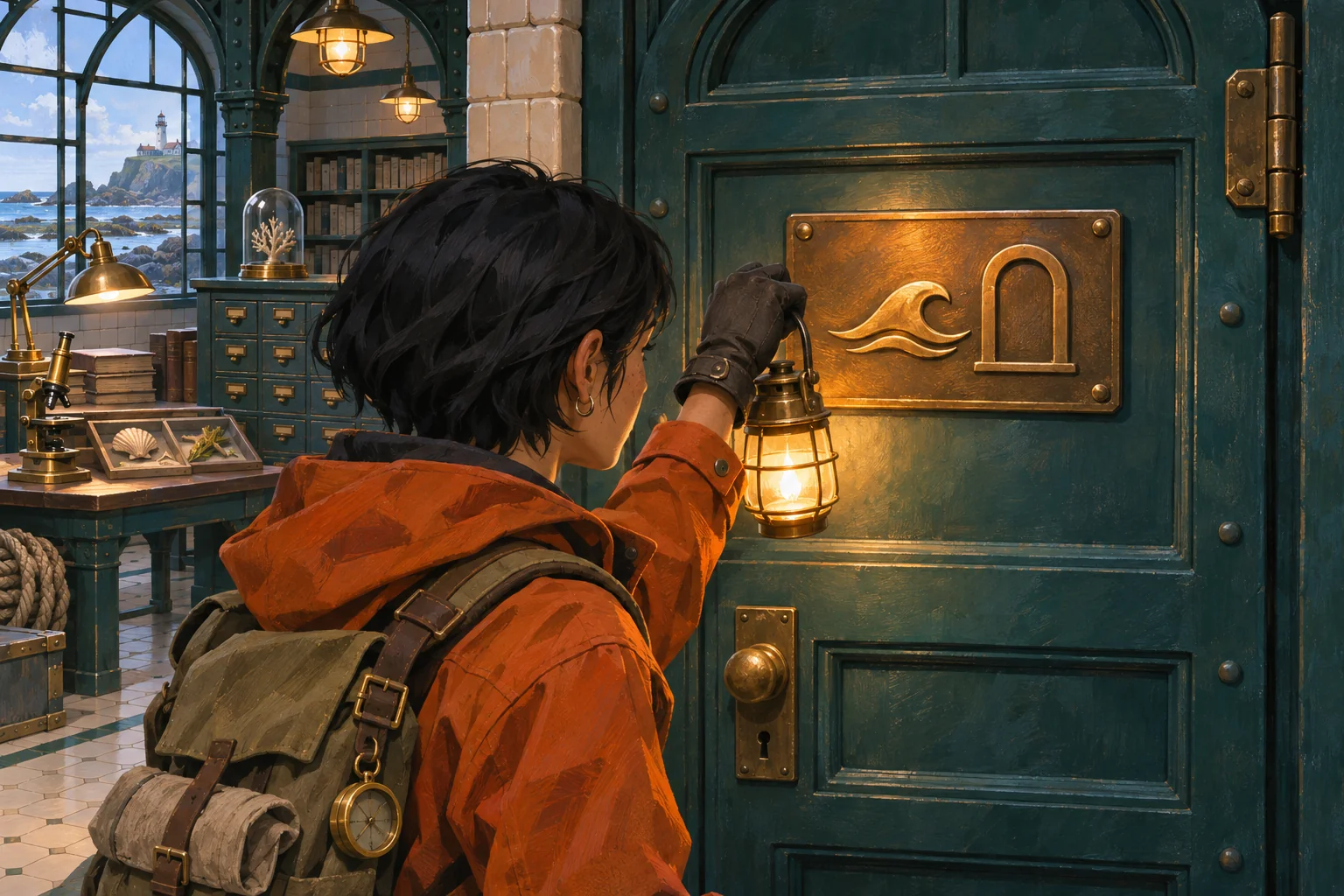
When both cards are placed, let the mapmaker suggest an edge even if only one plate has been seen. Draw it dashed. To confirm it, check that both distinct plate IDs are in the notebook, that they have the same symbol, and that they face each other in the correct rooms. Use a solid line for a match and a marker on the mismatched side for an invalid placement. Win when the confirmed edges connect Entry to Exit. Clearing a suggestion should leave the collected plates available.
Test a route with one missing plate
We ran a local command-line replay of the same map with three clues collected. Entry east and Pump west were both known. The team had found Pump north, but had not found Exit south.
| Confirmation rule | Pump to Exit | Can escape? |
|---|---|---|
| Either plate is enough | Confirmed | Yes |
| Require both plates | Pending | No |
After we added the exit plate, the revised rule confirmed both edges and allowed escape. With all clues present but the exit card facing the wrong way, the last link still failed. The replay checks map state. In a playable version, watch whether a dashed link tells the players what to look for next instead of making them keep rotating cards.
Start with a three-card prototype
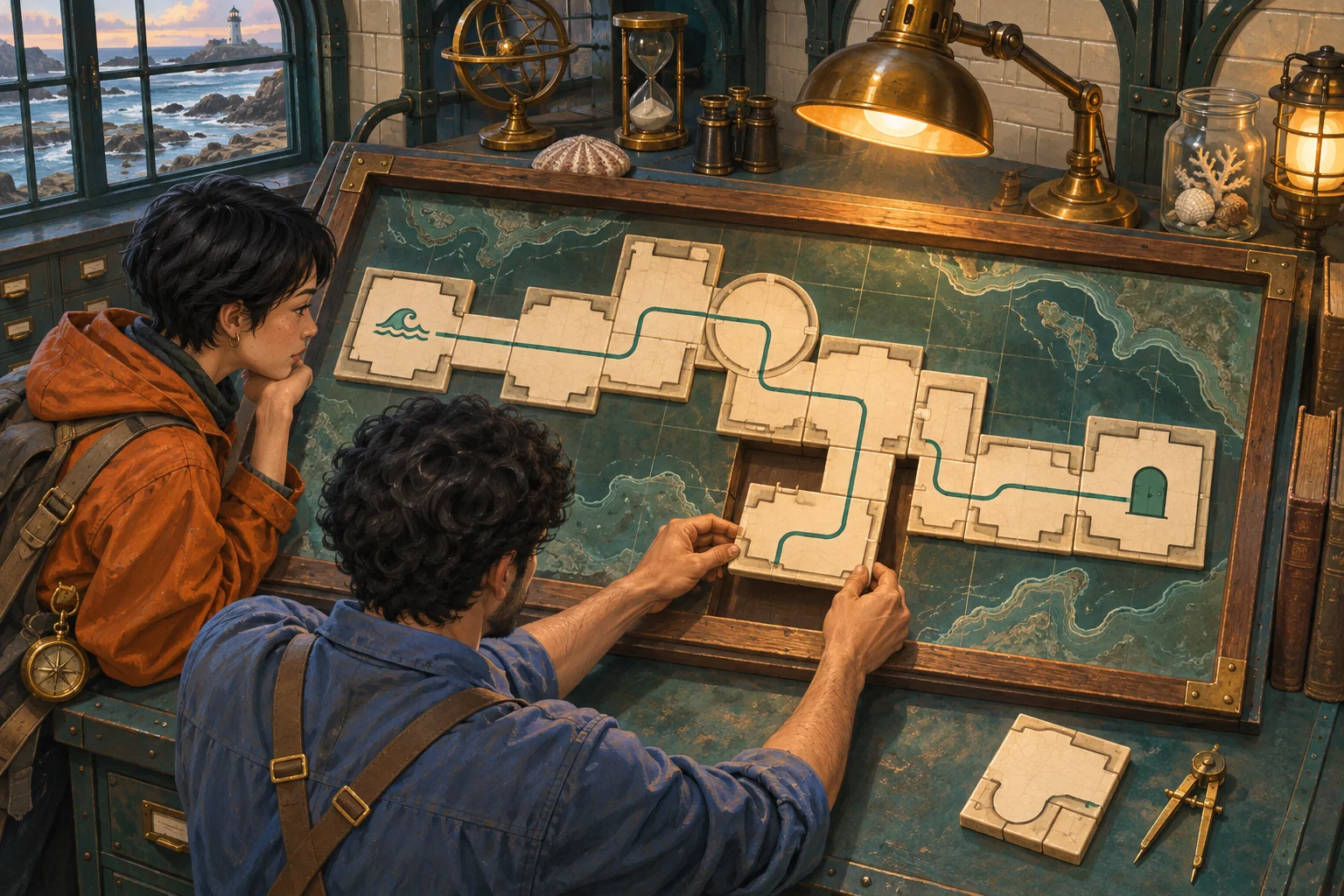
SEELE AI takes a prompt for a browser-game prototype and supports follow-up editing. Ask for the notebook and mapboard in the same room setup. Recreate the partial evidence case before making more cards, and confirm there is a reachable way to inspect the last plate.
Make a small co-op browser escape room called Tideglass Archive with local split controls. One player finds four doorway plates and records their room, side, and symbol. The other arranges Entry, Pump, and Exit cards on a fixed-north map. Match Entry east to Pump west by a wave and Pump north to Exit south by a lantern. Draw guesses dashed until both plates are discovered and correctly aligned. Let the mapmaker open viewing panels to reveal the matching plates. Open the exit only after both links are confirmed. Add a shared reset.
Start your clue-built escape room in SEELE
Frequently asked questions
Should both players be able to edit the map?
Give one role placement control at first, while both can highlight a card or read the notebook. That keeps simultaneous edits out of the first room and gives the explorer a clear contribution. Once collaboration feels natural, test whether shared editing helps or causes accidental changes.
Can players rotate the room cards?
Start with fixed north while you check how well the direction clues read. If rotation becomes a challenge in a later room, rotate the visible plate directions with the card and mark its current north. Give the team a quick way to undo an accidental turn.
Should a wrong connection erase a discovered clue?
Keep the clue. A mismatch is information about the current arrangement, and the same discovery may be useful elsewhere. Mark just the link that fails, let the team remove it, and preserve the notebook across map edits so players do not repeat work.