In fictional Glass Harbor, a detective starts at the docks and follows evidence toward a conservatory. The route passes through a repair shop and bell tower. Three confirmed clues each connect one adjacent pair of locations. Keep the four locations, clue order, and destination fixed. After each clue, add only the supported link and show which places are now reachable. Compare this evidence-built map with a static map that displays every route from the start. Report clues found, visible locations and links, and whether the conservatory can be reached.
Turn confirmed clues into location links
Define four places in order: docks, repair shop, bell tower, and conservatory. Write three clues, each supporting one adjacent connection: docks to repair shop, repair shop to bell tower, and bell tower to conservatory. Keep clues separate from locations so a player can inspect evidence before deciding whether its link is reliable.
When a clue is confirmed, add its edge to the map graph and reveal the connected location. Do not draw an unconfirmed connection just because it exists in the authored case. Godot Resources can hold stable clue and location definitions; the set of confirmed clues and visible links belongs to the current investigation state.

Reveal only the routes supported by evidence
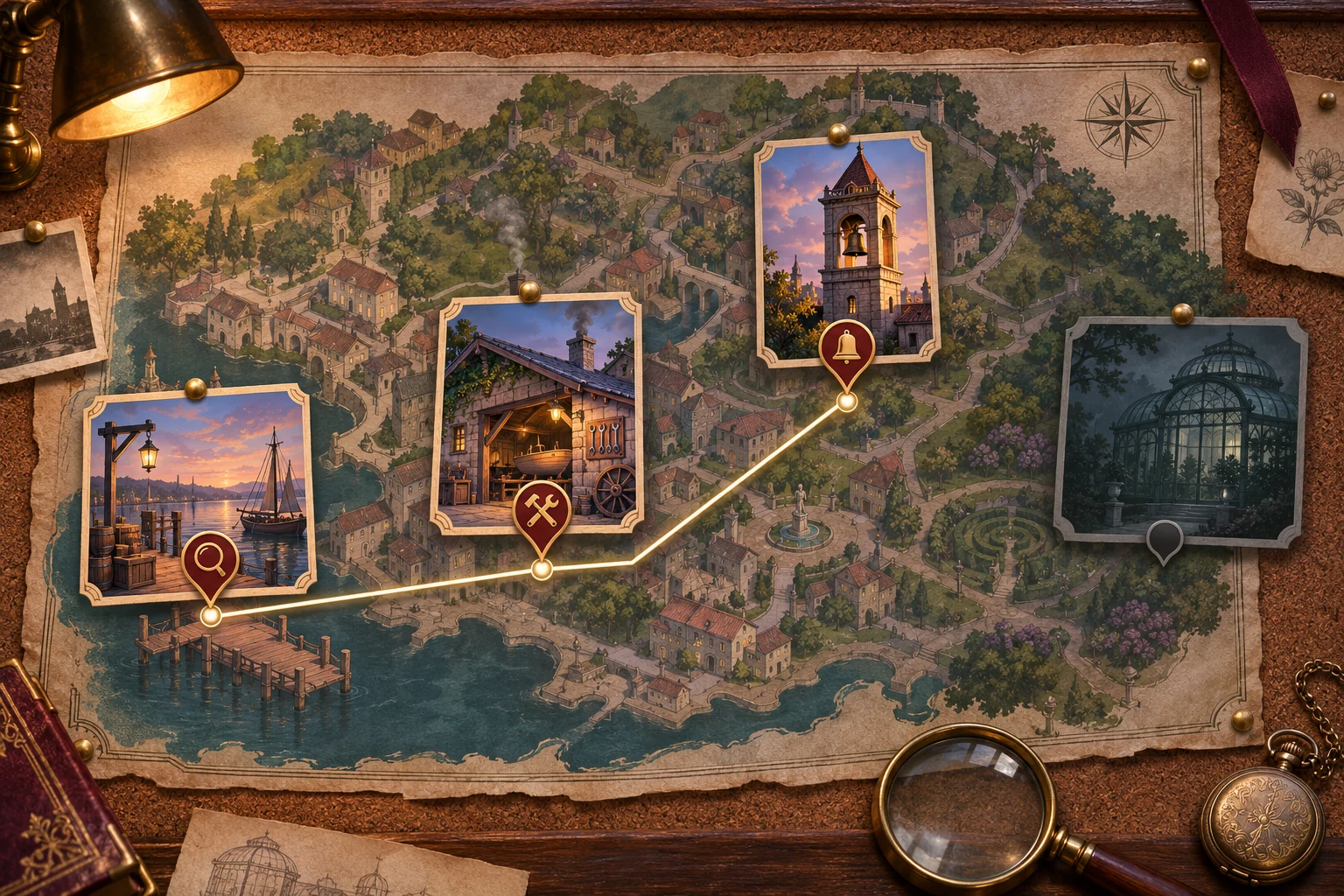
Start with the docks visible and the conservatory unreachable. The first clue adds the repair shop and one link. The second adds the bell tower and a second link. Before the third clue, the conservatory remains disconnected. This gives the map a clear relationship to player discovery instead of showing a complete route before the mystery is investigated.
Keep the clue order and map rules fixed while the graph grows. If evidence is rejected, leave the route unchanged; if a clue is confirmed twice, do not add a duplicate link. A small status panel can report confirmed clues, visible places, and the current reachable set so players can see what the evidence has changed.
Test when the final location becomes reachable
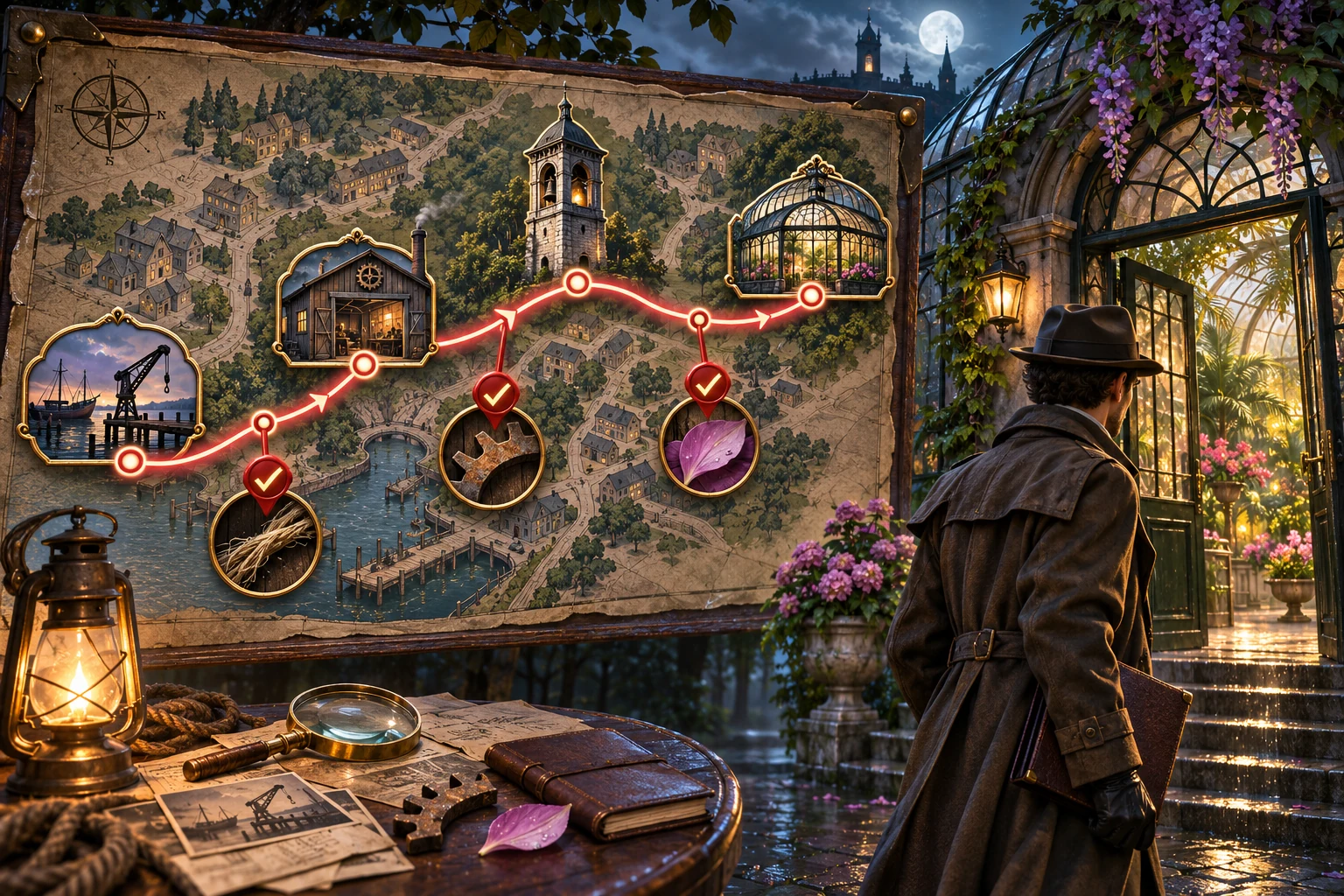
Run the same case from an empty investigation state. After clue one, show two locations and one link; after clue two, show three locations and two links, with the conservatory still unreachable. After clue three, show four locations and three links, and confirm that a path from the docks reaches the conservatory. The static-map control displays all four locations and three links immediately.
Report each clue, visible locations, visible links, and destination reachability at every step. Reset the investigation before replay so old evidence cannot remain on the map. Glass Harbor and its clues are fictional; the deterministic test checks only that confirmed evidence reveals the intended graph and route.
Give the AI a fixed clue-built map test
Create a detective mystery game in fictional Glass Harbor. Use four locations in order: docks, repair shop, bell tower, conservatory. The detective starts at the docks. Three clues each connect one adjacent pair: docks to repair shop, repair shop to bell tower, and bell tower to conservatory. Add a map link only after its clue is confirmed. Keep location set, clue order, and destination fixed. Show confirmed clues, visible locations and links, and whether the conservatory is reachable after each clue. Include a static-map control that shows all links from the start.
Reset the investigation and verify the map grows from two locations/one link after clue one, to three/two after clue two, then four/three after clue three. The conservatory must stay unreachable until the last clue. Reject duplicate clues without adding duplicate links.
FAQ
How can clues build a map in a detective game?
Represent locations as nodes and confirmed evidence as links between them. Add a route only after the player accepts the clue that supports it, then update which locations are visible and reachable. This makes map growth part of the investigation rather than a decorative reveal.
How do you test an evidence-driven map?
Fix the locations and clue sequence, then record the graph after each discovery. Check visible nodes, confirmed links, and whether the destination is reachable. Compare the result with a static-map control and reset investigation state before replaying. for each checkpoint.
What should a clue-based map show the player?
Show which clues are confirmed, which location links they support, and what parts of the map are currently reachable. Keep unknown routes visually distinct from confirmed ones so players can tell evidence apart from speculation and understand why access changed.