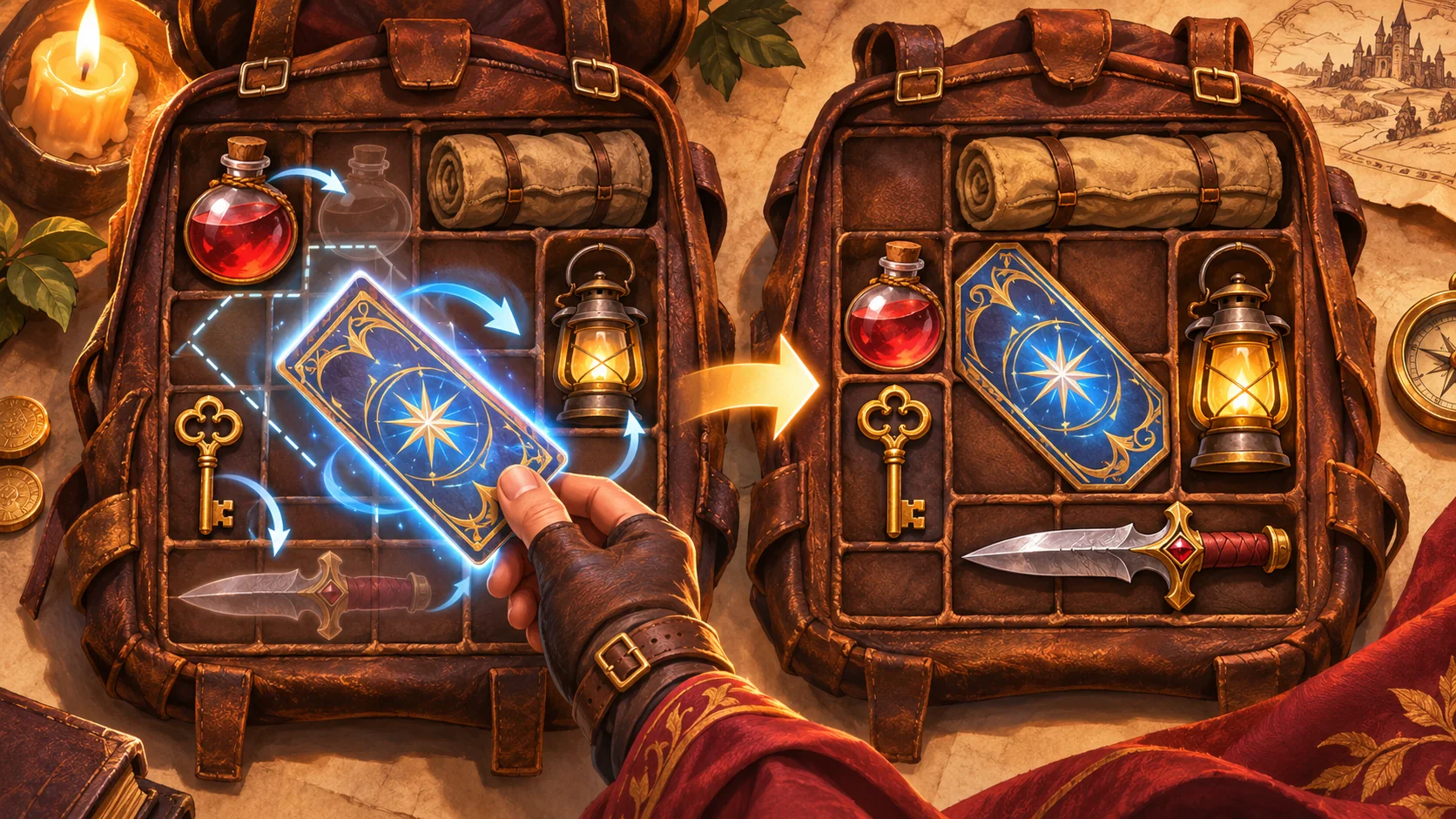
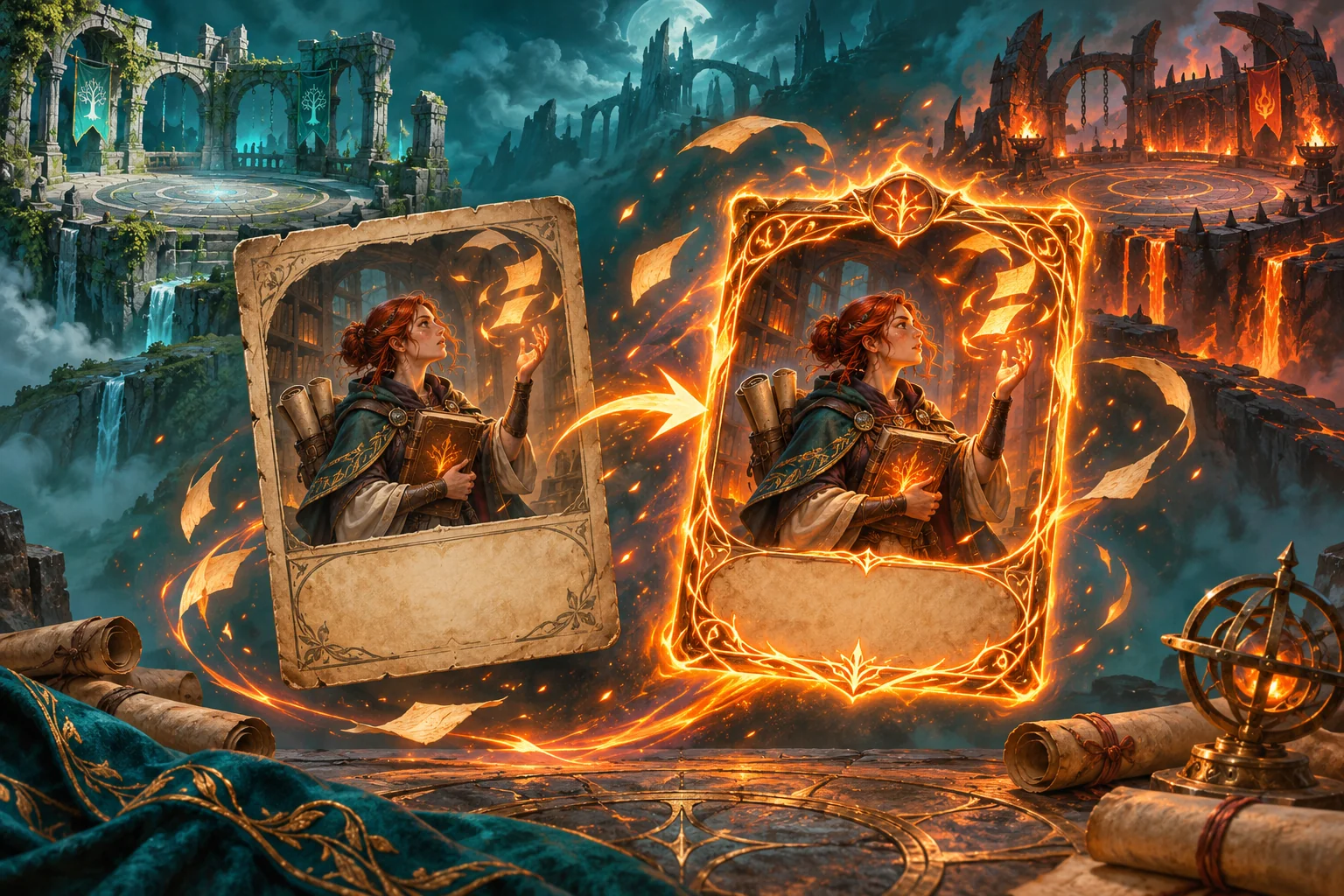
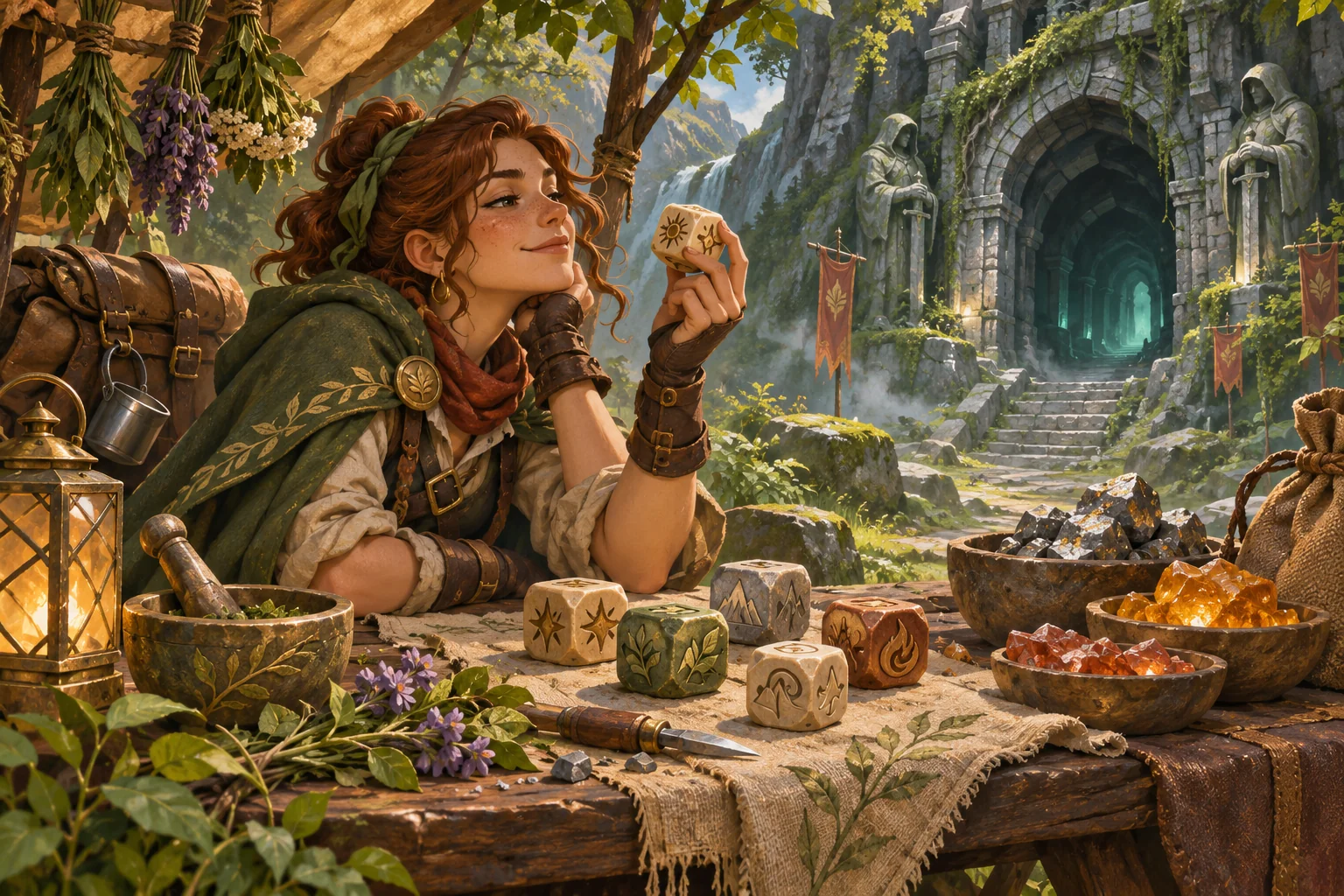
A collectible card game can turn a die roll into a lasting deck decision. Instead of adding a temporary bonus for one turn, let the roll permanently reshape one card. Keep the mapping small and save the modified card so the result survives a new match.
Choose one card and define its die mapping
Start with a base creature card that has two attack and one shield. Roll one six-sided die: results one to three add one attack; results four to six add one shield. Show the outcome before applying it and identify the card that will change.
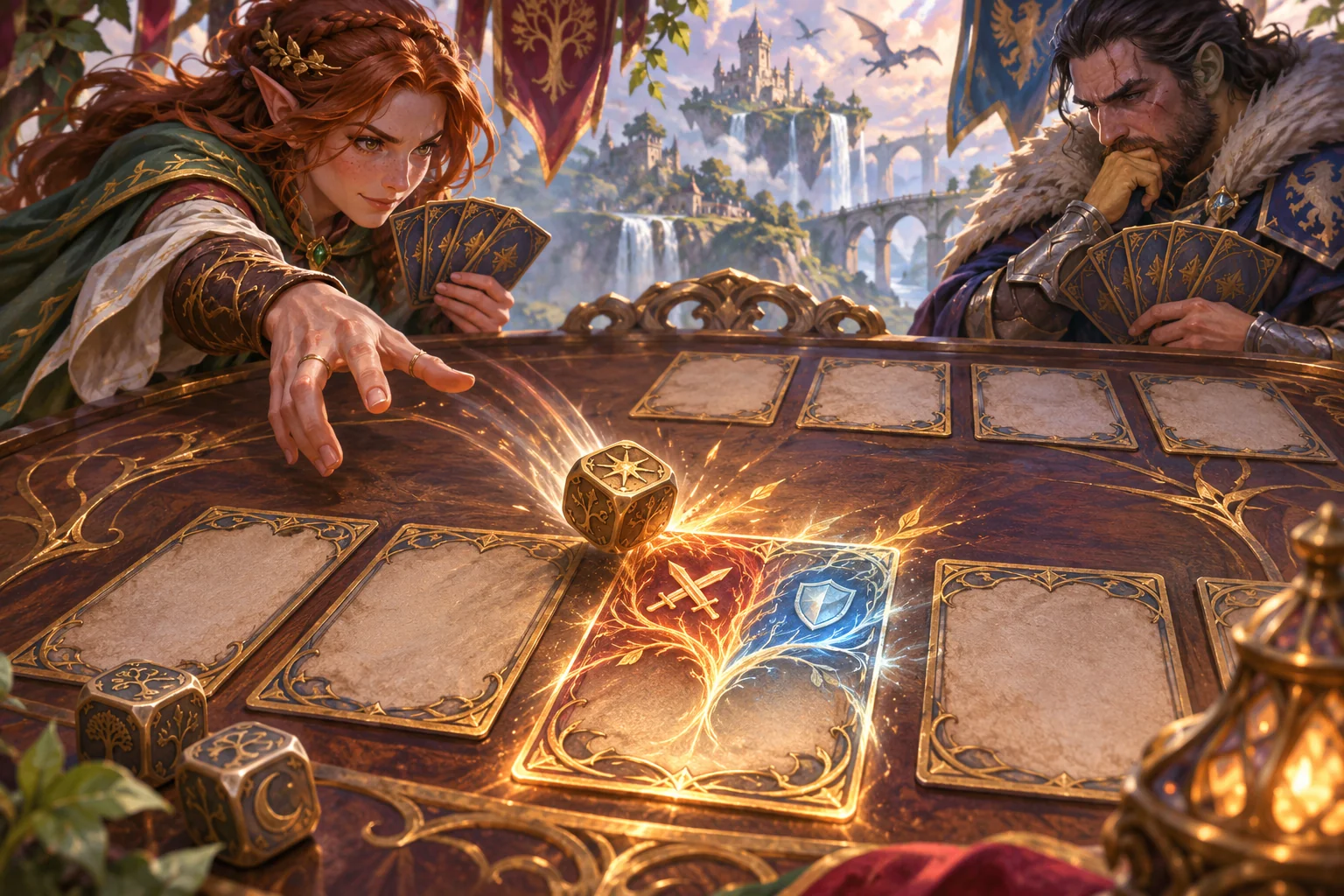
Use a single transformation per card for the first test. This makes it clear whether the die changes the card permanently rather than adding a temporary modifier that expires at the end of a turn.
Apply the result once and save the card
If the die shows two, the card becomes attack three and shield one. If it shows five, attack remains two and shield becomes two. Mark the card as transformed and save its new values to the deck. Drawing it in another match should load the saved stats without rolling again.
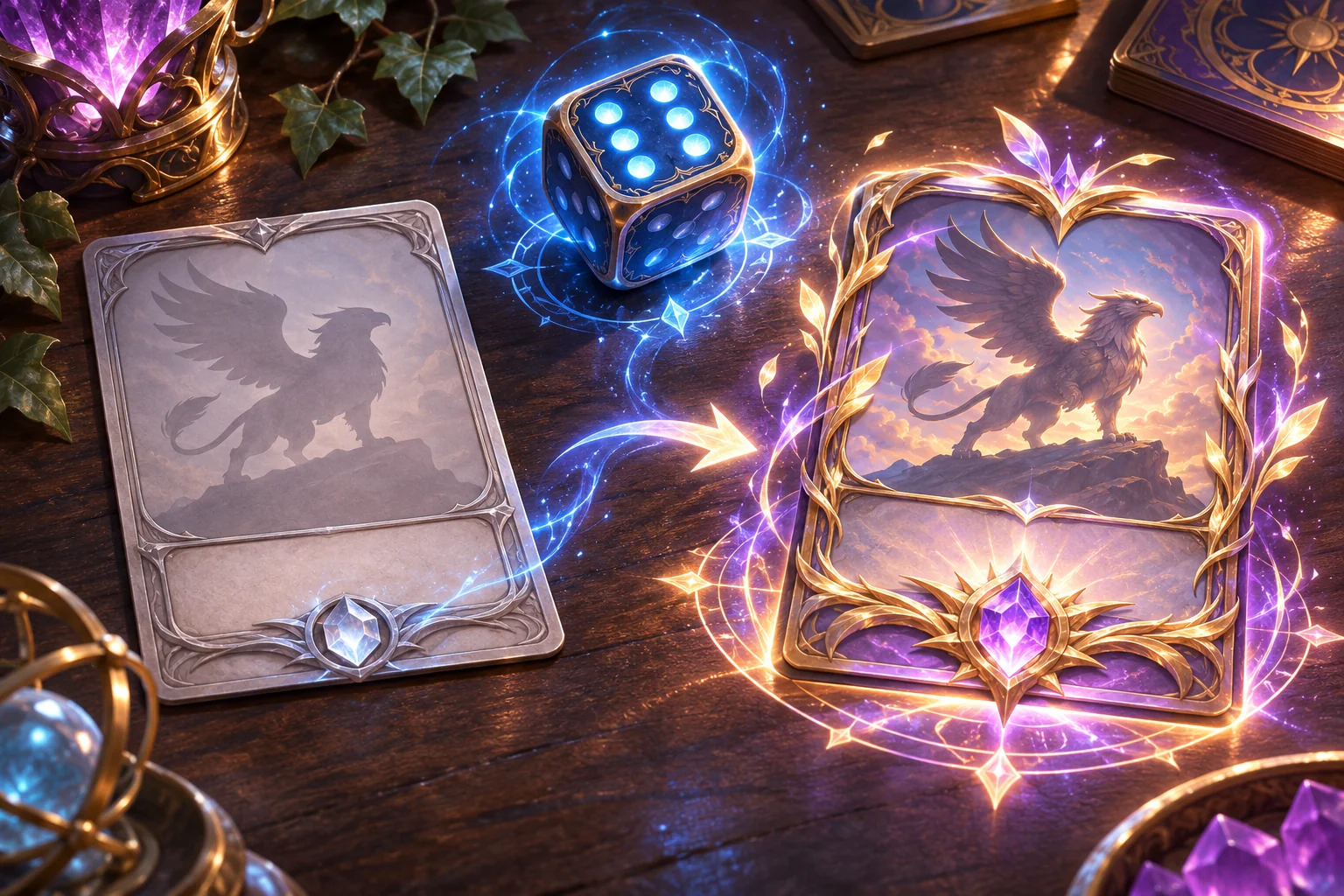
Keep the original card template separate from the player’s saved version. That lets a new copy start with base stats while the transformed copy retains its result. Make the permanence visible in the card record, not just in a short visual effect.
Replay both die ranges across a new match
The local rules replay checks one result from each range. A roll of two adds attack; a roll of five adds shield. The changed card is saved, then loaded in a new match. Its modified values remain, and no new die roll occurs during loading.
| Die result | Change | Saved stats | New match |
|---|---|---|---|
| 2 | +1 attack | 3 attack, 1 shield | Persists |
| 5 | +1 shield | 2 attack, 2 shield | Persists |
This deterministic check verifies die mapping, one-time transformation and saved values only. It does not test combat balance, deck economy, multiplayer synchronization, or a full card game. Add those systems after the mapping and persistence are reliable.
Prompt for a card-shaping dice prototype
Ask an AI game maker for a collectible card prototype with one creature card and a six-sided die. Results one to three permanently add one attack; four to six permanently add one shield. Save the changed card to the deck and load it in a new match without rolling again. Show the result and add a reset for both ranges.
Once persistence works, test other mappings or more cards one at a time. Keep the first experiment focused on whether the die changes a saved card exactly once.
Start a collectible card game prototype in SEELE
Frequently asked questions
Should the die bonus last for only one turn?
For this mechanic, save the changed stat on the card so the roll creates a deck-building choice that survives the match boundary. A temporary bonus is a different rule and should use a separate duration field. Make the card record show which kind of effect was applied.
How do I prevent the card from changing again when drawn?
Apply the roll when the player confirms the transformation, then persist the new values and a transformed marker. Loading or drawing the saved card should read those values directly. Do not run the die mapping again during deck load or at the start of a later match.
What should I test before balancing the deck?
Test at least one result from each die range, save both transformed versions, and load each into a new match. Confirm the intended stat changed once and the other stat stayed fixed. This checks the transformation and persistence, not whether either card is competitively balanced.