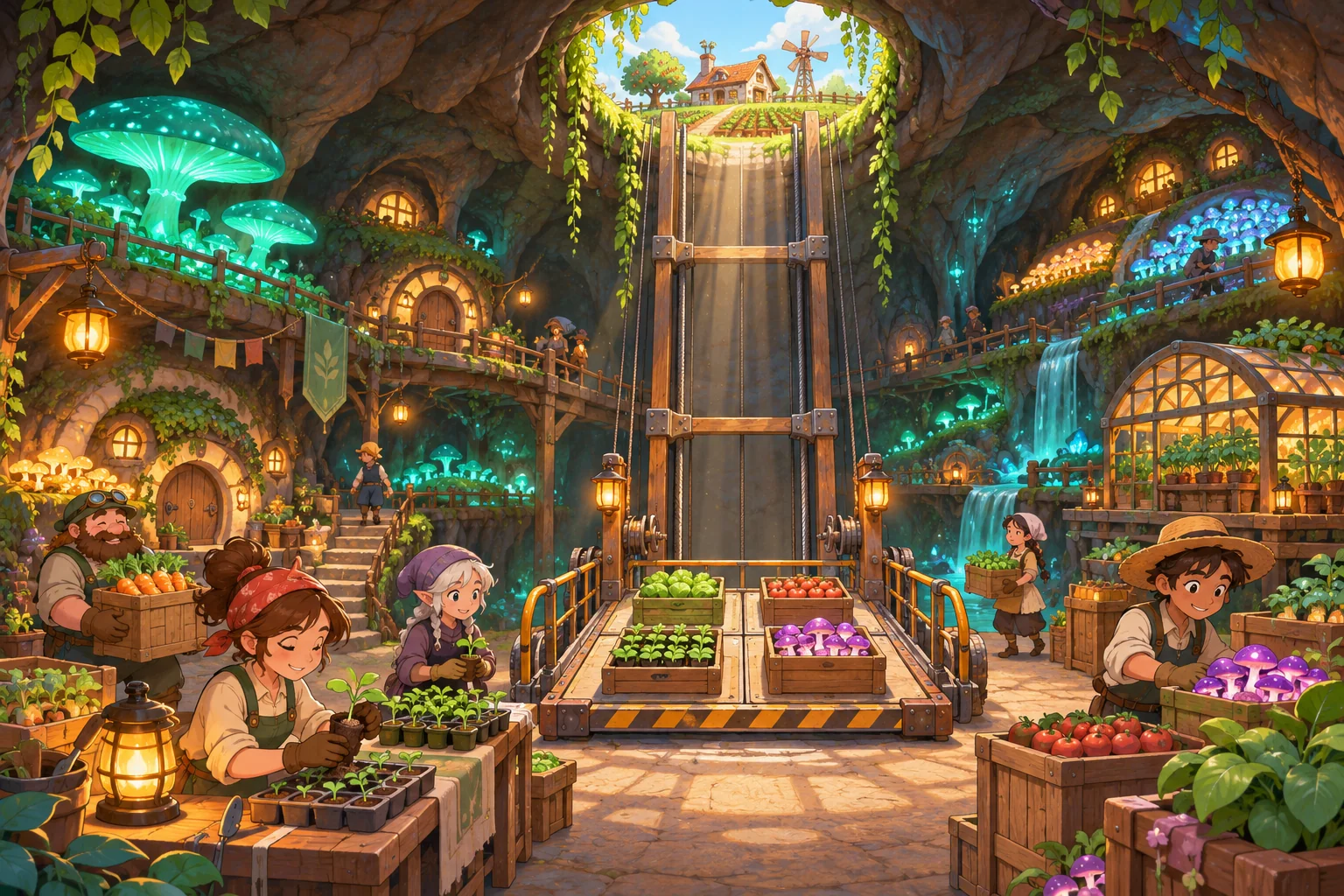
In fictional Hollowdeep, five residents live below ground and rely on a freight elevator for surface supplies. The elevator allows two trips each day. Each trip carries either three ration crates or one air-filter cartridge. Residents consume three ration crates per day, and a ventilation repair needs one filter. Keep starting stock at zero and plan across two days: use both day-one trips for food, then one food trip and one filter trip on day two. Track trips, inventory, daily consumption, shortages, and whether ventilation is repaired. The limited route turns supply planning into the colony’s central decision.
Make the underground community depend on a scarce route
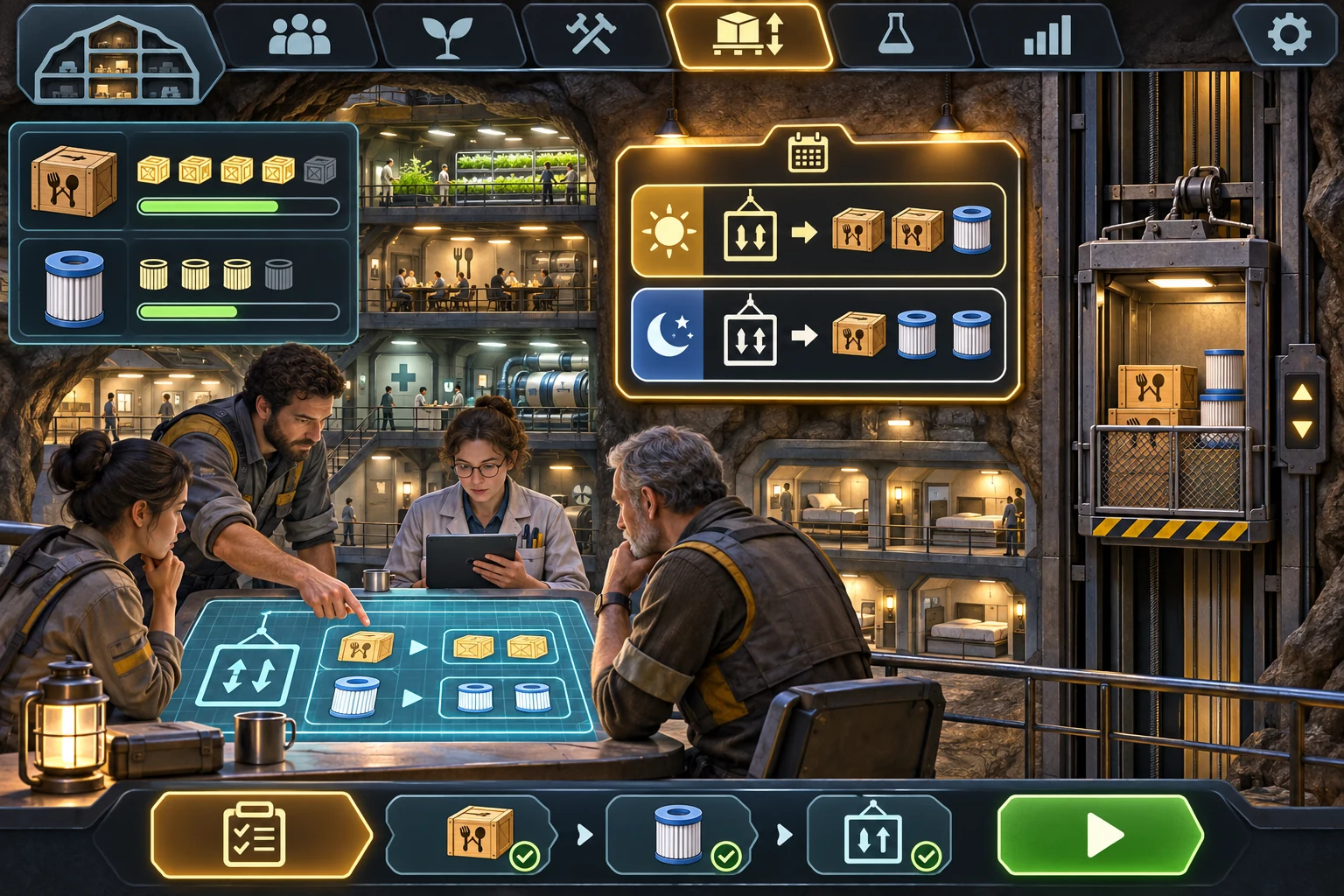
Build Hollowdeep around a small resident group, shared stores, and a freight elevator that reaches the surface. Limit the elevator to two trips each day. Each trip can carry three ration crates or one air-filter cartridge, so residents must choose between immediate food and maintenance supplies. Keep the cargo rule visible before a trip is dispatched.
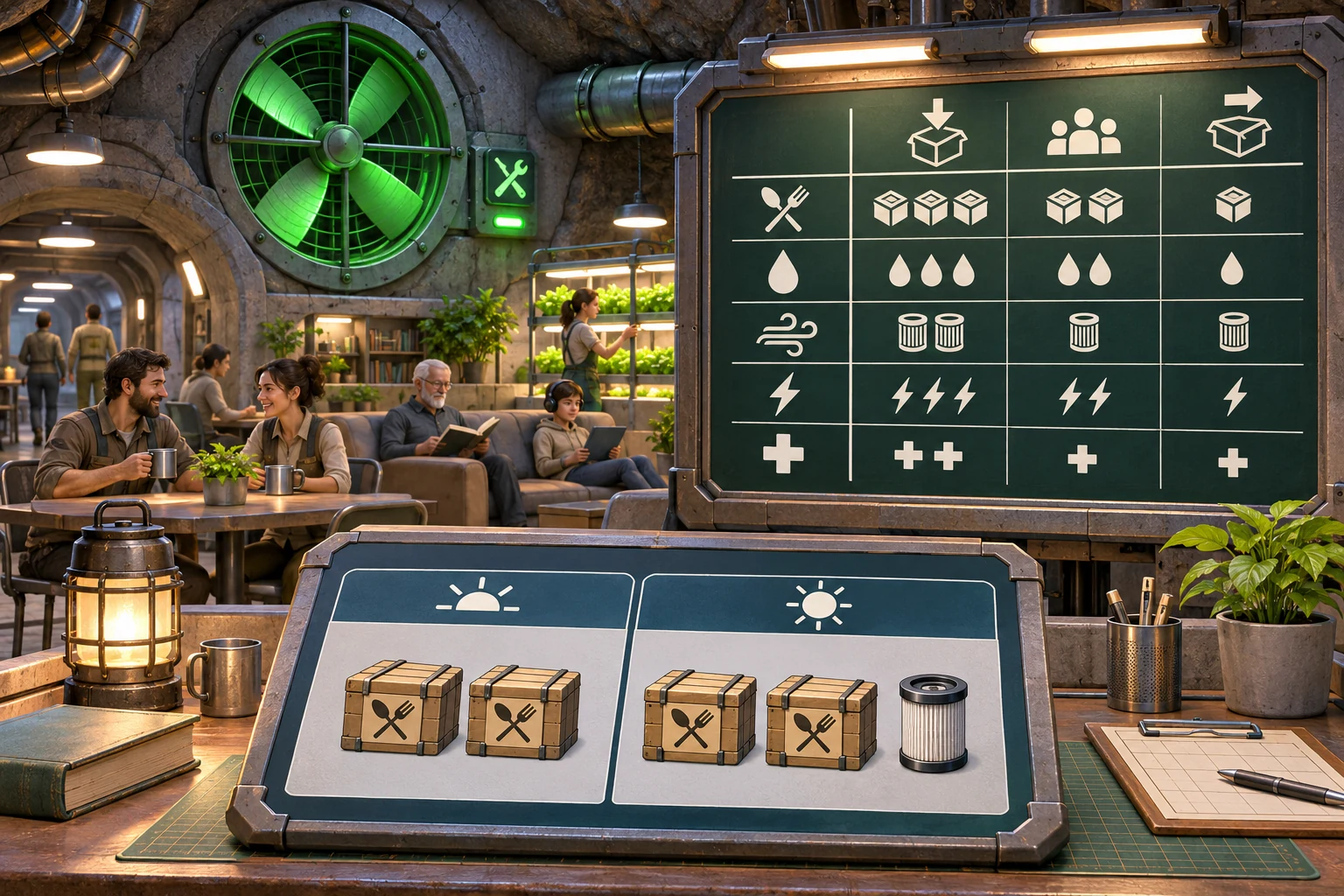
Give residents a daily demand of three ration crates and make one filter cartridge necessary to repair the ventilation fan. Track food and filters as separate inventory items. Godot Resources can hold authored definitions such as trip capacity, cargo options, and repair requirements; the current stock belongs to the colony’s changing state.

Schedule surface trips around food and repairs
Start with no ration crates or filters. On day one, spend both available trips on ration crates: six arrive, residents consume three, and three remain. This protects the community through the first day while leaving the ventilation repair unsupplied. Keep the two-trip cap visible so players cannot solve scarcity by quietly adding another elevator run.
On day two, send one trip for three more ration crates and one for a filter cartridge. Before consumption, the colony has six ration crates and one filter. Residents use three crates, leaving three, and the filter repairs ventilation. The plan meets demand and maintenance with exactly four trips across the two-day cycle.
Test the two-day inventory and colony outcome
At the end of day one, report two trips used, three ration crates remaining, no filter, and ventilation unrepaired. At the end of day two, report four trips total, three ration crates remaining, one filter consumed by the repair, no food shortage, and restored ventilation. Keep resident count, demand, starting stock, cargo choices, and trip limit unchanged across both days.
This fixture checks whether the schedule respects limited surface access while satisfying food demand and a repair need. Show the inventory before and after each day so players can trace each cargo choice. Hollowdeep, the residents, and all counts are fictional; the test verifies only this two-day supply plan, not a complete colony economy.
Give the AI a fixed two-day colony supply test
Create a colony-management game in fictional Hollowdeep for five underground residents. They consume three ration crates per day. A freight elevator allows exactly two surface trips per day, and each trip carries either three ration crates or one air-filter cartridge. Start with zero stock. The ventilation repair requires one filter. Test two days: day one uses both trips for rations; day two uses one ration trip and one filter trip. Report trip count, inventory before and after daily consumption, shortages, filter use, and ventilation state.
Verify day one: two trips deliver six ration crates, three are consumed, three remain, and ventilation is unrepaired. Verify day two: two more trips deliver three ration crates and one filter; after three rations are consumed, three remain and ventilation is repaired. Keep the two-trips-per-day cap and all demand fixed.
FAQ
How can limited surface access shape a colony-management game?
Make each surface trip consume a visible slot and give it a clear cargo capacity. When residents need food and maintenance supplies, players must plan what to bring and when. Report the trip limit and inventory so scarcity comes from a readable rule.
How should a colony balance food with repair supplies?
Set daily consumption and repair requirements, then plan trips over a fixed period. Track each cargo type separately and subtract consumption at the same point each day. This reveals whether the schedule protects residents while still carrying the item needed for maintenance.
What should a two-day supply test measure?
Record trips used each day, cargo delivered, food consumed, remaining inventory, shortages, and repair status. Keep starting stock and resident demand unchanged. A two-day ledger shows whether the route plan works across a cycle instead of only at one snapshot.