Introduction
A custom party game gives a café group a shared activity that can start quickly, fit a short session and work with different player counts. The rules should be easy to teach, and the host should be able to change the theme without rewriting how a round works. Start with a fictional board-game café scenario and an editable game-night template.
This guide uses Lantern Table Café, an invented venue and a cooperative game called Signal & Story. The players, café, cards and outcomes are fictional. No real café, playtest or commercial venue was used, and the article makes no business or customer-experience claims.
Define the table goal and round length
State how many people can play, what the group is trying to do and how a round ends. A compact co-op game might give players a few clue cards and a shared route to complete before the round marker reaches its limit. Tell players whether they win together and what happens on a tie or incomplete route.
Prompt 1 — game-night brief
Design an original party game called Signal & Story for the fictional Lantern Table Café. Scope a short cooperative round for a small table: players connect clue cards to complete a shared route before a round marker reaches its limit. Define setup, player turns, communication, completion, incomplete result and reset. Use invented content; list assumptions and untested rules.
The brief should identify which components the host needs and what the group can do on a turn. Keep the goal visible so new players do not need to memorize a long rulebook.
Make setup and components easy to teach
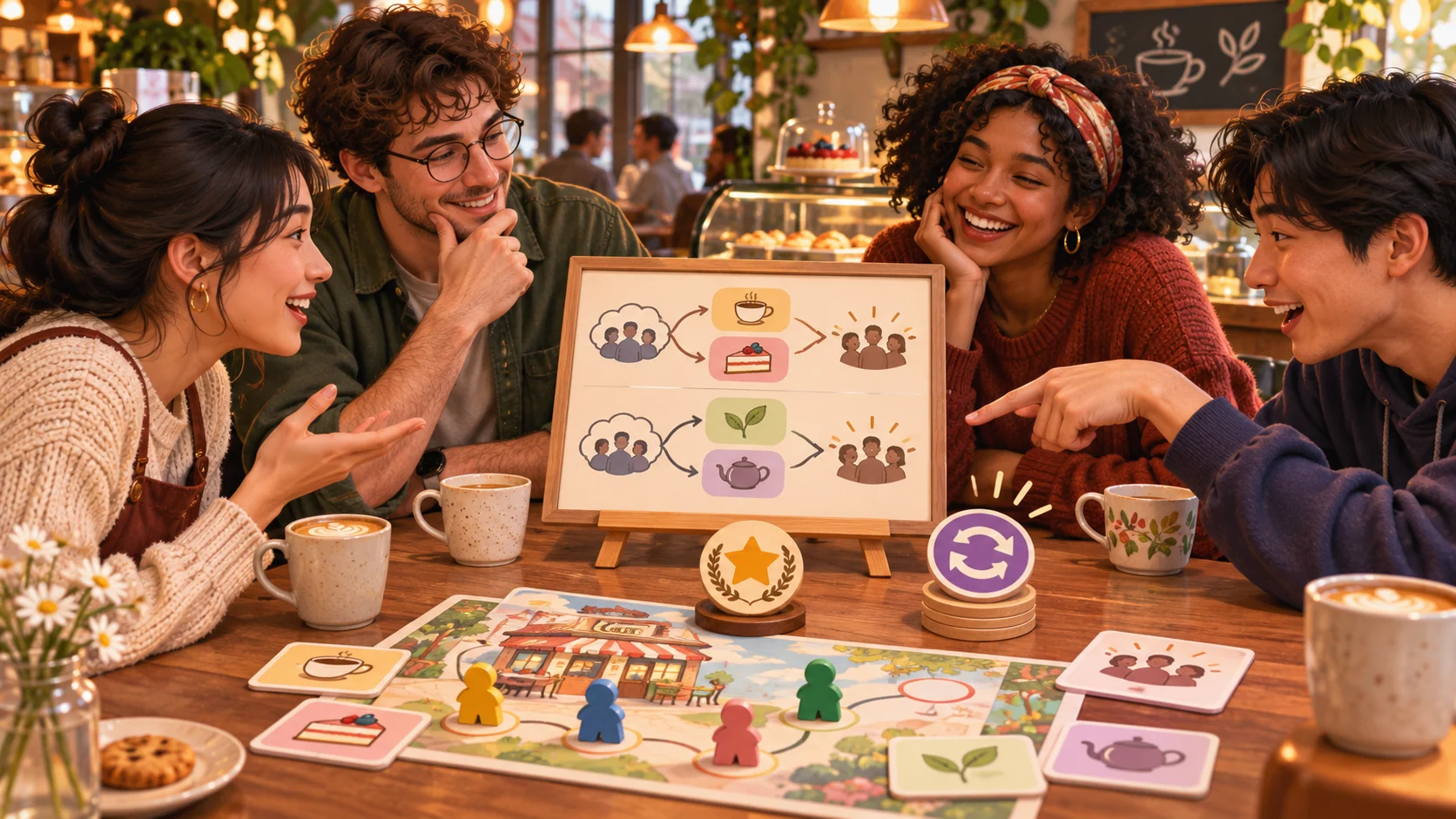
A table card can show the objective, turn order and available actions. Use a small number of tokens or cards and label what each one means. A cafe host can explain the round from one page without introducing hidden rules.
Prompt 2 — setup card and components
Create a one-page Signal & Story setup card with a fictional cooperative goal, three clue cards, one shared route board, a round marker and a reset instruction. Explain what each component does and what a player may do on a turn. Keep the first session short and label all sample card text as fictional.
| Component | Game use | Teach in one sentence |
|---|---|---|
| Clue cards | Offer information for the route | Read the visible clue before placing it |
| Route board | Shows shared progress | Connect the next route marker |
| Round marker | Limits the session | Advance it after the group turn |
| Host card | Summarizes rules | Use it to resolve an unclear step |
The component list is a fictional design aid, not a recommendation for running a real venue.
Make cooperative turns and outcomes clear
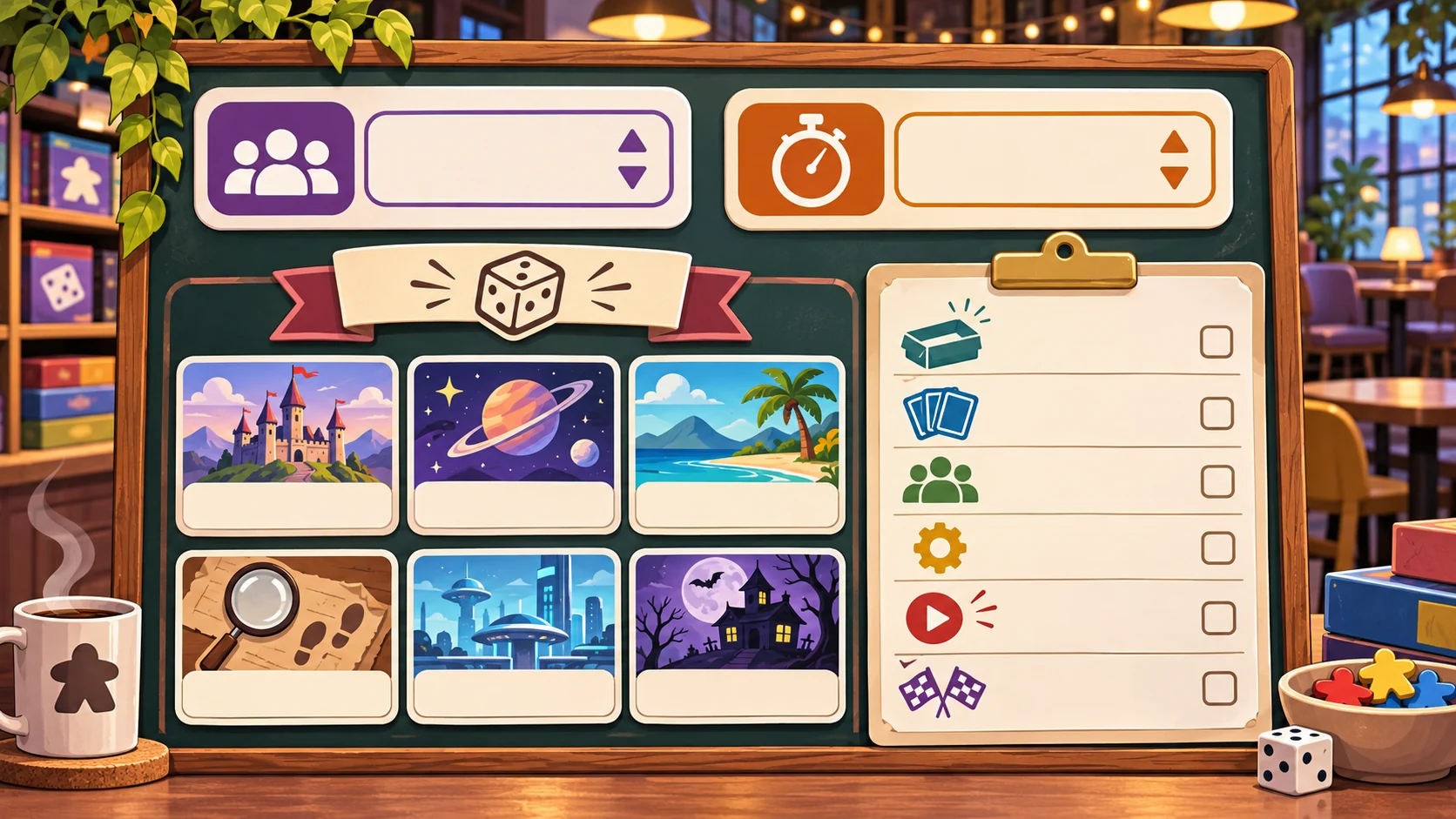
Players need to know whether they can discuss clues openly, whether one player places a card or the group agrees and what happens if no clue fits. State how the route advances and what counts as a completed round. Avoid scoring individual performance if the point is cooperation.
Prompt 3 — turn and result rules
Define Signal & Story turns for the fictional café game. Each turn should allow the group to discuss one clue, place or pass, and advance the round marker. Specify how a completed route, incomplete route and tie are shown. Keep the rules consistent and avoid ranking individual players.
A short reference card can answer common questions during a round. If a rule needs a long explanation, simplify it before adding extra card types.
Let the café theme change without changing the rules

A themed edition can change clue text, art and the route story while keeping setup and turn order stable. Keep each clue self-contained and avoid private venue data or assumptions about the people at the table. A fictional theme such as a lighthouse route or a night market can show how the template adapts.
Prompt 4 — theme pack
Create two fictional Signal & Story theme packs for Lantern Table Café: a moon-garden route and a night-market route. Change only card names, short clues and illustration notes; keep the same cooperative objective and turn rules. Do not refer to real customers, local events or business performance.
A consistent template makes the game easier to customize. Review each new clue for clarity and check that it still supports the same route logic.
Provide an editable game-night template
A host or designer needs to change the theme, player count, round limit, components, clue cards and completion rule. Keep the fields simple so a different fictional edition can be prepared without changing how the game works.
{
  "gameName": "Signal & Story — fictional demo",
  "venue": "Lantern Table Café — invented setting",
  "players": {"min": 2, "max": 5},
  "roundLimit": 6,
  "theme": "moon-garden route",
  "goal": "connect three clue cards to complete the shared route",
  "turnActions": ["discuss one clue", "place or pass", "advance marker"],
  "completionRule": "route complete before the marker limit",
  "dataLabel": "fictional game-night example; no café playtest"
}
Replace the theme, cards, player range and round limit after reviewing the game with its intended players. Keep the example labeled fictional until real sessions are actually tested.
Request a small playable party-game slice
A first build could include setup, three clue cards, one route board, a shared round marker, place/pass actions, complete/incomplete result and reset. Specify what must work: select a clue, update shared progress, advance the marker and resolve the round. A polished rules card alone is not a playable game.
Prompt 5 — first playable table round
Build a small fictional Signal & Story game with a setup screen, three clue cards, shared route board, round marker, place/pass actions, cooperative progress, completed/incomplete outcomes and reset. Keep theme content editable. At handoff, list working interactions, static screens and untested rules. Do not claim venue playtesting.
No playable game or café session was tested for this guide.
Prompt 6 — simulated café customization
Adapt the template to a fictional “Blue Door Boardroom” game-night theme with an original cloud-library route and three new clue cards. Keep player actions, round limit logic and completion rule unchanged. Label the venue and game fictional. This is a local simulated customization, not a real café project.
The scenario demonstrates how a venue theme can change while the shared activity stays familiar. It does not describe a real cafe or customer session.
Prompt 7 — observed-output review
Review the running local Signal & Story prototype for setup, clue selection, place/pass, shared progress, round marker, incomplete result, completion, editable theme and reset. Mark each present, missing or unclear from observed interactions. Record brief evidence and one smallest next change. Do not claim player enjoyment or venue suitability unless tested.
Fictional game-night snapshot
| Field | Lantern Table Café example |
|---|---|
| Players | Small cooperative table |
| Goal | Connect three clues to finish a shared route |
| Round | Limited by a visible marker |
| Customization | Theme, clue cards and illustration notes |
| Evidence | Fictional template only; no café playtest |
The snapshot describes an adaptable game format, not a validated venue activity.
Conclusion
A custom party game for a board-game café should have a shared goal, short rules, visible progress and theme fields that can be edited without changing the round logic. Lantern Table Café and Blue Door Boardroom are fictional; no real café, customer, playtest or business result is claimed. Use an editable template to shape the game, then test the actual table interaction before describing it as playable.
You can take a scoped concept into the Free AI game maker, then compare the result with the review checklist.
FAQ
What should a custom party game for board-game cafes include?
Define player count, shared goal, setup, turn order, round limit, result states and reset.
How can a café customize a party game?
Change theme, card text and artwork while keeping the core rules consistent and easy to teach.
Should a café game rank individual players?
It depends on the design goal. A cooperative game can track shared progress without ranking participants.
What belongs in an editable party-game template?
Include venue theme, player range, components, turn actions, round limit and completion rule.
Does a rules-card mockup prove a party game is playable?
No. Verify setup, player actions, progress, outcomes and reset in an interactive build or actual playtest.