Introduction
An audience party game gives a streamer and viewers a shared activity with simple rules, short rounds and visible outcomes. The design has to explain how viewers join, choose an action and see the group result. Begin with one fictional show segment and an editable prompt template before expanding into more game modes.
This guide uses Milo’s Night Arcade, a fictional channel scenario with invented viewers and game choices. No real stream, audience or platform integration was used, and no playable game was built or tested. The sample configuration is an editable planning template, not evidence of a live audience test.
Pick a short audience loop
Define the host’s role, what a viewer can do and when a round ends. A simple loop can present a prompt, accept one choice per participant, close responses, reveal an aggregate result and begin another round. Decide how late arrivals, ties and skipped rounds appear. Keep the host in control of pacing and avoid implying that viewer names or reactions are real.
Prompt 1 — show-segment brief
Design a fictional audience party game for Milo’s Night Arcade. Scope one five-minute show segment with a host prompt, three viewer choices, a response window, an aggregate reveal and a next-round control. Define join, vote, close, tie, skip and reset states. Use invented placeholder counts. No real streamer, viewer or platform is involved; list assumptions and untested interactions.
A brief should distinguish a mock audience count from actual participation. If the preview uses sample votes, label them visibly as fictional data.
Make joining and round state clear
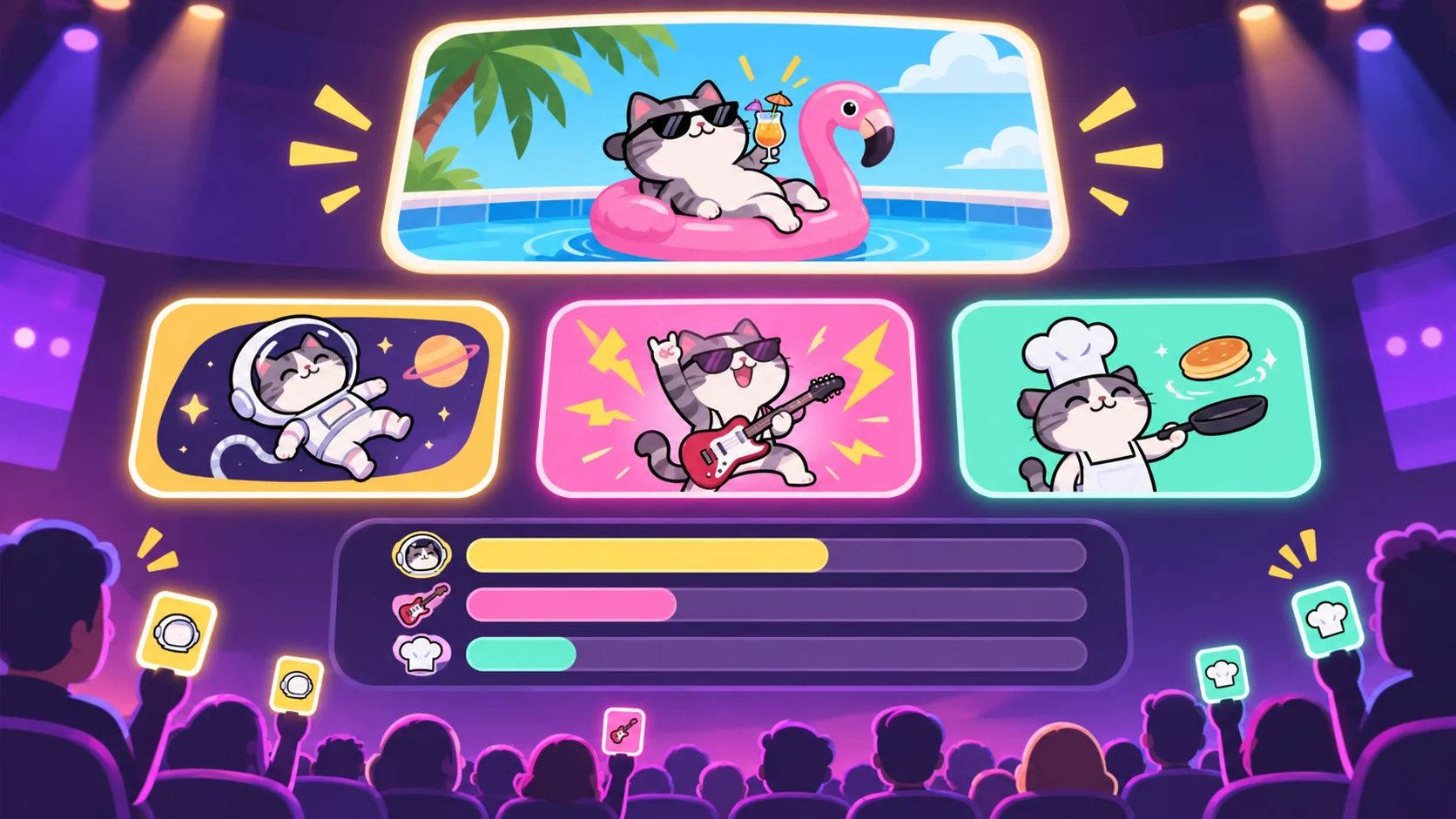
A player needs to know whether the room is open, a round is accepting responses or results are visible. Keep the join action simple and show the current round state before any choice. For a local preview, explain that sample viewer cards are illustrative and are not connected to chat.
Prompt 2 — lobby and round states
Create a local interface concept for Milo’s Night Arcade with a waiting room, open round, closed round and results state. Use fictional avatar names and sample viewer counts clearly marked as mock data. Show a host-controlled start and close action. Do not imply a real stream connection or collect personal information.
| State | Host action | Viewer-facing feedback |
|---|---|---|
| Waiting | Open a round | Show that choices are not active yet |
| Accepting | Keep responses open | Display the prompt and remaining time |
| Locked | Close the round | Explain that choices are no longer changing |
| Reveal | Show aggregate result | Label sample counts as fictional in preview |
This state table is a design aid; it does not establish a working chat integration.
Write prompts with balanced choices
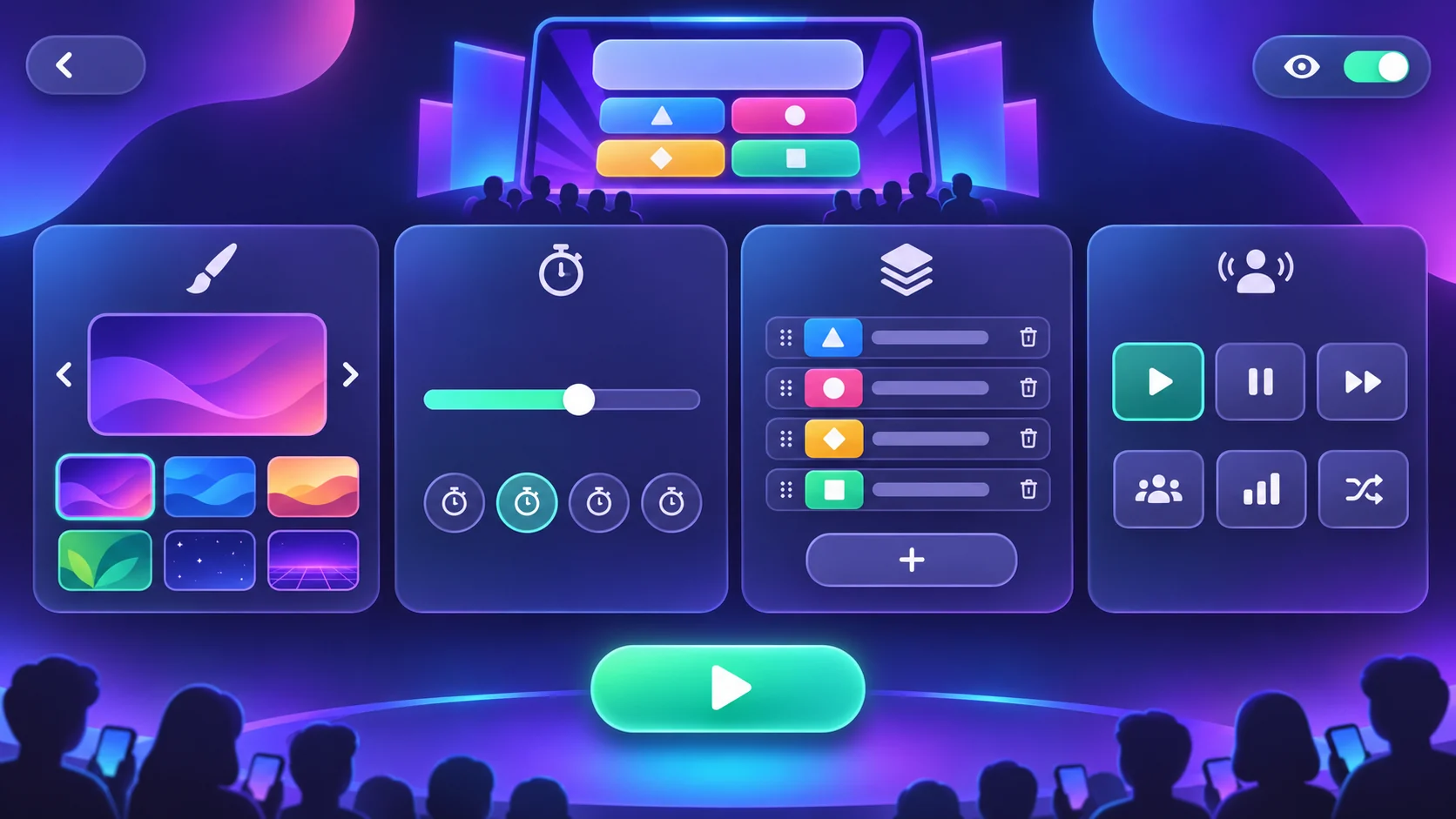
A party prompt should be quick to read and offer choices that are distinct without requiring specialist knowledge. Use a short theme, three options and a clear result rule. Avoid using a single choice that is framed as the correct answer unless that is the intended game mechanic.
Prompt 3 — round-card template
Draft three original Milo’s Night Arcade party-game prompts. Each should include a one-sentence setup, three short choices, a response window, an aggregate rule and a host transition. Keep choices playful and easy to understand. Use fictional content, avoid requiring personal details and label all sample responses as mock data.
The round card should be editable: the host can change the theme, prompt, options, timer and reveal style without rewriting the whole game specification.
Make host controls predictable
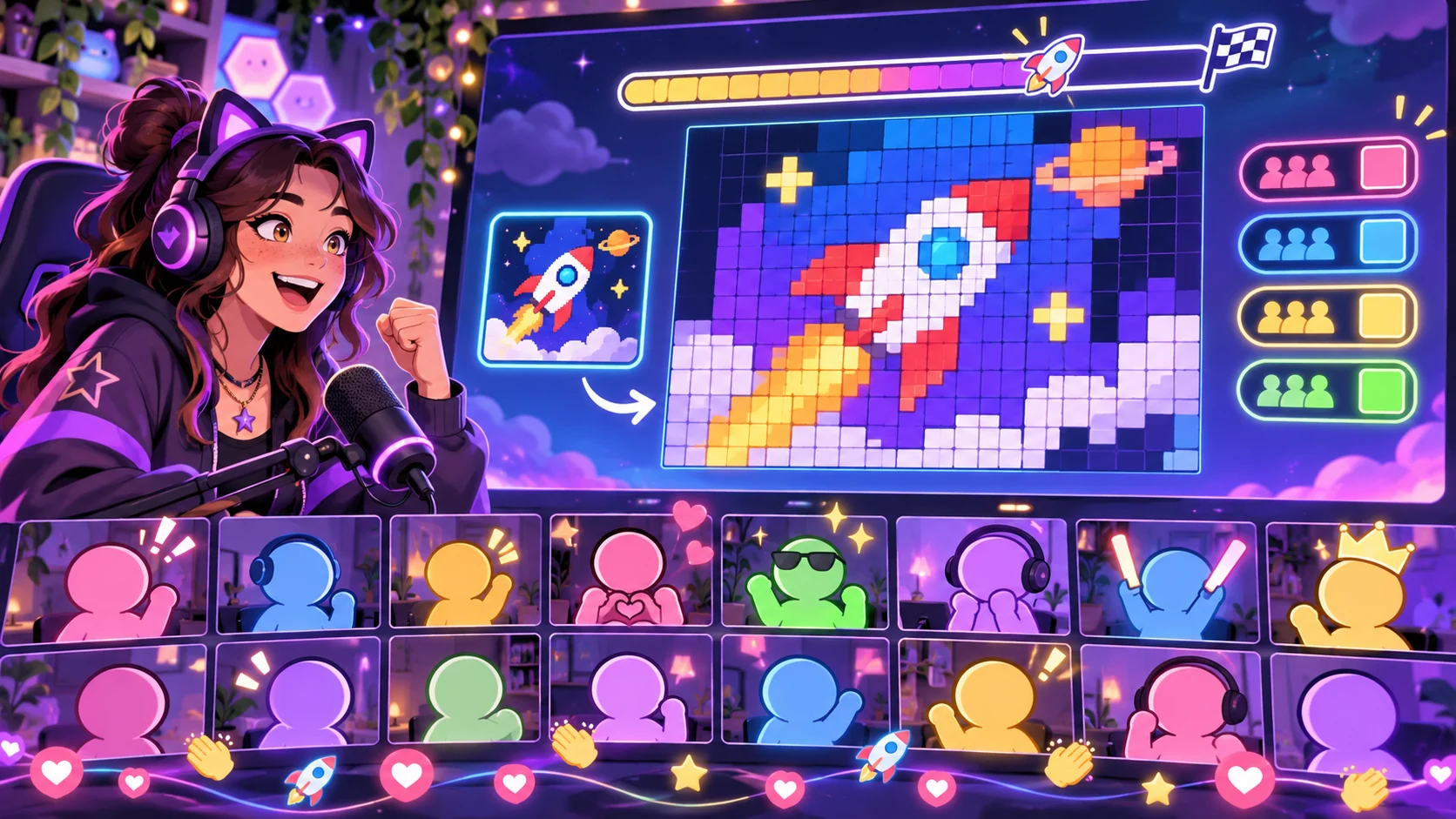
The host may need to open, pause, close or skip a round. Show the active state and what the next control will do before it is selected. Define whether a paused timer resumes or resets, and what happens to a tie. In a local mockup these are proposed rules, not tested stream controls.
Prompt 4 — host controls
Specify predictable host controls for the fictional party game: open round, pause, resume, close, reveal, skip and reset. For each, show the current state, next state and whether sample responses are preserved. Include a tie rule and an undo boundary. Treat the interface as a local design prototype with no real chat integration.
Clear controls help a host maintain pacing. The result view should offer a next step without claiming to measure real audience engagement.
Provide an editable scenario template
A useful starter package lets the creator replace the channel name, show theme, prompt, choices, timer and reveal text. Keep the structure plain so a creator can make a fictional setup without changing the round logic. The following sample is invented and intentionally small.
{
  "scenarioName": "Milo's Night Arcade — fictional demo",
  "showTheme": "Choose a tiny robot's next task",
  "roundSeconds": 30,
  "prompt": "Which task should the robot try first?",
  "choices": ["Sort glowing buttons", "Deliver a paper crown", "Water a moon flower"],
  "resultRule": "Reveal the option with the most sample votes; show a tie if counts match",
  "sampleVotes": {"Sort glowing buttons": 12, "Deliver a paper crown": 9, "Water a moon flower": 7},
  "dataLabel": "Fictional local preview data — not live audience input"
}
Edit the scenario name, theme, prompt, choices, timer and reveal rule for another fictional show. Keep the data label when using sample counts. This example was not run with a real creator or audience.
Request a small playable party-game slice
A first build could include a lobby, one prompt card, three choices, a host-controlled timer, a closed state, aggregate reveal, tie handling and reset. Specify which interactions must work: open, vote, close, reveal and begin another round. Separate a static preview from a connected product.
Prompt 5 — first playable slice
Build a small fictional audience party game for Milo’s Night Arcade with a local lobby, one editable prompt card, three choices, a host-controlled response timer, close and reveal states, sample aggregate result, tie handling and reset. Clearly label seeded sample votes as mock data. At handoff, list working interactions, static screens and untested features. Do not claim chat integration or audience testing.
Only call the result playable after interacting with the running build. No such build or live test is claimed in this article.
Prompt 6 — custom-show scenario
Adapt the fictional party-game template to a five-minute “Night Arcade” segment. Replace the theme, prompt and three choices while preserving the same round states. Show the editable fields and a sample reveal using fictional data. Do not use a real channel, audience or platform integration.
This simulated customization shows which fields a creator can change. It is a local example, not a real-stream demonstration.
Prompt 7 — observed-output review
Review the running local prototype for lobby state, prompt edit, host start/pause/close, choice selection, tie handling, aggregate reveal, mock-data labels and reset. Mark each present, missing or unclear from observed interactions. Record concise evidence and one smallest next change. Do not claim streamer usability, live integration or audience engagement unless actually tested.
Fictional show-segment snapshot
| Field | Milo’s Night Arcade example |
|---|---|
| Segment | Choose a tiny robot’s next task |
| Choices | Three playful fictional options |
| Round | One short host-controlled response window |
| Result | Sample vote reveal with explicit mock-data label |
| Customization | Theme, prompt, choices, timer and reveal text |
| Evidence | Local planning example only; no real stream or audience test |
The snapshot demonstrates editable fields while keeping the audience fictional.
Conclusion
An audience party game should make joining, choosing, round closure and results easy to follow for both host and viewer. Milo’s Night Arcade and its sample votes are fictional; no live stream, integration, playable build or audience test is claimed. Use the editable template to shape a bounded round, then verify actual interactions before describing the game as playable.
You can take a scoped concept into the Free AI game maker, then compare the result with the review checklist.
FAQ
What should an audience party game for streamers include?
Define the host prompt, viewer choices, response window, round states, result rule, host controls and reset.
How can viewers join a streamer party game?
Describe the join state clearly and specify whether the design is a local mockup or connected product.
Can sample votes be presented as live audience results?
No. Label seeded counts as fictional preview data unless they come from a verified live interaction.
What should an editable streamer-game template contain?
Include fields for the show theme, prompt, choices, timer, result rule and transitions.
Does a local party-game preview prove chat integration works?
No. Verify the connection and round interactions in the intended live environment before claiming integration.