Introduction
A customer mini-game gives a local business a short, repeatable activity connected to its products or theme. The game should be fun on its own, easy to understand at the counter and clear about what is a game reward or a placeholder offer. Start with a fictional shop scenario, an editable template and one small challenge.
This guide uses Copper Finch Bakery, an invented neighborhood shop, and a pastry-decorating mini-game. The business, customers, rewards and outcomes are fictional. No real business, promotion, customer response or playable game was tested, and the article makes no sales or conversion claims.
Pick a repeatable customer challenge
Choose one action that connects to the business without interrupting the customer’s visit. A short challenge might ask players to decorate a fictional pastry by choosing three toppings. Define how a round starts, what counts as completion and whether replay changes the challenge.
Prompt 1 — business-game brief
Design a fictional Copper Finch Bakery customer mini-game where a player decorates an invented pastry by choosing three toppings. Scope one short round with simple instructions, a visible result and replay. Define the shop theme, player action, success rule, session length and placeholder reward state. Do not use a real business or customer data; list assumptions and untested interactions.
The brief should connect the game action to a shop theme while letting customers skip the game. Avoid making the interaction look like a required purchase step.
Make the game easy to start and finish
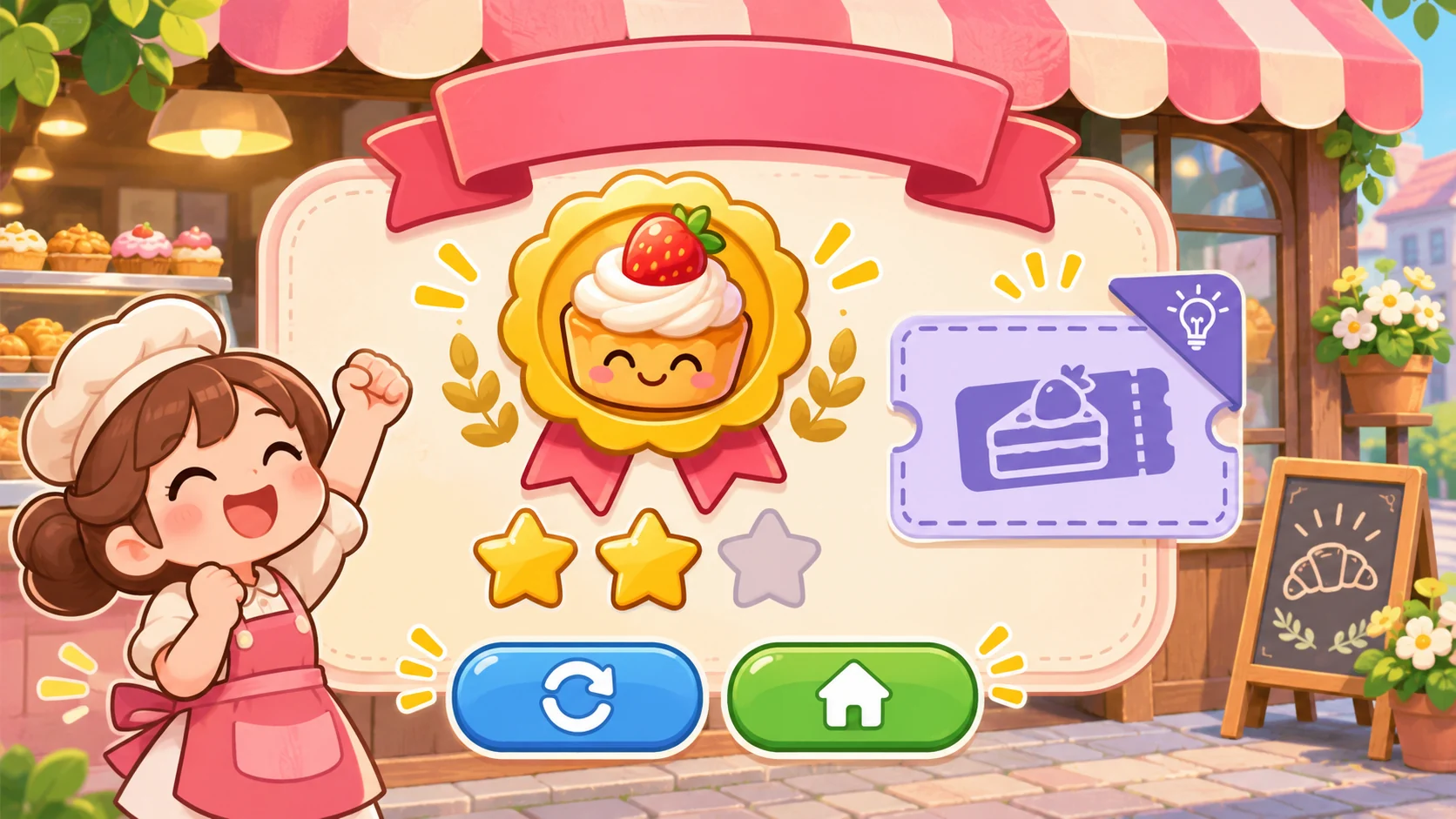
A small start screen can show the challenge, options and time limit. The result screen should explain how the score or badge was determined. Keep controls large and simple, and provide a clear stop or replay choice. A counter-side mockup is not evidence that real customers can use it.
Prompt 2 — start and result screens
Create a fictional Copper Finch Bakery mini-game start screen with a pastry-decorating prompt, three topping choices, a short round timer and a visible skip option. Add a result screen with a playful badge and replay choice. Mark any reward or coupon as a placeholder. Do not imply a real promotion or customer test.
| Screen | Player need | Business context |
|---|---|---|
| Start | Understand the action and choose to join | Participation is optional |
| Round | Select toppings and see the current state | Use original fictional pastry art |
| Result | Understand the outcome | Any offer remains a labeled placeholder |
| Replay | Start another round or finish | No purchase is required in the mockup |
This screen plan does not make claims about customer engagement or real promotions.
Keep reward and offer rules transparent
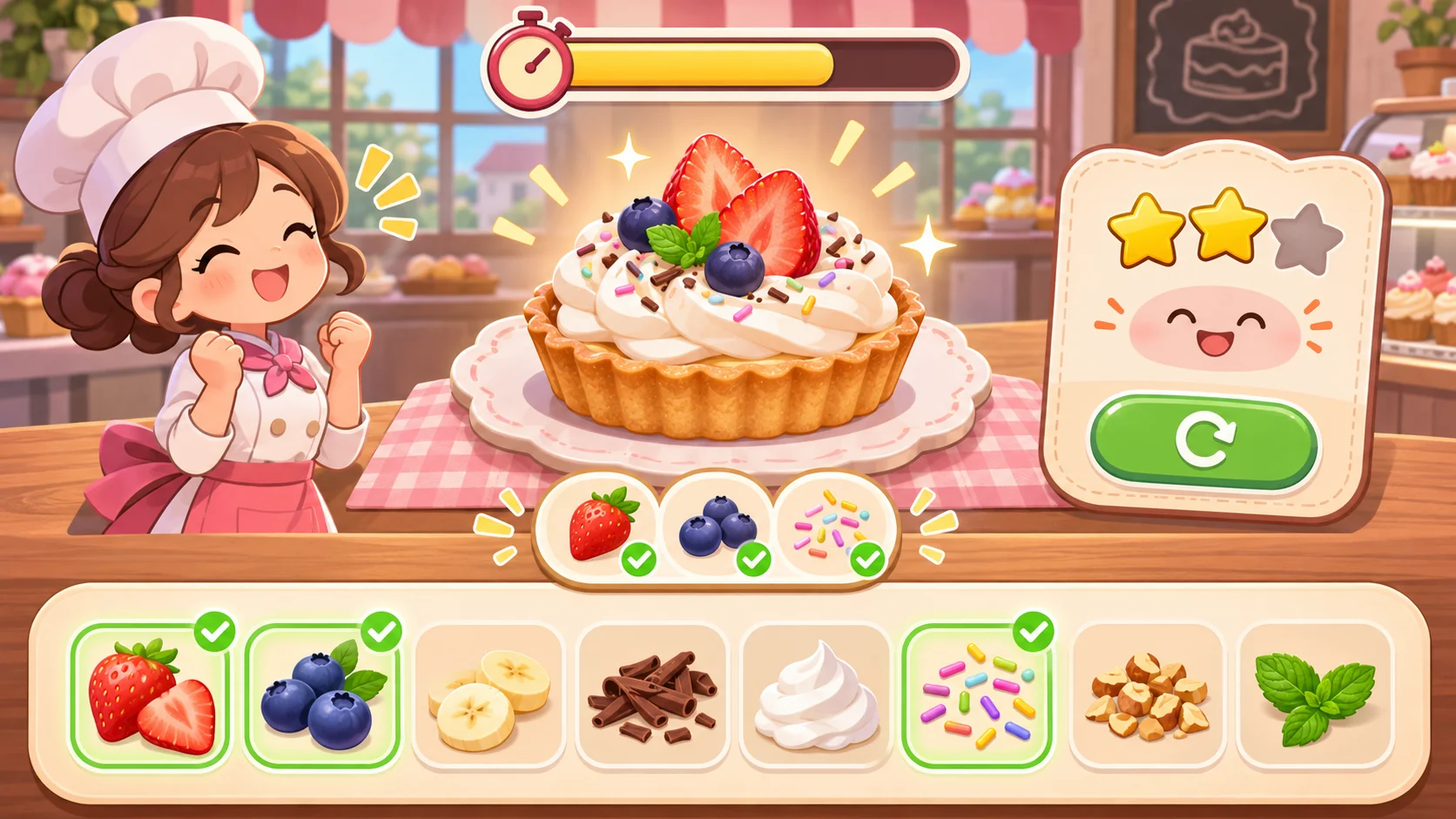
A reward can be an in-game badge or a placeholder offer, but the rules should be visible before a player starts. State whether the result is random or skill-based. Do not invent a real discount, eligibility condition or business policy. In this local concept, the safest example is a badge with no monetary value.
Prompt 3 — clear reward state
Define Copper Finch Bakery reward states for the fictional mini-game. Use a non-monetary in-game badge as the default and an optional placeholder offer only for visual layout. Explain when the badge appears and what the mockup does not include. Do not create real discount terms or claim a promotion exists.
A clear result prevents a mockup from being mistaken for an active offer. Keep the reward state separate from any actual purchase or customer account flow.
Create seasonal versions without changing the loop
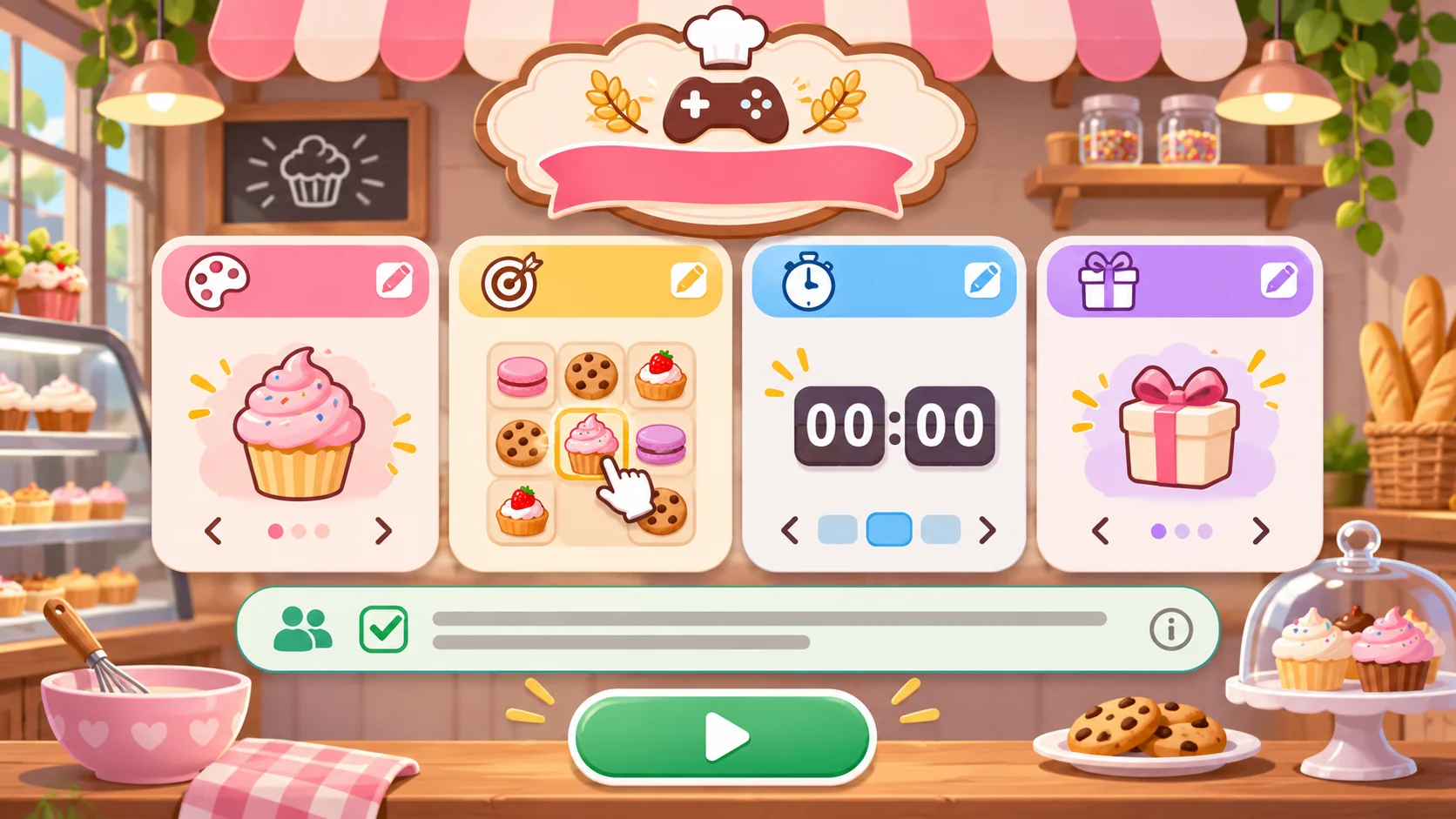
A repeatable challenge can swap the pastry, toppings and background while keeping the same rules. This makes updates easier to review. Each version should preserve the start, three choices, result and replay states so a returning player can recognize the interaction.
Prompt 4 — mini-game theme pack
Create two fictional Copper Finch Bakery themes: a berry tart and a moon-shaped cookie. Change only the pastry art, topping names and short flavor text; keep the same three-choice round and badge result. Use original content and avoid product or nutrition claims.
A theme pack can be reviewed as content, separately from the game logic. Make sure choices remain readable and that decoration does not cover the controls.
Provide an editable local-business template
A shop owner or designer needs to change the business theme, challenge, options, timer, result text and reward label. Keep any promotion field visibly marked as a placeholder until a real business supplies approved information.
{
  "businessName": "Copper Finch Bakery — fictional demo",
  "challengeName": "Decorate the pastry",
  "roundSeconds": 30,
  "prompt": "Choose three toppings for the invented honey-star tart",
  "options": ["berry dots", "citrus curls", "cocoa stars"],
  "completionRule": "Show a badge after three selections",
  "reward": {"type": "in_game_badge", "label": "Golden whisk"},
  "offerPlaceholder": "No live offer; replace only with approved terms",
  "dataLabel": "fictional local preview; no customer test"
}
Replace the business theme, prompt, choices, result and reward state for another fictional shop. Do not leave placeholder promotion text in a live experience.
Request a small playable customer mini-game
A first build could include a start screen, three topping choices, a timer, result badge, skip and replay. Specify the interactions that must work: start, select, update a visible counter, finish, display result and reset. A themed screen alone is not a playable game.
Prompt 5 — first playable shop game
Build a small fictional Copper Finch Bakery mini-game with optional start, three selectable toppings, visible selection count, short timer, badge result, skip and replay. Keep business copy and themes editable. At handoff, list working interactions, static screens and untested behavior. Do not claim real customer use, sales impact or promotion readiness.
No playable game or customer session was tested for this article.
Prompt 6 — simulated business customization
Adapt the template to a fictional “Juniper Jar” neighborhood tea shop. Change only business theme, challenge, choices and badge text while preserving the same round controls. Use fictional product names and no real offer. This is a local simulated customization, not a real business project.
This example shows which fields a local business can customize without claiming that an actual shop used the game.
Prompt 7 — observed-output review
Review the running local mini-game for optional start, instructions, topping selection, counter, timer, result badge, skip, replay, placeholder-offer label and reset. Mark each present, missing or unclear based only on observed interactions. Record concise evidence and one smallest next change. Do not claim customer engagement or business results.
Fictional shop-game snapshot
| Field | Copper Finch Bakery example |
|---|---|
| Challenge | Decorate an invented pastry with three choices |
| Round | Short, optional and repeatable |
| Result | Non-monetary in-game badge |
| Customization | Shop theme, prompt, options and badge text |
| Evidence | Fictional template only; no business or customer test |
The snapshot demonstrates the editable fields, not a real local promotion.
Conclusion
A customer mini-game for a local business should connect a repeatable challenge to the business theme while making participation, results and rewards clear. Copper Finch Bakery and Juniper Jar are fictional; no real shop, promotion, customer test or business result is claimed. Use an editable template to shape the round, then verify the actual interaction before describing it as playable.
You can take a scoped concept into the Free AI game maker, then compare the result with the review checklist.
FAQ
What should a customer mini-game for local businesses include?
Provide a short challenge, clear instructions, optional participation, visible result and replay or finish choice.
How can a local business connect a game to its theme?
Use original product-inspired art or choices while keeping the game action understandable without purchase.
Should a mini-game reward be presented as a real offer?
Only if an actual business has approved the offer details; a concept mockup should label rewards as placeholders.
What belongs in an editable local-business game template?
Include the business theme, challenge, choices, timer, completion rule, result and reward label.
Does a counter-side mockup prove customers will enjoy the game?
No. Test the interaction with the intended users before making usability or business claims.