Introduction
A digital board-game prototype helps a tabletop designer see how rules, turns and components behave in an interactive format. It can clarify setup, hidden information, player choices and state changes before a group commits to a physical playtest. Start with one fictional game, a small rules slice and an editable data template.
This guide uses Tideglass, an invented coastal exploration board game with fictional cards, tokens and player choices. No tabletop designer, physical game or digital prototype was tested. The rules and components are planning examples, not evidence of play balance or production readiness.
Define what the prototype should answer
Choose one question for the digital version: can players understand turn order, see how a card changes the board or complete a short objective? State the intended player count, setup and end condition. Keep the first slice small enough that a designer can compare it with the written rules.
Prompt 1 — digital prototype brief
Design a fictional digital board-game prototype called Tideglass. Scope one short coastal exploration scenario for two players with a shared hex map, a small hand of cards, tide tokens and a clear objective. State what question the prototype should answer, setup, turn structure, player actions, end state and reset. Use invented rules and list assumptions that need tabletop review.
The prototype goal should describe a rule or interaction to inspect, not promise that digital play proves the tabletop design works.
Map physical components to digital states
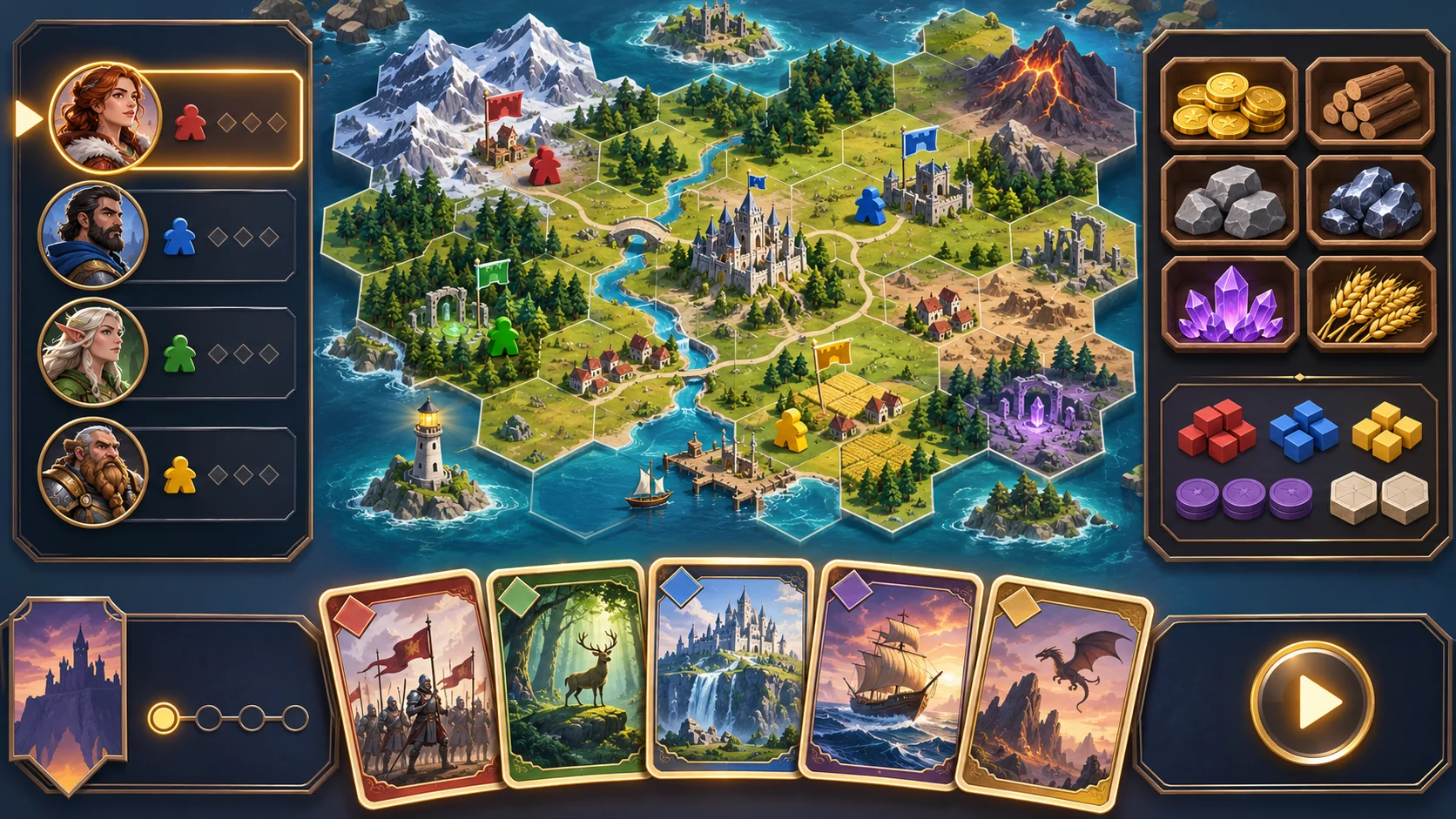
List each board, card and token, then say what it means in the digital prototype. Show which items are visible to both players and which are private. Keep the digital version consistent with the written rules and make unavailable actions explainable.
Prompt 2 — component and visibility map
Map Tideglass components to digital states: shared hex map, player hand, tide tokens, objective marker and turn indicator. For each, define owner, visibility, allowed action and state update. Use a small fictional setup and identify any rule that is ambiguous in the source brief.
| Component | Visibility | Digital behavior |
|---|---|---|
| Shared map | Both players | Shows explored and unexplored hexes |
| Player hand | Private to owner in the concept | Displays available card choices |
| Tide token | Shared state | Updates when the turn rule advances |
| Objective marker | Both players | Shows scenario progress |
This table is an interaction plan; it does not represent a tested game implementation.
Make turn order and legal actions clear
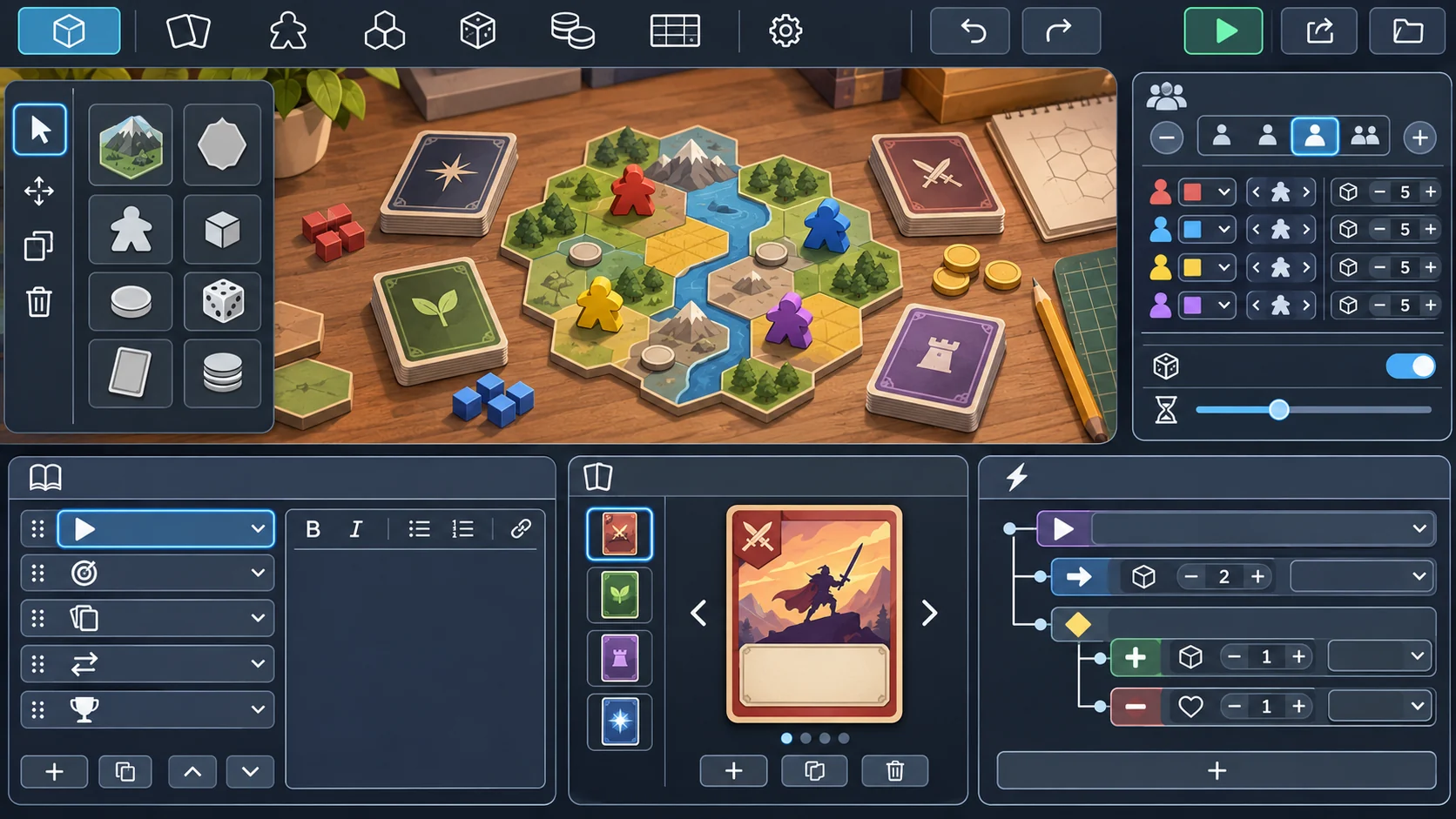
A turn summary can show whose turn it is, which actions remain and what can be done next. If a card cannot be played, explain the rule or resource that blocks it. A short action log helps the designer compare what happened with the written rules.
Prompt 3 — turn flow and action checks
Define a Tideglass turn with player selection, one card action, map update, tide-token update and turn handoff. Show legal actions before selection and explain a blocked action. Add a concise state log. Use deterministic rules and label unresolved interactions for tabletop review.
The action flow should not introduce new rules silently. If the digital prototype needs a tie-breaker, flag it as an open design question.
Represent card effects and board updates
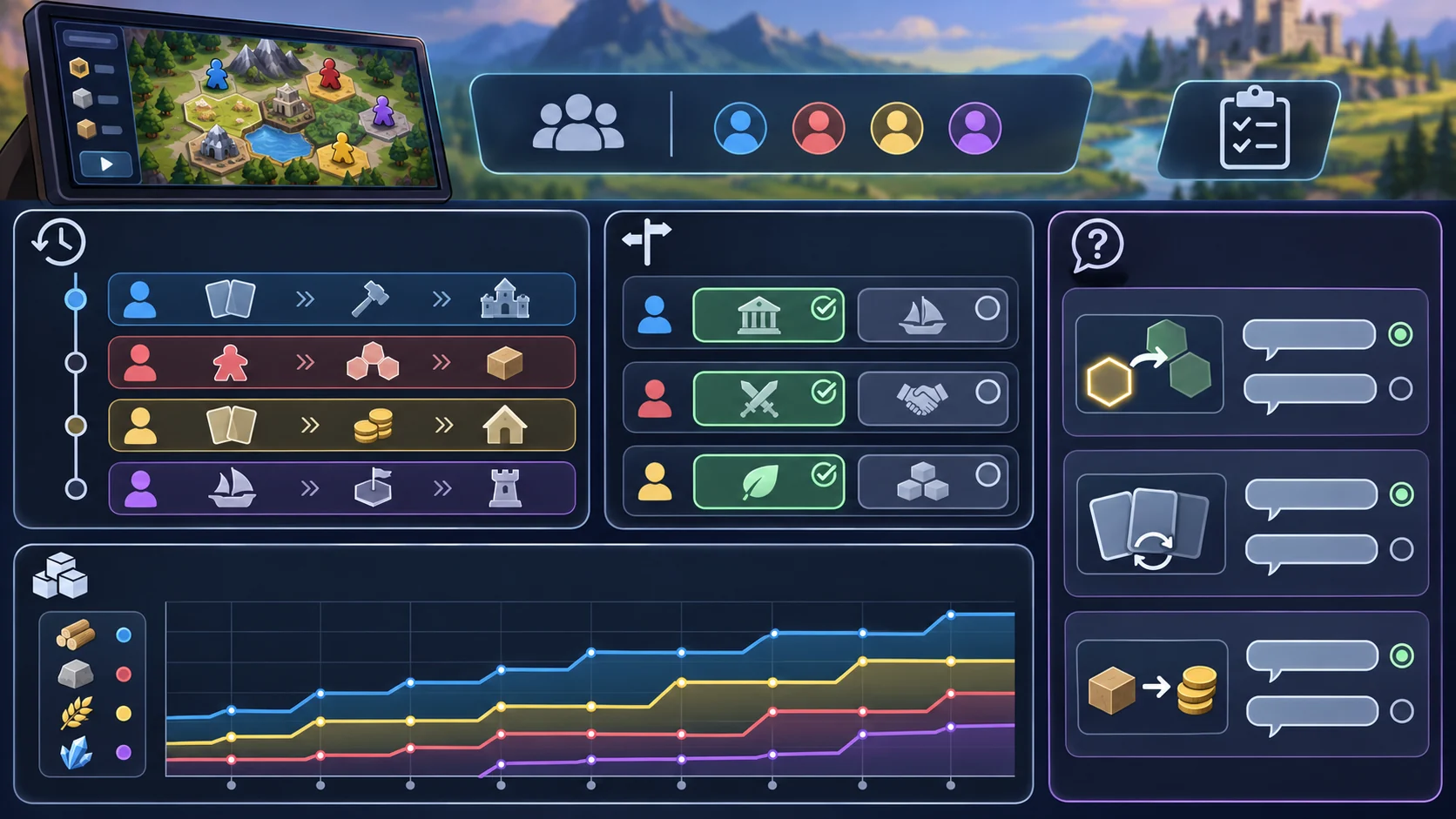
Card text, targets and effects should use the same wording as the rules reference. When a card changes the map or a token, show the before and after state. Make the effect inspectable so a designer can find differences between written intent and prototype behavior.
Prompt 4 — card effect view
Create three original Tideglass cards with target, cost, effect and timing fields. Demonstrate one card changing a hex state and one updating a tide token. Show the state before and after and flag any text that needs designer clarification. Do not claim that effects are balanced or playtested.
A card prototype can reveal missing timing or ownership rules. Record those questions instead of filling gaps with unreviewed assumptions.
Provide an editable tabletop-to-digital template
A designer needs to change the player count, setup, components, turn sequence, card effects and objective. Keep the data structured so the same design can be inspected on a shared board and in a rule summary.
{
  "gameName": "Tideglass — fictional prototype",
  "players": {"min": 2, "max": 2},
  "objective": "reach the lighthouse hex before the tide track ends",
  "components": ["shared hex map", "private card hand", "tide tokens", "objective marker"],
  "turn": ["choose one card", "apply its effect", "advance tide", "hand off turn"],
  "cards": [
    {"id": "chart", "target": "adjacent unexplored hex", "effect": "reveal one hex", "timing": "on play"},
    {"id": "anchor", "target": "current hex", "effect": "hold tide state", "timing": "before tide update"}
  ],
  "reviewLabel": "fictional rules; no tabletop or digital playtest"
}
Replace the fictional map, cards, objectives and turn sequence with the designer’s rules. Keep the review label until a real version has been tested with intended players.
Request a small playable digital slice
A first build could include one scenario, shared map, two private hands, three cards, visible turn order, resource tokens, objective progress, event log and reset. Specify what must work: select a card, apply an effect, update the board, advance the turn and finish the scenario. A digital rules presentation is not automatically a playable prototype.
Prompt 5 — first playable slice
Build a small fictional Tideglass prototype for two players with one shared hex map, private hands, three playable card effects, tide tokens, objective marker, turn order, state log, win/loss result and reset. Show legal actions and blocked reasons. At handoff, list working interactions, static panels and unverified rules. Do not claim tabletop balance.
No prototype or tabletop playtest was run for this article.
Prompt 6 — simulated designer customization
Adapt the template to a fictional “Lanterns Below” game about exploring a submerged archive. Change the objective, components, card effects and turn summary while preserving the same digital state structure. Label the game fictional and rules untested. This is a local simulated customization, not a real designer project.
This example demonstrates how the data structure can support a different tabletop concept. It does not describe a real game or designer workflow.
Prompt 7 — observed-output review
Review the running local Tideglass prototype for setup, component visibility, private hand behavior, legal actions, card effects, board updates, tide timing, turn handoff, objective state and reset. Mark each present, missing or unclear based only on observed interactions. Record concise evidence and one smallest next change. Do not claim balance or tabletop readiness.
Fictional prototype snapshot
| Field | Tideglass example |
|---|---|
| Players | Two fictional players |
| Components | Shared hex map, hands, tokens and objective |
| Main loop | Choose card → apply effect → advance tide → hand off |
| First milestone | One card updates the intended map state |
| Evidence | Fictional data template only; no game test |
The snapshot sets a compact implementation scope. It does not confirm rules clarity or balance.
Conclusion
A digital board-game prototype should make components, turn order, legal actions and state changes easy to inspect. Tideglass and Lanterns Below are fictional; no designer, tabletop session or playable digital build was tested. Use an editable template to map rules into visible states, then compare the running version with the actual tabletop rules and player feedback.
You can take a scoped concept into the Free AI game maker, then compare the result with the review checklist.
FAQ
What should a digital board-game prototype for tabletop designers include?
Map components, visibility, turn order, legal actions, card effects, objective state and reset.
How can a digital prototype help review tabletop rules?
It can make state changes and ambiguous actions visible for comparison with the written rules.
Does a digital prototype prove a board game is balanced?
No. Balance and clarity require review and playtesting with the intended players.
What belongs in an editable board-game prototype template?
Include player count, components, visibility, turn sequence, card effects and objective.
Should a prototype invent missing rules?
No. Mark ambiguous cases as design questions so the tabletop designer can resolve them.