Introduction
An interactive picture-book game can invite readers to choose, notice details or revisit a story moment. For children’s authors, the prototype should keep the authored voice and illustration style while making each choice easy to understand. The game can add participation, but should not change the story into an unreviewed content stream.
This guide uses Pip and the Moon Garden, a fictional picture-book concept about a fox finding a quiet path home. Its characters and story are invented. No author, child reader or playable book was tested.
Choose an age-aware story goal
Decide what the reader should do within the story: choose a path, find a repeated detail, listen to a line or help a character decide. The author should choose the intended age range and reading context, then review vocabulary, pacing and emotional tone. Keep the first prototype to a few spreads and one meaningful choice.
Prompt 1 — author brief
Plan an interactive picture-book game called Pip and the Moon Garden. Define the intended reader age range for author review, read-aloud context, story goal, start and ending, one choice and the emotional tone. Keep all characters and events fictional, and identify text and art that require author approval.
A brief should say whether an adult is expected to read with the child. That choice affects how much text appears on screen and whether narration or printed-page alternatives are needed.
Turn page moments into gentle choices
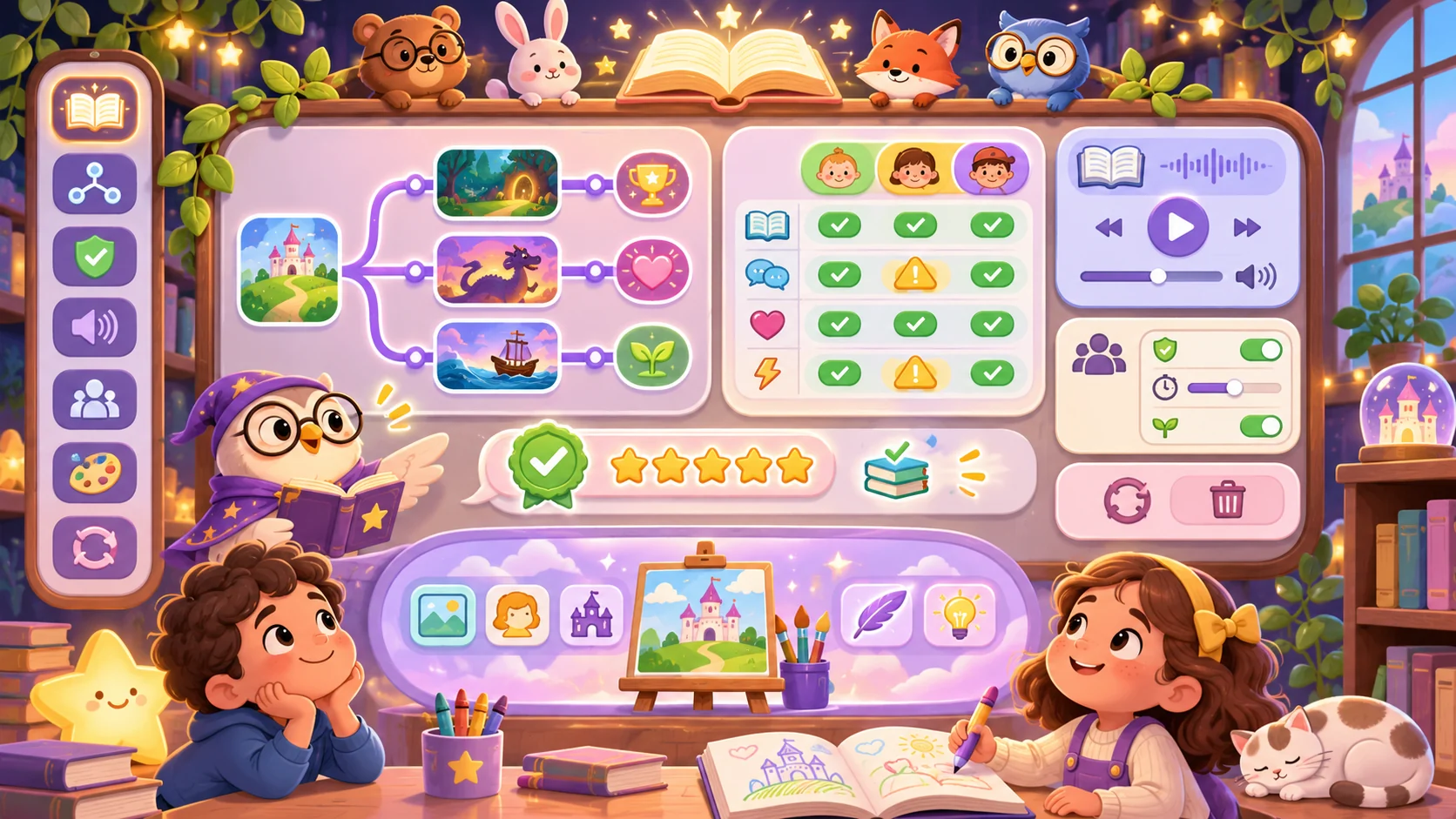
A picture-book choice can ask what a character notices or which safe, story-relevant path to follow. Keep options concrete and avoid implying that a child’s choice is wrong or morally bad. Explain how each choice changes the next spread and whether the reader can return.
Prompt 2 — story branch map
Map three fictional Pip and the Moon Garden spreads: the garden gate, a firefly path and a quiet pond. At each spread, define the illustration, short read-aloud text placeholder, reader choice, resulting next page and return option. Keep outcomes gentle and author-reviewable.
| Spread | Reader action | Story response |
|---|---|---|
| Garden gate | Choose the lantern path or flower path | Reveal a different visual detail |
| Firefly path | Tap a firefly or continue | Show a short optional note |
| Quiet pond | Choose to pause or follow the path home | Reach the same calm ending |
The flow is fictional. An author can change the branches, but should check that every route still supports the story’s intended ending and tone.
Preserve the author’s text and illustration

Keep original text, narration, art and interactive overlays in separate editable fields. Place controls where they do not cover important details. A reader should be able to tell what is part of the illustration and what can be selected.
Prompt 3 — page and hotspot specification
Specify the Pip and the Moon Garden garden-gate spread. Separate authored text, illustration notes, interactive hotspots, focus state and response text. Add a read-aloud option and a way to continue without tapping the artwork. Do not generate replacement story text without author review.
For a print-first book, include a non-digital way to follow the story so the interactive version does not become the only complete version.
Keep reader choices private and optional
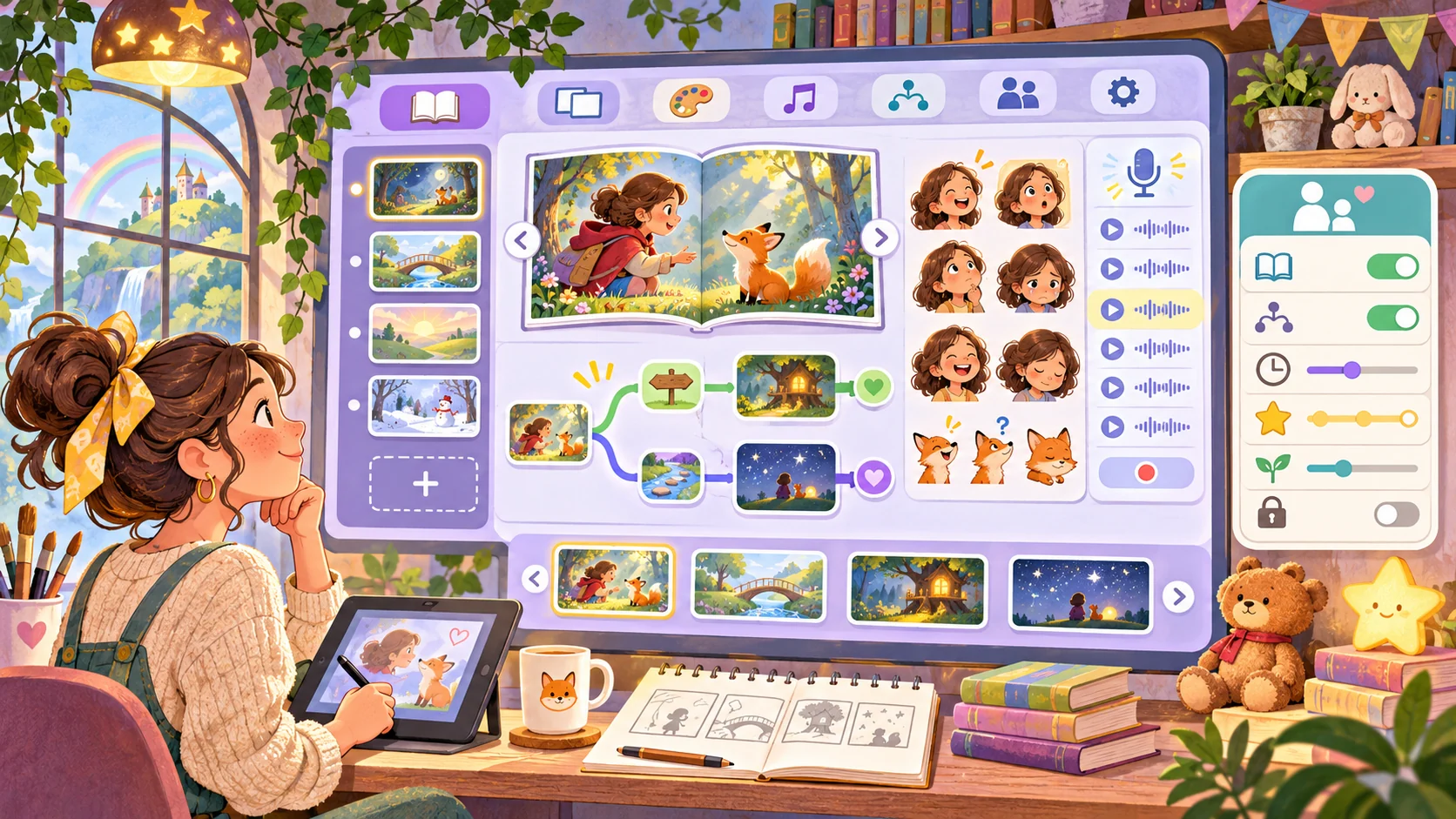
A local prototype can remember story choices only for the current session and clear them on reset. Do not ask a child for a name, location, photo, voice recording or contact detail to progress. Any future account or analytics feature would need separate review by the responsible adults and product team.
Prompt 4 — privacy and caregiver controls
Design Pip and the Moon Garden with no child account or personal-data collection. Provide an adult-readable setting for narration and sound, a clear reset and a way to continue without optional interactions. Explain what the local prototype stores: current story state only, cleared on reset.
Keep the picture-book template editable
The JSON below separates spreads, authored text, illustration notes, choices, narration and privacy behavior. Authors can revise story content while preserving the interaction and review fields. This is a planning template, not a finished book or child-tested experience.
{
  "bookGame": "Pip and the Moon Garden — fictional concept",
  "audience": "author selects age range and reading context",
  "adultReadAloud": true,
  "spreads": [
    {"id":"garden-gate","text":"author-approved text placeholder","artNote":"Pip at a moonlit garden gate","choices":[{"label":"lantern path","next":"firefly-path"},{"label":"flower path","next":"firefly-path"}],"returnAllowed":true},
    {"id":"firefly-path","text":"author-approved text placeholder","artNote":"fireflies reveal a quiet detail","choices":[{"label":"notice a firefly","next":"quiet-pond"},{"label":"continue","next":"quiet-pond"}],"optionalDetail":true},
    {"id":"quiet-pond","text":"author-approved text placeholder","artNote":"calm ending scene by a pond","choices":[{"label":"pause","next":"quiet-pond"},{"label":"follow the path home","next":"ending"}]}
  ],
  "narration": "optional; author-approved recording or text-to-speech review",
  "privacy": "no child account or personal data; clear local story state on reset",
  "reviewNotes": ["fictional concept", "not child-tested", "author and caregiver review required"]
}
Keep narration and text aligned so the reader does not receive conflicting versions. An author should approve all story lines and any audio before publication.
Prototype the read-and-choose loop
A first digital slice can include three spreads, page turns, two choices, optional narration, back and reset controls and an adult-facing settings view. Ask the builder to expose which paths are interactive and which are static. A printed-page version can remain available for readers who do not use the digital interaction.
Prompt 5 — first playable book slice
Build a fictional Pip and the Moon Garden prototype with three illustrated spread placeholders, page turns, two gentle choices, optional narration control, back, reset and a no-tap reading path. Use only author-approved text placeholders. Report interactive and static elements; do not claim child testing.
A local preview can show layout and branch structure. It cannot show whether children understand the choices or whether the pacing works during a real read-aloud.
Simulate an author customization
For a fictional customization, adapt the structure to Nori and the Paper Kite, an invented picture-book concept about a child and a kite on a breezy hill. Replace the character, visual motifs and choices while keeping the text author-controlled and personal data out of the prototype. This is a simulated authoring example, not a real manuscript.
Prompt 6 — fictional book customization
Adapt Pip and the Moon Garden to a fictional picture-book concept called Nori and the Paper Kite. Create three spreads, two gentle choices, optional read-aloud and an ending reachable from every route. Mark all story and art details fictional and untested; preserve author approval fields.
Prompt 7 — author and caregiver review
Review the local prototype for age-range placeholders, readable text, gentle outcomes, branch consistency, read-aloud control, no-tap path, back and reset, and absence of child data collection. Record observed local behavior only. Mark child comprehension, pacing and emotional response as untested and requiring appropriate review.
Fictional read-aloud snapshot
| Moment | Intended interaction | Evidence boundary |
|---|---|---|
| Open | Adult or child begins the first spread | Fictional screen plan |
| Choose | Reader selects a gentle path or continues | No child reader involved |
| Listen | Narration can be enabled or skipped | No recording created |
| Finish | All branches reach the calm ending | No playable book tested |
The snapshot describes a design proposal, not an observed reading session.
Conclusion
An interactive picture-book game should preserve the author’s voice, make choices gentle and give readers a clear way through the story. Start with a few spreads, keep text and art editable, and make narration and interaction optional. Pip and the Moon Garden and Nori and the Paper Kite are fictional; no author, child reader or playable book was tested. Review the age fit, story, art and privacy choices with the responsible adults before use.
You can take a scoped concept into the Free AI game maker, then compare the result with the editable story-branch checklist.
FAQ
What should an interactive picture-book game include?
Include authored spreads, gentle choices, clear page transitions, optional narration, back and reset, and a no-tap reading path.
How can children’s authors add choices to a picture book?
Use concrete story-relevant options, show how they change a spread and keep every branch consistent with the intended tone.
Should an interactive book collect information from child readers?
The story can work without personal data. This local sample collects none and clears its story state on reset.
How can authors preserve the original book’s voice?
Keep approved story text separate from interaction prompts and require author review for any generated copy or narration.
Does a local picture-book prototype prove children will understand it?
No. Child comprehension, pacing and emotional response were not tested and require appropriate review.