Introduction
A digital card-game prototype helps a designer inspect how card text, costs, targets and turn rules interact. The goal is to make effects and state changes visible, not to assume a digital version proves the tabletop game is balanced. Start with a fictional deck slice, a short round and an editable card schema.
This guide uses Starfall Archive, an invented two-player card game with fictional cards, resources and effects. No card designer, physical deck or playable prototype was tested. All costs and interactions are examples for planning, not evidence of balance.
Choose the interaction the prototype should test
Pick a small question: can a player understand the target of an effect, pay its cost or follow the end-of-turn sequence? State player count, starting resources, turn order and how a round ends. Keep the prototype focused on interactions that are hard to review in static card art.
Prompt 1 — card-prototype brief
Design a fictional digital card-game prototype called Starfall Archive for two players. Scope a short match with a small hand, shared play area, resource counter, one turn sequence and a clear end condition. State which card interactions the prototype is meant to inspect, setup, legal actions, turn handoff and reset. Use invented cards and values; list unresolved rules.
A useful brief states which information is public, which stays in a player’s hand and what a player can inspect before acting.
Map cards to structured fields
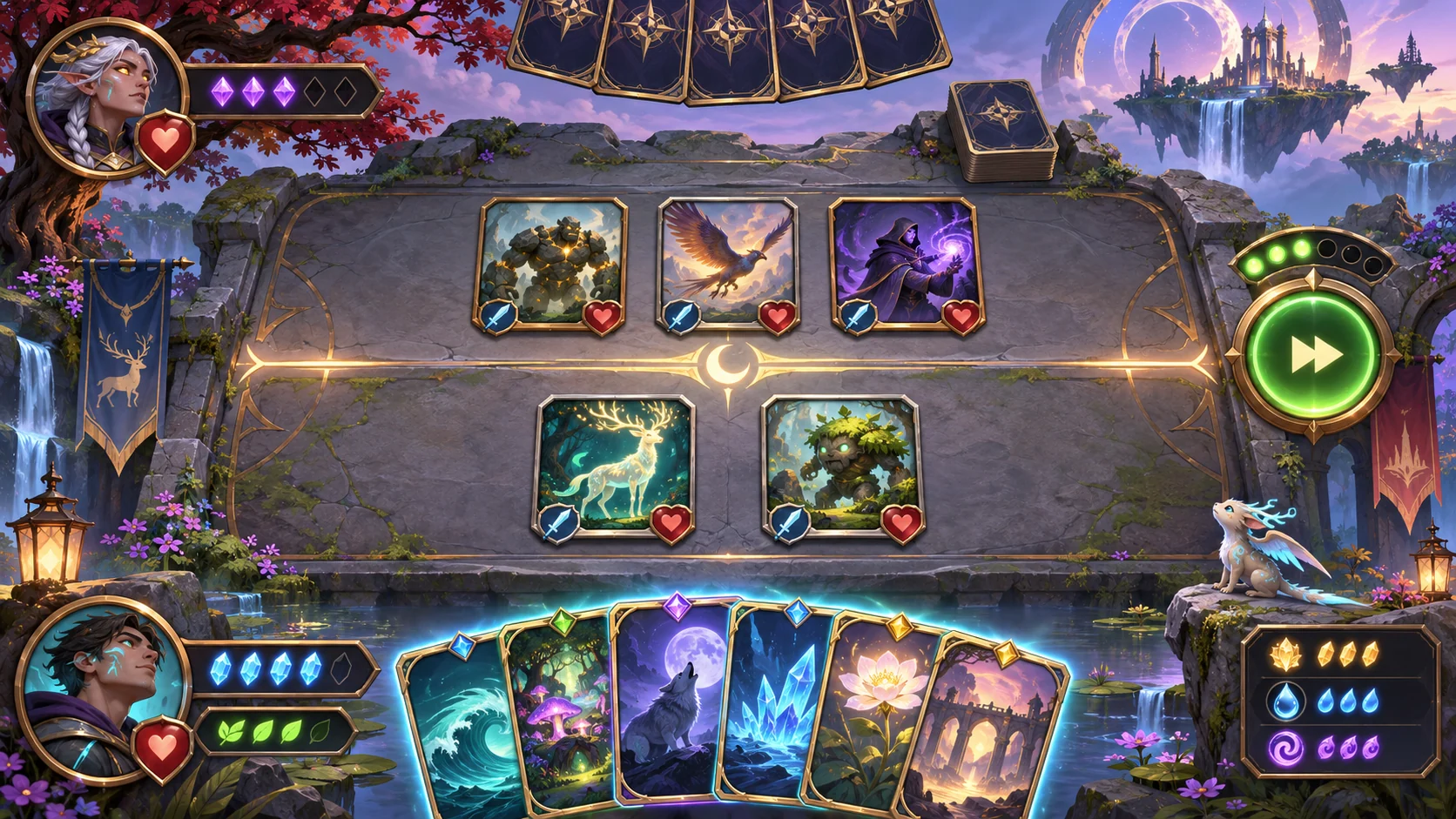
A card can be represented as a set of fields: name, cost, target, effect, timing and reminder text. The digital interface can show those fields separately so the designer can compare them with the written rules. Flag missing targets or timing instead of silently guessing.
Prompt 2 — card schema and visibility
Define a Starfall Archive card schema with original name, resource cost, legal target, effect, timing, reminder text and visibility. Show which fields appear to both players and which remain private. Include an error state for a missing target or unclear timing. Keep all card examples fictional.
| Field | Designer question | Prototype display |
|---|---|---|
| Cost | What resource is spent? | Show before confirmation |
| Target | Which card or player can be affected? | Highlight legal targets |
| Effect | What state changes? | Preview the affected value |
| Timing | When does it resolve? | Add to the action log |
This schema helps inspect wording and state, but it does not validate game balance.
Make legal actions and costs visible
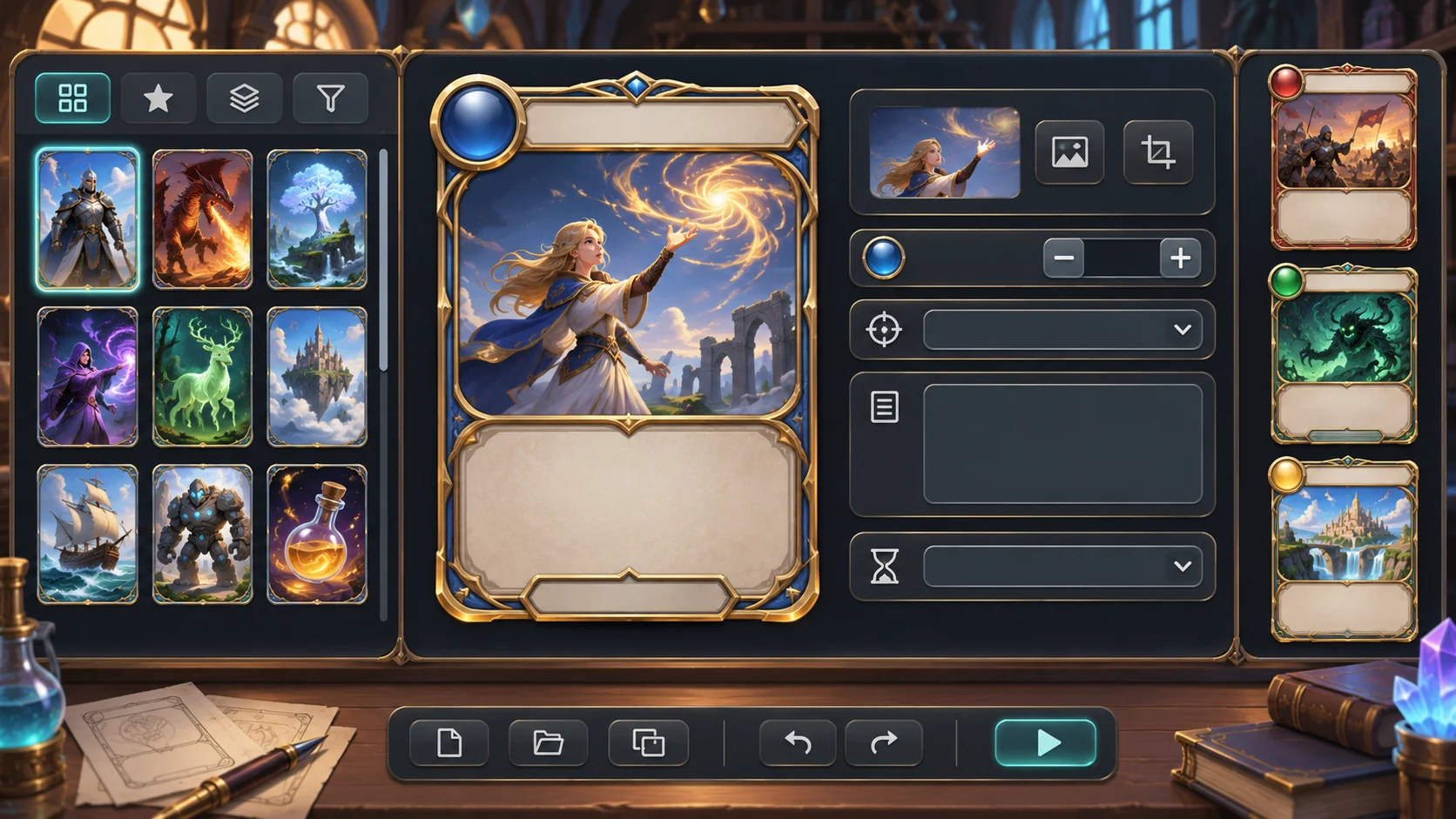
Before a card is played, show whether the player can afford it and what targets are legal. If an action is blocked, explain the reason. When it resolves, update the resource, card state and target together, then record the event.
Prompt 3 — play-card interaction
Specify a Starfall Archive play-card interaction: select a card, show its cost, highlight legal targets, confirm the play, apply its effect and update the action log. Define what happens if the player cancels or lacks resources. Use deterministic fictional rules and show each state before and after.
A card should not disappear without an explanation. The designer should be able to tell whether it was played, discarded, returned or left unchanged.
Review turn order and effect timing
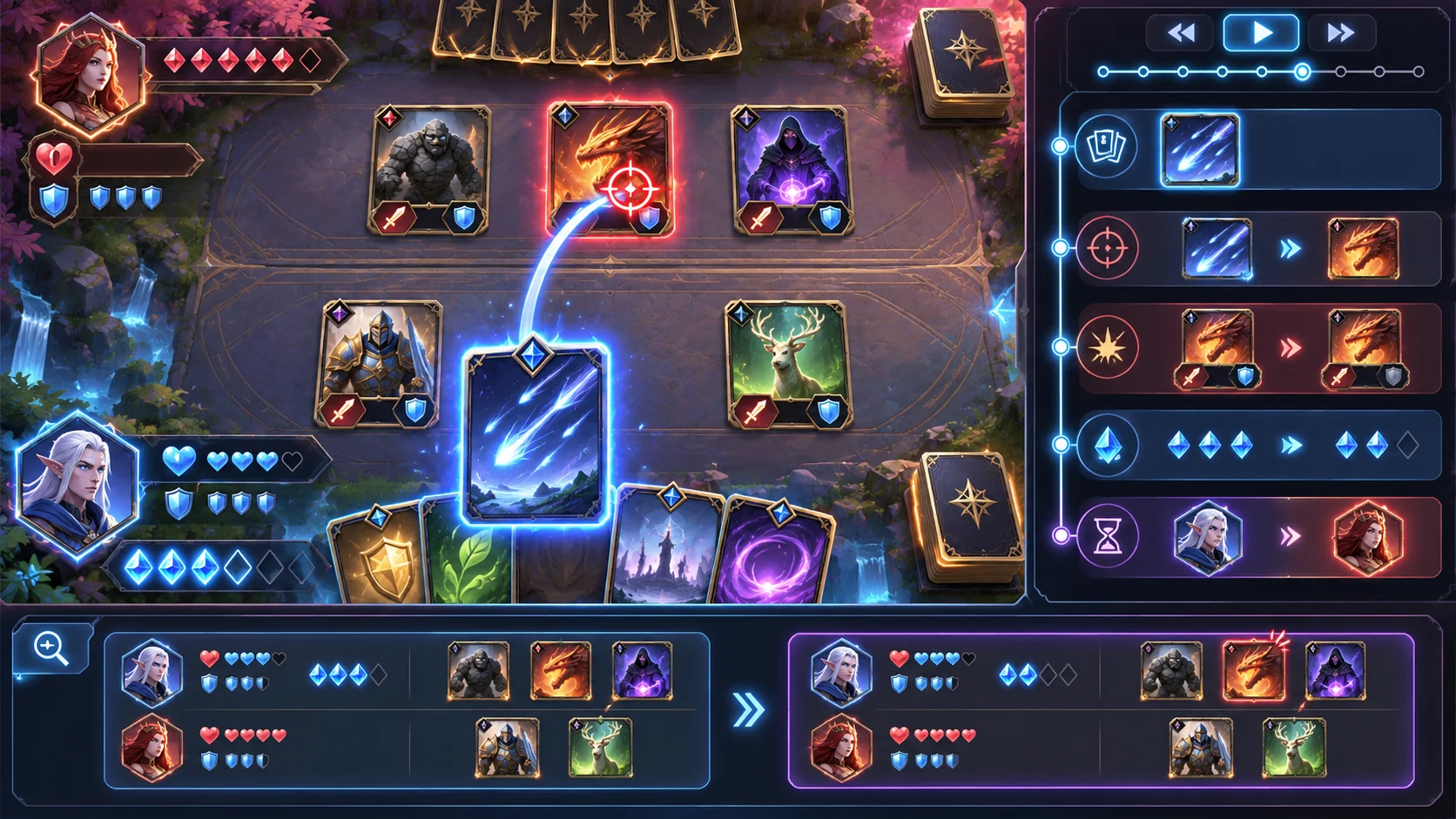
Card games often depend on when an effect resolves and who acts next. Put the phase, active player and pending effect in the interface. Define how simultaneous or conflicting effects are ordered in the prototype, and mark unclear cases for designer review.
Prompt 4 — turn and timing flow
Create a Starfall Archive turn flow with draw, action, effect resolution and handoff phases. Show the active player, pending effect and next phase. Define one simple conflict rule and mark any timing ambiguity as an open design question. Do not claim the sequence has been playtested.
A visible phase marker helps a designer compare implementation behavior with the rulebook. Keep the action log concise enough to follow a short round.
Provide an editable card-game template
A designer needs to replace cards, costs, effects, player count, resource rules and end conditions without changing the review structure. The JSON below is a fictional schema example; it does not define a finished or balanced game.
{
  "gameName": "Starfall Archive — fictional prototype",
  "players": {"min": 2, "max": 2},
  "startingResource": 3,
  "turnPhases": ["draw", "action", "resolve", "handoff"],
  "cards": [
    {"id": "starlight-map", "cost": 1, "target": "one unexplored site", "effect": "reveal site", "timing": "action"},
    {"id": "archive-key", "cost": 2, "target": "one revealed site", "effect": "add one lore token", "timing": "resolve"}
  ],
  "endCondition": "complete the fictional archive objective",
  "reviewLabel": "invented rules; no digital or tabletop test"
}
Replace card definitions and rules with original design material. Keep unclear timing or target rules flagged rather than allowing the prototype to invent behavior.
Request a small playable digital slice
A first build could include two hands, a shared play area, a few cards, resource counters, legal-target highlighting, turn phases, effect log, end state and reset. Specify what must work: select, pay, target, resolve and hand off. A card gallery with no working rules is not a playable prototype.
Prompt 5 — first playable card round
Build a small fictional Starfall Archive prototype with two players, private hands, shared play area, three card effects, resource counters, legal-target display, visible phases, effect log, end condition and reset. Show blocked actions and state updates. At handoff, list working interactions, static screens and unverified rules. Do not claim balance.
No playable digital or tabletop game was tested for this article.
Prompt 6 — simulated designer customization
Adapt the card schema to a fictional “Glass Orchard” game about collecting dream seeds. Replace card names, costs, targets and effects while preserving the same fields and turn phases. Label the cards fictional and untested. This is a simulated local customization, not a real designer project.
This shows how the structure can support another fictional game while keeping state and timing visible.
Prompt 7 — observed-output review
Review the running local Starfall Archive prototype for hand privacy, resource cost, legal targets, effect resolution, card state, turn phases, active player, action log, end condition and reset. Mark each present, missing or unclear based on observed interactions. Record concise evidence and one smallest next change. Do not claim balance or designer approval.
Fictional card-round snapshot
| Field | Starfall Archive example |
|---|---|
| Players | Two fictional players |
| Cards | Three original test effects |
| Main loop | Select → pay → target → resolve → hand off |
| Review focus | Cost, timing and state consistency |
| Evidence | Fictional schema only; no card or round test |
The snapshot defines a testable slice. It does not establish that the card effects are balanced.
Conclusion
A digital card-game prototype should make card fields, legal actions, timing and state changes easy to inspect. Starfall Archive and Glass Orchard are fictional; no designer, physical deck or playable game was tested. Use an editable card schema to scope the interaction, then compare the running prototype with the written rules and player tests before making balance claims.
You can take a scoped concept into the Free AI game maker, then compare the result with the review checklist.
FAQ
What should a digital card-game prototype for designers include?
Include card fields, costs, targets, effect timing, turn phases, state updates, action log and reset.
How can a prototype expose unclear card rules?
Show target, cost and timing separately, and mark missing or ambiguous fields for designer review.
Does a digital card prototype prove balance?
No. It can make interactions inspectable, but balance requires appropriate playtesting and review.
What belongs in an editable card schema?
Include card identity, cost, target, effect, timing, visibility and reminder text.
Should a prototype silently resolve an ambiguous effect?
No. Flag the ambiguity so the designer can choose the rule deliberately.