Introduction
A publisher pitch prototype is a bounded playable slice a solo developer can use to communicate a game’s distinctive interaction and direction. It can help a conversation become concrete, but it does not guarantee a publishing deal, prove market demand or replace a complete production plan.
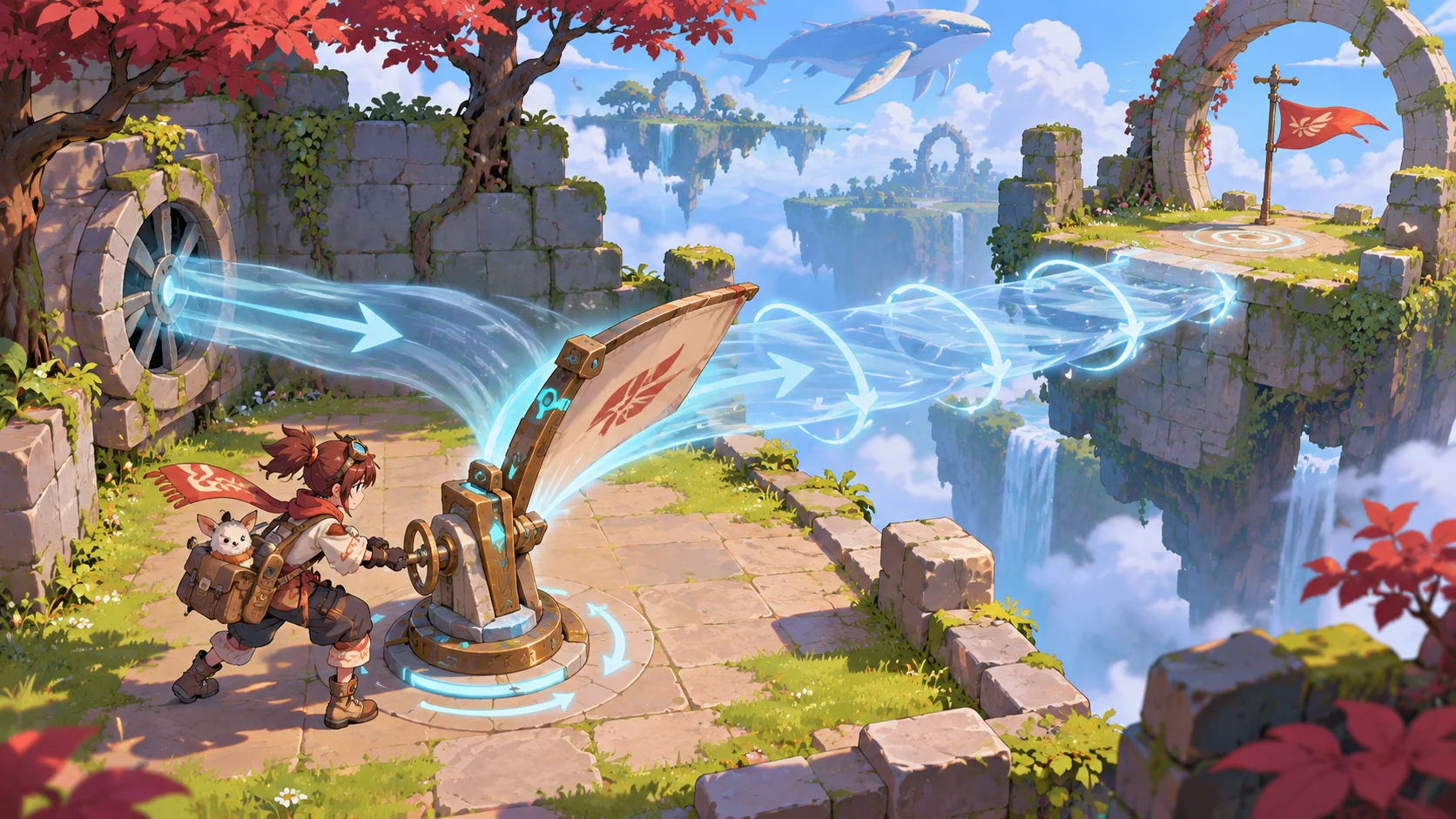
This guide uses Windward Signal, a fictional adventure concept where a courier redirects wind currents to open a route. The game, developer and pitch are invented; no publisher, meeting or playable build is represented.
Define the decision the prototype should support
Start by naming what a reviewer should understand after playing: the core action, its feedback and why it could support a larger game. Keep that decision separate from business claims such as audience size or sales potential. A prototype should give the reviewer enough context to play a small slice without pretending the entire game is complete.
Prompt 1 — pitch prototype brief
Write a brief for a fictional solo developer pitching Windward Signal. State the core promise, target experience, one distinctive mechanic, slice duration, playable start and finish, required context, known risks and evidence the prototype cannot provide. Mark all commercial outcomes unknown.
A tight brief also defines exclusions. Features such as online multiplayer, progression and a large world can stay outside the pitch slice if they are not needed to communicate the central mechanic.
Build around one distinctive mechanic

The fictional courier can rotate a wind vane to redirect an airflow path, moving a sail lift or opening a gate. The prototype needs one understandable challenge, readable cause and effect, and a reset. Do not add multiple puzzle types before the team knows whether this interaction is legible and worth developing.
Prompt 2 — mechanic slice plan
Design one Windward Signal pitch slice. Specify the starting state, wind-control input, airflow feedback, one obstacle, success condition, reset and estimated play time. List every placeholder and unverified technical assumption. Do not claim player or publisher testing.
| Slice element | Reviewer should see | Keep evidence honest |
|---|---|---|
| Context | Goal and controls | Label explanatory text versus implemented UI |
| Interaction | Input changes wind direction | Verify in the actual build |
| Consequence | An obstacle responds to airflow | Show only implemented state changes |
| Finish | A short payoff or clear endpoint | Do not imply the full game exists |
| Handoff | Build version and known limits | Separate estimates from measured results |
Present the project without overstating it
A pitch package can include a short playable build, a concise overview, controls and a note about what is still unknown. If the prototype uses placeholder art or temporary sound, label it. If only a video or static mockup exists, do not call it playable.
Prompt 3 — reviewer context and build notes
Draft a short context screen for the fictional Windward Signal prototype. Explain controls, slice length, placeholder assets, build version and what is out of scope. Avoid sales, audience or production claims that are unsupported by evidence.
Make the experience easy to launch and reset. Include platform requirements and a fallback capture if the build cannot run in a meeting, while making clear that a video is not interactive evidence.
Keep pitch data editable
Store the core promise, mechanic, slice scope, version, risks and evidence status in an editable package. The JSON below is a planning template, not a tested pitch build.
{
  "projectName": "Windward Signal — fictional pitch concept",
  "status": "concept; no publisher review or playable build",
  "corePromise": "redirect wind to change a compact exploration route",
  "slice": {"start":"courier at a blocked path","interaction":"rotate a wind vane","finish":"open one route and reach a lookout","targetMinutes":5},
  "controls": ["move", "interact with vane", "reset puzzle"],
  "placeholderAssets": true,
  "build": {"version":null,"platform":"choose and verify","launchInstructions":"pending"},
  "knownRisks": ["input readability", "wind simulation scope", "camera clarity"],
  "commercialEvidence": "not supplied; no sales or market claims",
  "nextDecision": "pending prototype inspection"
}
Keep design facts, implementation status and commercial assumptions in separate fields. That makes it easier to update the pitch without turning a goal into a reported result.
Build and review the playable slice
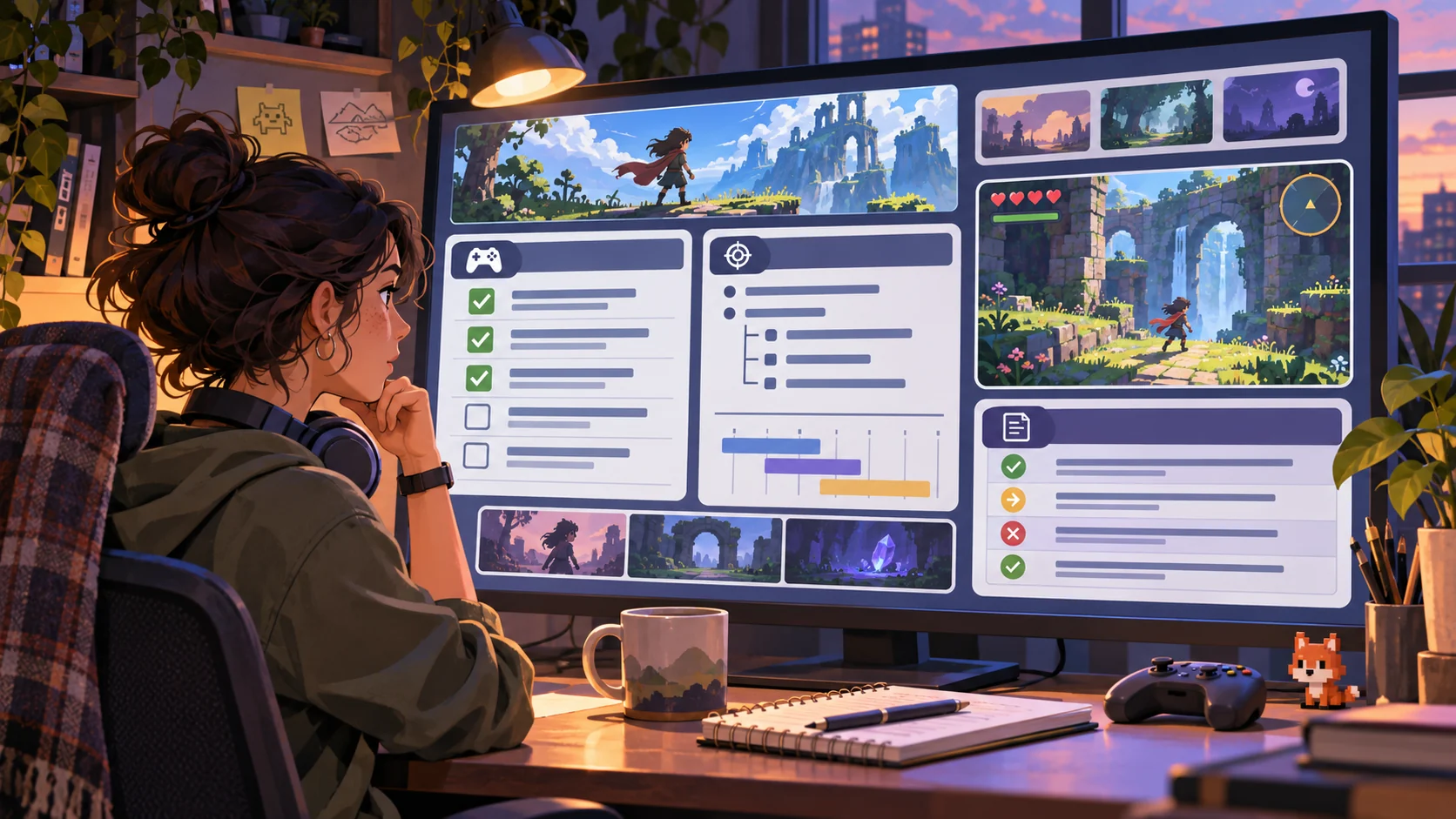
Implement one interaction from start to finish and check that the build launches, input works and reset returns to a known state. Keep the slice short and stable. Record the version used for any review. If testing has not happened, leave review fields empty and describe the next test as planned.
Prompt 4 — playable pitch prototype
Build a local Windward Signal prototype with one route, wind-vane input, visible airflow response, one obstacle, success and reset. Use clearly marked placeholder assets. Provide run instructions, version, working controls, known issues and untested assumptions. Do not claim publisher feedback or a validated market.
For a fictional customization, imagine changing the courier’s route from a hillside windmill to a floating orchard while keeping the vane interaction and slice duration fixed. This is an example of editing the pitch package, not an actual commissioned scenario.
Prompt 5 — fictional scenario adaptation
Adapt the Windward Signal slice to a fictional floating orchard. Change environment art and obstacle placement only; keep the mechanic, controls and duration constant. List changed assets, dependencies and what must be retested. Mark the scenario fictional and untested.
Prompt 6 — pitch readiness review
Review the local pitch package for launch reliability, controls, mechanic clarity, slice length, placeholder labels, build version, known risks, run instructions, accessibility and evidence boundaries. Mark each item implemented, static, missing or not tested. Do not create publisher or player feedback.
Prepare a clear handoff
A useful handoff includes the project overview, a playable link or local build, controls, expected play time, version, known limitations and contact or next-step information. Keep budgets, schedules and audience assumptions labeled as estimates until supported. A publisher conversation may provide useful feedback, but the prototype alone cannot establish a deal or commercial viability.
Prompt 7 — handoff checklist
Create a handoff checklist for a solo developer’s publisher pitch prototype. Cover launch test, platform requirements, controls, build version, capture fallback, asset credits, known risks, budget and schedule assumptions, data privacy and next steps. Leave unverified results pending.
Conclusion
A publisher pitch prototype for solo developers should communicate one distinctive mechanic through a bounded, stable slice. Make the build easy to run, label placeholders, track versions and separate design intent from commercial evidence. Windward Signal is fictional; no publisher meeting or playable build occurred. Use actual project and review evidence before making claims about feasibility, audience demand or publishing interest.
You can shape a small concept in the Free AI game maker, then compare it with the editable pitch template.
FAQ
What is a publisher pitch prototype?
It is a small playable slice intended to communicate a game concept or mechanic during a publishing discussion.
How much of the game should a pitch prototype include?
Include only enough to demonstrate the core interaction and its feedback. A pitch slice is not a complete production build.
Does a prototype guarantee a publisher deal?
No. A prototype can support discussion but cannot guarantee interest, funding or a publishing agreement.
What should a solo developer include with the build?
Provide launch instructions, controls, version, expected play time, known limitations and clear labels for placeholder content.
Can a pitch prototype prove market demand?
No. Market claims require appropriate evidence. A short prototype alone does not establish audience size or commercial viability.