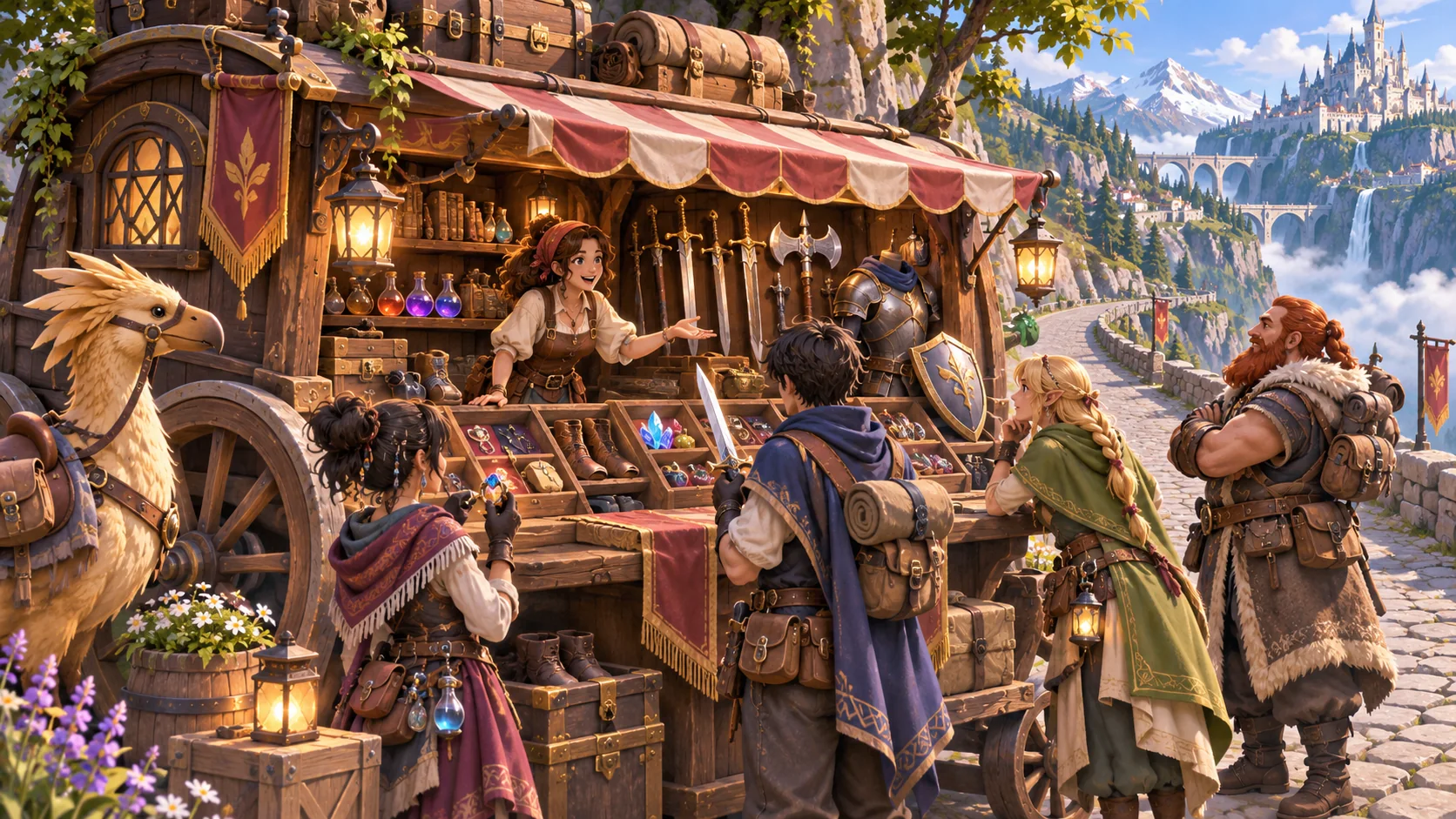
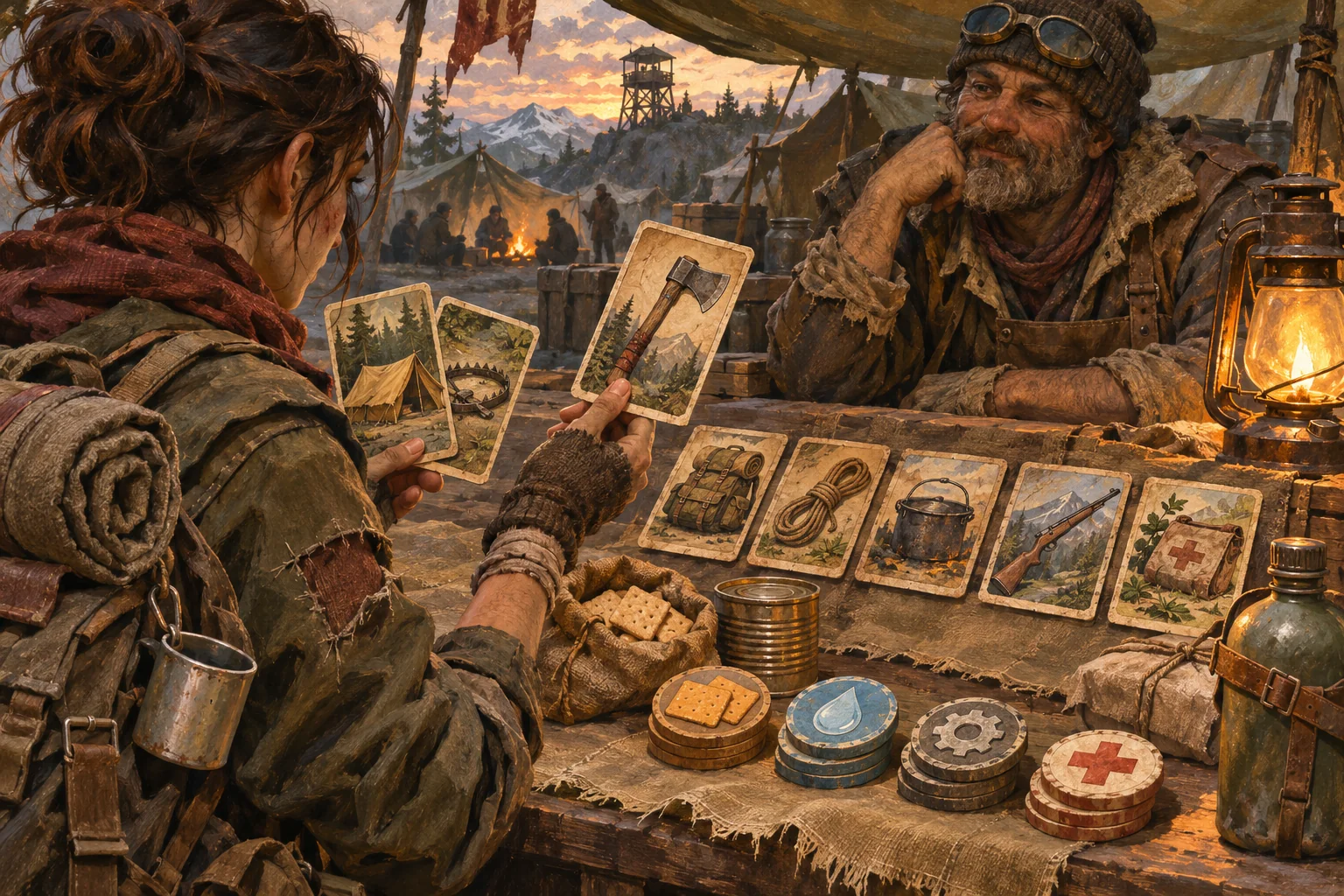
A dungeon crawler can make its shop more than a menu between runs. Let a merchant wagon travel with the party and serve as a mobile base. The player explores nearby rooms, gathers relics, then decides whether to return to the wagon to trade for supplies before venturing deeper.
Start with a short route, one relic and one consumable. Keep the rooms and loot fixed while comparing a stop at the shop with a bypass. A deterministic resource check can show whether a trade changes the party's supplies; it cannot establish whether the detour feels worthwhile or the dungeon is well paced.
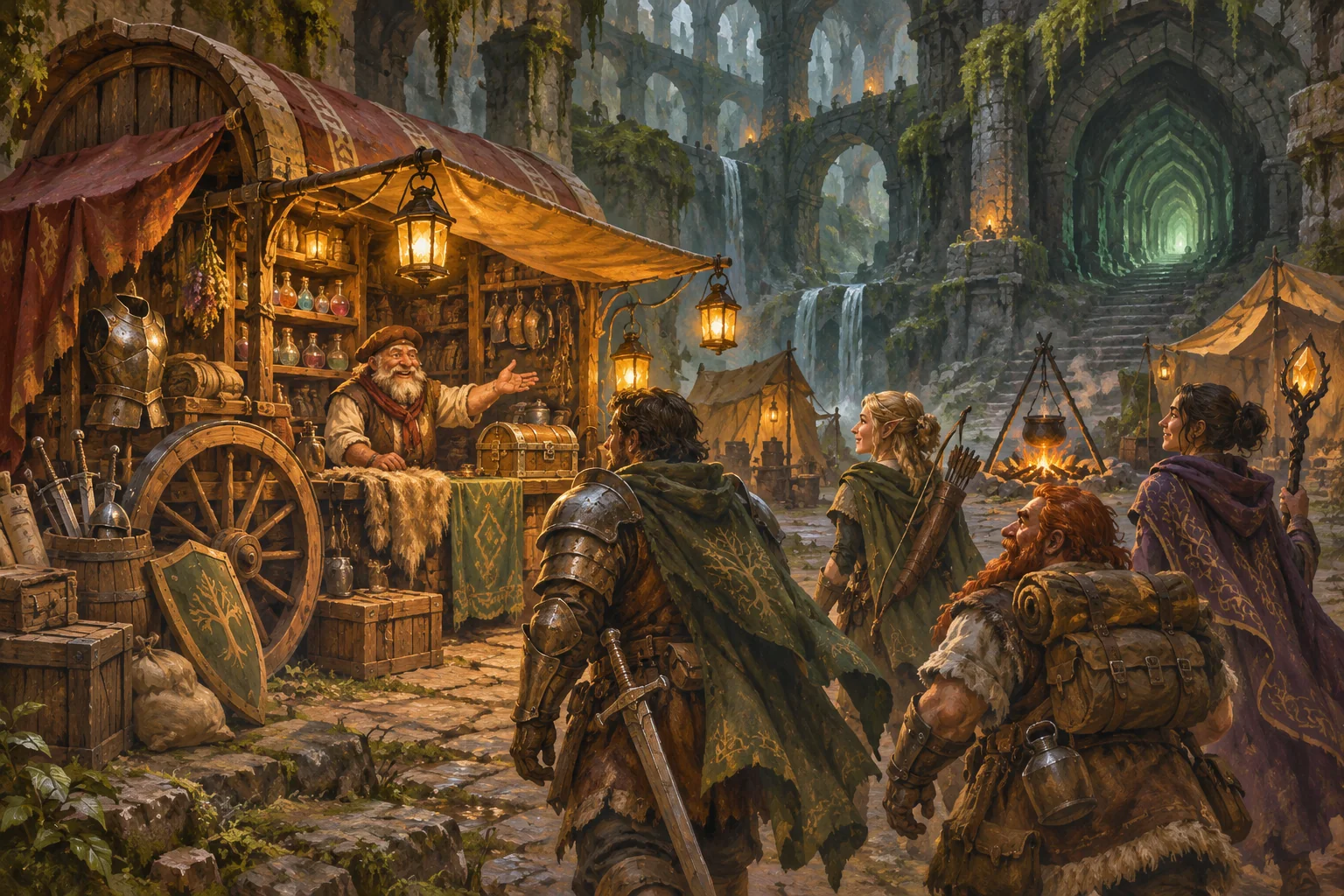
Make the wagon a useful stop on the route
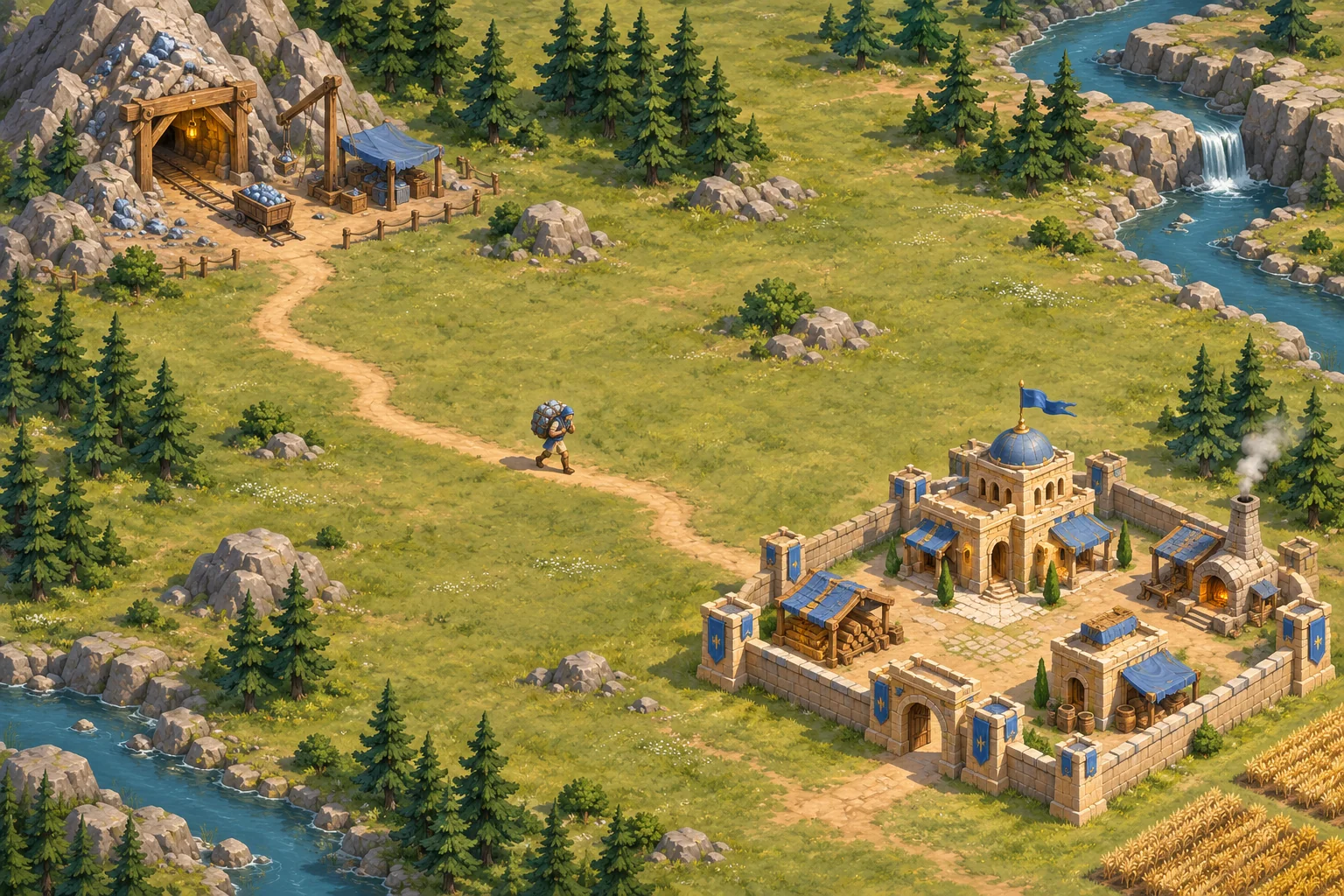
Keep the shop's location visible on the dungeon map. After each room, show the party's distance from the wagon, current lamp fuel and carried relics. The wagon can convert one relic into two fuel units, restock a limited healing kit or reveal a rumor about the next chamber. Give each service a clear cost.
Let the wagon advance at a predictable pace or remain at a discovered camp until the party catches up. If it moves, show when and why; a base that relocates without notice can make route planning feel arbitrary. Keep a persistent ledger for stock and upgrades so revisiting the shop feels like returning to a familiar base.
Test one two-room route before adding merchants or branching inventory. Hold room order, relic drops and starting supplies fixed. Compare the same route with a shop stop and a bypass, then add hazards or stock changes only after the trade decision is clear.
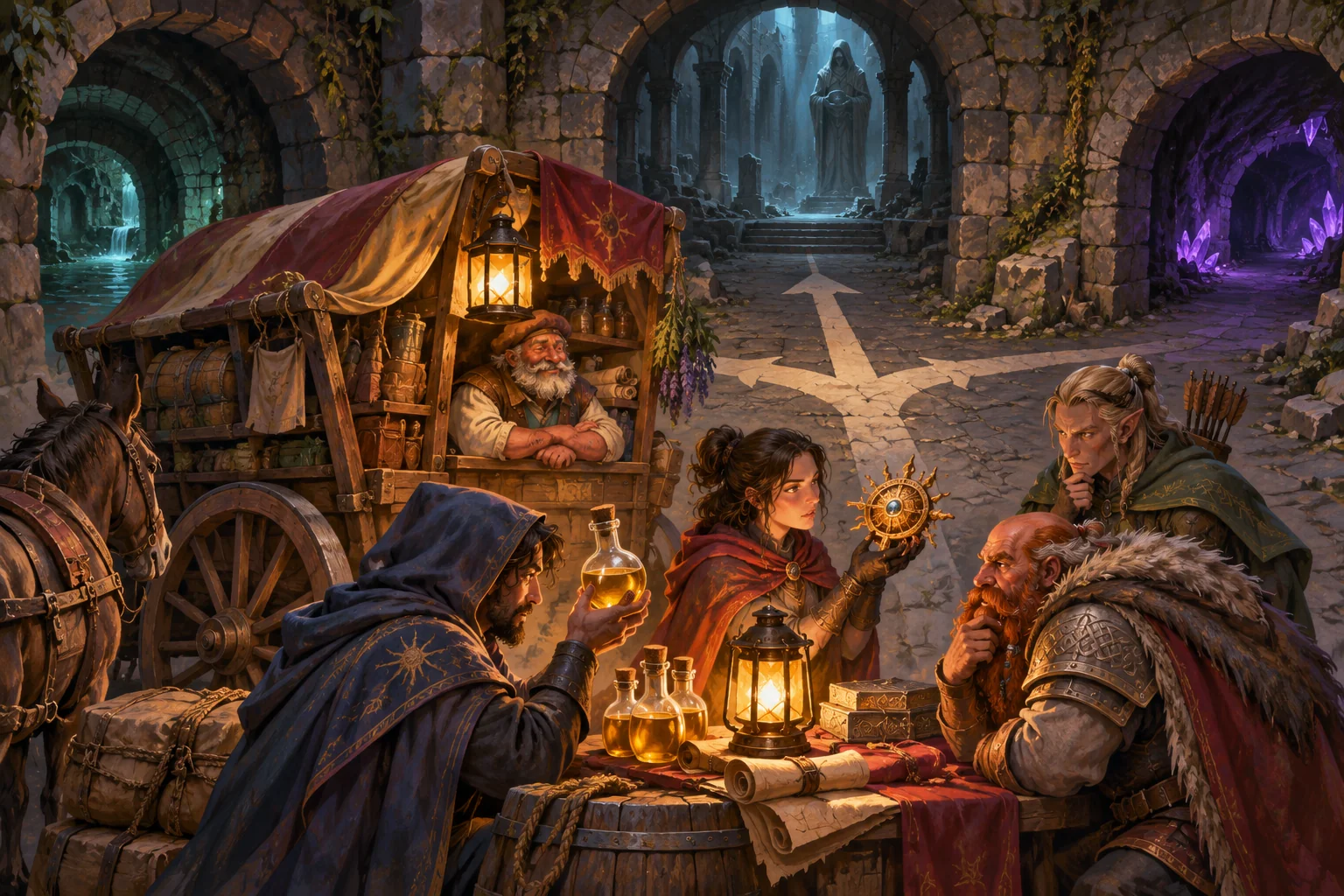
Trade a relic for fuel before the next chamber
The party begins with one lamp unit and finds a relic in the first room. The next chamber consumes two fuel. On the bypass route, the party keeps the relic and reaches the chamber with one fuel, so the lamp runs out before the room is explored.
On the stop route, the party returns to its traveling shop and trades the relic for two fuel units. The next chamber now begins with three fuel and the party keeps the lamp lit through the fixed encounter. Room order, loot and fuel costs remain the same; only the shop stop changes the inventory state.
This deterministic model checks the trade and resource arithmetic only. It does not show whether the detour is too long, the relic feels valuable or the room is enjoyable in darkness. Playtest route length, supply costs and shop relocation before tuning the crawler's pacing.
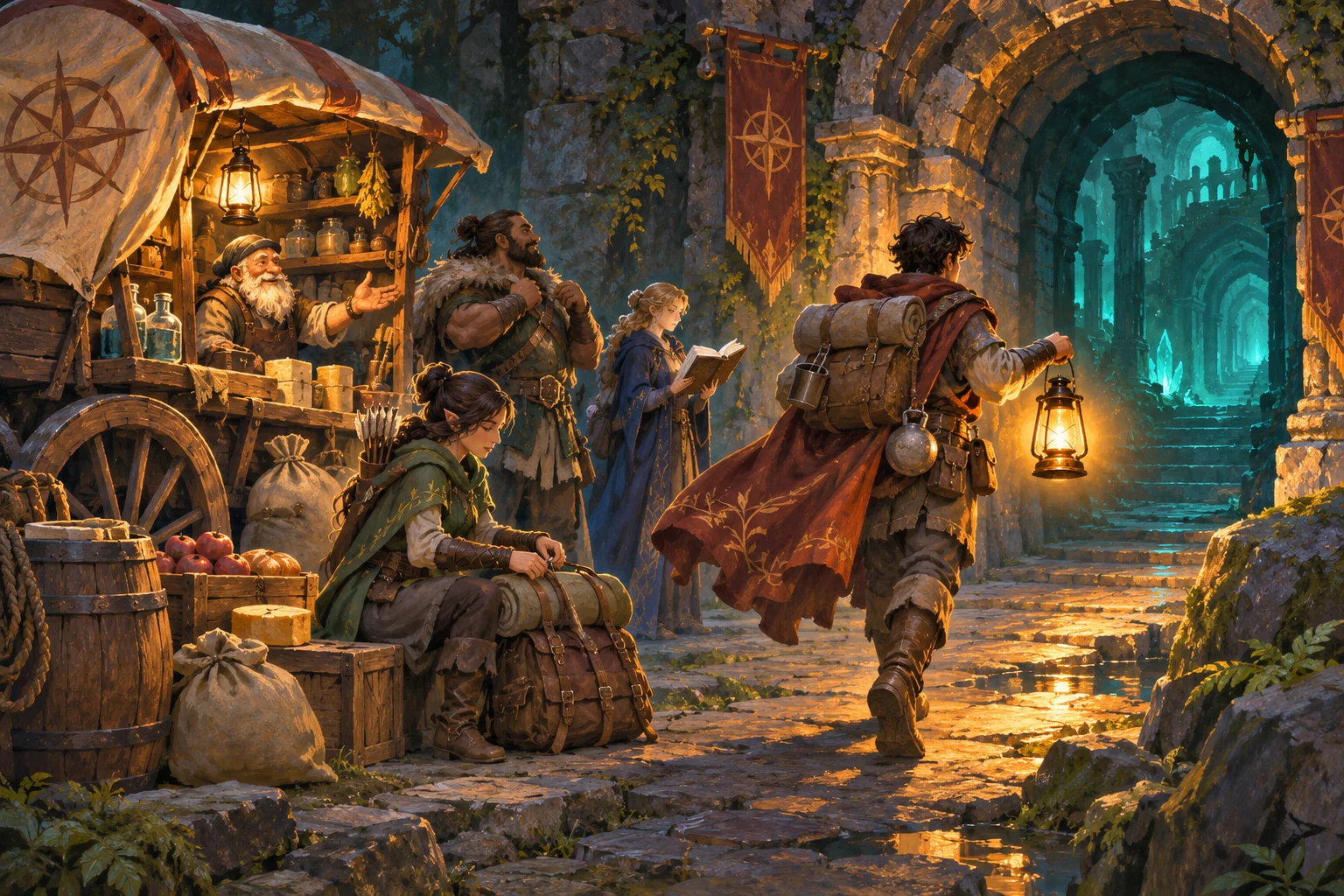
Ask AI to prototype a traveling shop base
Show the wagon's map position, party supplies, relic cost and trade result.
Change only whether the party stops at the shop; keep the route and loot fixed.
Create a dungeon crawler where a merchant wagon travels with the party and serves as its base. Start with 1 lamp fuel; the party finds 1 relic in the first room; the next room consumes 2 fuel. The wagon trades 1 relic for 2 fuel. Compare bypassing the shop with stopping to trade. Keep room order, loot and costs fixed. Show the wagon location and inventory before and after the choice. Treat this as a resource-state check, not proof of pacing or fun.
Make each return to the shop support a route choice
A traveling shop becomes a dungeon base when it carries persistent stock and converts discoveries into supplies the party needs. Show its location, service costs and inventory clearly. Verify one fixed trade before expanding the stock, then playtest detours and relocation so the shop supports exploration instead of interrupting it.
Prototype a dungeon crawler with SEELE's AI game maker
Frequently asked questions
How can a traveling shop work as a dungeon base?
Let the merchant wagon follow or periodically meet the party, keeping its stock and upgrades between rooms. Players can return to trade relics for supplies, review rumors or prepare for the next chamber. Make its map position and services predictable.
What makes a shop detour worth taking?
Offer a clear trade that matters to the next room, such as exchanging a relic for lamp fuel or healing supplies. Show the route cost and resulting inventory before the player commits. A fixed comparison helps verify the resource change.
Does a resource model prove the shop improves pacing?
No. It checks whether a trade changes supplies under fixed costs. It cannot measure detour length, tension or whether players value the inventory choice. Playtest the route and shop timing before tuning the crawler's pace. Test this across several rooms.