In fictional Greenwheel Farm, two crop beds yield three produce each and four units of residue. A storm captures six water units and turns them into four energy units for a small factory. One factory batch uses three energy and two residue to make three compost; apply one compost to each bed. Next season, each bed yields four produce. Keep two produce as seed and sell six at two coins each for 12 coins. In a no-storm control, the factory cannot run: yield stays at six, two are retained, and four sell for eight coins. Report water, energy, residue, compost, harvest, and sales. The loop connects weather recovery, farm waste, seasonal planting, and income with explicit balances.
Capture storm runoff as factory power
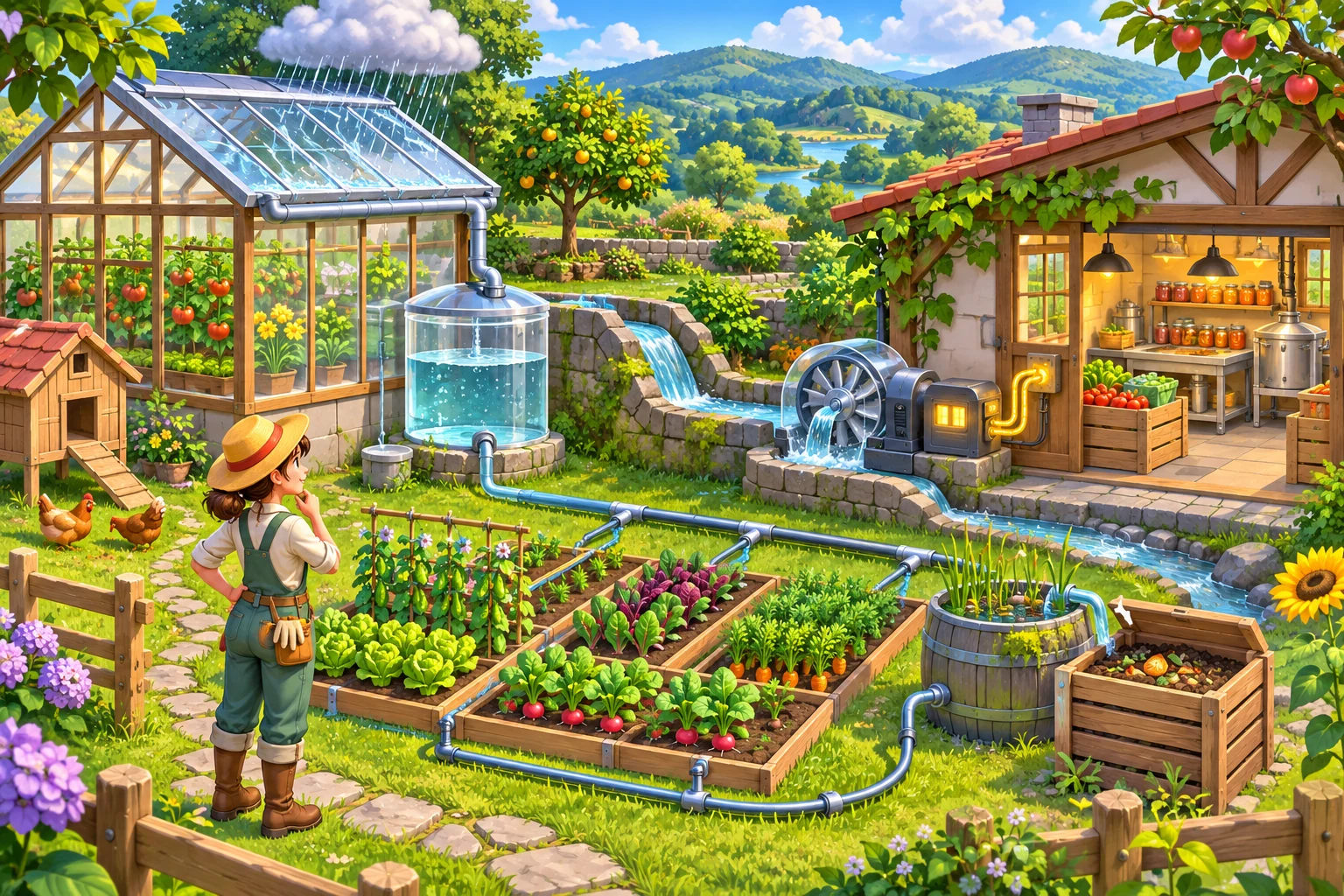
Begin with two planted beds. Each yields three produce and two residue, giving six produce and four residue total. A storm sends six units of runoff into a cistern and waterwheel, generating four energy units for the factory. Keep water, energy, and residue as separate tracked resources; captured water is the source of power, while crop residue is a factory input.
Show the storm capture and the energy balance in the farm view. The factory has no external power in this test. Its batch costs three energy and two residue, so the available four energy and four residue allow one batch, leaving one energy and two residue. Godot Resources can store authored farm and machine settings; Greenwheel Farm and its values are fictional.
Run one factory batch and return compost to the beds
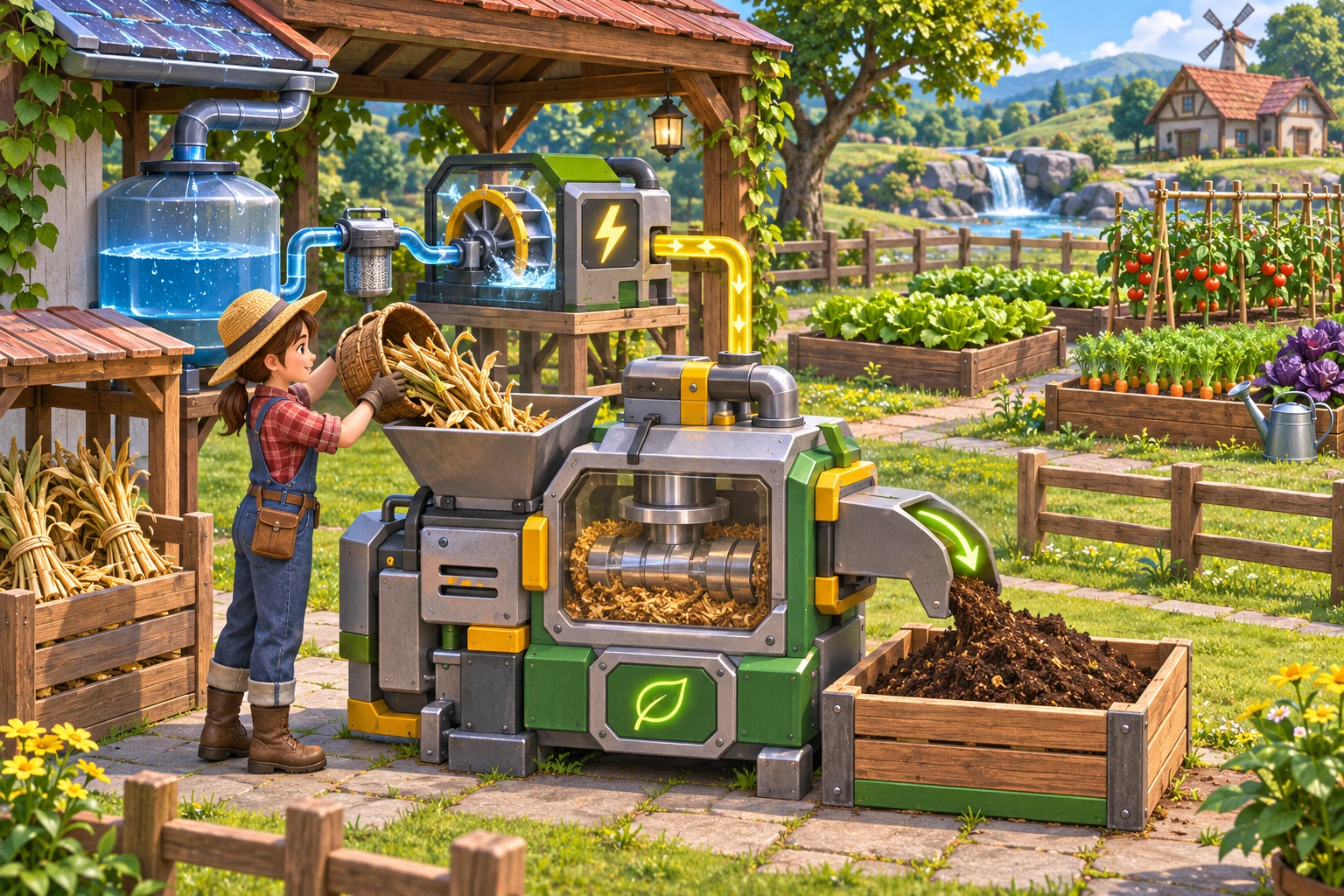
Run exactly one batch: spend three of four energy units and two of four residue units to create three compost units. Apply one compost to each bed, leaving one compost in storage. The machine has converted recovered environmental inputs into a farm improvement rather than importing power or discarding the harvest waste.
Keep the first season yield fixed at six produce. Record the remaining balance after production: one energy, two residue, and one stored compost. If the storm does not arrive, generate no energy and skip the batch. This control prevents the factory from running on an unlisted backup supply.
Compare the next harvest and market income
With compost on both beds, the next season yields four produce per bed, or eight total. Retain two produce for seed and sell six at two coins each, earning 12 coins. In the no-storm control, no compost is made, so the yield remains six: retain two and sell four for eight coins. The difference is tied to the recovered-resource loop.
Report both outcomes with the same starting beds and market price. Include captured water, generated energy, residue used and left over, compost made and applied, yield, seed reserve, and coins earned. This deterministic comparison checks that the factory uses only recovered inputs and that its benefit appears in the following season. Greenwheel Farm and all quantities are fictional.

Give the AI a fixed recovered-resource farm test
Create a farming simulation in fictional Greenwheel Farm. Two beds each yield 3 produce and 2 residue in season one. A storm captures 6 water units and generates 4 factory energy. One batch costs 3 energy and 2 residue and makes 3 compost; apply one to each bed. In season two, each treated bed yields 4 produce. Keep 2 as seed and sell 6 at 2 coins each. Run a no-storm control: zero energy, no batch, yield 6, keep 2 and sell 4 for 8 coins. Report every resource balance and sales.
Verify the storm run: season one yields 6 produce and 4 residue; runoff generates 4 energy; one batch uses 3 energy and 2 residue to make 3 compost; apply 2 and store 1. Season two yields 8 produce; reserve 2 seeds and sell 6 for 12 coins. In the no-storm control, the factory stays off, yield remains 6, and selling 4 after reserving 2 earns 8 coins.
FAQ
How can environmental resources power a farm factory?
Define a recoverable input such as captured runoff, then state how much usable energy it creates. Keep it separate from crop residue used by the machine. A visible balance lets players see why production runs and prevents the factory from quietly relying on an unlisted power source.
How should crop waste fit into a farming loop?
Track residue produced by each harvest and specify how much a machine consumes. Return the output, such as compost, to the beds in the next season. This connects harvesting, processing, planting, and yield in a repeatable cycle instead of treating farm waste as an unlimited bonus.
What should a seasonal farm prototype compare?
Use the same beds and market price in a resource-enabled run and a control without the recovered input. Record energy, residue, compost, next harvest, seed reserve, and sales. The comparison shows whether the factory’s benefit follows from the specified resource loop.