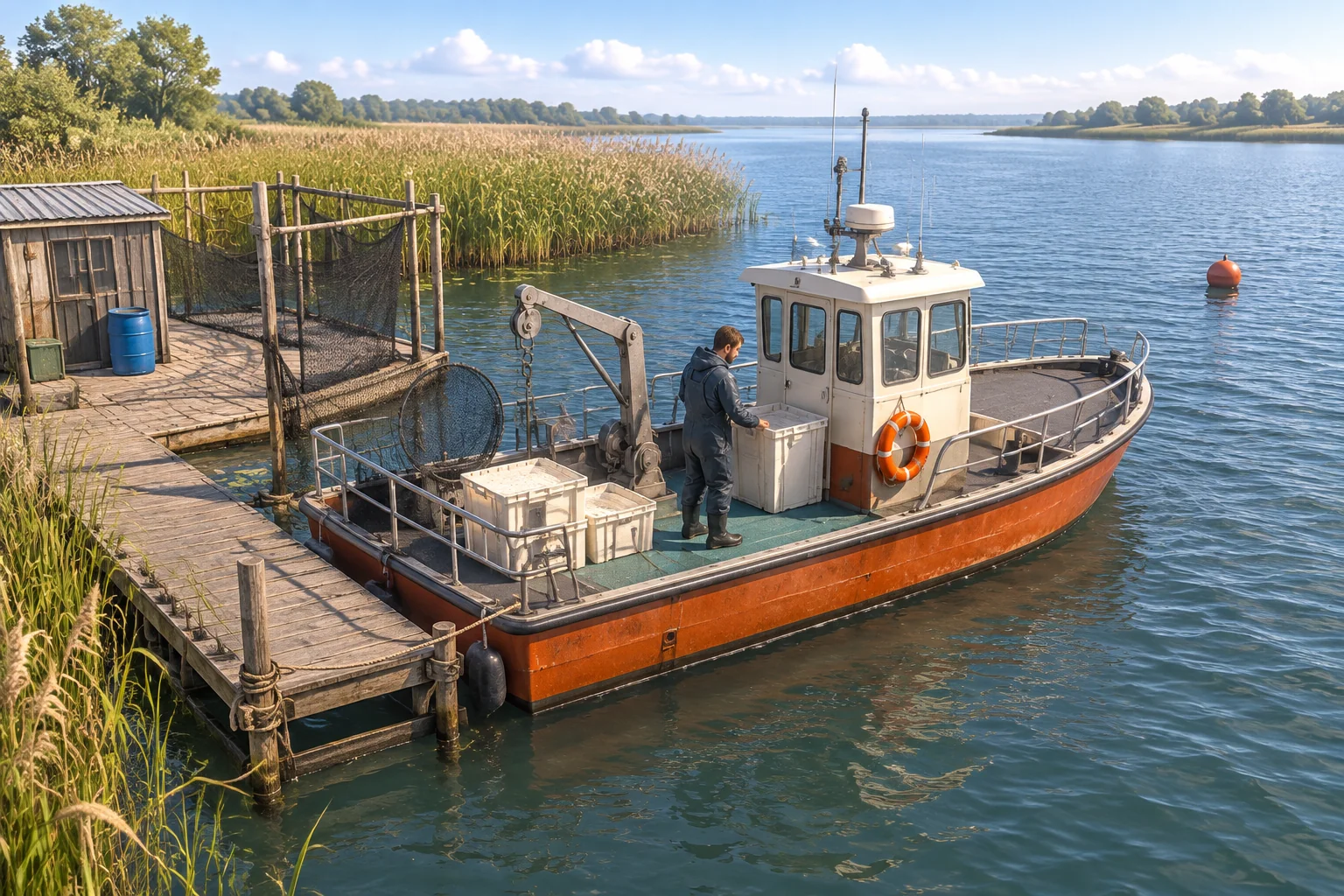
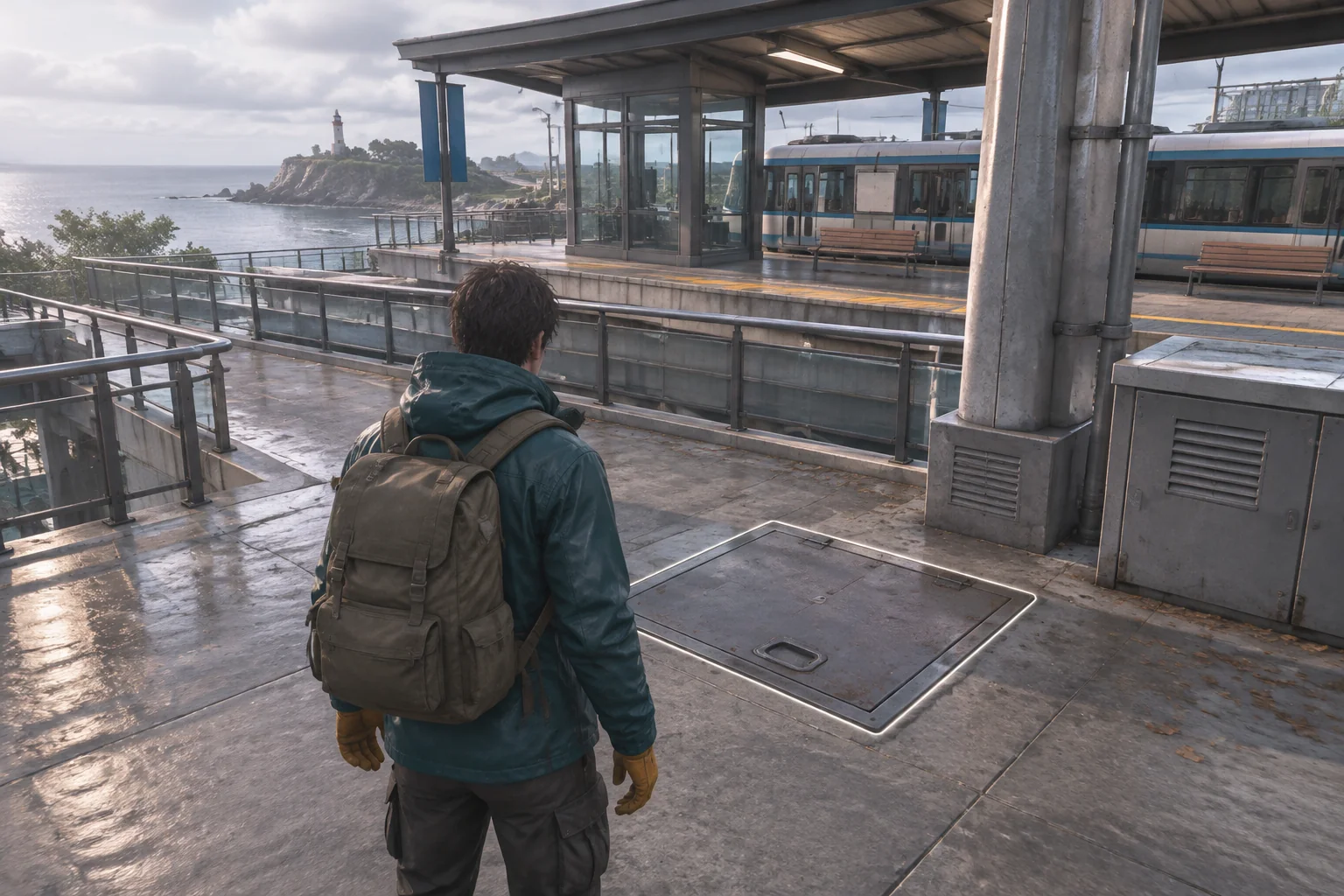
A fishing adventure can tell a story through the way the player arranges found objects. Start with a shell, driftwood, and red buoy from the harbor, then place them on a tide table with three slots. Their order reveals a memory tag and can affect a practical fishing reward.
Give each object a readable place
Collect the three objects during a short shoreline walk. At the table, let the player move each object between the left, center, and right slots. Keep the objects visible and avoid adding more inventory items while testing the story interaction.

Map arrangements to distinct memories
The shell–driftwood–buoy order reveals a return memory. The buoy–driftwood–shell order reveals a departure memory. Store the result as a journal tag instead of a long cutscene. Only the return tag unlocks the harbor lure.

Replay both object orders
Begin with no objects placed and no journal tag. Test the return arrangement and confirm that it writes return and unlocks the lure. Reset, test departure, and confirm its tag is distinct while the lure stays locked.
| Arrangement | Journal tag | Harbor lure |
|---|---|---|
| --- | --- | --- |
| Shell–driftwood–buoy | Return | Unlocked |
| Buoy–driftwood–shell | Departure | Locked |

Prompt for an AI game maker
Ask for a small fishing-adventure harbor where three collected objects can be rearranged on a tide table. Define two exact orders, show a distinct journal memory tag for each, and unlock one lure only for the return memory. Include a reset so both patterns can be replayed.
Keep fishing catches and dialogue branches outside this first experiment. Add more objects only after each arrangement reliably produces its intended memory.
Start a fishing adventure prototype in SEELE
Frequently asked questions
Does the arrangement need a cutscene?
No. A short memory card or journal tag can show the story result clearly and keeps the test focused on object placement. Keep the arrangement rule fixed during this test so the memory and reward remain easy to compare. Repeat the check once. again.
Can both arrangements unlock the lure?
Not in this prototype. Only the return tag unlocks it, so the reward rule is visible and testable. Keep the arrangement rule fixed during this test so the memory and reward remain easy to compare. Repeat the check once. again.
What should happen after an invalid order?
Show no memory tag and keep the lure locked. This gives the player clear feedback without inventing an unintended story. Keep the arrangement rule fixed during this test so the memory and reward remain easy to compare. Repeat the check once. again.