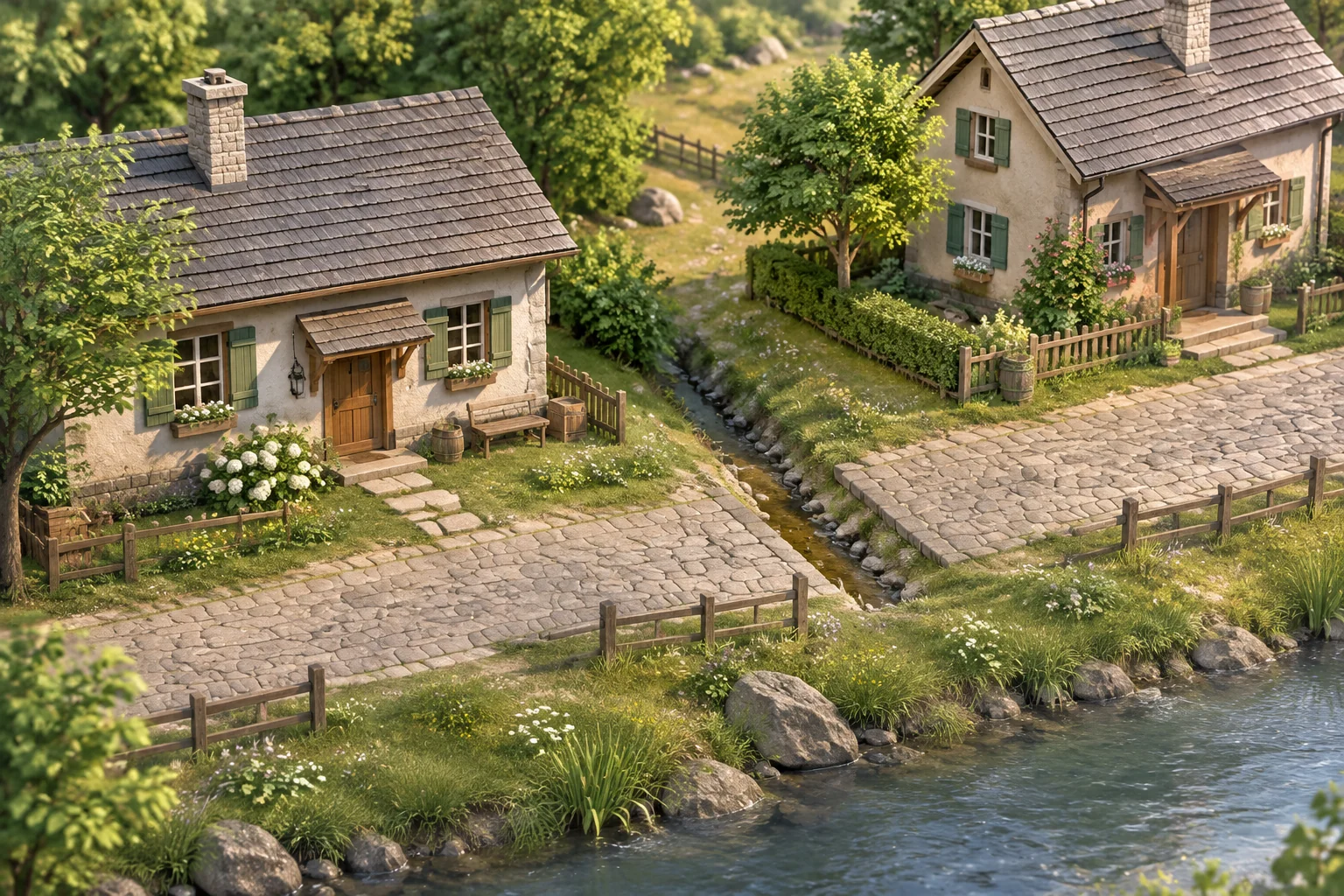
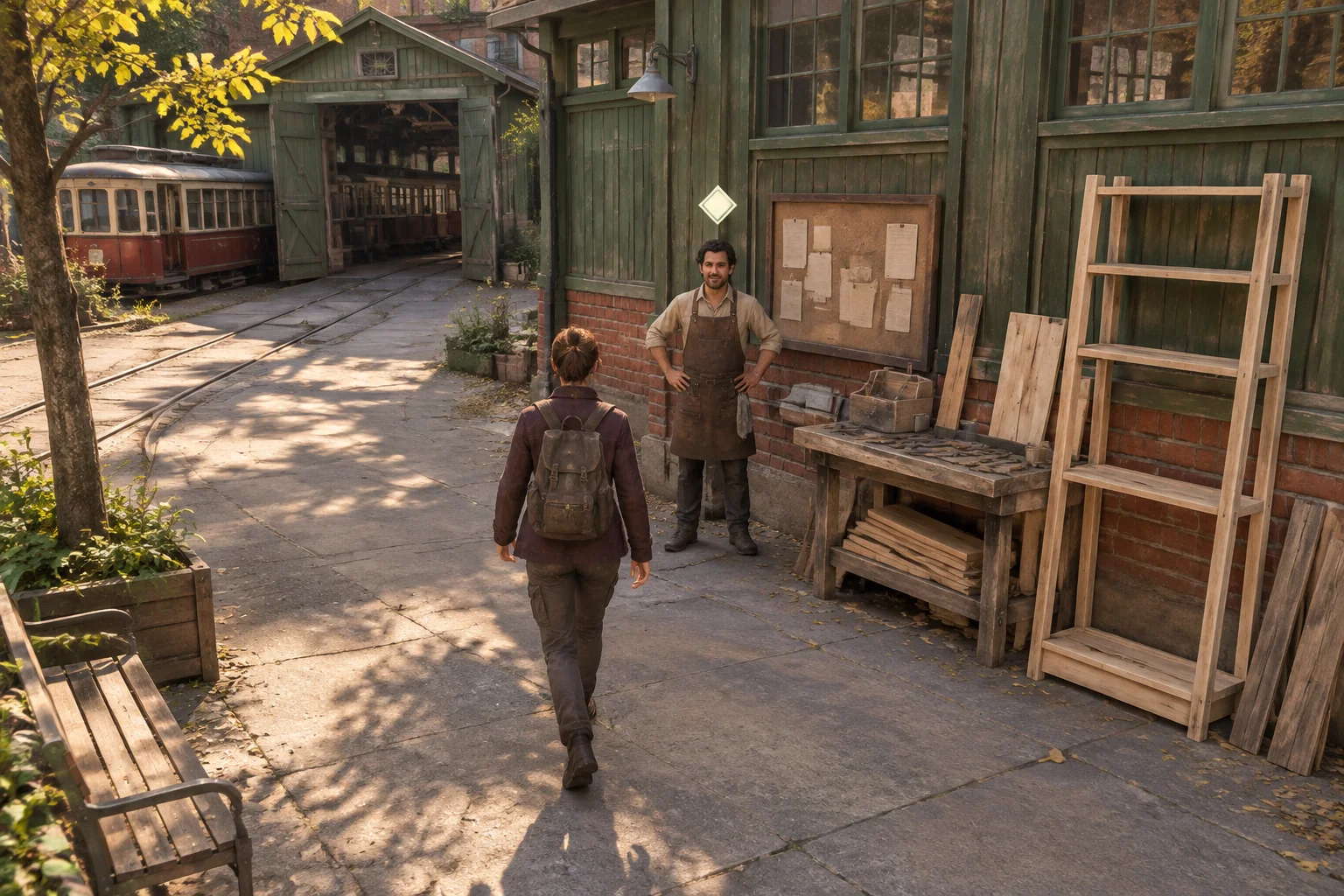
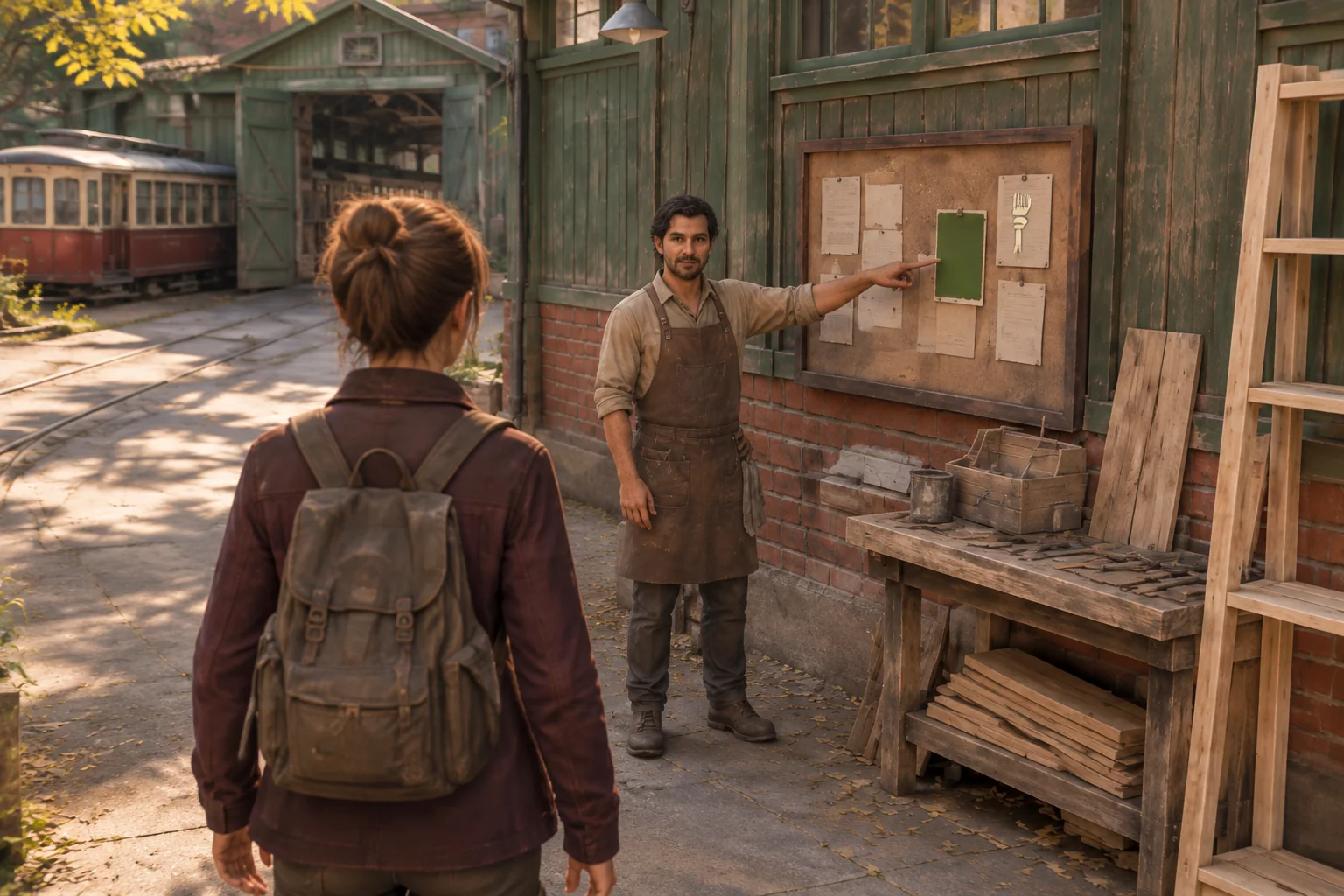
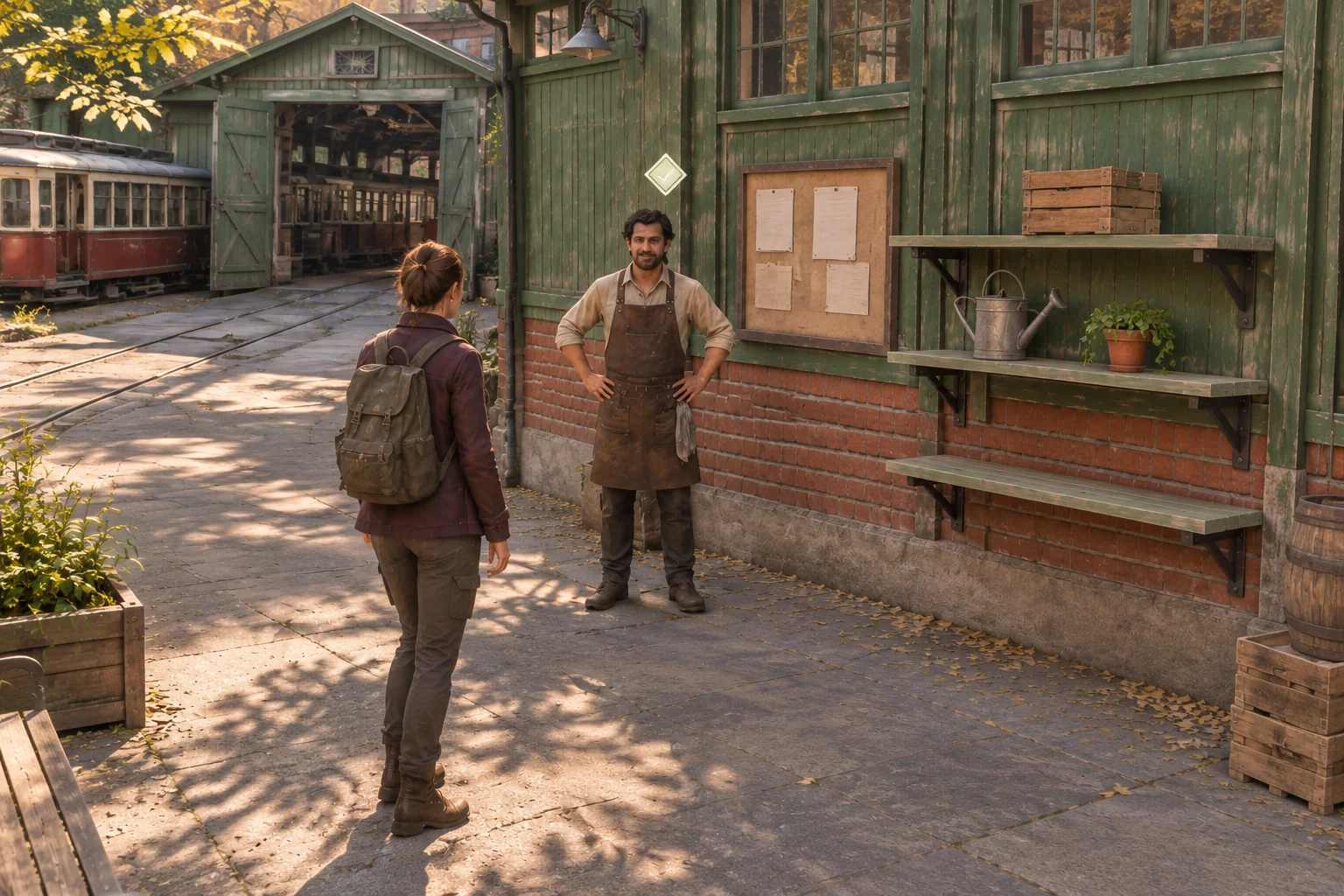
To make an original game inspired by Animal Crossing, start with a familiar place, people the player can return to, and a small project that changes the neighborhood. In this fictional inland tram depot, two neighbors help turn an empty frame into a public exchange shelf. The player gathers wood and asks each person for one contribution over three visits.
Use a visit button to advance this prototype. The player can stay and inspect the courtyard as long as they like. The decision is what to do before leaving, and the shelf gives them a visible reason to come back.
Take one idea from the reference into a new place
Nintendo’s Animal Crossing: New Horizons gives players an island to explore, with activities such as gardening and fishing and opportunities to get to know animal residents. Nintendo also describes talking with neighbors and helping with requests. Those facts come from Nintendo’s New Horizons page and its guide to neighbor interactions.
For your own game, use the idea of returning to familiar people and seeing a place change. Give them new roles and a reason to contribute. At the depot, Jun can paint the shelf and Sol can fit the mounting brackets. The courtyard, people, props, and visit rules belong to this project.
Give each visit a small decision
Start on visit 1 with two actions, no boards, and no promises. Jun is available on the first visit, Sol on the second, and both on the third. Show who is present at the noticeboard. Inspecting the board is free. The player selects End Visit when ready. The game never reads the device clock or advances while they look around.
| Action | Rule | What changes |
|---|---|---|
| Ask a neighbor | Spend one action if that neighbor is present and has not promised before. | Record the resident’s contribution once. |
| Collect a board | Spend one action. Allow one pickup per visit. | Add one board to the player’s stock. |
| Install the shelf | Spend one action. Require both promises, at least two boards, and an unfinished shelf. | Use two boards and replace the frame with a finished shelf. |
| End Visit | Use whenever ready, at no action cost. | Advance the visit or show the final recap. |
Carry boards and promises between visits. For visits 2 and 3, restore two actions and allow a new board pickup. Ending early leaves the unused actions behind. Reject repeated promises, extra pickups, unavailable residents, and installation without the required materials, promises, or action. A rejected request leaves the state unchanged.
Compare a finished project with an unfinished one
Try the two schedules below. Both players collect the same boards and eventually get both promises. The difference is when they make room for those conversations.
| Visit | Completion route | Delayed promises |
|---|---|---|
| 1 | Ask Jun and collect one board. End with Jun’s promise and one board. | Collect one board and end early, with no promises. |
| 2 | Ask Sol and collect one board. End with both promises and two boards. | Collect one board and end early, with two boards and no promises. |
| 3 | Install the shelf. It uses one action and both boards. End with the shelf finished. | Ask Jun and Sol. Install is rejected because no actions remain. End with the shelf unfinished. |
In the delayed route, keep the promises and both boards when the installation is rejected. The recap can show what is ready and what remains unfinished. If you reset those contributions immediately, the player loses the information that explains what to do differently next time.
Ask AI to build the visit loop
SEELE’s cozy game creator offers a starting point for designing a small place, a repeatable action, and a visible payoff. Describe the courtyard and fix the visit rules in the prompt. Let the first draft establish the scene while you check whether the actions, contributions, and recap agree.
Build one original browser neighborhood game in a retired inland
tram depot courtyard. Use a noticeboard, material bench, two human
neighbors, and one unfinished public exchange shelf frame.

Start on visit 1 with two actions, no boards, and no promises.
Jun is present on visit 1, Sol on visit 2, and both on visit 3.
Inspecting the board is free. Ask a present neighbor once to spend
one action and record their unique promise. Jun supplies a paint
finish and Sol supplies brackets. Collect Board spends one action
and adds one board, at most once per visit.

Install spends one action and consumes two boards. Require both
promises, two or more boards, and an unfinished shelf. Replace the
frame with a finished shelf and allow installation only once.
Reject invalid actions without changing any state.

End Visit advances the visit with no action cost, preserving boards
and promises. Restore two actions and the board pickup on visits 2
and 3. Ending visit 3 shows finished or unfinished. Keep the project
state in the recap. Do not use a device clock or calendar.
Restart restores the initial visit, stock, promises, and frame.
Check an unavailable neighbor, a repeated promise, and a second board pickup on the same visit. Confirm that none of those requests spends an action. Run both schedules in the table, then reset and verify that the first visit starts with an empty stock and unfinished frame. The guide to checking an AI game in small steps can help you isolate a follow-up change if a rule fails.
Show who will be around on the next visit
Try one board change if players save both conversations for the end. Leave the current-visit list alone and add a cue for the next visit. At the same starting state, both versions show Jun now. The revised board also shows Sol next. On visit 3, the board has no upcoming visit to show.
Keep the same availability, action budget, and shelf rules. The worksheet changes only what the player can see ahead of time. In a built version, observe whether players can say whom they plan to ask next and whether they recognize that leaving both promises until visit 3 uses both actions.
Let one shared place show the progress
Build the shelf project before adding more rooms or routines. Try a completed visit sequence and an unfinished one, then check whether the recap explains the difference. Start your original neighborhood game with SEELE’s cozy game creator and use the three visits to check when the courtyard changes.
Frequently asked questions
Do I need a real-time clock for a neighborhood game?
For this prototype, let the player advance visits manually. You can check availability and progress with a repeatable sequence, and the player can pause to inspect the courtyard. Add a clock only if real waiting is part of the experience you want to design.
How can neighbors feel distinct without an affinity meter?
Give each neighbor a recognizable role and a contribution that changes the shared project. A painter might bring the finish while a carpenter brings the brackets. Show their work in the result so the difference is visible even when there is no friendship score.
What should happen if the project stays unfinished?
Keep the recap specific. Show which materials and commitments are ready, then explain which requirement is missing. In the delayed route, the stock and promises are complete, but there is no action left to install the shelf. That gives the player a clear reason to try another schedule.
When should I add another routine?
Add one after the first project has a clear beginning, a useful reason to return, and a visible result. Give the next routine a different purpose, such as stocking the shelf after it is installed. Check that the new action does not hide the reason to visit the neighbors.