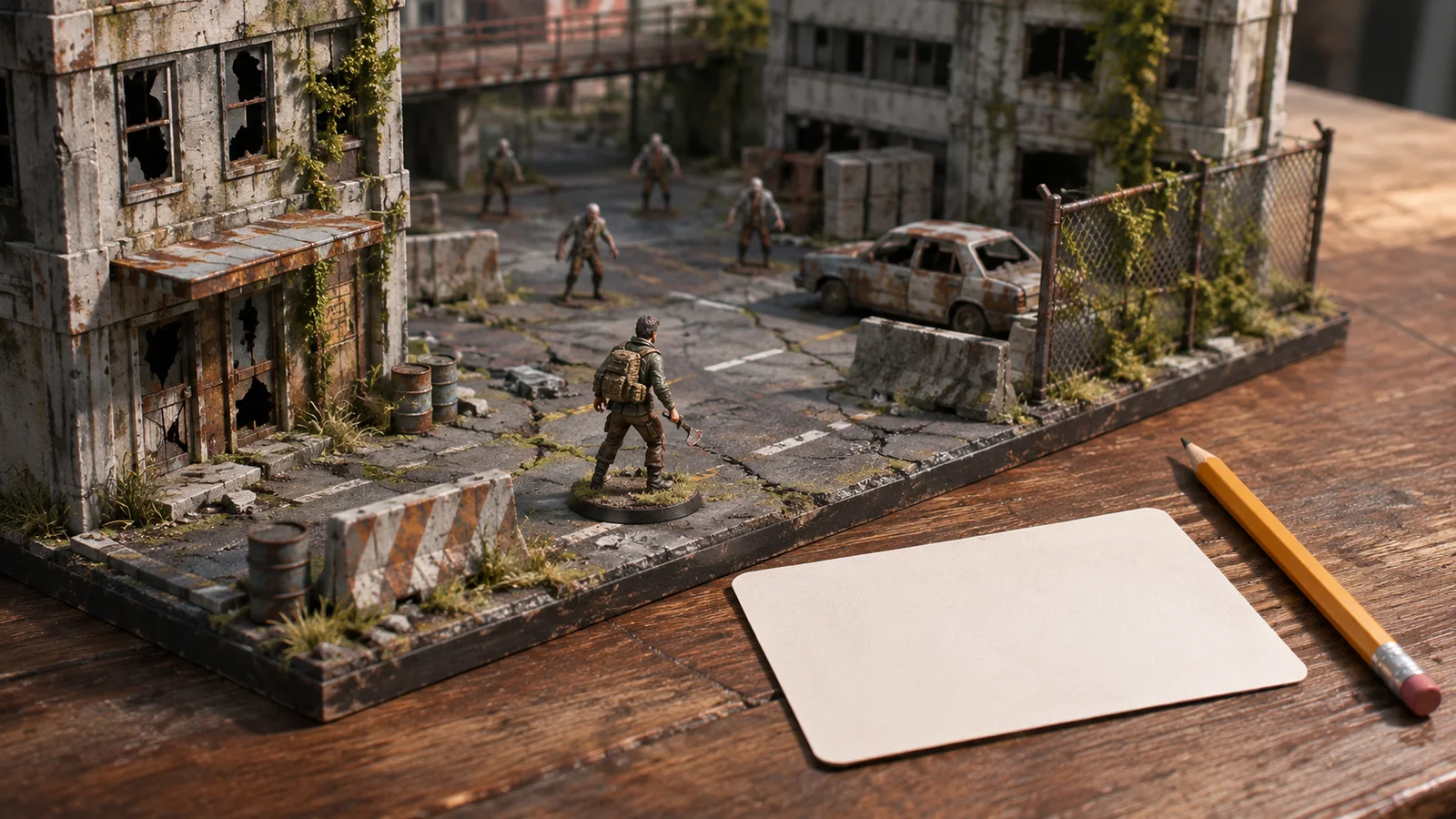
To make an original puzzle inspired by Baba Is You, start with one thing the player can change about the room. In this fictional utility vault, pushing a ceramic selector onto a socket changes which screens the player can walk through. The first setting opens a route to an access token. The second opens a route to the exit.
Give that change a physical cause the player can see. Two differently shaped sockets let you teach one rule, then check whether the player understands what closes as well as what opens.
Turn the reference mechanic into a different rule
In Baba Is You, players move blocks that represent the rules of a level. Moving those blocks can change how objects behave or what the goal is. Hempuli’s description of Baba Is You explains the mechanic, and the official Steam listing credits Hempuli Oy as developer and publisher.
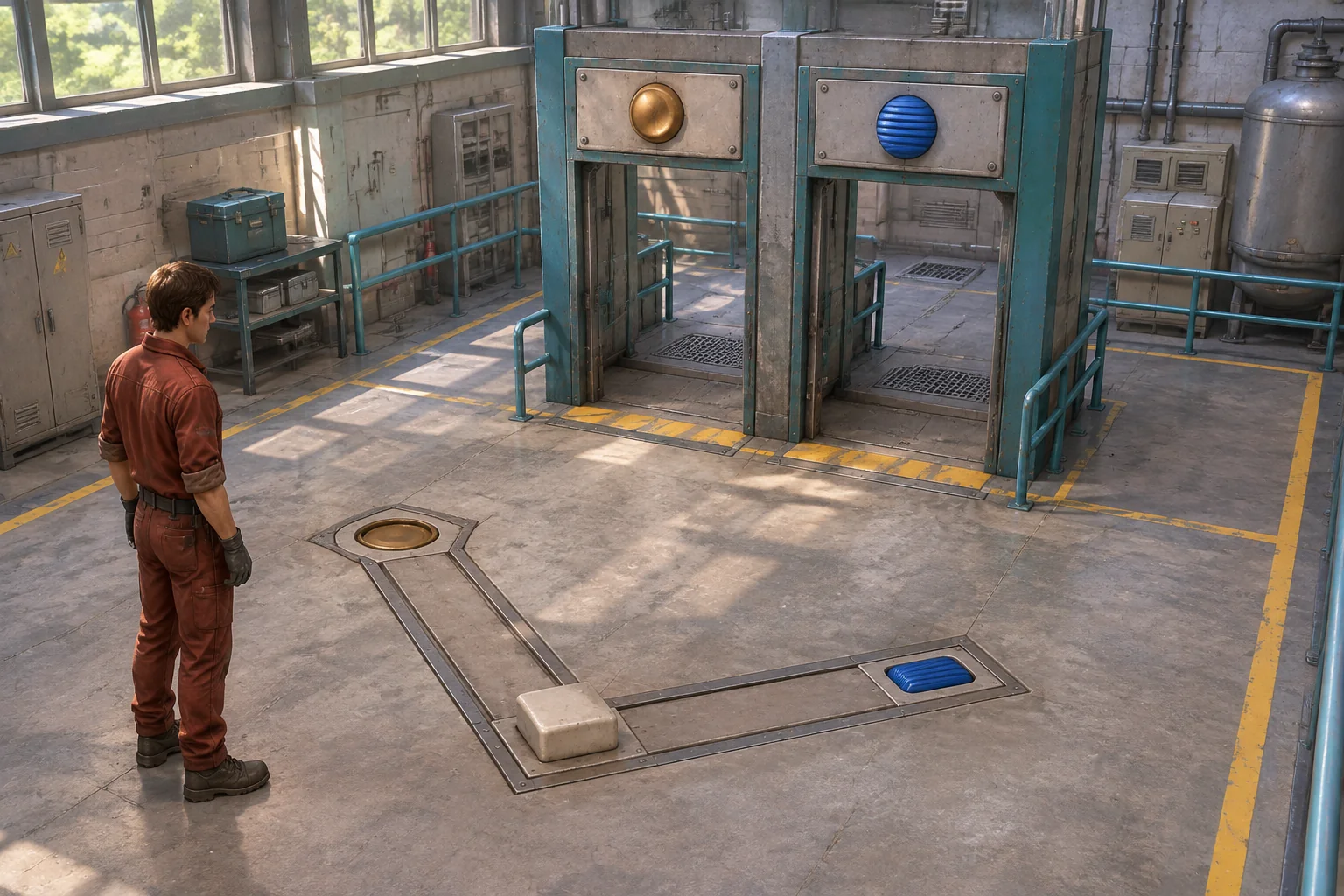
For the original utility room, use a single physical selector and two shape-coded sockets. The selector assigns passability to a family of screens. The shapes identify the family, while the position of the selector determines which one is passable. Make the setting, objects, and feedback fit your own puzzle.
Define what each selector position changes
Use a seven-column, five-row grid. Count x from zero to six eastward and y from zero to four southward. Start the technician at (0, 2) and the selector at (1, 2). Mark (1, 2), (2, 2), and (2, 3) as the only tiles the selector can occupy.
| Selector position | Bronze-circle screens | Cobalt-ridge screens |
|---|---|---|
| Neutral track cell (1, 2) | Solid | Solid |
| Bronze-circle socket (2, 2) | Passable | Solid |
| Cobalt-ridge socket (2, 3) | Solid | Passable |
Build a divider in column 3 with a bronze screen at (3, 1), a cobalt screen at (3, 4), and fixed walls in the other cells. Put fixed walls at (4, 2), (5, 2), and (6, 2) so the areas on the right stay separate. Put the access token at (4, 1) and the exit at (5, 4). All other tiles are open.
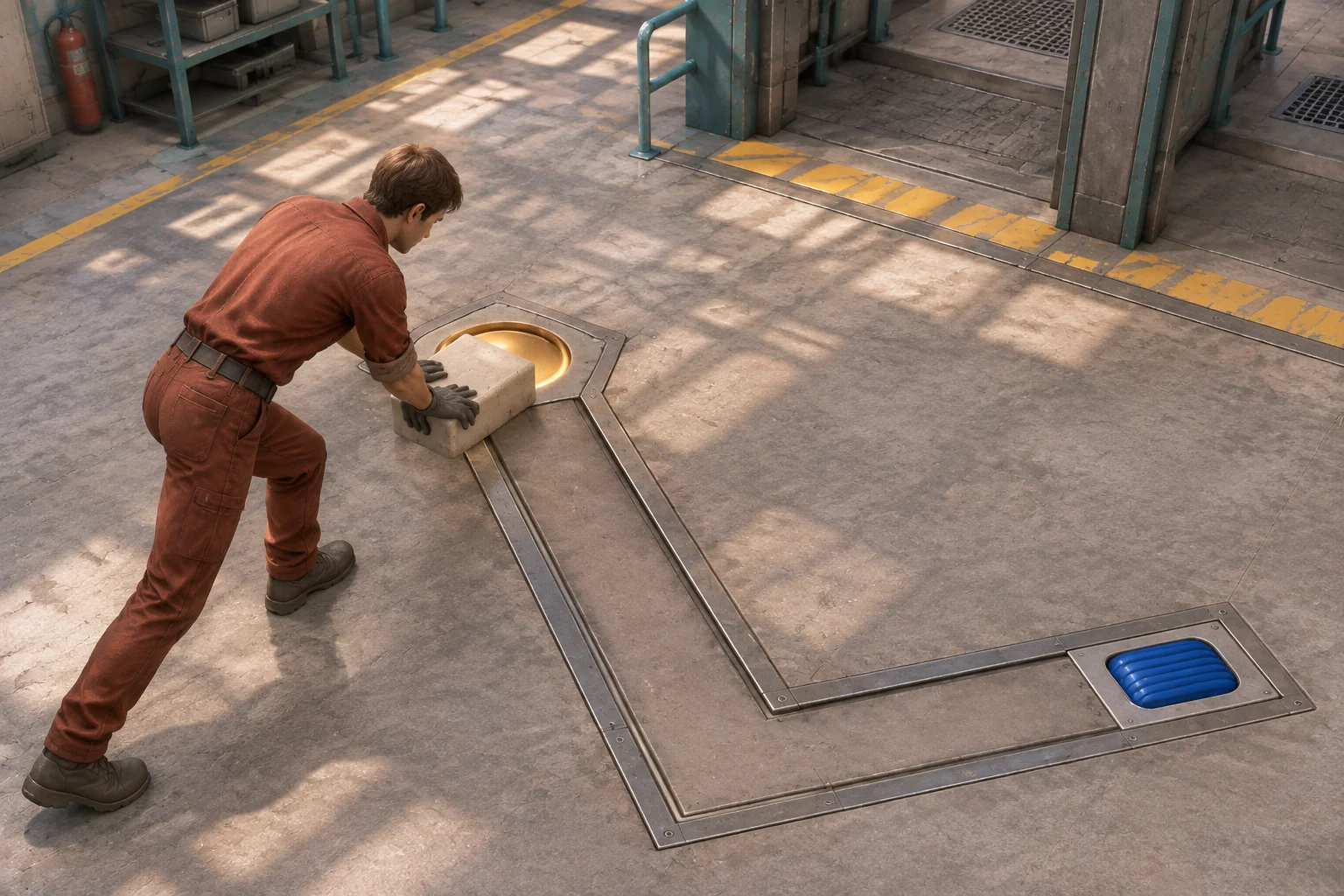
A direction input moves the technician one tile. If the next tile holds the selector, push it one step in the same direction only when the destination is on the track. The technician then enters the tile the selector left. Reject a wall, a closed screen, an off-track push, or movement outside the board without changing any state. Derive passability from the selector’s new position before the next move.
Collect the token before changing the rule again
| Inputs from the previous state | Expected result |
|---|---|
| Right | Push the selector to (2, 2). The technician is at (1, 2), and only bronze is passable. |
| Up, right, right, right | Cross the bronze screen and pick up the token at (4, 1). |
| Left, left | Return to (2, 1) while the bronze screen is still passable. |
| Down | Push the selector to (2, 3). The technician is at (2, 2), and only cobalt is passable. |
| Left, down, down, right | Go around the selector and reach (2, 4). |
| Right, right, right | Cross the cobalt screen and reach the exit at (5, 4) with the token. |
The first route is useful because it reaches the token, but the player needs to return through it before using the other setting. Try reaching the exit after switching to cobalt without taking the token. The technician can enter the tile and keep moving, but the room stays unfinished. If the player returns to (2, 4), they can push the selector up to make bronze passable again.
Ask AI for the room and the exact move rules
SEELE’s puzzle game maker offers a starting point for describing a rule, a visible clue, and a player action. Give it the new setting and exact grid. Keep the selector’s movement and passability table fixed so you can compare the first build with the route.
Build one original browser puzzle in a municipal utility relay room.
Use a 7-by-5 grid, x=0–6 eastward and y=0–4 southward. Start the
technician at (0,2) and a ceramic selector at (1,2). The only legal
selector cells are (1,2), (2,2), and (2,3).

At x=3 put a bronze screen at (3,1), a cobalt screen at (3,4), and
fixed walls on every other tile. Also block (4,2), (5,2), and (6,2).
Put a one-time access token at (4,1) and the exit at (5,4).

Allow one cardinal step. If it hits the selector, push one cell only
if the destination is on the selector track. On an accepted push,
move the player into the selector's previous tile. Reject invalid
moves and pushes without changing the player, selector, token or rule.

Derive passability from selector position before the next input.
At (1,2) both screen families are solid. At (2,2) only bronze is
passable. At (2,3) only cobalt is passable. Use original shape marks.
Win only when the technician reaches the exit after collecting the
token. Restart restores start positions, token, rules and outcome.
Show a debug grid and the result of the last move.
From the neutral start, move up, right, right, and try another right. The bronze screen should block that move. Reset, then move up and right before trying down. The proposed push would put the selector on open floor at (1, 3), which is off the track. Neither piece should move. After checking the full route, restart and verify that both screens are solid and the token is back. The guide to checking an AI game in small steps shows how to request a focused correction if a rule fails.
Show the two routes that change after a push
Start with a light on the active socket. If that cue gives players too little information, also mark the two affected screens briefly when the selector moves from bronze to cobalt. Give the newly passable cobalt screen a continuous outline and the newly solid bronze screen a dashed outline.
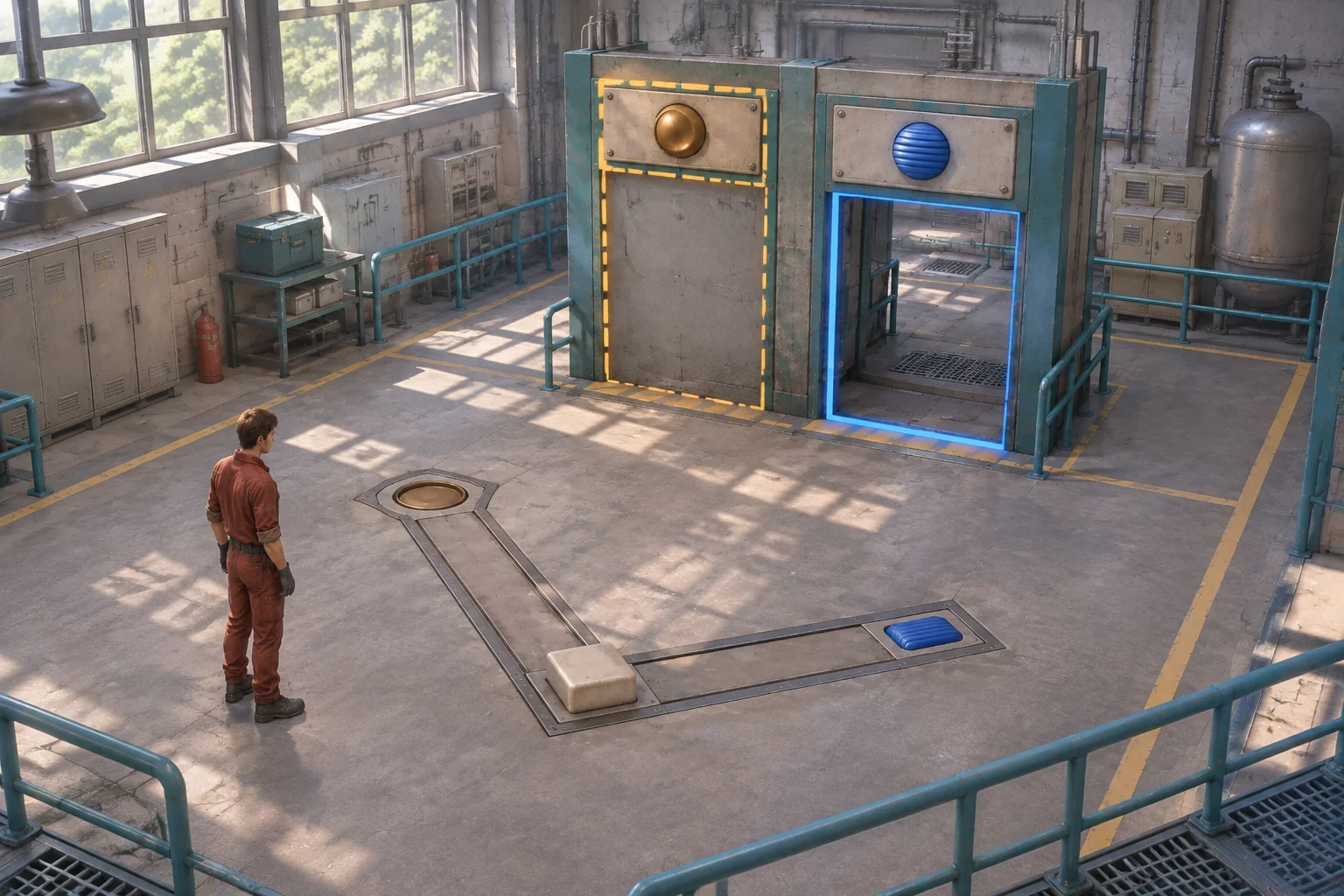
Replay the same push from (2, 1). Both versions leave the selector at (2, 3) and keep the token collected. The original display marks no distant screens, while the revised cue marks both. In a built version, check whether the player can identify the changed routes before moving. The marker has no effect on passability.
Let the first rule create a route the player can explain
Build one room where the player can use a rule, change it, and see what that change does. Verify the blocked and accepted pushes before adding more properties. Start your original rule-changing puzzle with SEELE’s AI puzzle game maker and keep the token route beside the first build.
Frequently asked questions
How can I represent rules without word blocks?
Use a physical control that maps to a visible property. For this room, a ceramic selector chooses one screen family, and the family uses matching shapes on the socket and screen. Check that the shapes remain distinguishable when viewed at the normal game size.
Should the player be able to reverse a rule change?
Give the player a way to return to a previous setting when the layout allows it. Here, the technician can reach the tile below the cobalt socket and push the selector up. Check the recovery path from both sides before adding a change that cannot be reversed.
What should happen when a push is rejected?
Keep the player, selector, and rules in their previous states. A short cue can explain the reason, such as the selector reaching the end of the track. Verify the same rejection with a debug readout so a visual effect cannot hide an accidental move.
When should I add another property to the room?
Add one after players can predict the result of each selector position and explain how it changes the route. Give the new property its own visible cue and one small test. Keep the original room available so you can isolate an interaction if the new puzzle behaves unexpectedly.