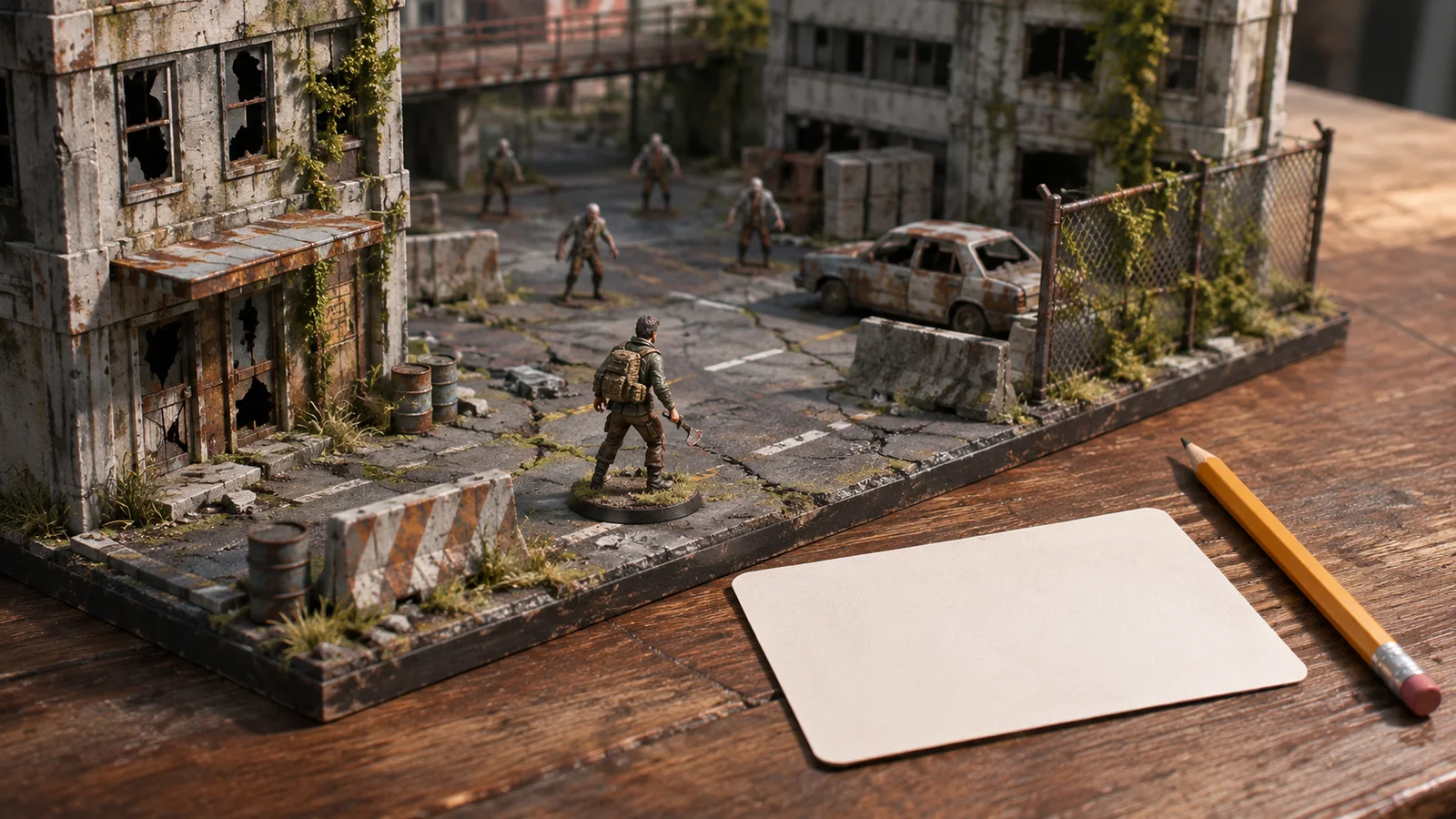
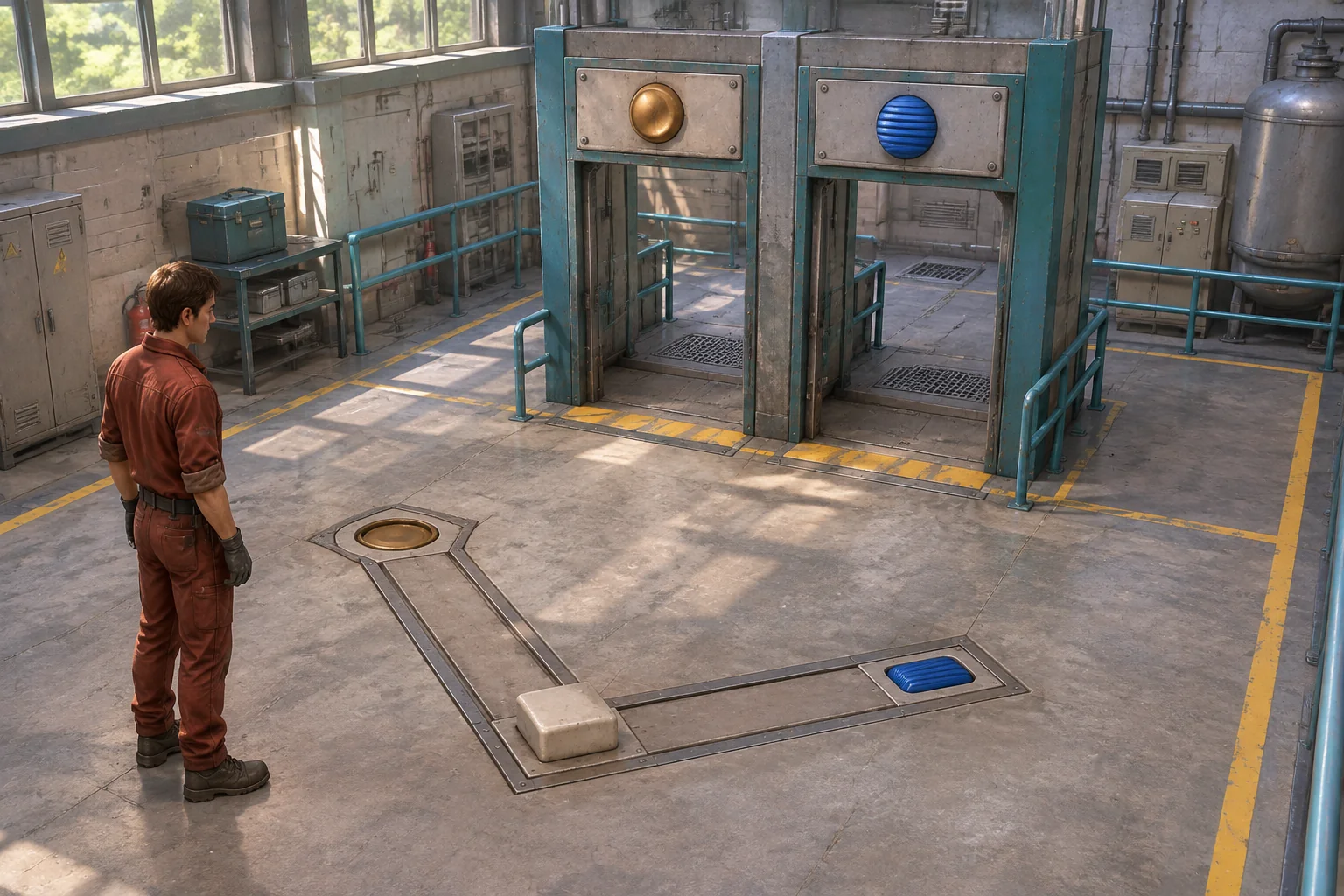
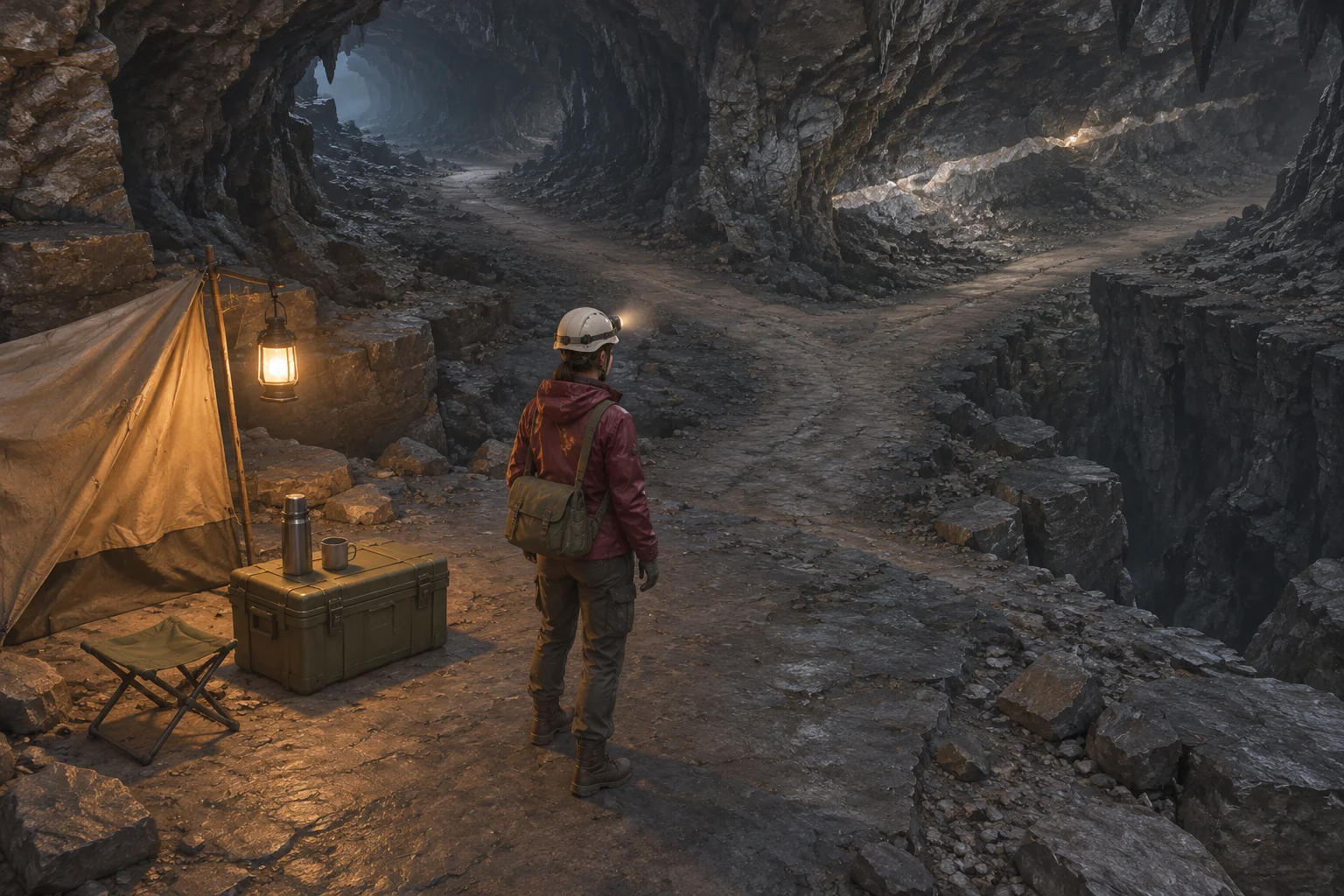
Give the player a reason to choose what comes back from the water. Put one request on the pontoon before the dive, then make the complete load change which route home is available. The return is part of the expedition. Filling the request is a separate action at the surface.
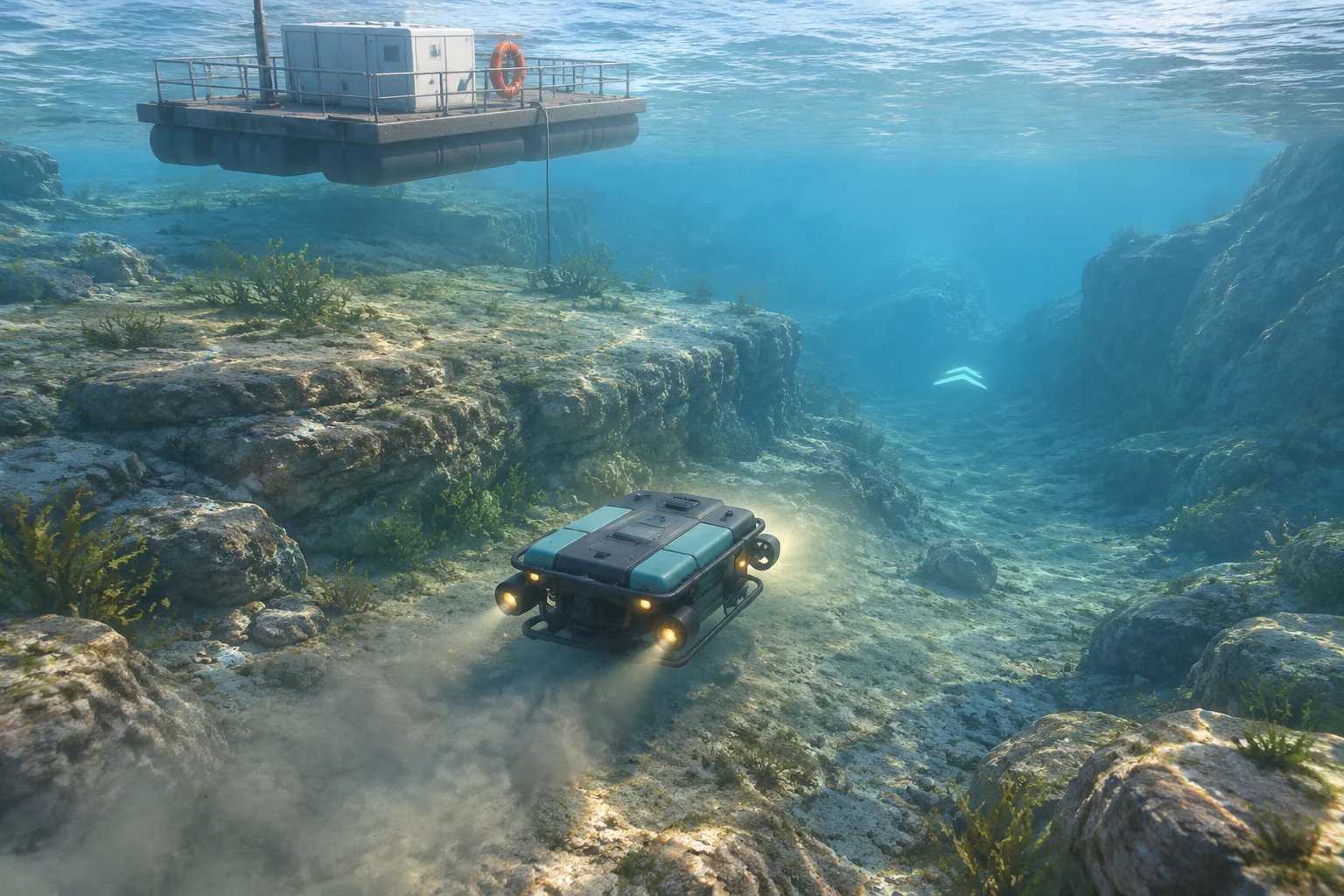
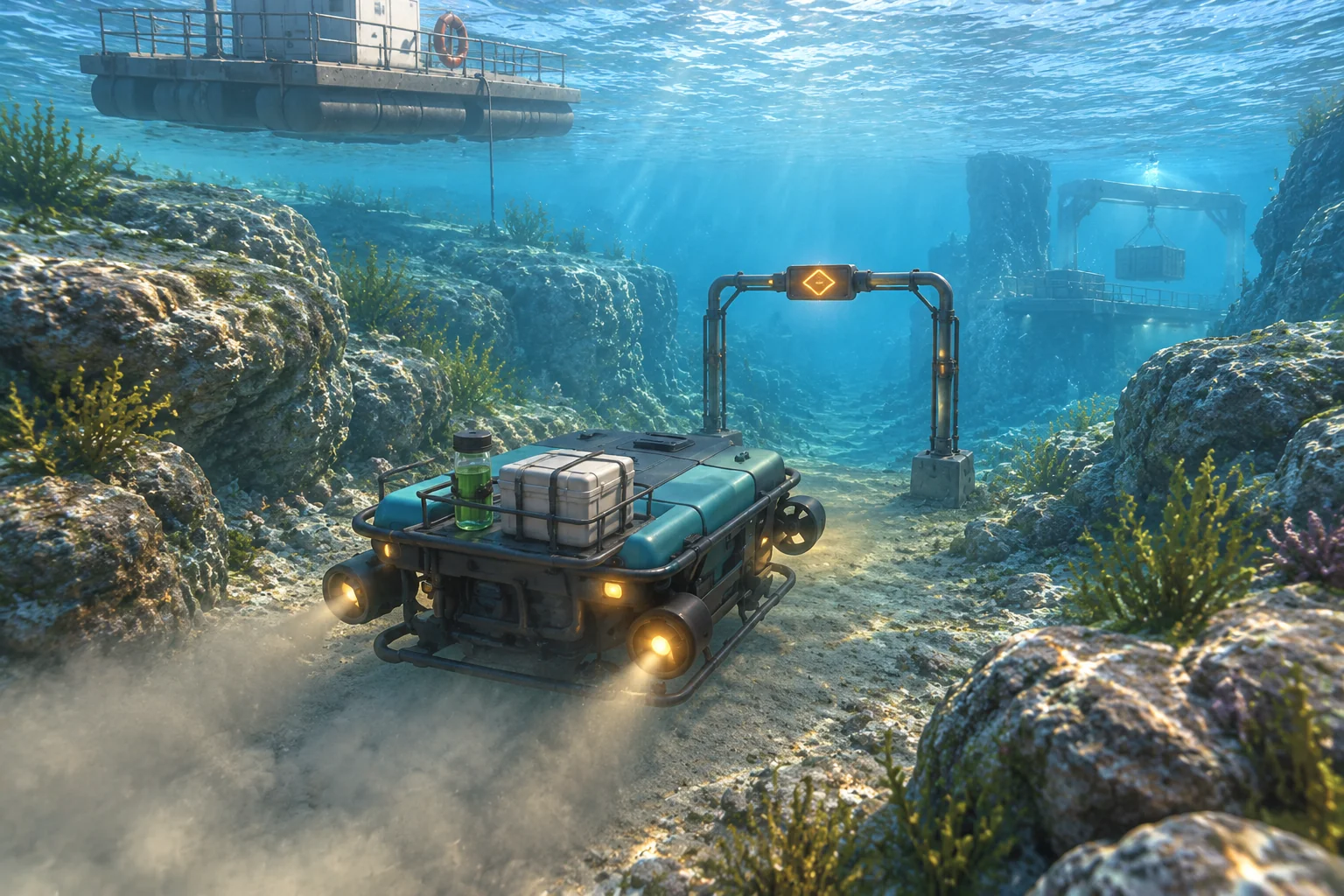
In the fictional Tide Exhibit, an unmanned survey sled collects an algae vial and a mineral case for a paired display. The two specimens fit on the sled, but together they exceed the narrow return’s weight limit. The player can take a cargo lift and finish the display above water.
Connect the gathering trip to a surface request
MINTROCKET’s game overview describes Dave the Diver as a combination of daytime ocean exploration and a nighttime sushi restaurant. Its official press kit explains that fish caught during the day supply the evening service.
Use that connection in a different setting. Ask what the surface activity needs and how that changes the underwater trip. Here the paired exhibit needs two specific specimens, so the player chooses a return based on both what is carried and what is missing.
Draw the return routes around the order
Start in Dive phase at Pontoon P with empty cargo. Connect P to Fork F, F to Shallow Shelf S, F to Deep Vent D, and D to Cargo Lift L. Those links work in both directions, with a cargo limit only when moving from F back to P. Add a one-way lift link from L to P. A return to P after departure starts Service.
| Location or link | Rule | What the player should see |
|---|---|---|
| Shallow Shelf S | Collect one algae vial, weight one. | A distinct vial slot and its contribution to the load. |
| Deep Vent D | Collect one mineral case, weight two. | The second specimen slot and the route onward to L. |
| Fork F to Pontoon P | Accept at most two units of total cargo weight. | Current cargo weight beside the return limit. |
| Cargo Lift L to Pontoon P | Accept at most three units. The lift link only returns to P. | A return route still available with both specimens. |
Use abstract weight units. A rejection at the narrow return should keep the sled at F with the same cargo, phase and accepted-action count. That lets the player choose a route without losing the samples already collected.
Replay a full load and an incomplete request
Start each replay from Reset. The first route anticipates the load and goes to the lift from D. The second reaches the fork with both items and tests the narrow return. A third comes back with only the vial.
| Replay | What to do | Expected result |
|---|---|---|
| Plan for the full load | P to F to S, Collect vial, S to F to D, Collect case, D to L to P, then Fit Display. | Nine accepted actions. The lift admits weight three. Fit completes the display. |
| Try the narrow return at full load | Follow the same start through Collect case, then move D to F. Try F to P. Recover through F to D to L to P, then Fit Display. | The narrow link rejects weight three after seven accepted actions. The recovery and Fit end at eleven. |
| Return with the vial only | P to F to S, Collect vial, S to F to P, then try Fit Display. | Service starts after five actions. Fit names the missing case and leaves the vial intact. |
Surfacing confirms which cargo is available for service. It does not fill a display slot by itself. Let the player see the delivered items, then choose Fit Display. Only a valid fit consumes both specimens and completes the order.
Give AI one expedition and one service action
Start with the route and order states. SEELE’s prompt-led creation gives you a starting point for a small build. Use a simple map and a visible specimen panel before adding animations.
Build an original browser expedition game called Tide Exhibit.
Start in Dive phase at Pontoon P with no cargo.
Connect P-F, F-S, F-D and D-L in both directions.
Add one-way return L to P. F to P allows cargo weight at most 2.
L to P allows weight at most 3. Outbound P to F has no weight limit.

At S, Collect loads one algae vial weighing 1.
At D, Collect loads one mineral case weighing 2.
Collect each once. Keep separate slots and sum their weights.
Move crosses one available link. Reject blocked moves and duplicate
collection without changing state or accepted-action count.

Reentering P after departure begins Service and ends the only dive.
Fit Display in Service requires both distinct specimens. Consume
both and complete the order once. If one is missing, show its empty
slot and retain all delivered cargo. Surfacing alone cannot complete it.
Reset clears cargo and display and returns to the initial Dive at P.

Show available routes, both limits, cargo weight, specimen slots,
phase, and action result. Create original sled, inlet, dock and UI.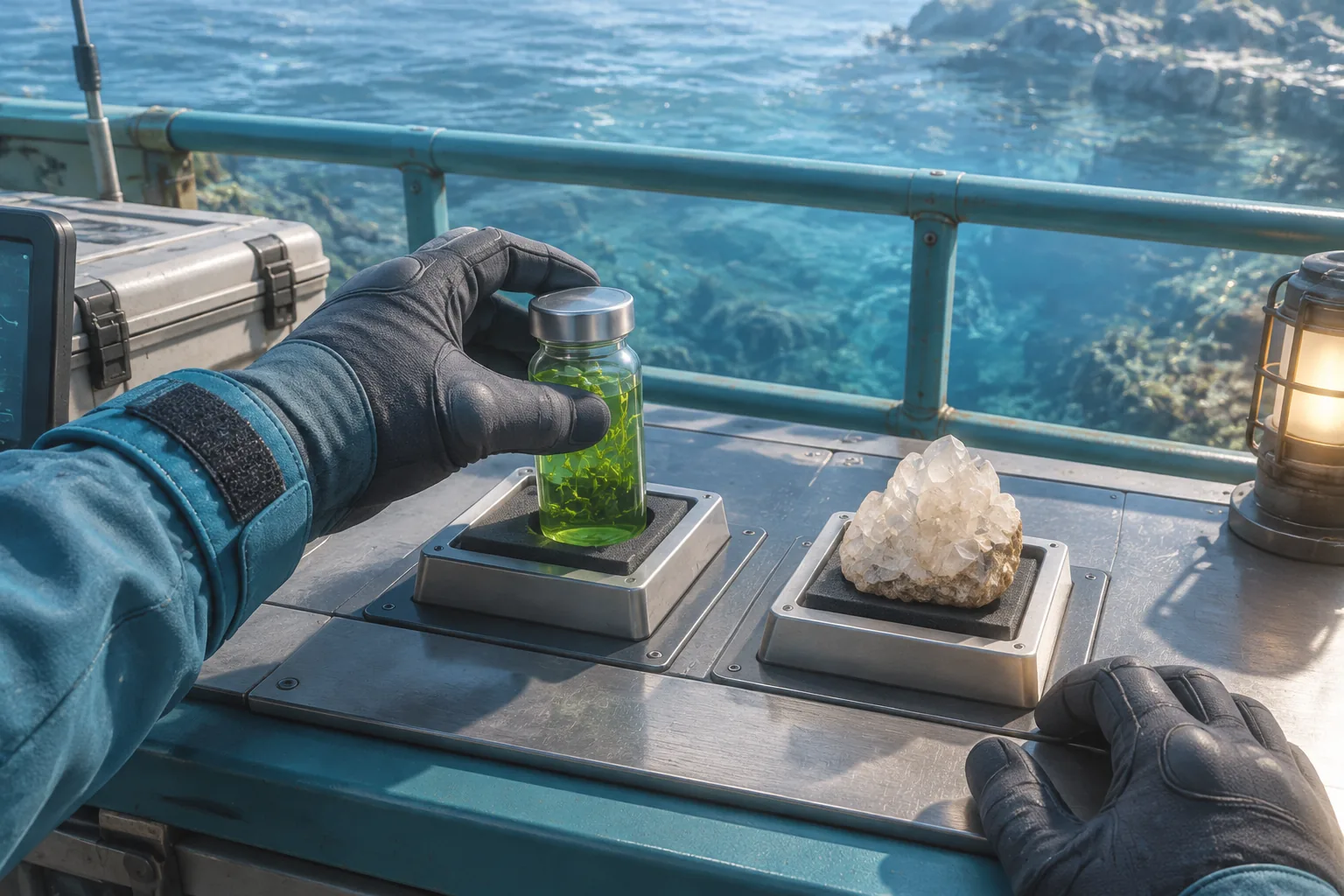
Try a second Collect at the same location and check that it adds nothing. Test the full load at F before taking the lift. Then replay the partial return and check that the empty display slot is named without spending the vial. Reset after both the completed display and the partial return.
Change only the narrow return limit
Raise the F to P limit from two units to three. Keep the sample weights, the lift and the display requirement fixed. Replay the loaded route back to F. The narrow return now accepts both specimens. The player surfaces and completes the order after nine accepted actions.
That saves two actions compared with recovering after the rejected narrow return in the original replay. The planned lift route was already nine. The change gives the full load another equally short way home. Decide whether your first dive should make the lift necessary or let the player choose either route. The guide to revising one rule and rerunning the loop offers a way to keep the comparison focused.
Build one order that shapes the dive
Choose what the surface request needs before designing the underwater route. Start your original underwater expedition with SEELE’s AI Game Maker and check that the return rule changes the player’s plan before adding more specimens or requests.
Frequently asked questions
Should I limit the cargo by weight or item count?
Use weight when different pairs of items should change the route. Use a count if the decision is simply how many objects the sled can carry. This fixture gives each specimen its own slot and uses weight to decide which return link accepts the load.
Where should the return limits appear?
Show them on the route view and repeat the relevant limit at the link. Put the current cargo weight beside it so players can compare them without doing a separate search. A rejected move should tell them which other return remains available.
What happens if the player surfaces with only one specimen?
Show the item that arrived and name the missing display slot. Preserve the delivered specimen when Fit is rejected. In this one-dive fixture, offer a reset so players can try the full route again. A longer game could let them plan another dive.
When should I add another surface request?
Add one after a full delivery and an incomplete return both give clear feedback. The next request should make a different underwater route worth taking. If both requests ask the player to gather the same load in the same order, the extra choice adds little.