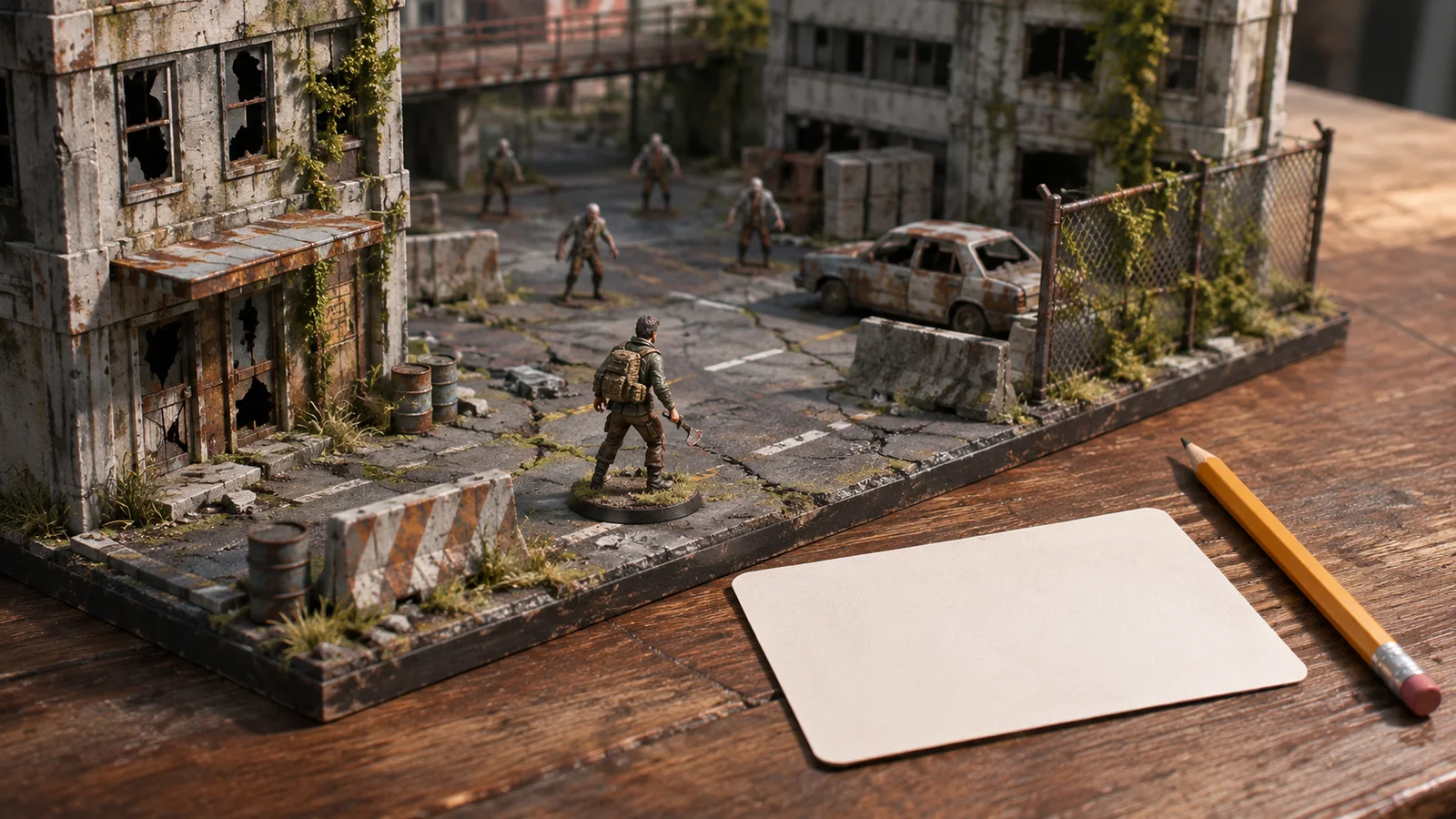
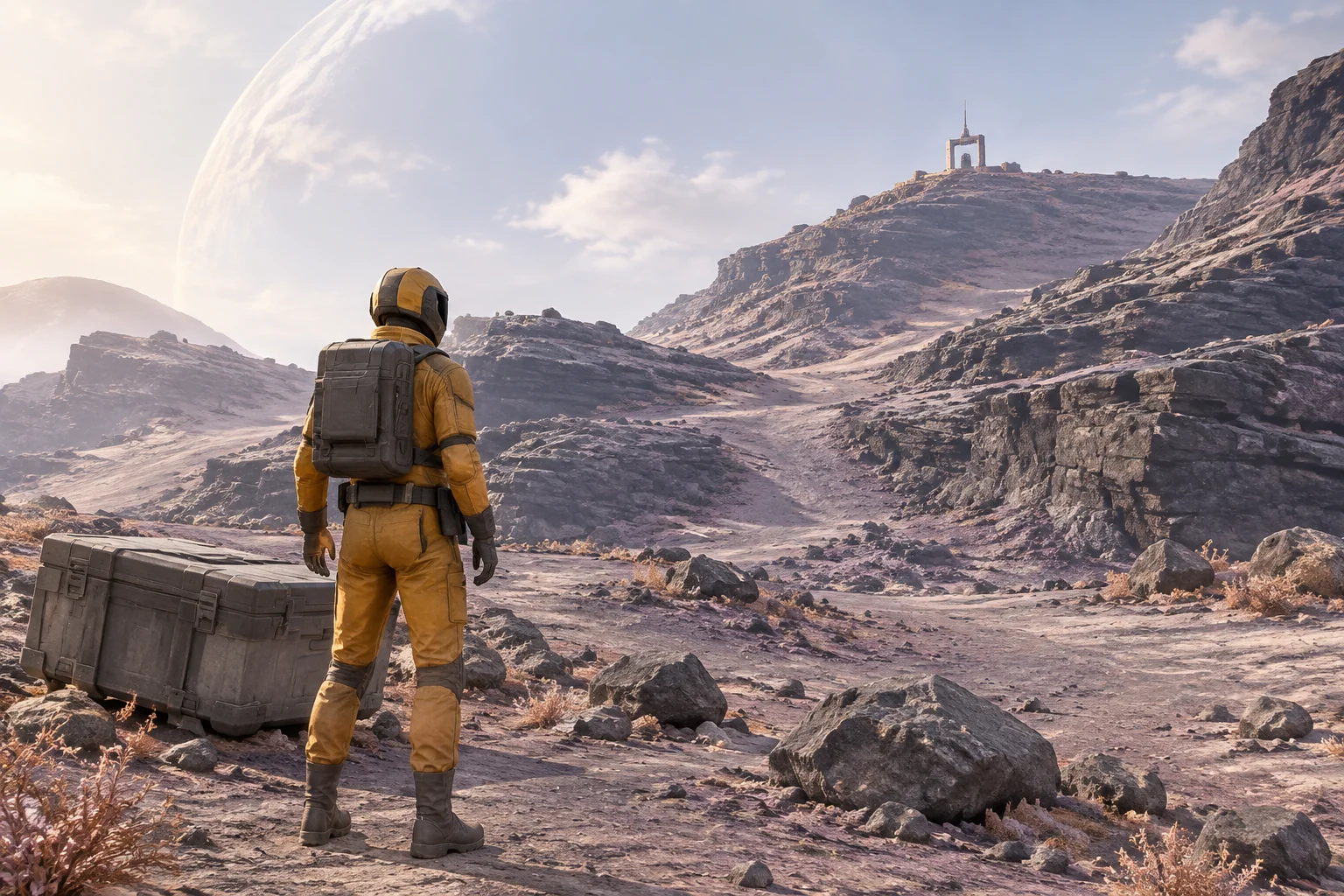
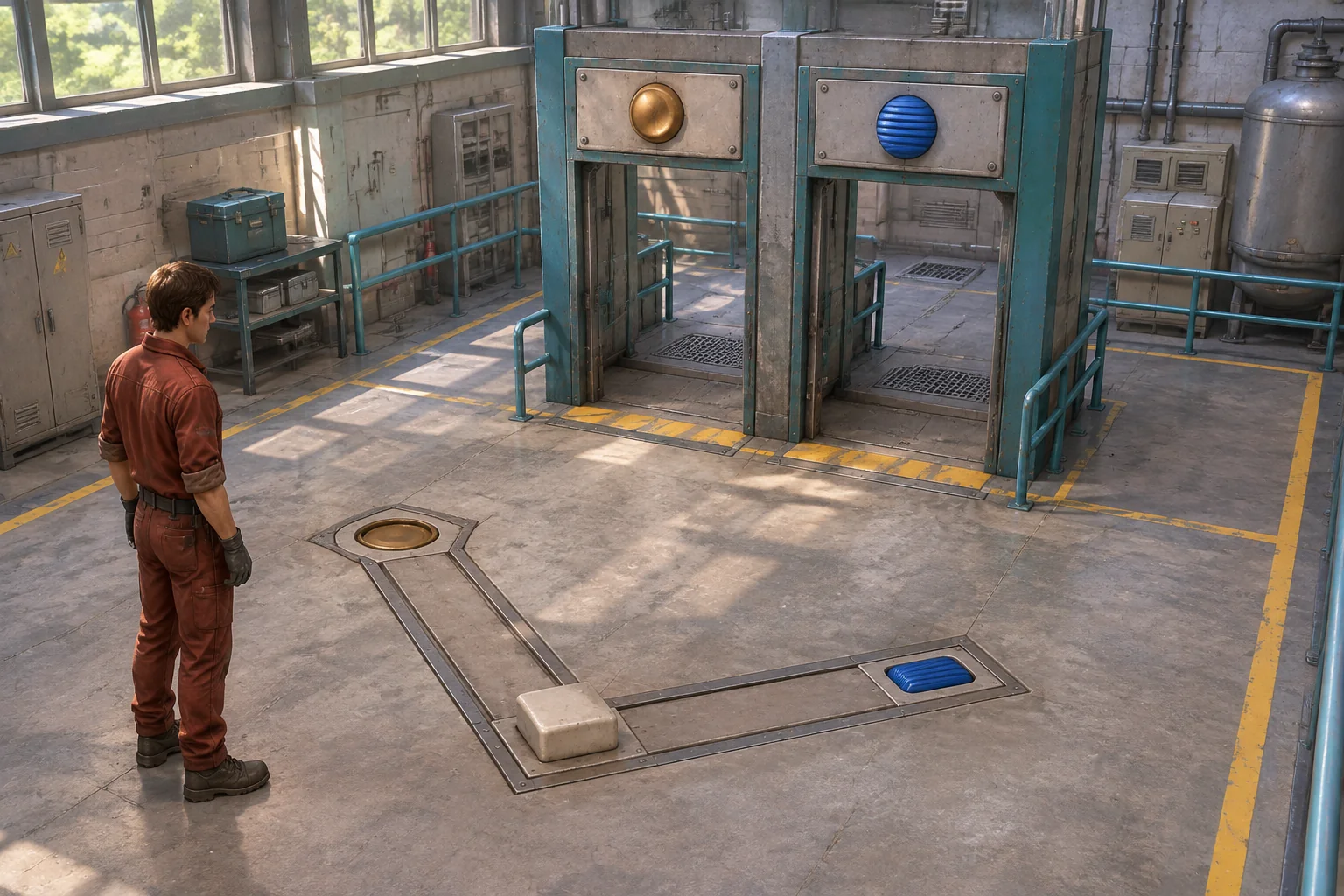
To make an original game inspired by Cult of the Lamb, give the player a reason to bring something home from an expedition. Then let their community decide what that haul makes possible on the next trip. In this fictional mountain waystation, the player returns with cord and a dried herb. The community can use those supplies to repair a bridge or prepare a travel meal.
Build one short trip, one preparation, and one return objective. That gives you a full loop to check before expanding either the expeditions or the settlement.
Give the trip and the community a reason to connect
Cult of the Lamb combines venturing into regions and fighting enemies with building a community. The store description also describes collecting resources to build structures. Massive Monster’s overview and the official Steam listing document those parts of the game. Steam credits Massive Monster as developer and Devolver Digital as publisher.
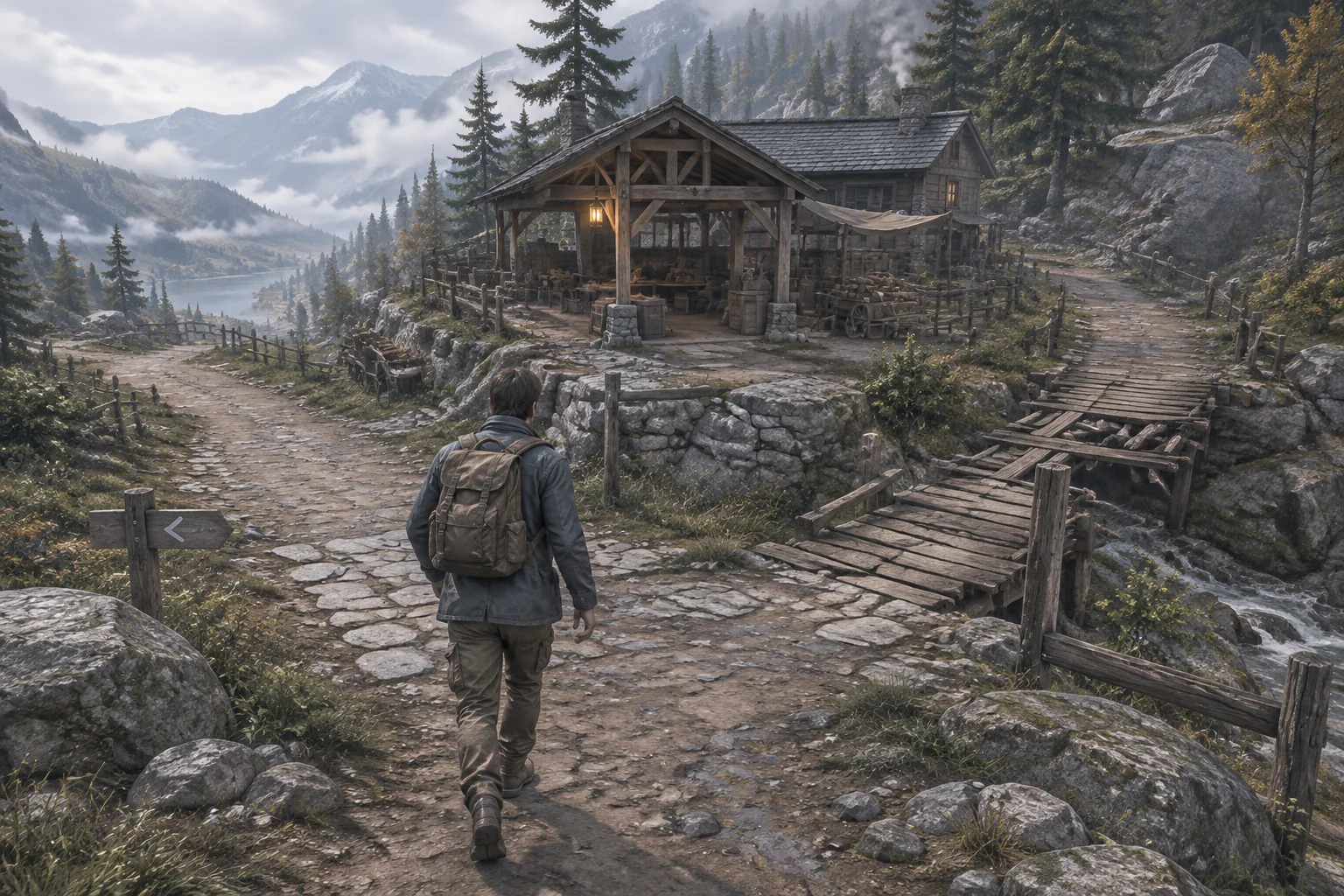
Use that connection as a design question for your own game. What changes at home because of the trip, and what changes on the next trip because of the work at home? Here, an original survey sentry, trail, timber shelter, and human keeper give the two phases their own setting and purpose.
Bring one salvage bundle home
Start the keeper with three stamina and the community with no supplies. Walking out costs one stamina. At the salvage site, a malfunctioning survey sentry blocks access to a bundle. Give the player one Brace action that costs one stamina and clears the encounter. Once the sentry is clear, picking up the bundle costs nothing.
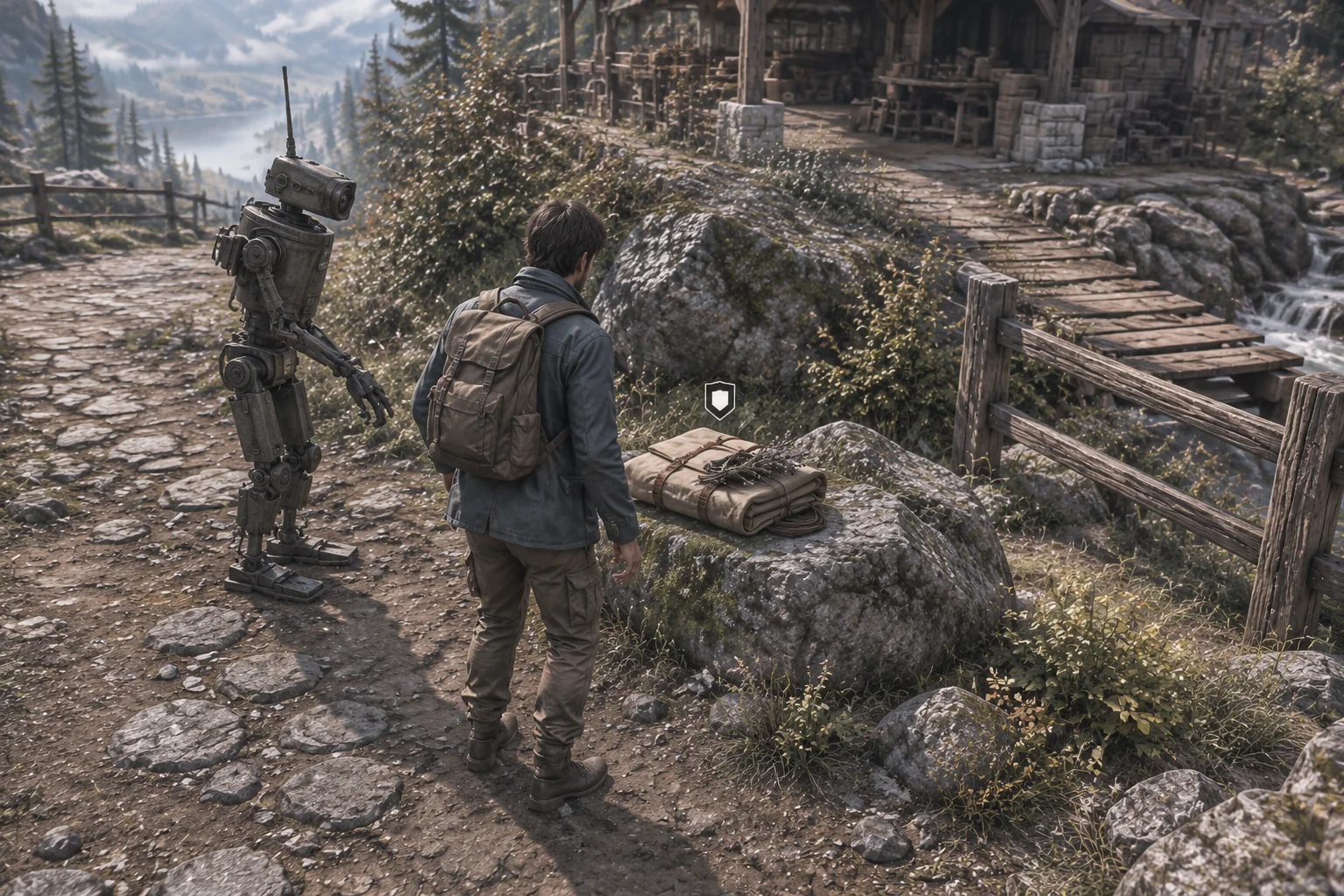
Reject a pickup while the sentry is active and a return before the bundle is collected. Once the keeper has it, the walk home costs the final point of stamina. Zero on arrival is valid. Add two cord and one dried herb to the community stock only on return, once. Show the carried bundle and the deposited supplies separately so the player can tell when the preparation becomes available.
Make one preparation change the next route
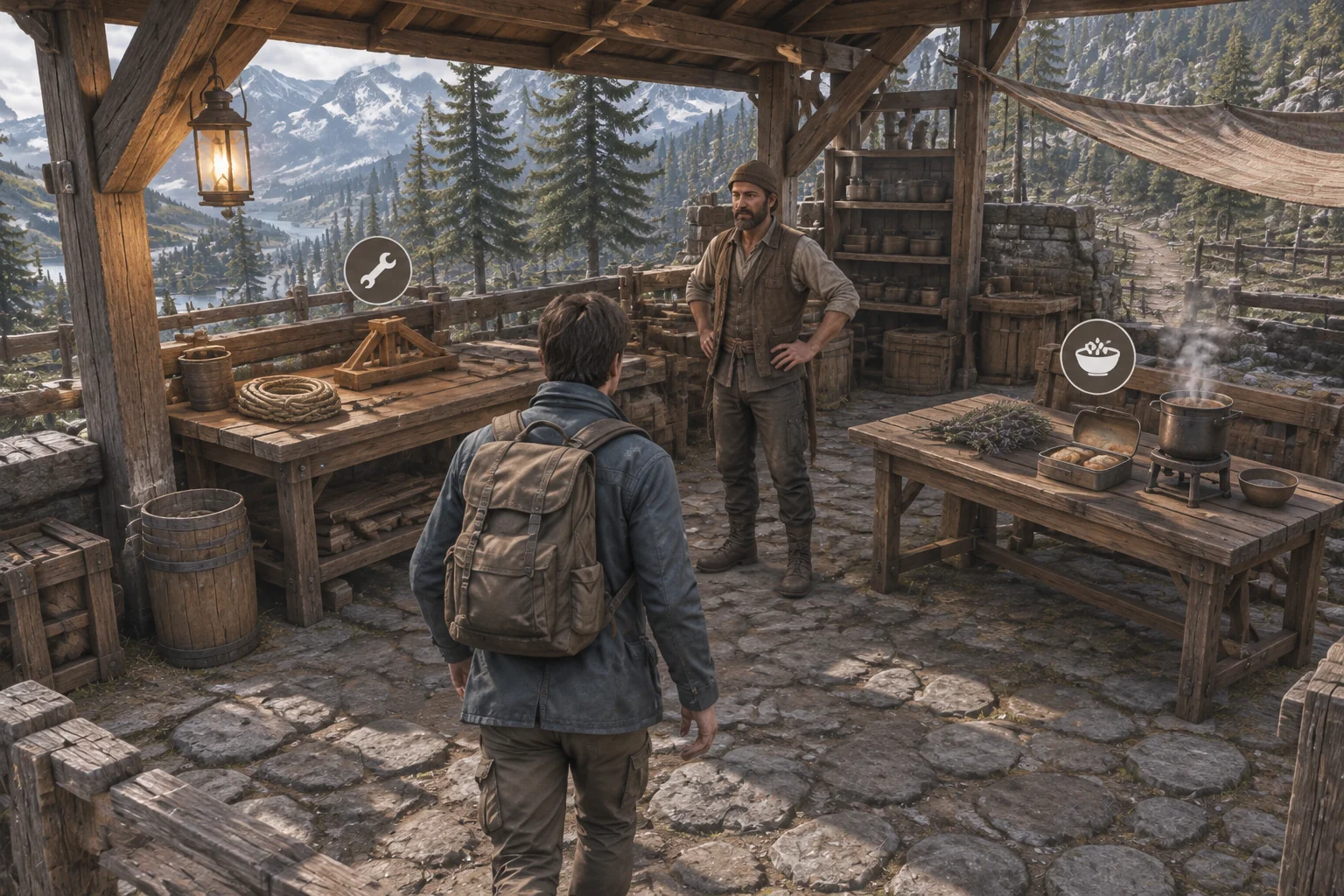
At home, offer two preparations from the same bundle. The player commits to one. Repair Bridge uses two cord and opens the ridge crossing. Cook Meal uses one herb and adds one stamina to the next trip. After either choice, a second preparation is unavailable. The next trip starts with three base stamina, plus one if the meal was chosen.
| Preparation | Stock left at home | Valid route | Why the other route fails |
|---|---|---|---|
| Repair Bridge | 0 cord, 1 herb | Ridge crossing. Open bridge, 3 stamina available, 3 spent. | Valley detour costs 4 stamina. |
| Cook Meal | 2 cord, 0 herb | Valley detour. No repair needed, 4 stamina available, 4 spent. | Ridge crossing requires the repaired bridge. |
Both routes recover the same trail marker and return it to the waystation. The costs cover the whole round trip. Check the route’s access and stamina cost before spending anything. An exact balance is enough. A rejected choice leaves stamina, stock, and the marker unchanged, so the player can choose the other route.
Ask AI for the complete two-trip loop
SEELE’s AI game maker offers a starting point for a focused brief with one loop to check. Give it the trail, waystation, and exact transitions. Leave room for the draft to choose the art and layout while you hold the costs and effects fixed.
Build one original browser expedition and community game at a
mountain waystation. Use an original human field keeper, timber hub,
damaged bridge and a small survey sentry.

Start with 3 stamina and empty stock. Walk out for 1 stamina.
Brace costs 1 and clears the sentry once. Collect one bundle for no cost
after the sentry is clear. Return costs 1 and requires the bundle.
Accept zero stamina at home. Deposit 2 cord and 1 dried herb once.

Allow exactly one hub preparation. Repair Bridge costs 2 cord and
opens Ridge. Cook Meal costs 1 herb and gives the next trip +1 stamina.
Start that trip at 3 stamina plus the meal bonus if applicable.

Ridge requires the repaired bridge and costs 3 for a round trip.
Valley Detour needs no repair and costs 4. Validate access and stamina
before paying. Reject invalid actions without changing state.
Accept an exact budget. A legal route returns the marker and finishes.
Restart restores stamina, encounter, stock, bridge, meal and marker.
Check the first trip before testing both preparations. Try collecting too early, then try returning before pickup. After one valid return, confirm that repeated return input does not add supplies again. Run the two rows in the table and test each rejected route before taking the valid one. The guide to checking an AI game in small steps can help turn a failed check into a focused change.
Change one route cost and check the preparation again
Suppose you reduce the valley detour from four stamina to three. Keep the bridge requirement, meal bonus, supply costs, and marker fixed. Start from the same bridge-prepared state in both versions. The ridge is legal in either version. The detour changes from unaffordable to affordable at exactly three stamina.
That change gives the bridge-prepared player another legal route. In a built version, check whether players can explain why they chose a preparation and whether the meal still has a purpose. Use the same returned stock and start position so you can trace the difference to the route cost.
Check that the return changes what happens next
Build one trip that brings home a useful bundle and one preparation that changes the next route. Compare the reasons each unavailable route gives the player. Start your original expedition and community game with SEELE’s AI game maker and keep the two preparation traces nearby when you check the first draft.
Frequently asked questions
Why keep both the expedition and the community in the first build?
The trip supplies something the community can use, and the community changes what the next trip allows. One short example of each is enough to check that handoff. If either part has no visible effect on the other, strengthen the connection before making either phase longer.
How can I prevent the return from awarding stock twice?
Give the bundle one identity and record when it has been deposited. Treat the return and deposit as one accepted transition. Repeat the return input after the first delivery and check that the stock, preparation, and trip state all remain exactly where they were.
How should I show why a route is unavailable?
Show the missing condition next to the route. A damaged bridge needs repair, while a long detour needs more stamina. Give the player a separate cue for each case so they can tell whether they need access to the path or a bigger travel budget.
When should I add another expedition?
Add one after the first two trips make the community choice understandable. Give the next trip a new reason to return, such as a different resource that opens a different preparation. Check the earlier branches again so the new trip does not erase their purpose.