Build your first escape room around a code that no single object reveals. Give players one object that tells them how to line up a tool, another that supplies the symbols, and a third that translates those symbols into digits. Put the clues close enough to compare. Then give players a way to recover when a plausible reading turns out to be wrong.
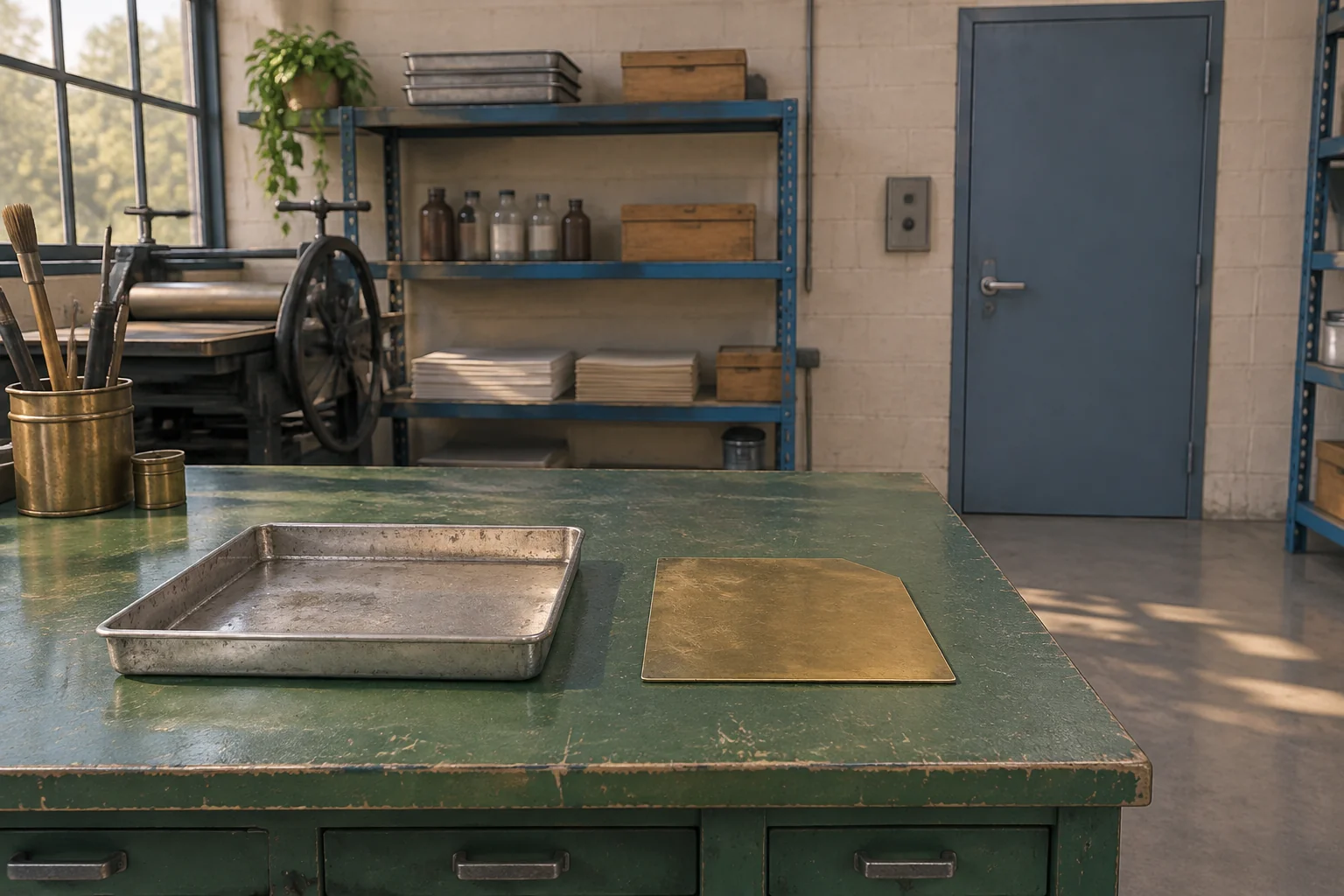
The fictional Proof Room takes place in a print workshop. A stencil sits beside a tray of printer’s symbols, and a ledger gives each symbol a digit. The player aligns the stencil, reads three windows in order, and enters the result at the exit.
Make inspection change what the player knows
Pine Studio describes Escape Simulator as a first-person puzzler where players can pick up and examine objects. The official Steam listing also describes pinning clues for cross-reference. For your own room, give players a reason to look closely at one object and compare it with another. The print workshop, props and code below are an original example of that relationship.
In the Proof Room, the ledger can be read before the stencil or afterward. Its six entries are all valid translations. The stencil decides which three entries matter, while a plaque tells the player which way the stencil should face. Knowing one fact helps the player make sense of the next.
Give each clue a separate job
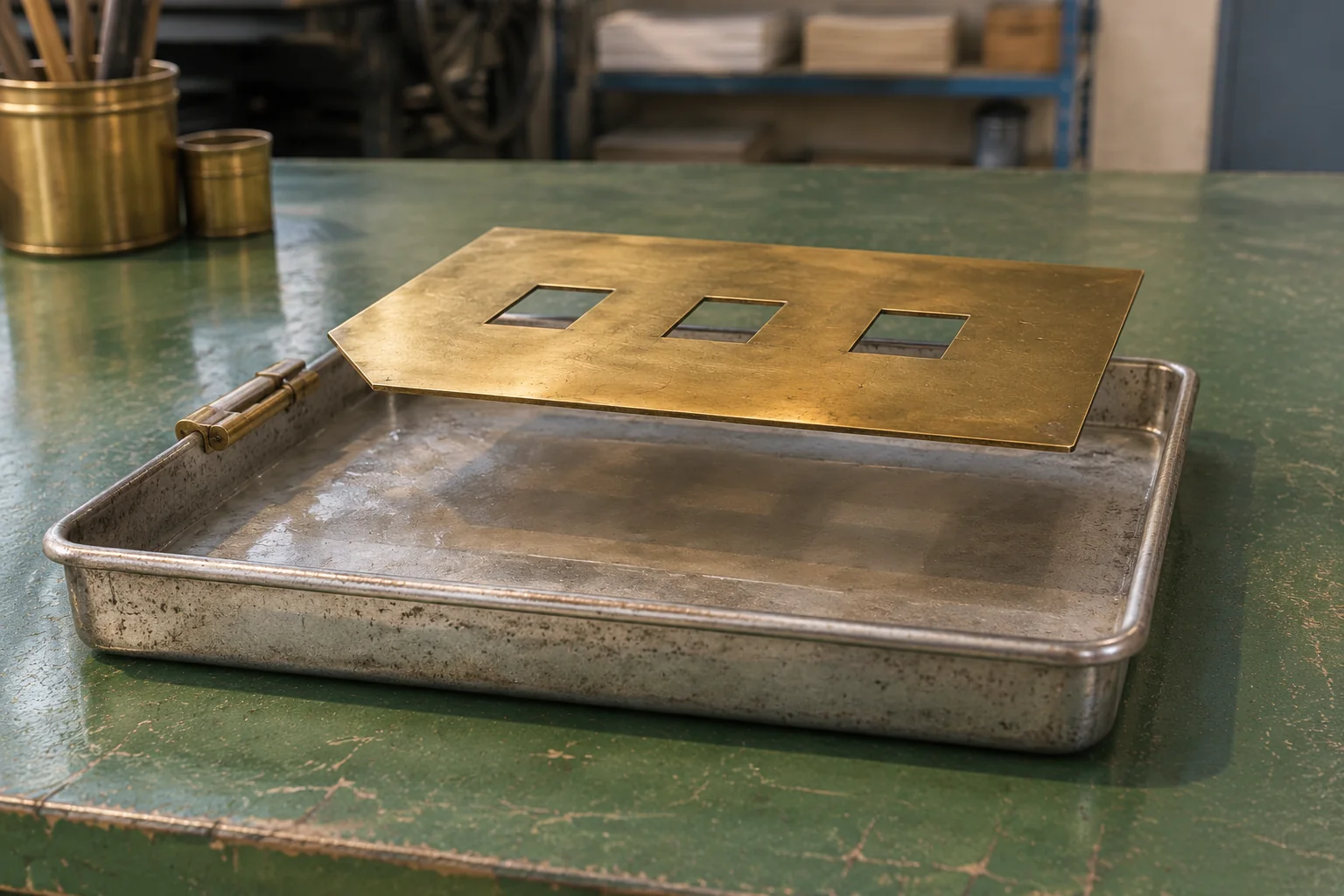
Define left and right from the view facing the bench. Put a small brass hinge at the upper left of the tray frame. Give the stencil one clipped corner and mark its three windows with one, two and three raised dots. The plaque says, “Place the clipped corner by the brass hinge. Read the windows in stamped order.”
| Tray row | Left | Middle | Right |
|---|---|---|---|
| Top | Moon | Leaf | Fork |
| Bottom | Key | Star | Ring |
When the clip sits at the upper left, the one-dot window shows Moon, the two-dot window shows Fork, and the three-dot window shows Star. The workshop ledger gives Moon 2, Leaf 5, Fork 8, Key 4, Star 1, and Ring 7. Read Moon, Fork, Star in dot order to get 281. Both the marks and glyphs should be distinguishable without relying on color.
Replay the right and wrong readings
The baseline lets the stencil seat in either orientation. Rotating it a half turn moves the clip to the lower right. The one-dot window now shows Ring, the two-dot window shows Key, and the three-dot window shows Leaf. Those are real ledger entries and yield 745. The reading looks plausible until the player compares the clip with the hinge or tests the code.
| Action to replay | Expected result |
|---|---|
| Submit the starting digits, 000. | Show a mismatch. The door stays locked, the stencil stays unplaced and the dials keep 000. |
| Rotate the loose stencil 180°, seat it and submit 745. | Show the same mismatch. Keep the stencil seated in that orientation and keep 745 on the dials. |
| Lift, rotate to 0°, seat, read again and submit 281. | Unlock the exit. Opening it is a separate action that ends the room. |
| Reset after opening the exit. | Restore the locked, closed exit, 000 and the unplaced stencil at 0°. |
Use a neutral response such as “The latch holds.” Leave the entered digits visible so players can compare them with the ledger and decide where to look again. The panel should accept 281 even if the player remembers the solution and has inspected nothing on this run. Inspection supplies information. It does not set a hidden requirement.
Give AI the objects and the state rules
Use an original scene and specify what every interaction changes. This brief keeps the positions, dot order and digits fixed while leaving the bench and room layout open to the creator.
Build one original browser escape room called Proof Room.
Set it in a municipal print workshop with one bench and one exit.
Facing the bench, put the tray hinge at the upper left.
Use a 2 by 3 tray. Top row Moon, Leaf, Fork.
Bottom row Key, Star, Ring.
Set the ledger to Moon 2, Leaf 5, Fork 8, Key 4, Star 1, Ring 7.
Tell players to align the clipped corner with the hinge
and read the windows in one-dot, two-dot, three-dot order.

Start with an unplaced stencil at 0°. At 0° its ordered windows
show upper left, upper right, lower middle. At 180° they show
lower right, lower left, upper middle. Allow both seating angles.
Lift before rotating. Lifting preserves the current angle.
Make every clue inspectable in any order.

Start the three independent dials at 000. Accept 281 on Submit.
A mismatch preserves the dials and all clue state. Give no
per-digit hint. Inspection is never required by the validator.
Unlock on a correct code, then let Open end the room.
Reset the dials, stencil and exit. Use original props and art.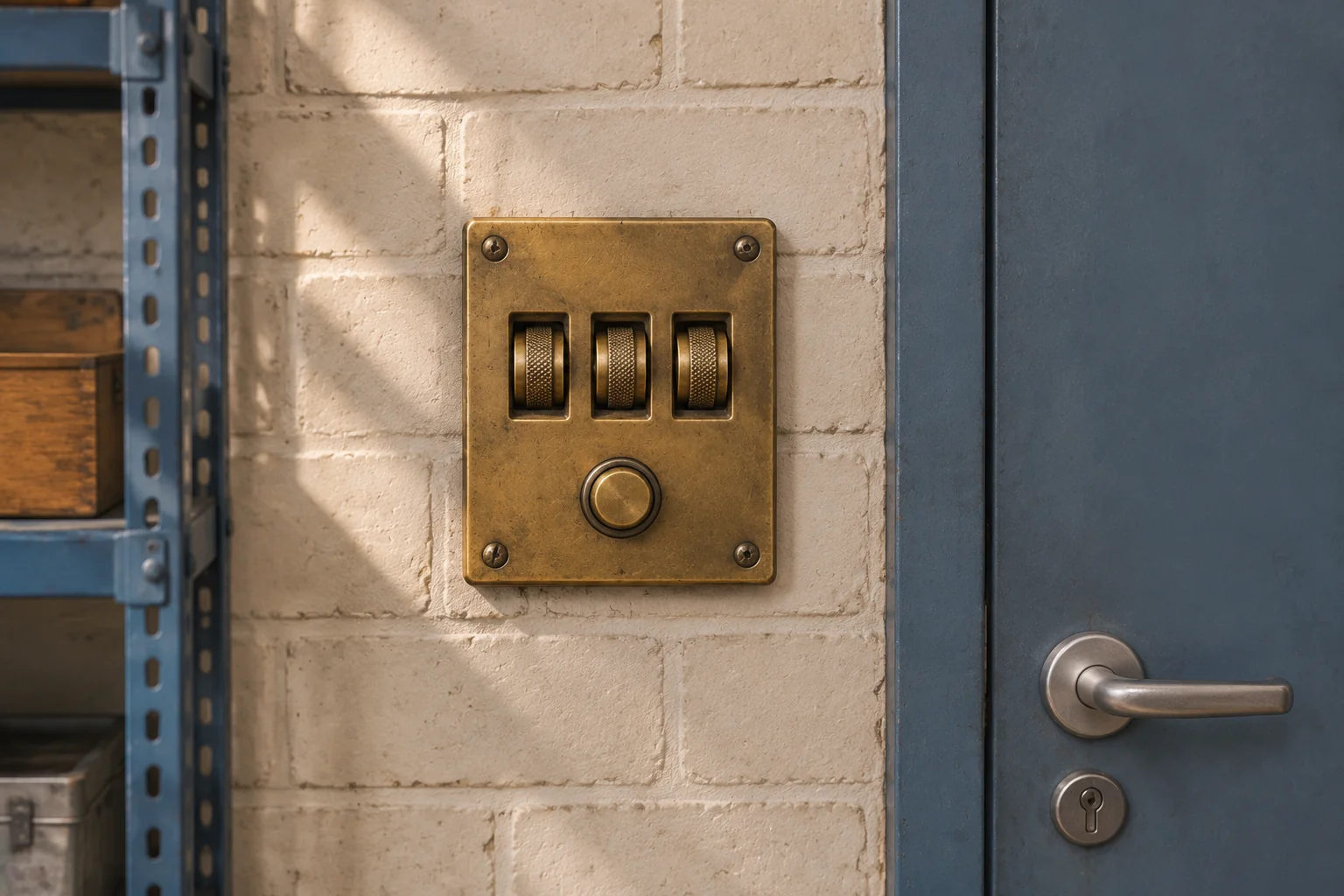
Move one check earlier
Change one rule so only the aligned stencil can seat. Replay the 180° placement. The baseline accepts it and leaves the player to discover the mismatch at the door if they submit 745. The revised placement rejects it and says, “The clipped corner is away from the hinge.” The stencil remains unplaced at 180°, and the dials stay as they were. The player can rotate the stencil and try again.
Keep the plaque, marks, legend, accepted code and panel feedback fixed. The revised room responds earlier to the same alignment error. A correctly seated stencil still leaves the player to read the windows and translate the glyphs. Use the guide to revising one rule at a time when you compare the two versions.
Finish one clue chain
Start an original escape room with SEELE’s AI Puzzle Game Maker and build the chain from the clue on the bench to the result at the door. Replay the correct reading and one credible mistake before adding a second room.
Frequently asked questions
How can players tell which clue comes first?
Give one object an explicit ordering job. The stencil’s dots identify the first, second and third window, while the ledger gives values. Players can find the ledger first and still recognize the order when they see the stencil. Keep the raised dots visible.
Should inspection unlock later interactions?
Only make it a requirement if the fiction and rules need it. In this room, looking at a clue teaches the player something. The exit panel simply checks the digits, so a player who already knows the code can enter it. Test that route after a reset.
Should a wrong guess clear the code?
Keep the digits visible if players can use them to diagnose their mistake. A neutral mismatch keeps the puzzle open. Avoid per-digit feedback if it would let someone bypass the clue chain by testing each position independently. Check that the dials stay put.
When should I add another lock?
Add one when it gives players a different kind of deduction or makes an earlier fact useful in a new way. First check that the existing room has a complete path, readable clues and a recovery route. Replay the entire route after adding it.