Give the player a promise they can keep with the same resource they need for tomorrow. Show who depends on that promise before they allocate anything. Then let the player see which service opened, which promise held, and how the decision changed what the settlement could do next.
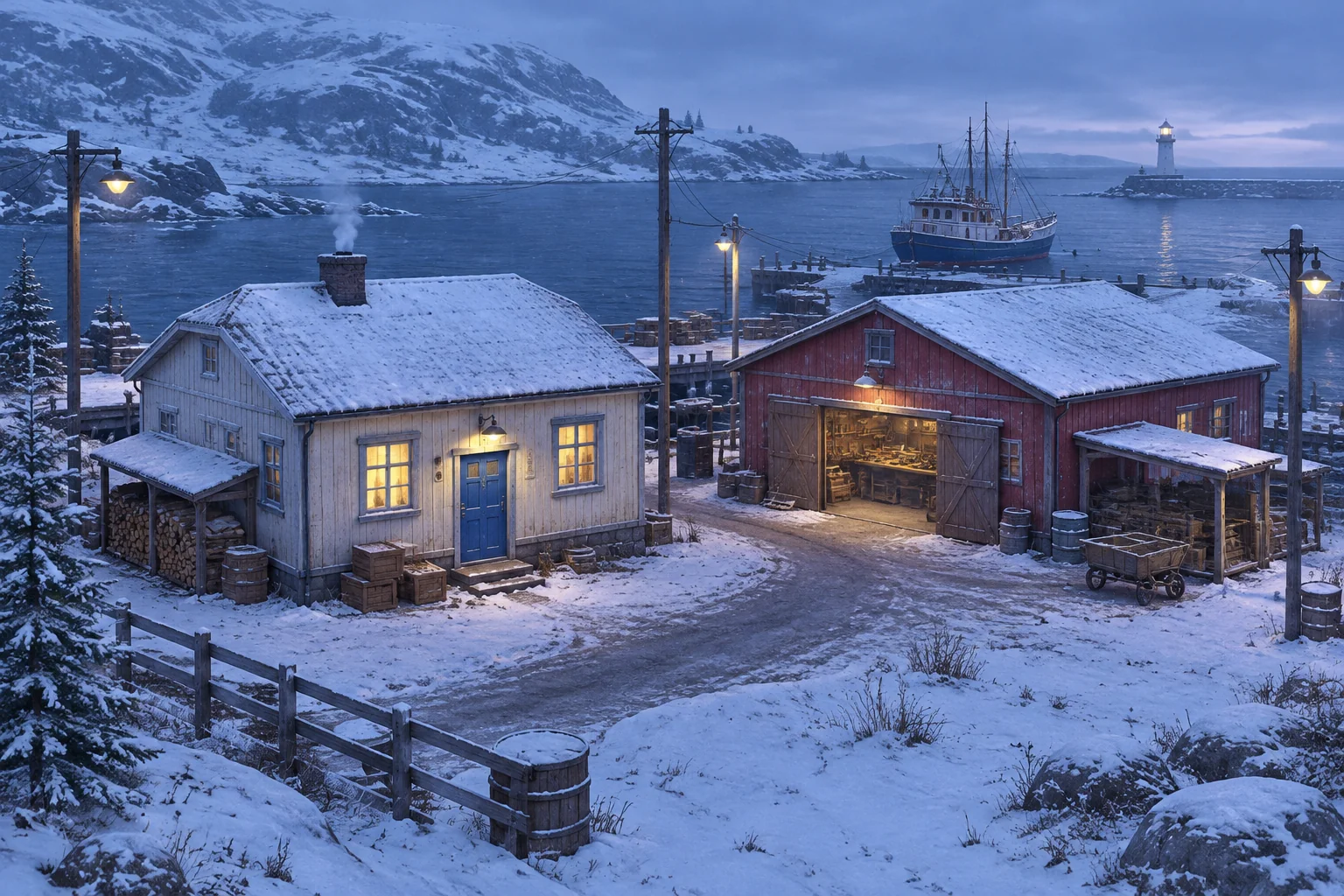
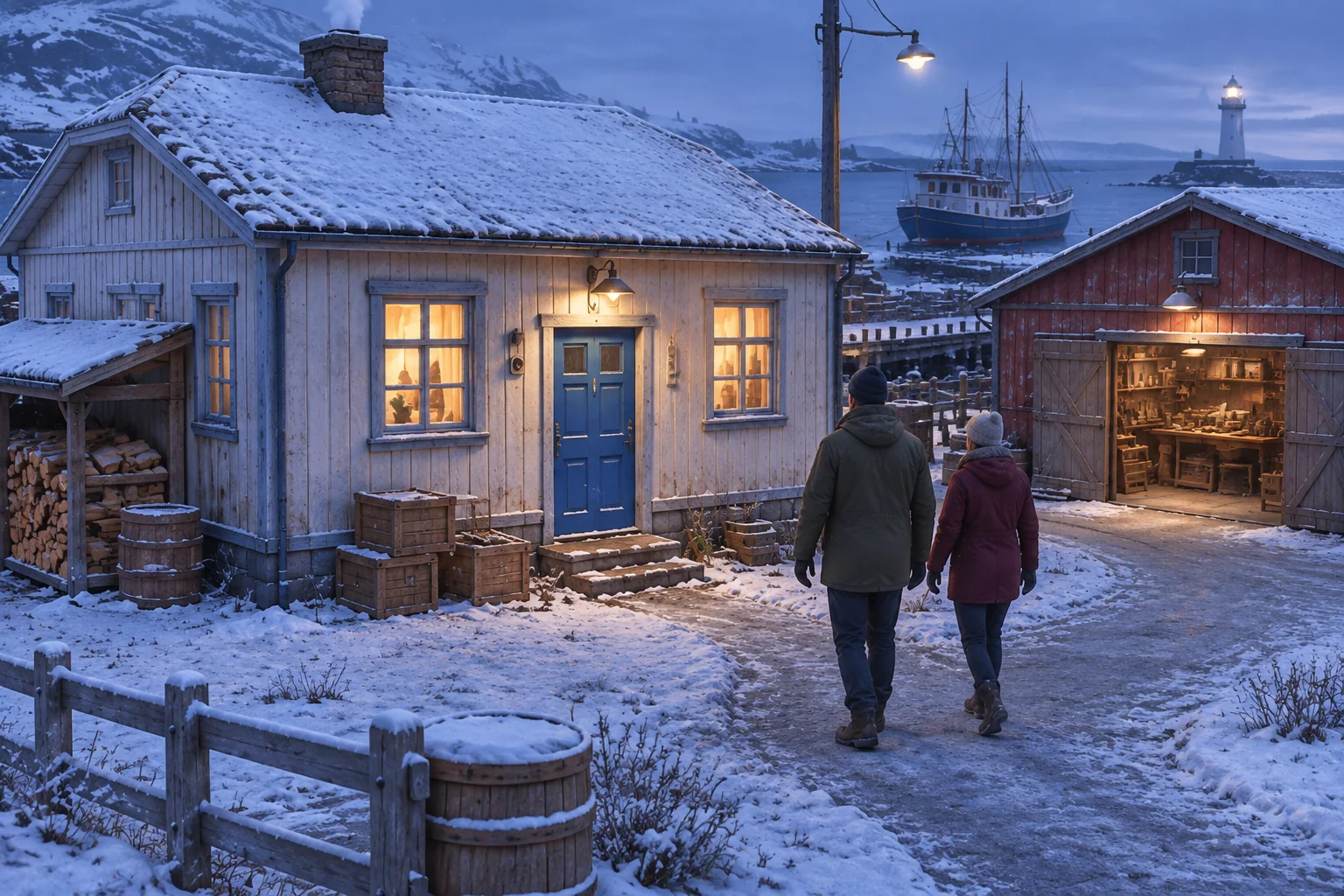
In the fictional Breakwater Warmth, a snowy quay has two buildings and two cold nights. The council promised to heat the public bunkhouse on the first night. The repair shop also needs heat. If it opens that first night, it can finish a door liner that makes the bunkhouse easier to heat the next night. The opening budget cannot cover both needs.
Give the heat budget a public commitment
The official Frostpunk listing from 11 bit studios describes heat as central to survival and says the player sets laws that shape daily life. It presents resource management and the condition of the community as connected concerns. Use that relationship as inspiration for an original decision. Breakwater Warmth uses a different settlement, pledge and heat system.
Put the council’s promise on the allocation screen from the first night. The bunkhouse expects enough heat for one promised night. The shop offers a repair that helps on the following night. A better outcome tomorrow can explain why the player chose the shop today. It cannot change whether the council delivered on its earlier promise.
Set two thresholds and one pledge
Give the player five heat credits each night. They can allocate whole, nonnegative amounts to the bunkhouse and the workshop, with a combined total of at most five. A valid Commit resolves the night and expires any unused credits. Reject an invalid allocation without advancing time or changing either outcome.
| Building | Heat needed | What the game records |
|---|---|---|
| Public bunkhouse | Three credits. The liner lowers this to two on Night 2 if it was completed on Night 1. | Count each warm night. On Night 1, mark the public pledge kept if warm and missed otherwise. |
| Liner workshop | Three credits each night in the baseline. | Count each operating night. An opening on Night 1 completes the liner. An opening on Night 2 comes too late to change the two-night forecast. |
Show the thresholds and the condition for getting the liner before the player commits. Between nights, install a completed liner at no additional cost. Update the next night’s bunkhouse requirement and leave the first-night pledge as recorded. At the end of Night 2, show the two service counts, the pledge outcome and whether the liner was ready in time.
Compare two allocation plans
In both routes below, the player spends all five credits. The difference is who receives the third credit on the first night and what that makes possible afterward.
| Plan | Night 1 | Night 2 | Outcome |
|---|---|---|---|
| Keep the pledge | Give three to the bunkhouse and two to the shop. The bunkhouse warms. The shop stays closed. | Repeat three and two. The bunkhouse warms again at its original threshold. | Two warm nights, zero shop nights, pledge kept, no liner. |
| Finish the liner | Give two to the bunkhouse and three to the shop. The bunkhouse stays cold and the shop makes the liner. | Repeat two and three. With the liner, the bunkhouse warms and the shop opens. | One warm night, two shop nights, pledge missed, liner ready. |
Keep those outcomes separate. A single score would require the designer to decide how many shop nights equal a missed pledge. A report that names the warm nights, shop nights and pledge leaves the tradeoff visible.
Give AI one cold spell
Ask for one allocation screen, a two-night clock and a report. Use fixed values and make the reasons for both service states visible.
Build an original browser strategy prototype called Breakwater Warmth.
Use a modern snowy quay with a public bunkhouse and a repair shop.
Start at Night 1, pledge pending, no liner and zero service counts.

Give 5 heat credits each night. Accept whole nonnegative amounts
for both buildings with a sum at most 5. Reject invalid entries
without changing state. Commit a valid plan and discard unused heat.

The bunkhouse needs 3 heat. Count one warm night if it meets that.
Only Night 1 sets the pledge. Warm means kept, otherwise missed.
The shop needs 3 heat. Count each night it meets that.
If the shop opens on Night 1, install the liner before Night 2.
The liner reduces the Night 2 bunkhouse requirement to 2.
A Night 2 shop opening counts as service but cannot affect the forecast.

Show the known thresholds, the pledge and the liner condition.
End after Night 2 and report warm nights, shop nights, pledge
and whether the liner was ready. Freeze the result.
Reset the night, counters, liner, pledge and input fields.
Use original buildings, artwork and interface.
Try entering three credits for each building. The game should reject the six-credit plan while leaving the pledge pending on Night 1. Then run both legal routes and verify that the pledge never changes on Night 2. Reset and confirm that the liner and both counts clear.
Change one opening threshold
Give the shop a draft curtain for the first night. In the rules, this lowers only its Night 1 requirement from three credits to two. Replay the pledge-first allocation of three to the bunkhouse and two to the shop on both nights.

On Night 1 both services now meet their requirements. The bunkhouse warms, the pledge is kept and the shop finishes the liner. On Night 2 the original three credits still warm the bunkhouse, although it needs only two. The shop again needs three and stays closed on its allocation of two. The same plan yields two warm nights, one shop night, a kept pledge and a liner ready in time. Keep every other rule fixed and use the guide to revising one rule at a time to compare the two versions.
Build one decision the settlement remembers
Start an original survival settlement with SEELE’s AI Game Maker and write one promise the player can see before committing heat. Replay both sides of that promise and make sure the report still shows who was served on the first night.
Frequently asked questions
How can players see the tradeoff before choosing?
Show the available heat, each building’s threshold and the result of meeting it on the same screen. In this scenario, show that the liner can only be ready in time if the shop opens on Night 1. Put the pledge beside that condition.
Should the game combine the outcomes into one score?
Start with separate outcomes when the choice depends on what the player values. Breakwater Warmth reports warm nights, shop nights and the pledge individually. A single total can make the route look optimal while concealing the particular promise or service that was lost.
How do I keep the missed pledge from feeling arbitrary?
Explain the promise and the threshold before the first commit. When the bunkhouse falls short, show exactly what was allocated and why the pledge was missed. Keep that first-night record distinct from the benefits of the liner on the next night.
When should I add a third building?
Add one after players can read the two existing requirements and explain how each outcome happened. The new building should introduce a different responsibility or timing constraint. If it simply repeats the same threshold, it may make the allocation harder to read without adding a choice.