Introduction
A choice-driven RPG feels responsive when a decision changes what the player sees or can do later. If you want to make a game like Undertale, start with that broad goal, then build your own conflict mechanic and consequence system. This guide uses a fictional story RPG called Starward Dispatch: players tune a star beacon during a short encounter, then choose which of two community routes receives the energy it produces.
This is a design example, not a generated game or tested result. Its purpose is to show how one small encounter can connect a player action to a visible later change without borrowing another game’s characters, dialogue, art, or exact battle design.
Start with choice and consequence, not copied battles
The official Undertale Steam listing describes an RPG with timed attacks and dodging enemy attacks (official Steam listing). That is the narrow reference context here. It does not mean a new project should reproduce Undertale’s characters, dialogue, pixel art, battle interface, encounter actions or story.
Starward Dispatch centers on a different decision: after tuning a beacon, the player chooses to send its stored charge to either a harbor path or an observatory path. Each route changes which location is accessible next, but neither choice is labeled as the “good” one. The story can respond through a new scene, a different visitor or a different resource, rather than a copied moral score.
Make one encounter explain its own rule
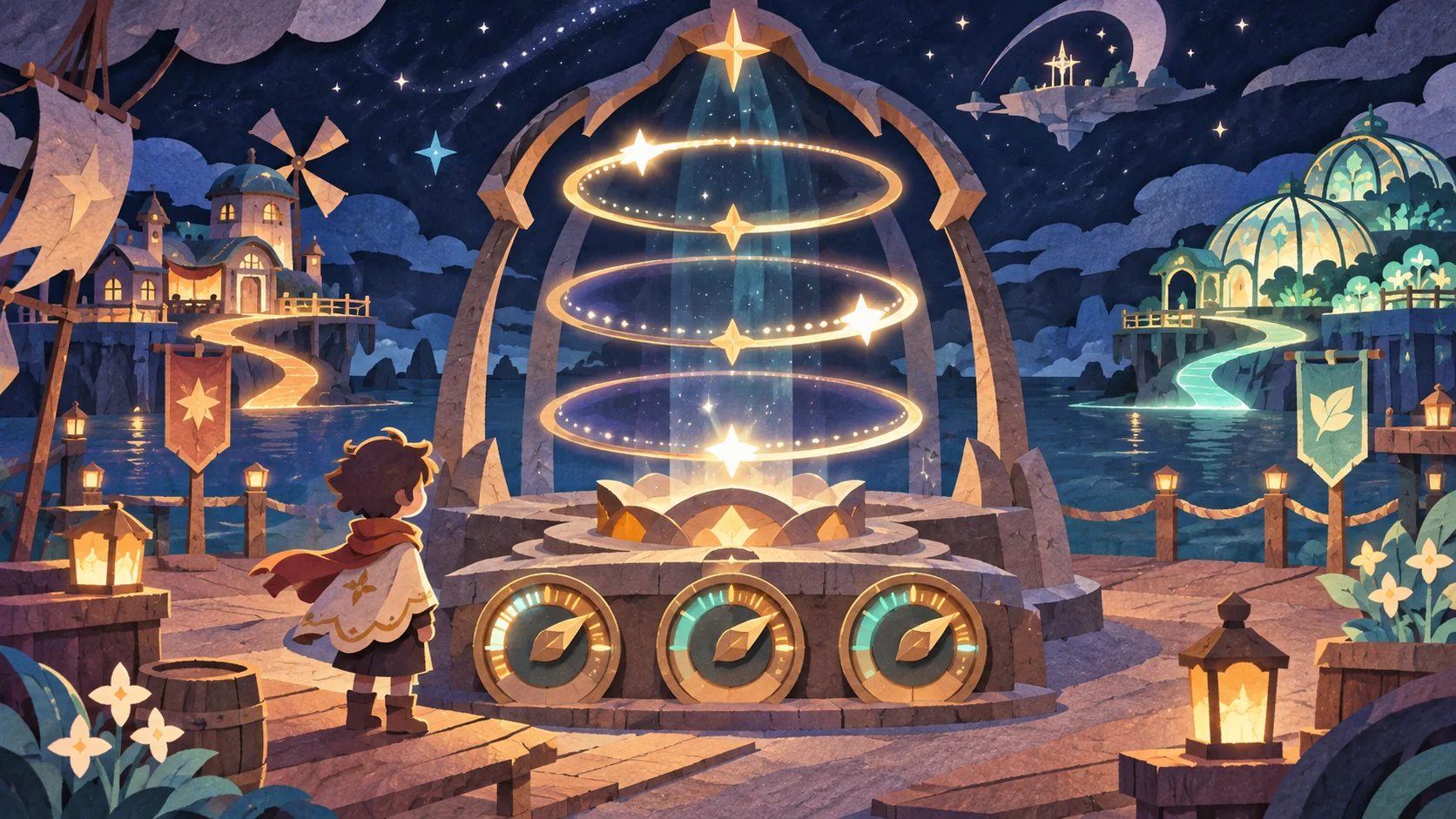
In the fictional encounter, a drifting signal pattern moves across three beacon rings. The player watches the pattern, then sets three dials to match it. A short timing window makes the action tense, but the result is easy to read: each correct dial lights a ring, and a complete match adds one route charge.
| Encounter step | Player action | Feedback | Why it matters later |
|---|---|---|---|
| Observe | Watch the three-beat signal | Rings pulse in order | The player can form a prediction |
| Tune | Set one dial at a time | Correct rings stay lit | Progress is visible before the final action |
| Confirm | Lock the beacon pattern | A charge enters the route ledger | The encounter creates a resource |
| Choose | Send the charge to harbor or observatory | One route on the map brightens | The choice changes the next destination |
| Return | Visit a later scene | Residents react to the powered route | The world acknowledges the decision |
The table connects action, feedback and consequence. If the charge appears only as a number, the choice may feel detached from the story. If a route visibly powers up, the player can understand what their action changed.
Keep the first prototype small
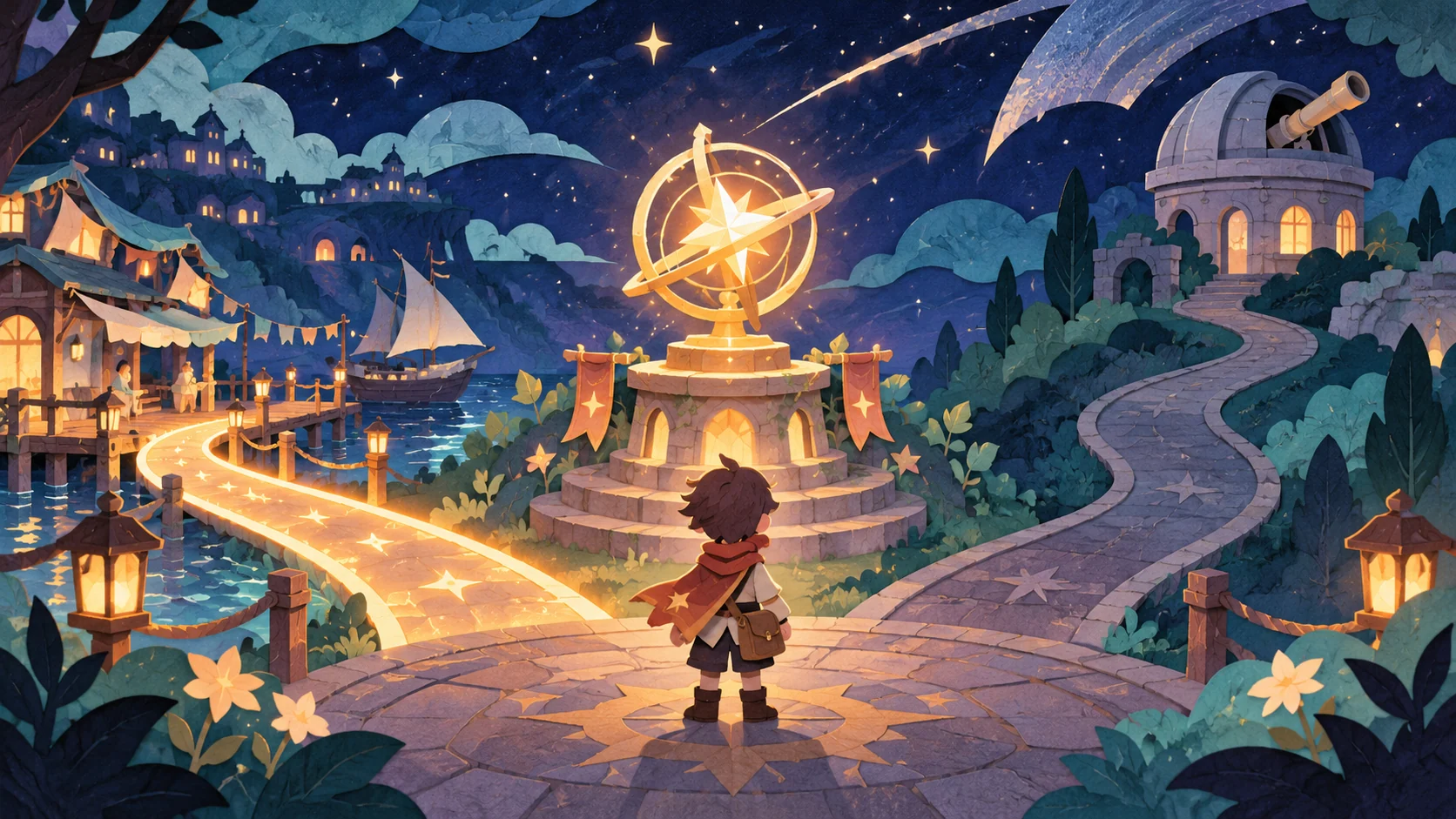
Start with one encounter, two destinations and one choice. Give the player a short signal pattern, a few dial states and a clear confirmation step. After the encounter, show a simple route map with the two possible paths. Do not add multiple endings, a relationship score, a large party, side quests and several resource types before this chain works.
Write the state changes down before implementing them:
- At encounter start, all three beacon rings are dark.
- Each correct dial lights one ring; an incorrect dial can be tried again.
- Confirming a complete pattern awards one route charge.
- Choosing harbor or observatory changes one visible map path.
- The next scene reflects which route was powered.
This small state list helps you catch contradictions. If the route map brightens but the next scene still loads the other destination, the game’s consequence rule is inconsistent. Fix the state connection before writing more branches.
Use a prompt that names the mechanic and the consequence
A useful prompt describes an original encounter, its inputs, feedback, and the state it changes. “Make an RPG like Undertale” does not say what the player should do or how the world should respond.
Create an original story RPG prototype called Starward Dispatch. In one short encounter, a three-beat signal moves across a star beacon with three dials. The player observes the signal and sets the dials to match it, with each correct ring lighting up. Locking the full pattern gives one route charge. After the encounter, let the player choose whether to send that charge to a harbor path or observatory path, and show the selected route brightening on a simple map. Include a retry for the beacon and keep the world-state change easy to inspect. Use original characters, setting, art, text and interface; do not copy any existing RPG content or battle system.
Treat this as a proposal for a starting point, not proof that a particular result exists or works. SEELE’s catalog describes prompt-led game creation and playable games, which can make it a place to explore a concrete RPG idea. It does not establish that Starward Dispatch has been generated or tested. You can start from the free AI game maker and inspect how the encounter and route state are implemented.
Make consequences clear without making choices feel like a quiz
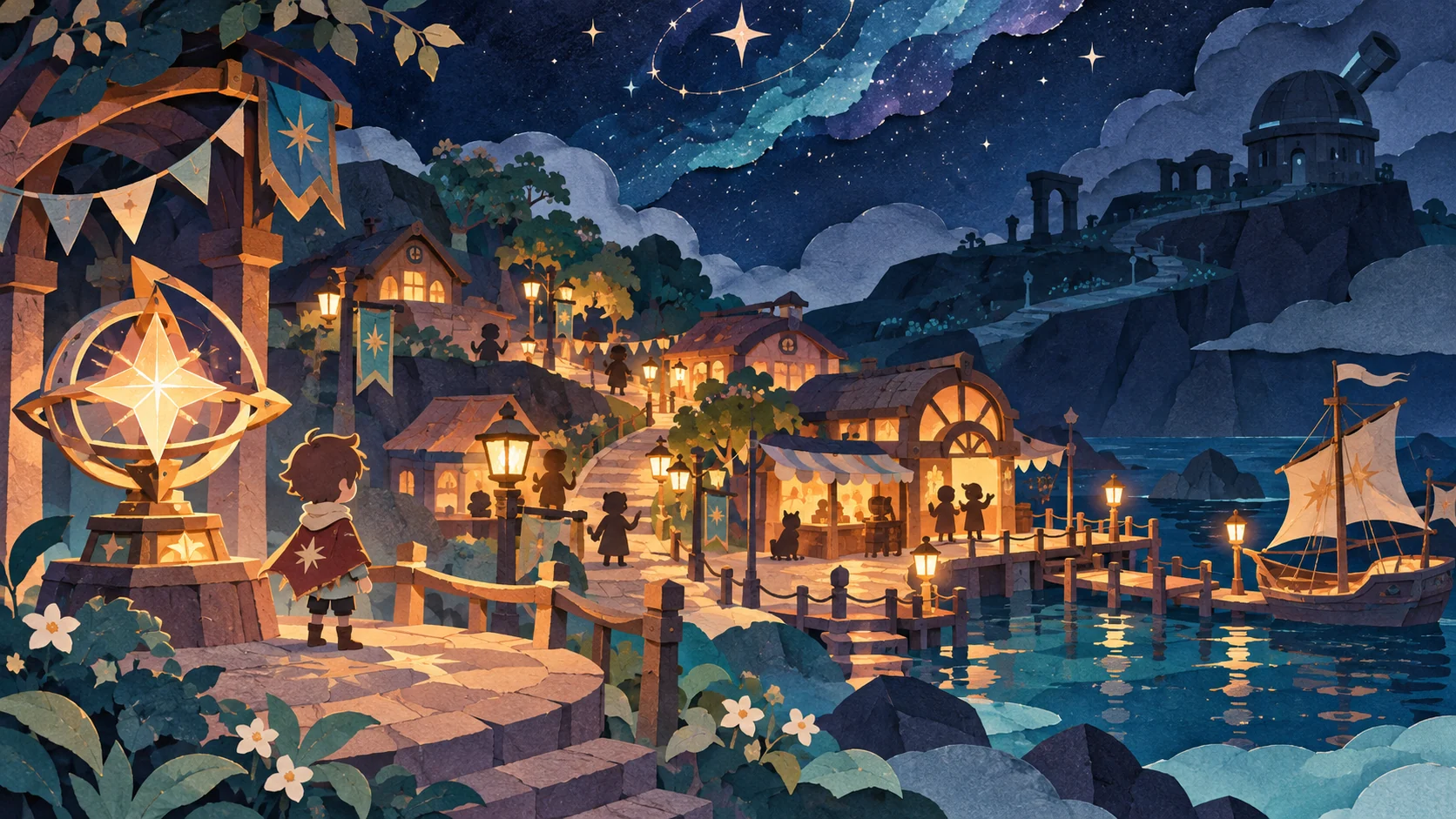
Players need enough information to understand what they are choosing, but a story choice does not have to reveal every future event. Show the immediate effect—harbor lamps or observatory signals turning on—then let later scenes provide the narrative result.
Avoid making one path consistently richer or more useful unless that is the intended decision. If one choice always unlocks more content, players may treat the other as a mistake. A tradeoff can be clearer: the harbor route offers a short path to a supply stop, while the observatory route opens a new clue. Both can lead to useful but different scenes.
Diagnose whether the player understands the state change
After the beacon encounter, ask a player to point to the route they powered and say what changed. If they cannot, strengthen the map response or repeat the chosen route in the next scene. If they understand the route but do not feel ownership of the choice, make the selection action more explicit or connect the route to a character they have already met.
| What you observe | Possible issue | First adjustment |
|---|---|---|
| Player does not notice the beacon pattern | Signal feedback is too subtle | Increase ring contrast or add a replay action |
| Player cannot tell which dial was correct | Progress is hidden until the end | Keep correct rings lit as they go |
| Route selection feels arbitrary | The immediate effect is not visible | Brighten the selected path on the map |
| Later scene ignores the choice | State is not carried forward | Connect route selection to the next scene condition |
| One choice seems obviously better | Tradeoff is too lopsided | Make both paths useful in different ways |
These are test hypotheses for a fictional prototype, not observed outcomes. Change one cue or consequence at a time and repeat the same encounter.
Test the full choice chain
Use one repeatable sequence: observe the signal, tune the beacon, choose a route, then enter the next scene. Ask the tester to explain the pattern before tuning, identify the route after the choice, and notice any difference when the next scene begins. If the action is understood but the story result is not, improve the link between route state and scene. If the pattern itself is confusing, tune its visual rhythm before expanding the story.
Conclusion
To make a choice-driven RPG inspired by Undertale while keeping it original, focus on the broad value of responsive decisions and invent your own encounter and consequence rules. Starward Dispatch links a short beacon-tuning challenge to a visible route choice. Prototype that chain first, then expand the story only after players can explain what changed and why.
FAQ
How do I make a game like Undertale without copying it?
Use a broad goal such as meaningful choices or expressive encounters, then create your own characters, dialogue, battle interactions, art and story. Starward Dispatch’s beacon-and-route example is fictional and distinct.
Should every choice change the ending?
No. A choice can change a route, scene, resource or character response without branching the entire story. Start with one consequence you can show clearly.
How can I make a choice feel meaningful?
Connect the player’s action to an immediate visible result and a later response. The result does not need to be better or worse; it should be understandable and consistent.
How many branches should a first RPG prototype include?
Begin with one decision that leads to two short outcomes. Confirm that the player can see and explain the difference before adding more branches.
Can AI create and test a choice-driven RPG automatically?
A prompt can help define a starting idea, but this example has not been built or tested. Check that encounter feedback, route state and later scenes all agree before treating the prototype as complete.