A gravity-flipping platformer can make the return journey feel different from the way in. The player follows a floor corridor to a vault, collects a key and reverses gravity at an anchor. The ceiling route then opens while the floor passage closes. Start with one chamber and make the two states easy to compare.
Preview the outward path and the return route
Use four landmarks: exit, gravity anchor, vault and ceiling passage. With normal gravity, the player can move along the floor from the exit through the anchor to the vault. The overhead passage is not traversable yet. Show this route before the player enters so the return challenge is anticipated, not hidden.
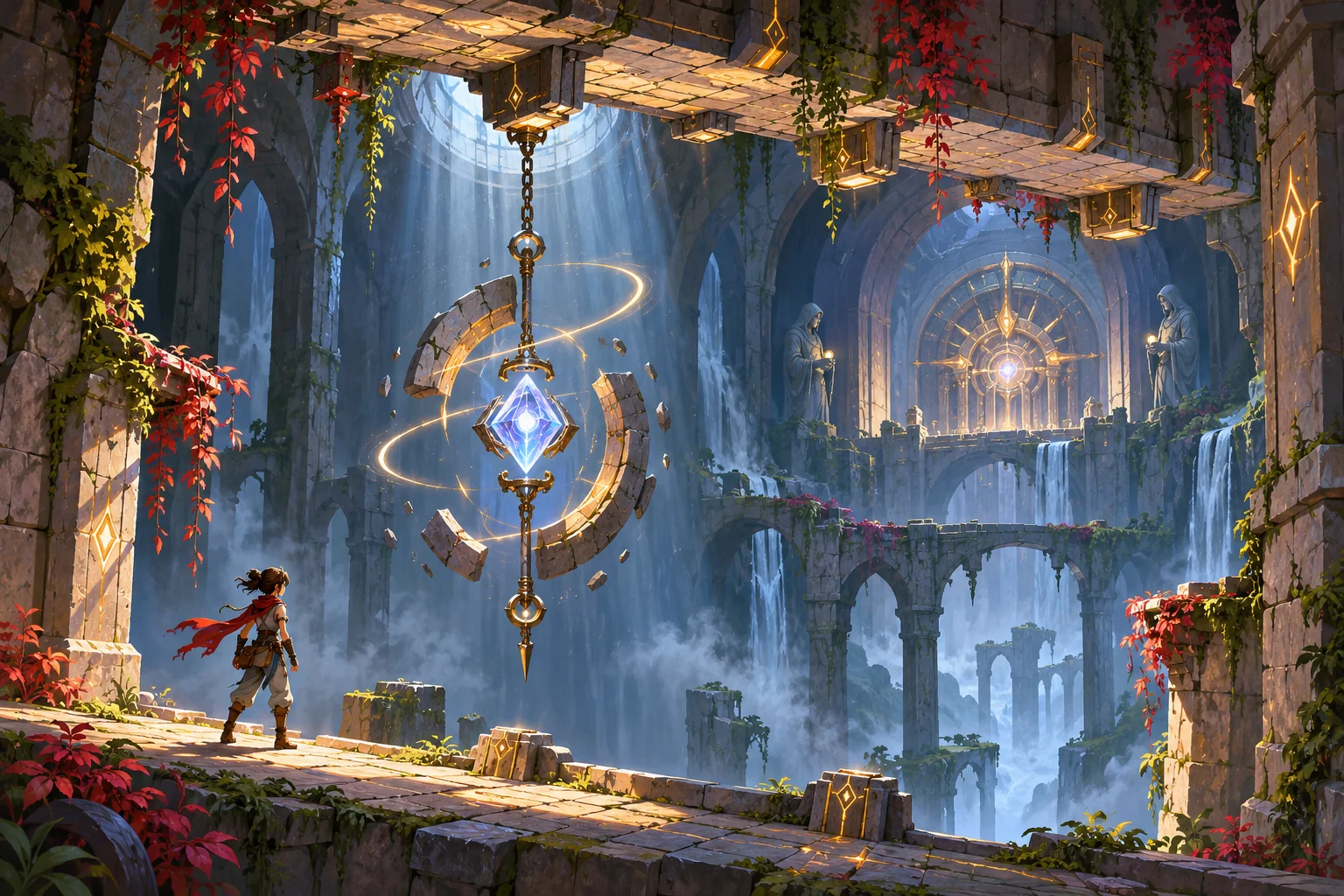
Keep the first chamber small and use a clear gravity indicator. The player should know whether gravity points toward the floor or ceiling, which gate is open, and where the key was collected. Mark the route and state changes as prototype rules.
Flip gravity to change the escape path
At the anchor, the player reverses gravity after collecting the key. The floor return gate closes, while an overhead link to the exit opens. The key stays in inventory and the exit remains the goal. The player must traverse the vault-to-exit route along the ceiling rather than walking back through the same corridor.
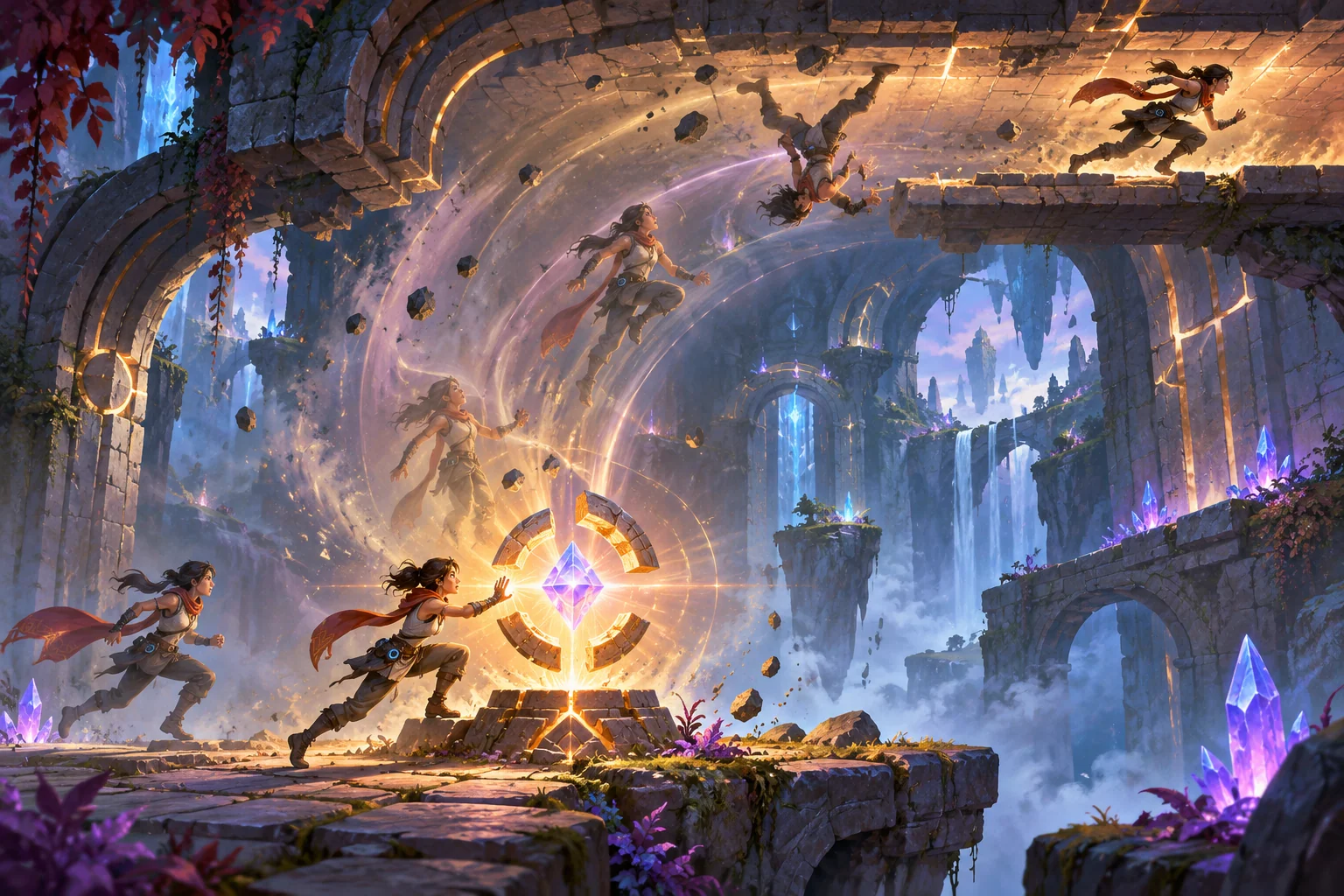
Show the new route before the flip completes. Preserve the key and update the map with the new openings. If the player flips back, define whether the floor gate reopens; avoid silently trapping them or resetting the chamber.
Replay reachability across both gravity states
The local route check starts with the floor route open and the ceiling link closed. Exit, anchor and vault connect on the outward trip. After the key is collected and gravity flips, the floor return link closes and the ceiling passage connects vault to exit. The escape goal remains reachable through a different route.
| State | Floor route | Ceiling route | Vault can return to exit? |
|---|---|---|---|
| Normal gravity, outward | Open | Closed | Through floor |
| Reversed gravity, return | Closed | Open | Through ceiling |
This deterministic graph check verifies route availability only. It does not simulate jumping, momentum, collision, hazards or a complete platform level. Add movement physics after the two route states are consistent and readable.
Build one reversible chamber before a full level
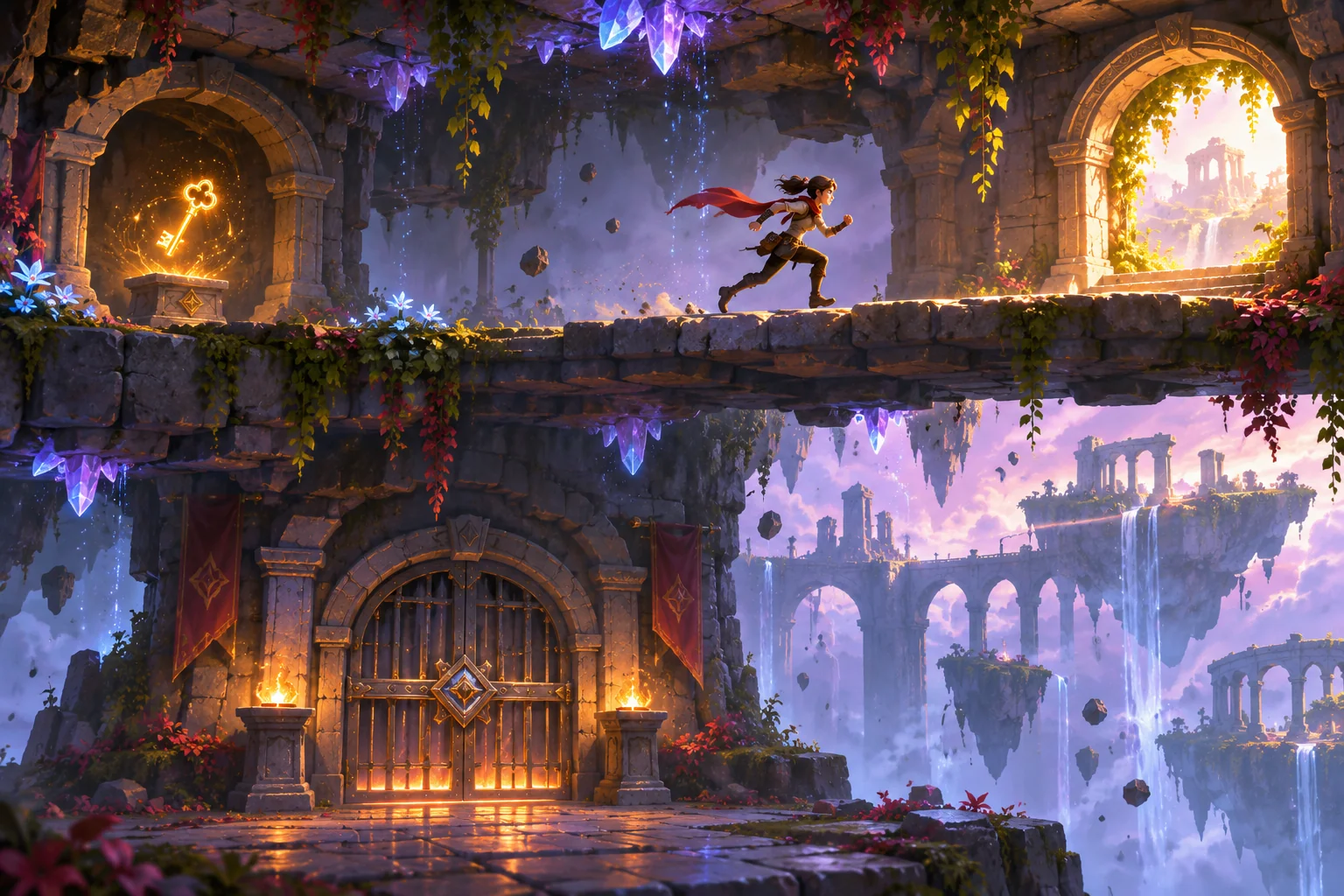
Ask an AI game maker for a small platformer chamber with an exit, gravity anchor, key vault and ceiling passage. Normal gravity opens the floor route to the vault. After the key is collected and gravity is reversed, close the floor return gate and open the ceiling route to the exit. Keep the key and player state, show a route preview and add a reset to compare both states.
Once this works, add an enemy or momentum-based jump one at a time. Replay the same chamber after each change. Players should understand why the return path differs before adding hazards or timing pressure.
Create a gravity-flipping platformer prototype with an exit, gravity anchor, key vault and ceiling passage. Under normal gravity, the player travels along the floor from the exit through the anchor to the vault; the ceiling route is closed. After collecting the key and flipping gravity at the anchor, close the floor return gate and open a ceiling link from the vault back to the exit. Preserve the key and current player state. Show the open route and gravity direction, and add a reset for the same chamber. Label the geometry as prototype rules; keep jumping physics simple.
Start a gravity-flipping platformer prototype in SEELE
Frequently asked questions
How can gravity change the return trip?
Use the gravity state to switch which passages are open. The player takes a floor route to the objective, then uses a ceiling route to return after flipping gravity. Show the route change so the second trip feels intentional. before the player commits.
Should the key disappear after the gravity flip?
No. Keep collected progress persistent while changing traversal links. That lets the player focus on navigating home instead of repeating the objective or wondering whether the key reset. The same key remains available on the return trip. throughout the entire route.
What should the first route test verify?
Check that the vault is reachable on the floor route and that the exit is reachable from the vault on the ceiling route after the flip. This verifies graph access, not jump physics or a finished level. Replay with a reset.