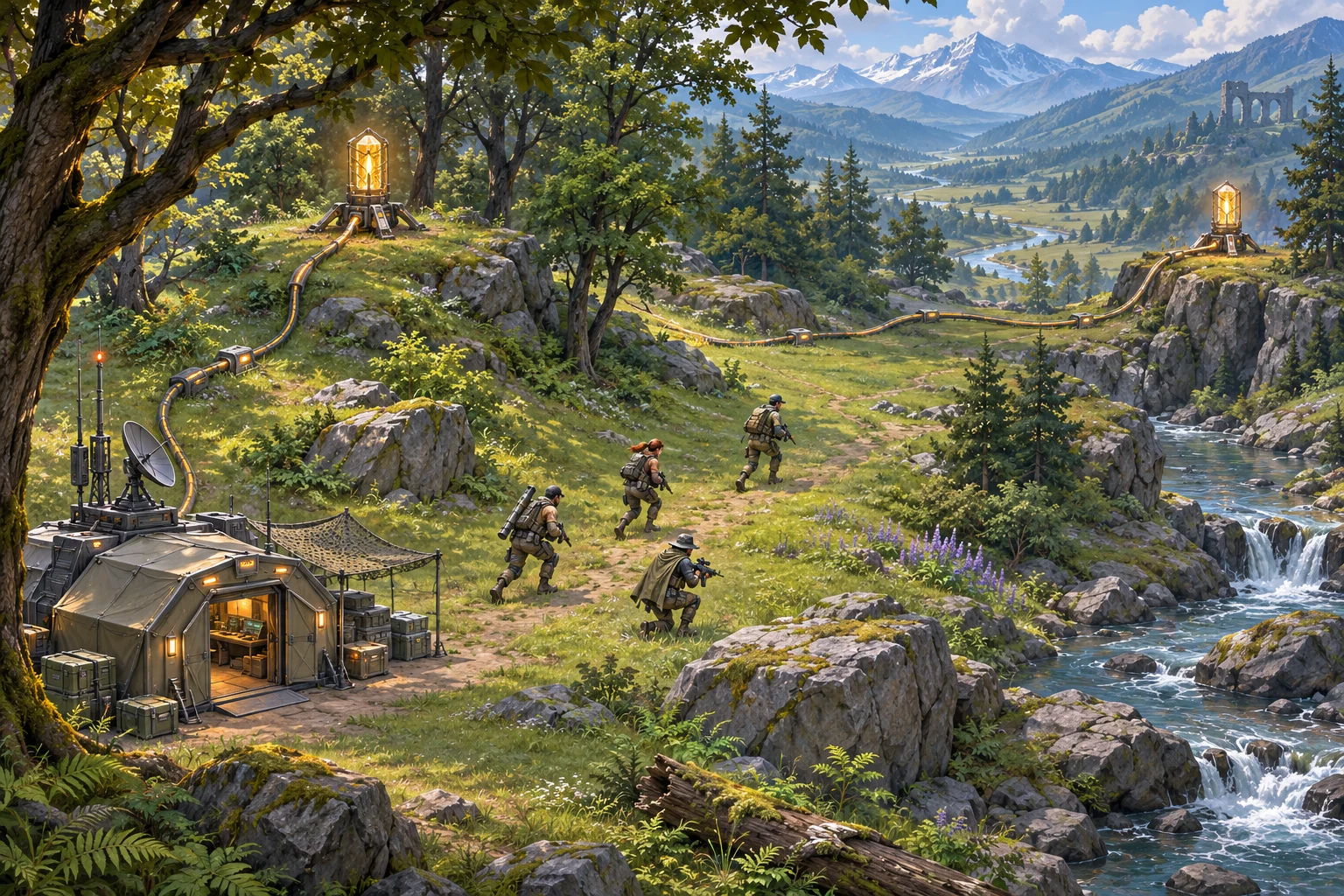
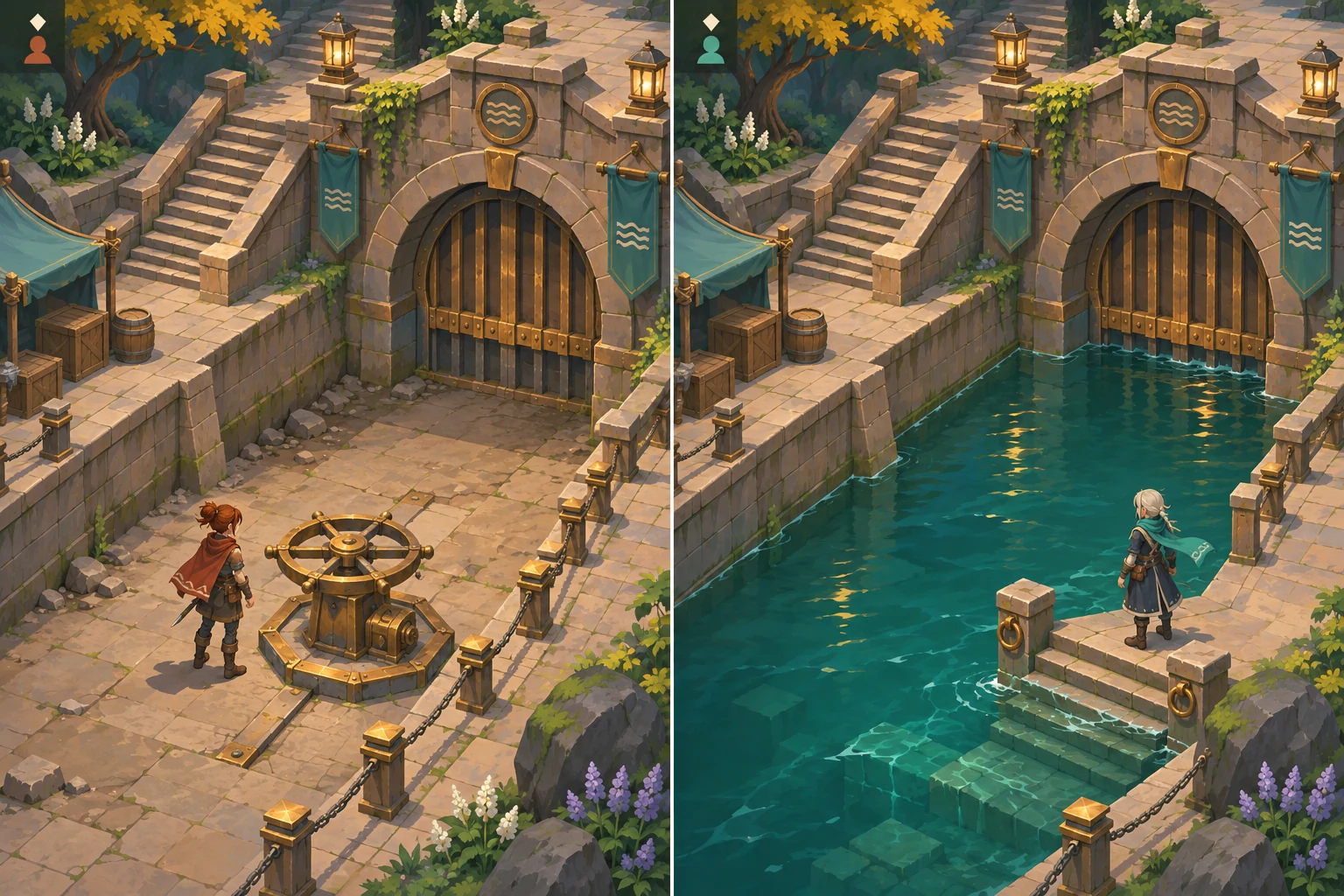
Give the player a reason to save charge
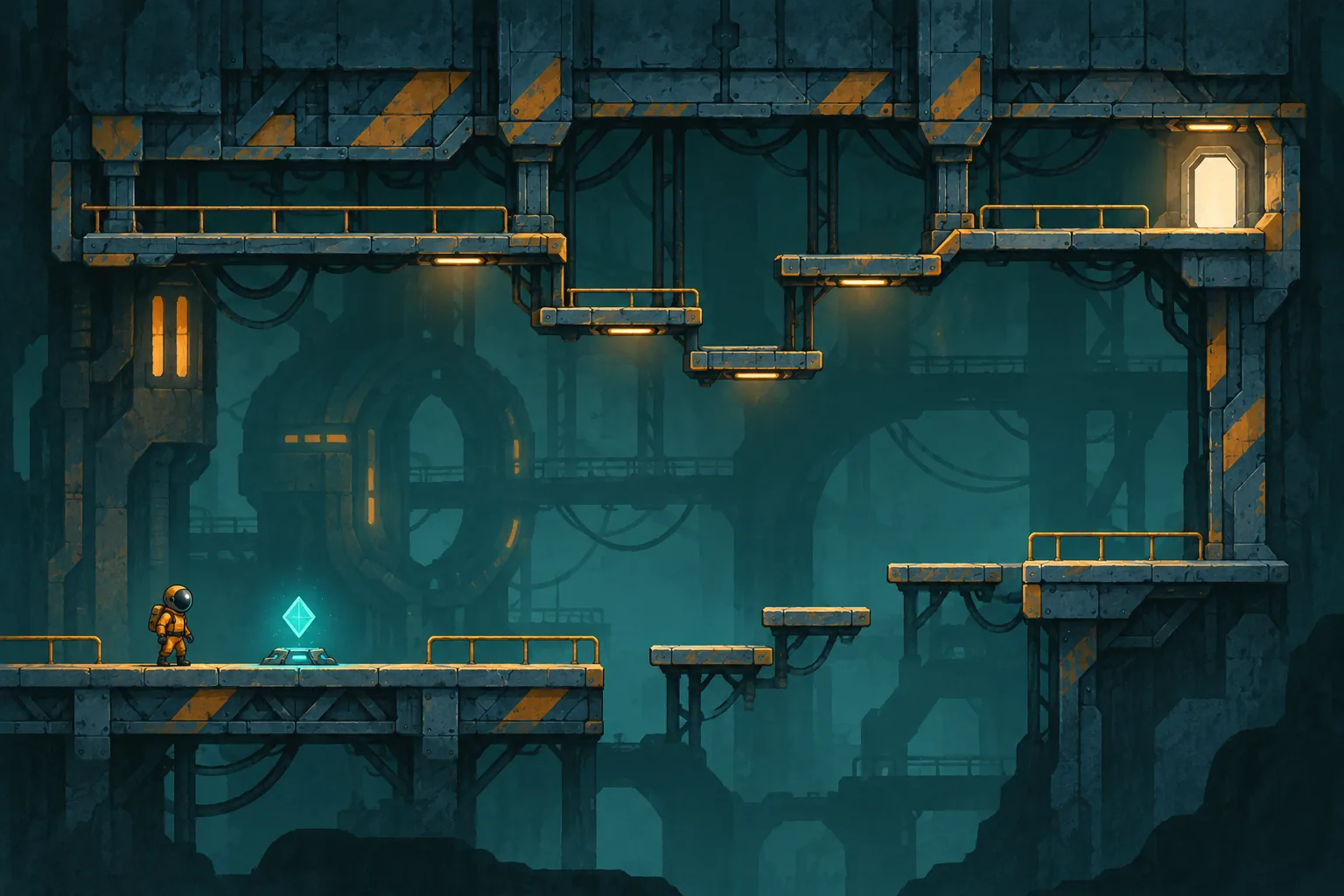
Start with one room and a shared battery. The courier can walk on a solid rail and fall in the current gravity direction for free. A gravity flip and a sideways burst each cost one cell. The short floor route spends three cells to reach the ceiling exit. The longer ceiling detour costs two actions and passes a refill. The player can see both landing rails from the junction and choose how much charge to keep in reserve.
Charge once per accepted input
Keep charge, gravity direction, current support, and collected pickup IDs in the room state. On a fresh flip press, require a settled landing and one cell. Spend it once, reverse vertical gravity, and clear vertical velocity so the player leaves toward the intended surface. Update support after collision resolution. A held key should do nothing until it is released and pressed again.
Treat a burst as a short sideways movement with a fixed end. For the first room, allow it only from a rail and suspend vertical acceleration for the burst. If the target ledge is missed, let gravity resume and use the checkpoint reset. Show an empty charge pip on a rejected action, and light the receiving surface on an accepted flip. Keep the camera upright so the direction change stays readable.
If you use Godot, CharacterBody2D gives you a script-driven body. Set its up_direction opposite the active gravity vector before moving so the contact you expect to stand on is classified as a floor. Code the charge and reset rules separately.
Walk the routes and test the reset
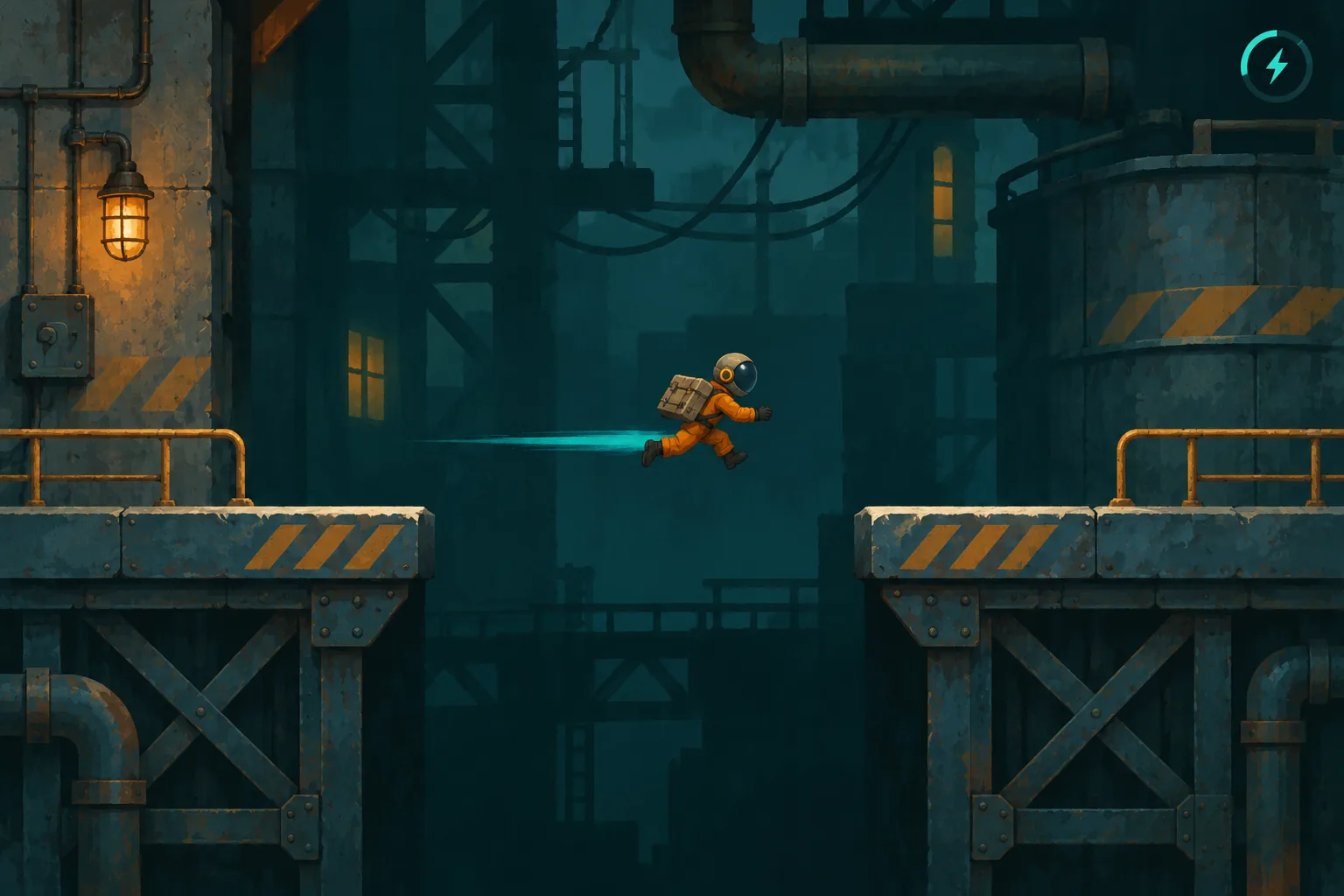
In the fictional Hollow Relay room, enter with two cells and walk over the entry pickup for a third. Take two floor bursts and pay for one flip at the far pad to arrive at the ceiling exit with zero. From the same junction, you can flip early, collect a refill on the ceiling detour, and burst to the exit with two cells left. Give the long route an extra stretch of free walking so the player trades distance for spare charge.
Run the checkpoint test from the lower pad after the first burst. In a local room-graph simulation, restoring only one cell allowed the next burst but left the far pad with zero, blocking the final flip. Restoring two let the same two actions reach the exit. This test checks permitted state transitions. In your playable build, also check whether collision, landing timing and restart inputs match the model. Restore pickup IDs deliberately so retrying cannot duplicate spent cells.
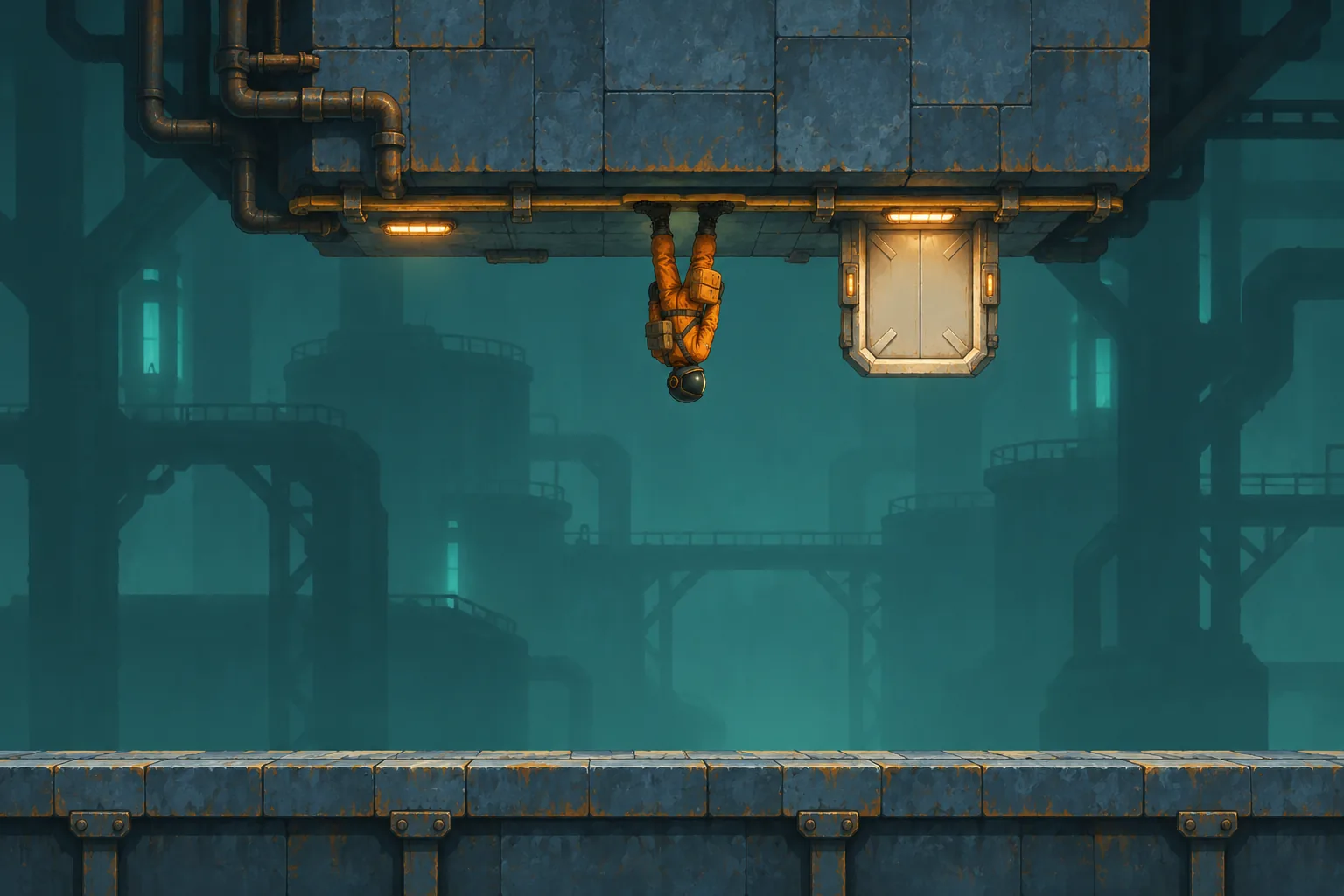
Ask for one room and a reproducible reset
Give the AI the walkable surfaces, paid actions, pickup positions, and expected balance on both routes. You can use SEELE AI Game Maker to start with a text prompt and revise a playable first version with follow-up instructions. Start by checking the checkpoint trace before changing visuals or movement speed.
Build a side-view room with free walking on settled rails. Start with two cells and put one pickup before the route split. Each floor burst and gravity flip costs one cell. Add a longer ceiling detour with one refill. From the checkpoint after the first floor burst, restore two cells and the saved pickup IDs. Display pips and gravity direction. Keep the camera upright.
Draft the one-room platformer in SEELE · Godot's CharacterBody2D reference
Frequently asked questions
What should happen when the player runs out of cells?
Keep walking on the current rail available, and make any nearby reachable refill readable. If the rail has no free route to a refill or exit, provide a checkpoint reset that restores enough energy for the next mandatory actions. Test this from every checkpoint.
Should walking consume the same cells as bursts and flips?
Keep walking free in the first room. It lets players approach a ledge, inspect a landing, or collect a refill without paying just to look around. Make walking consume charge only if you explicitly budget that distance and show how much an ordinary traversal costs.
How do I test if a checkpoint can trap the player?
Record the respawn position, gravity direction, remaining charge, and pickup IDs. Play the cheapest available route from exactly that state. If the player runs out before the next refill or the exit, restore more charge or place a refill that can be reached for free.