In fictional Vela Junction, a new northern depot should come from work the player has completed. One truck can finish a two-stop service route each day. When both handoffs are confirmed, the contract pays one expansion credit. Two credits unlock a second depot and truck. This makes expansion a result of reliable service, not simply a timer that runs while deliveries wait.
Make each contract a route with a clear finish condition
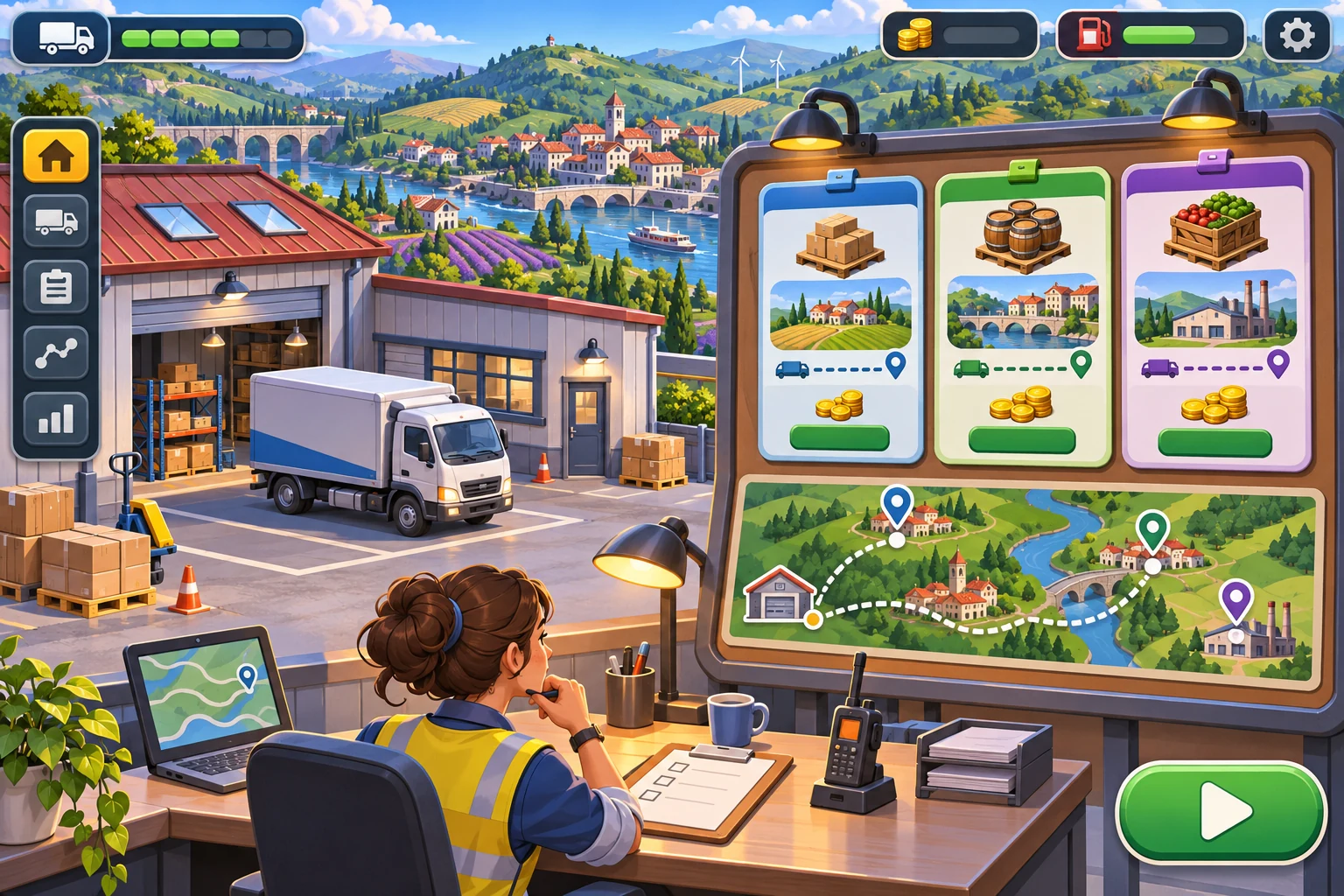
Start with one depot, one truck, and three service contracts. Each contract lists two delivery stops and a due day. The player plans a route, drives to both stops, and confirms each handoff. Only a fully confirmed contract earns its credit. Show the pending stop before departure and the proof-of-delivery state after each arrival, so the reward never feels automatic.
Keep route data separate from contract progress. In Godot, a Resource can store an authored contract’s stop list and reward, while the current run records completed handoffs and earned credits. The second depot costs two credits; it unlocks one additional truck route. A failed or partial contract earns no credit in the first test.
Tie expansion to completed service, not elapsed time
The baseline unlocks the northern depot at the end of day three, whether or not the player completed any contracts. The revised rule grants one credit for each completed two-stop contract and opens the depot as soon as the balance reaches two. Both versions use the same three routes, due days, single starting truck, and route duration of one day per contract.
Keep the next route visible while the player works toward the depot. Once two credits are earned, show the credit balance, the depot cost, and which delivery the new truck can take. If a handoff is missing, preserve the player’s progress but keep the contract incomplete. This makes the requirement legible and gives the player a reason to confirm both stops.

Replay the first three days and compare delivery capacity
Use a fixed seven-day week, with Routes A and B due on days one and two. Route C and a routine town delivery are both due on day three. Each route has two stops, and each truck handles one route per day. In the baseline, the depot arrives only after day three, so the starting truck prioritizes contract C and misses the routine town route. In the revised rule, A and B earn two credits by day two. The second truck is ready for day three, when C and the town delivery can both run.
The local simulation should report three completed contracts in both runs. The baseline misses one town delivery and reaches its timed depot only after the launch window. The revised run completes all three contracts, earns three credits, spends two, and completes the town route with its new truck. These results isolate timing and capacity: verified service funds another route while it can still help. Keep the rest of the seven-day calendar idle in this first check; add fuel or traffic only if they answer a separate design question.

Give the AI a contract rule and a three-day capacity test
Create a logistics management game prototype in fictional Vela Junction. Start with one depot and one truck that handles one two-stop route per day. Add three service contracts: Routes A and B are due on days one and two; Route C is due on day three. A routine town delivery is also due on day three. Each completed contract earns one expansion credit only after both handoffs are confirmed. A northern depot costs two credits and unlocks a second truck route. Compare a baseline that grants the depot after day three with a revised rule that unlocks it once two contracts are complete. Keep route stops, deadlines, travel time, and starting capacity fixed. Prioritize contract C if the baseline truck cannot do both day-three routes. Report completed contracts, credits earned and spent, depot status, and missed deliveries. Keep days four through seven idle.
If credits arrive before both stops of a contract are confirmed, require proof for each delivery before awarding one. Replay the same routes and deadlines; verify that the funded depot makes the second truck available for both day-three routes.
FAQ
When should a delivery contract count as complete?
Choose a visible finish condition, such as a confirmed handoff at every required stop. Show each stop’s status on the route and contract card. If a delivery is late, damaged, or missing, define whether it blocks the full reward or reduces it before the player accepts the contract.
How should contract rewards pay for expansion?
Use a clear credit balance and show the depot cost beside it. Award credits only after the stated service condition is met, then show which new route or vehicle those credits unlock. Players should be able to trace the expansion back to completed work.
How many routes belong in a first logistics prototype?
Use enough routes to make the capacity choice matter, but keep travel and stops easy to follow. Three two-stop contracts can show how an earned vehicle affects the next due route. Add traffic, fuel, or staff only when a later test needs those systems.