An aquarium management game can make expansion feel earned by tying it to the work of caring for animals and visitors. Instead of waiting for a passive timer, players maintain a habitat, complete a service contract and invest its reward in the next tank. Start with one reef habitat and a single contract so the growth loop is easy to understand.
Show care and service requirements up front
Use a prototype water-quality score from 0 to 100 and a count of completed visitor-care tasks. The contract requires water quality of at least 80 plus four tasks, such as guiding a school group, refilling a visitor station or helping a guest find the accessible route. The aquarium begins with 2 credits; a neighboring habitat costs 7. The contract pays 5 credits when both requirements are met. Show progress and payout before the player accepts the work.
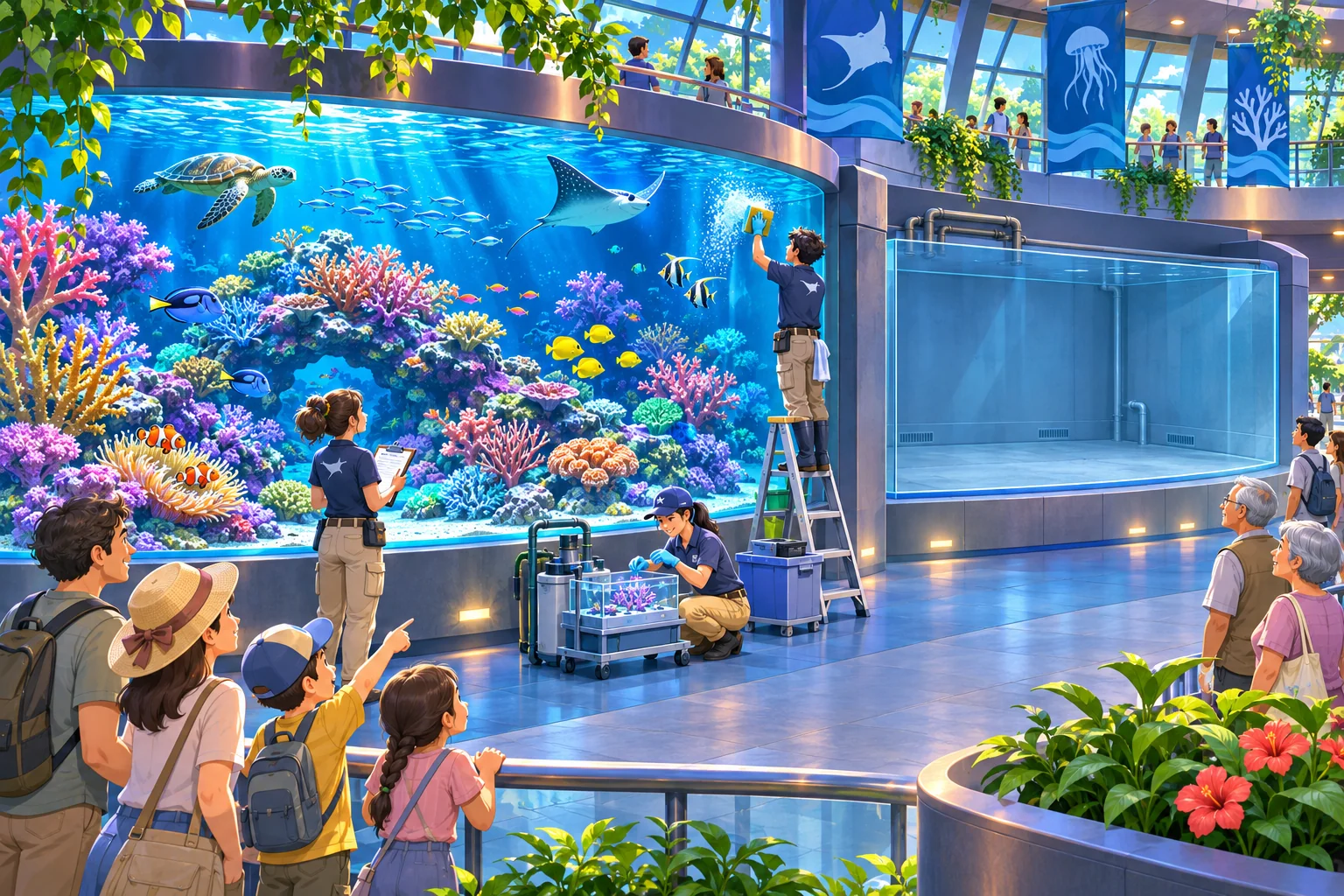
Keep the first aquarium small: one established tank, a visible expansion bay, one contract and a few service tasks. Make animal-care status visible beside visitor needs. The contract should reinforce routine care rather than ask the player to neglect the tank to earn growth funds.
Make contract work connect to the habitat
A contract should ask the player to provide a real service while preserving care quality. If water quality is 79, the contract remains incomplete even if all four visitor tasks are done. At 80 with four tasks, it qualifies for the reward. Avoid hidden deductions: show which requirement is short and let the player continue care or service before claiming payment.
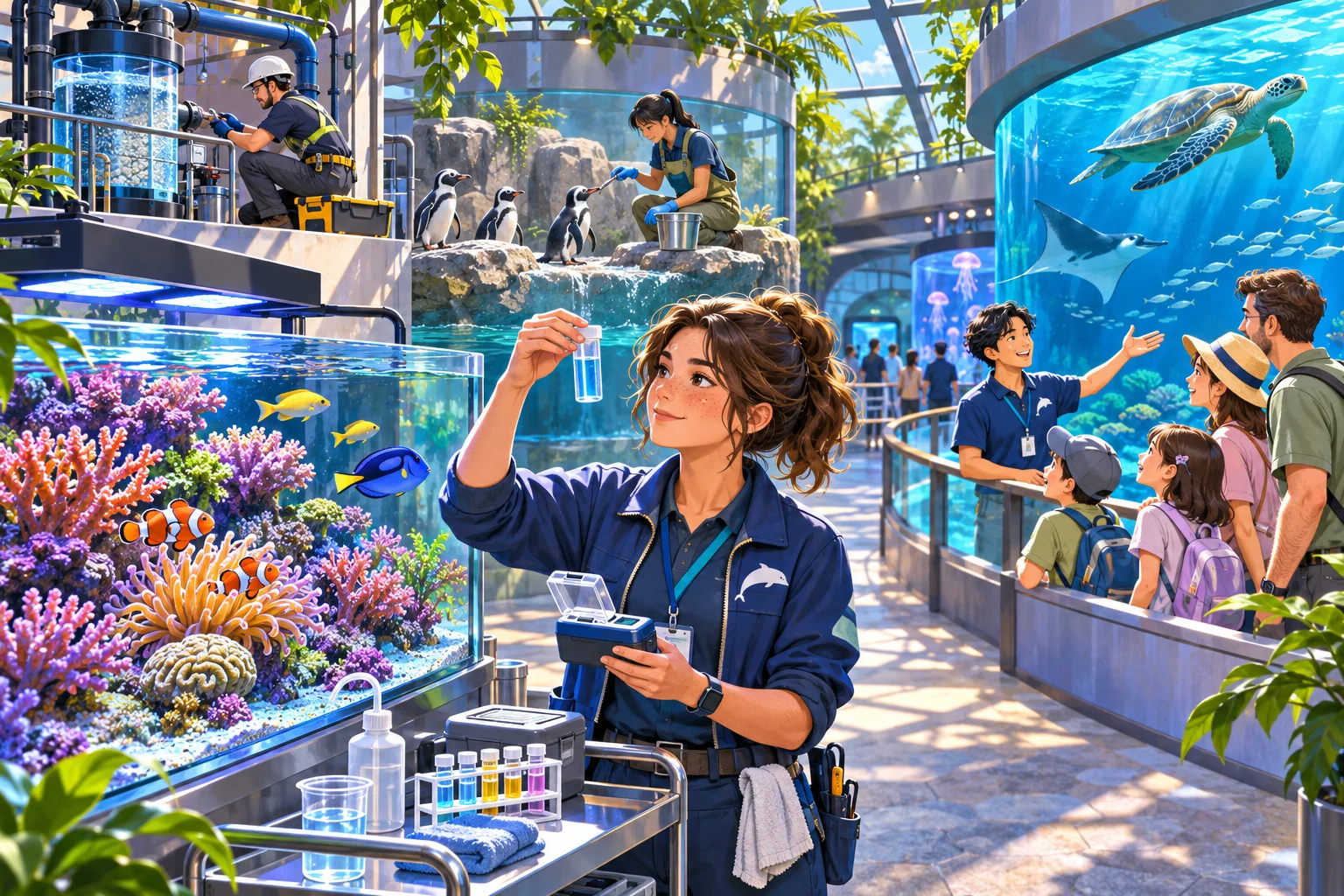
Keep the contract optional until accepted, and show its reward and deadline if the prototype uses one. When the player completes it, add the reward once. Prevent duplicate claims from paying repeatedly. This first test can use one fixed contract; later contracts can vary the service goal or habitat type.
Replay the threshold and expansion budget
The local rules check begins with 2 credits and a 7-credit tank. A contract requires quality 80 and four completed tasks and pays 5 credits. With quality 79, the task count alone does not qualify, so funds stay at 2. With quality 80 and all four tasks, the contract pays once and funds reach 7. Buying the tank leaves 0 credits.
| Case | Water quality | Tasks | Payout | Funds after |
|---|---|---|---|---|
| Below care threshold | 79 | 4 | 0 | 2 |
| Contract complete | 80 | 4 | 5 | 7 |
| Expansion purchased | 80 | 4 | 5 | 0 after 7-credit cost |
This deterministic check validates threshold and budget arithmetic only. It does not simulate water chemistry, species compatibility, guest behavior, operating costs or a playable aquarium. Keep those systems out of the first prototype until the contract-to-expansion loop reads clearly.

Build one contract before a full aquarium roster
Ask an AI game maker for a small aquarium management prototype with one reef tank, a water-quality meter, four visitor-service tasks, a contract payout of 5 credits and a new tank costing 7. Start with 2 credits. Let the player claim the contract only when quality reaches 80 and all four tasks are complete. Show the balance before and after purchase, and add a reset for the same starting state.
Once this loop is clear, add a second contract or habitat type one at a time. Replay the same care and service sequence after each change. That will show whether expansion choices grow from the aquarium’s operations rather than an unrelated cash reward.
Create a small aquarium management game prototype. Start with one reef habitat and 2 credits. Show water quality on a 0–100 scale and four visitor-care tasks. A service contract pays 5 credits only when water quality is at least 80 and all four tasks are complete. A neighboring new habitat costs 7 credits. Show contract progress, care status, payout and expansion cost before the player commits. At quality 79, do not pay; at 80 with four tasks, pay once. Let the player buy the tank and show the remaining balance. Add a reset. Treat values as prototype rules; do not simulate species compatibility or ecology yet.
Start an aquarium management prototype in SEELE
Frequently asked questions
How does a service contract fund expansion?
It turns completed guest-service work and habitat care into a defined reward. Players can see what is required, earn the payout and decide whether to spend it on another tank. Keep the goal and reward visible so expansion follows from aquarium operations.
Why make water quality part of the contract?
It prevents expansion work from rewarding neglect. A player must maintain the existing habitat while completing visitor tasks. In the example, four tasks are not enough at quality 79; the contract pays only after care reaches 80. Keep both goals visible beside the tank status.
What should I simulate first?
Start with care threshold, task completion, one-time payout and the tank cost. This checks whether the management loop is understandable. Species needs, guest behavior, staffing and long-term ecology can be introduced later, one system at a time. Confirm the same result in a repeatable local test.