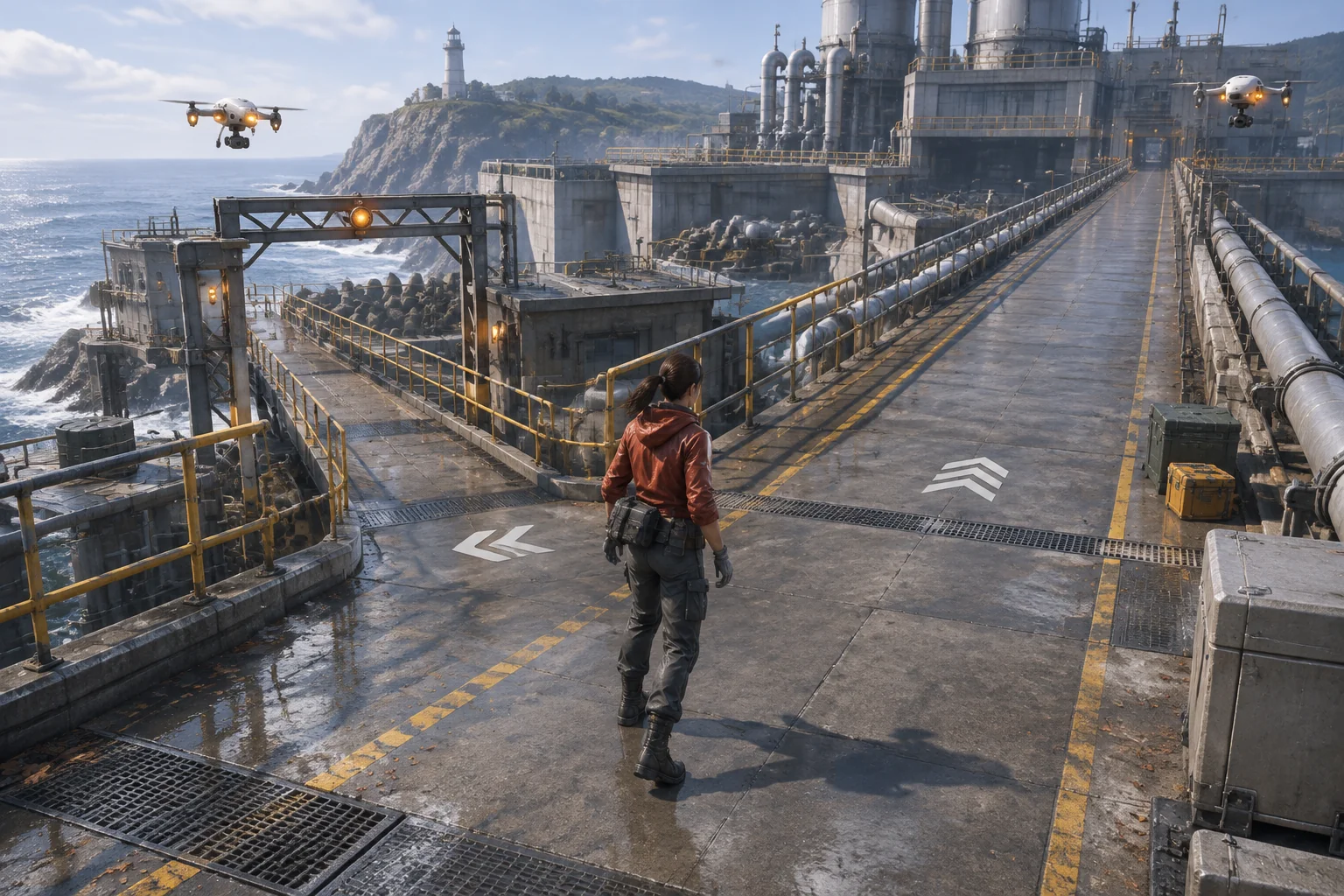
Make the hangar decision matter at extraction
Build one short expedition in which the player reads a route briefing, chooses exactly two modules, retrieves a relay core, and extracts. The mech has its basic blaster regardless of the chosen kit. The two module slots decide which obstacles are cheap to clear. Show both routes before launch, then freeze the module IDs until extraction or abort. The point of returning to the hangar is to try a different route with a different kit.
Set two slots and one capacity limit
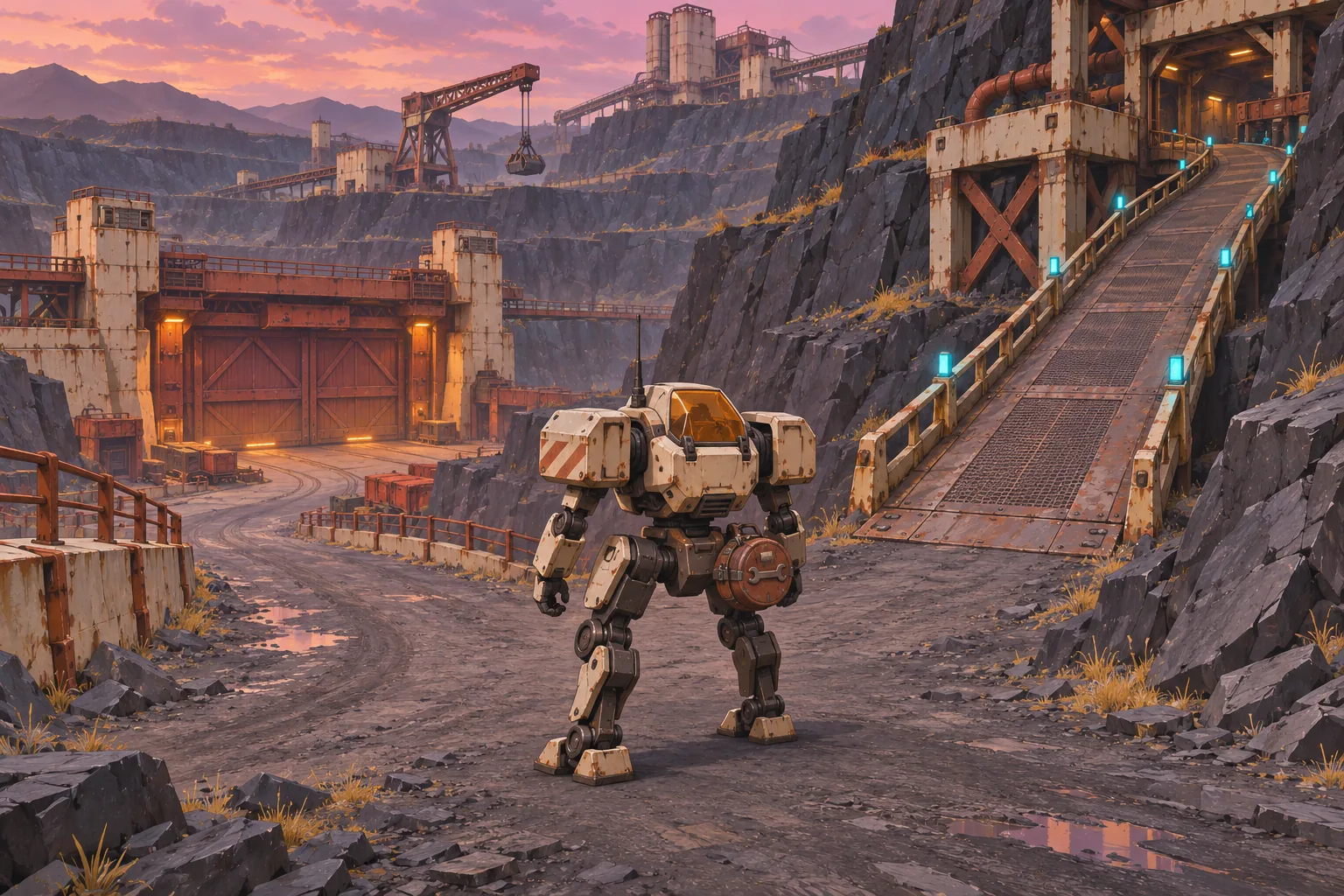
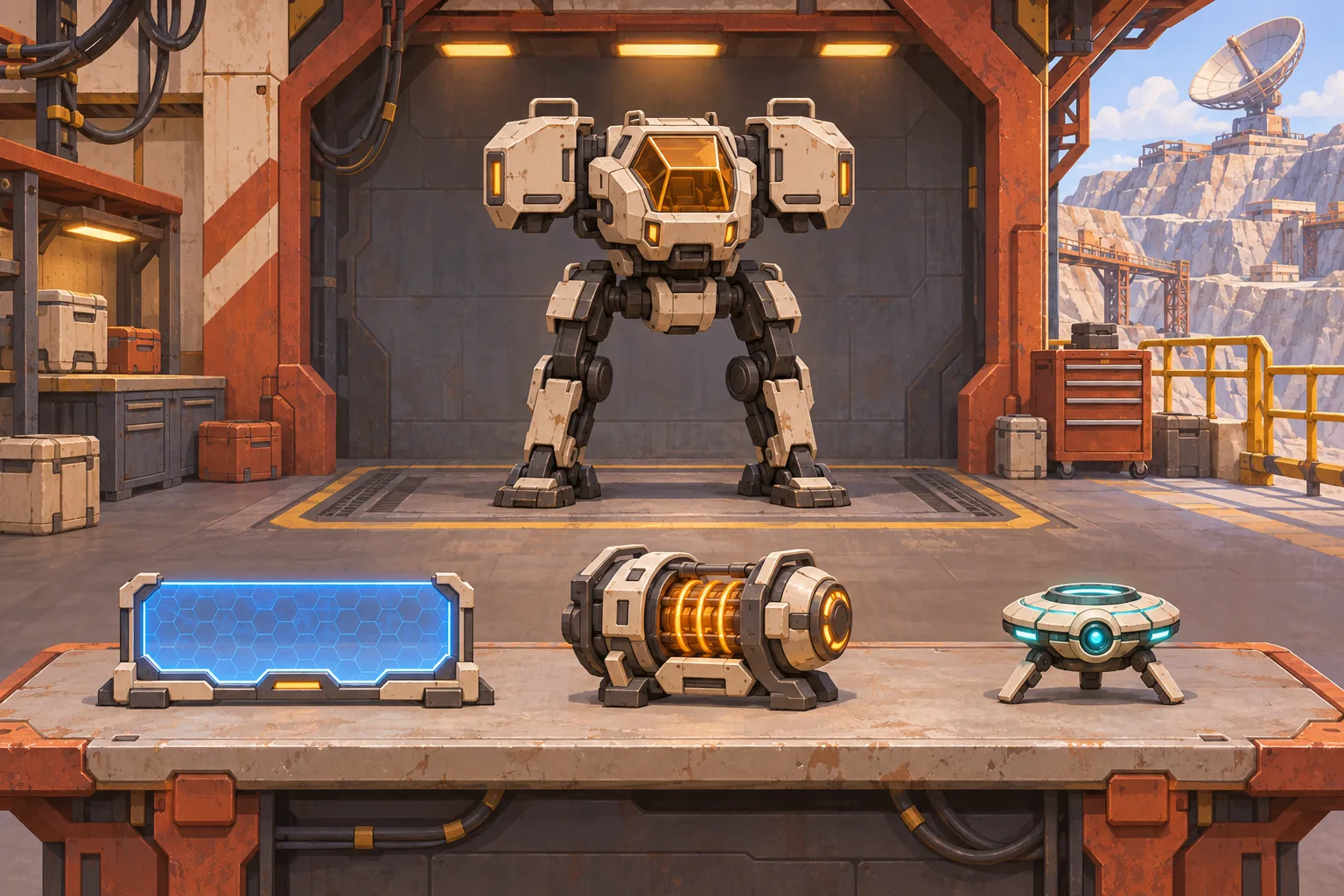
In Signal Quarry, a pulse emitter costs three capacity, a barrier costs two, and a survey probe costs one. The emitter opens a jammed gate or hatch quickly. The barrier shortens a crossing under the quarry's periodic electrical interference. The probe reveals a maintenance bypass. Show icons for the jammed freight gate, maintenance hatch, and interference beside their respective routes, then preview any loadout effect the intel supports.
Check distinct module IDs and total capacity again at launch. Store the accepted IDs on the expedition so changing the hangar selection does not change a run in progress. Give each route a slower default action. An incompatible kit should cost time, while the player can still reach the core. In Godot, Resources can hold fixed values such as module costs. Keep mutable run state, including the committed IDs, in the expedition instance.
Compare the two budgets with one scoring model
Use fictional time ticks to reason about the trade-off before animating it. The freight gate costs four ticks with the manual control or one with the emitter. Maintenance costs four at the hatch, one with the emitter, or two via the probe's bypass. Both routes cross interference for three ticks without the barrier or one with it. Sum the entry and crossing costs for each legal kit.
A local enumeration at capacity five gave emitter plus barrier a cost of two ticks on either route. At capacity four that pair became illegal. Emitter plus probe took four ticks on either route. Barrier plus probe took five on freight and three on maintenance. With the lower cap, each route has a different fastest kit. These are model scores. In the playable build, check whether the bypass is visible, whether the crossing feels worth preparing for, and whether abandoning a run unlocks the hangar.

Prototype one briefing, mission, and extraction
Ask the AI for the three module definitions, two routes, and the capacity check as separate pieces. SEELE AI Game Maker can start a playable prototype from a text prompt and take follow-up instructions. Ask for the launch snapshot before asking for extra enemies or effects. After one run, compare which kit the briefing led you to choose with what the mission actually rewarded.
Build Signal Quarry as a short fictional mech expedition. Start in a hangar with two module slots and four capacity. The emitter costs three, barrier two, and probe one. Show the freight gate and maintenance hatch in the briefing. Freeze two distinct legal module IDs at launch. Both routes can reach the relay core. Extract to show route time and return to the hangar.
Start your mech expedition prototype in SEELE · Godot documentation on Resources
Frequently asked questions
Should I let the player swap modules during a mission?
Keep modules fixed for this first expedition so the briefing has consequences. Offer a way to abort and return to the hangar if the player wants a different kit. If you add field swapping later, price it explicitly and test whether the briefing decision still matters.
How can the player recover from an inefficient loadout?
Give each route an available default interaction for every obstacle, such as a slower manual gate control. Let the player extract with the core and see where they lost time. That feedback helps them connect their next loadout decision to an actual obstacle.
When should I increase the equipment capacity?
Increase it when the legal kits feel too similar or a more demanding mission gives heavy modules separate jobs. Repeat the same route comparison after the change. If the extra capacity makes one pair win every route, adjust module costs or the route obstacles first.