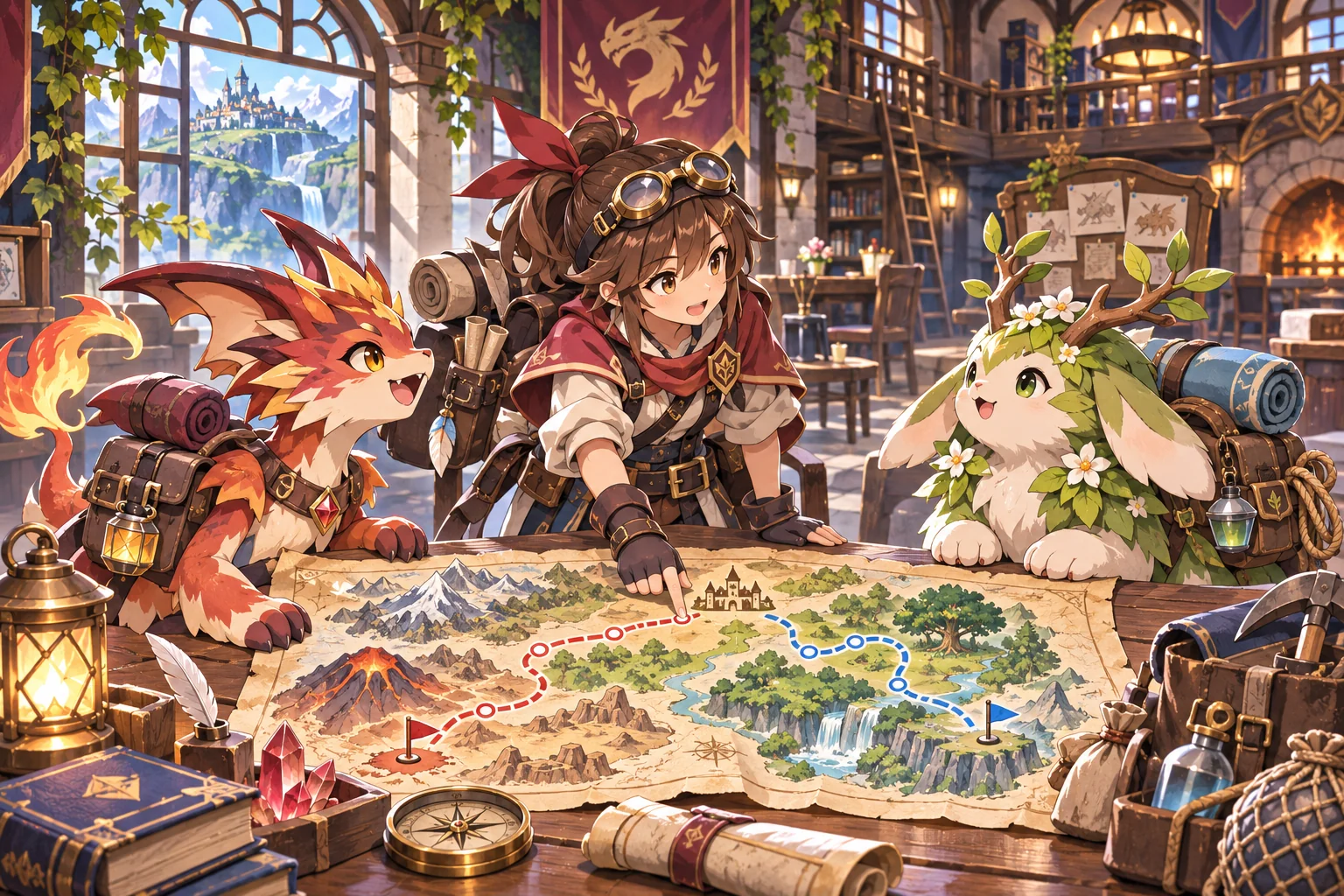
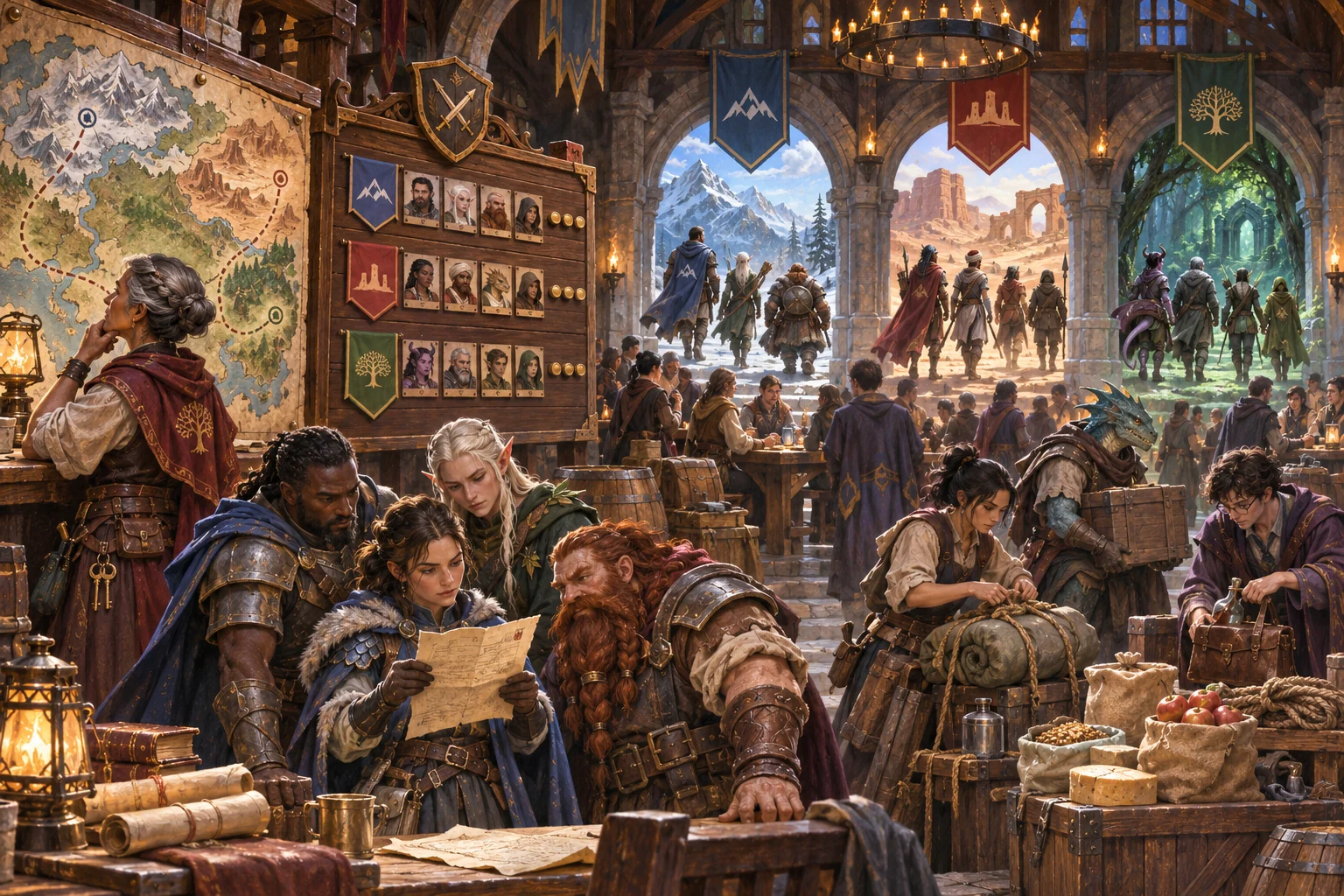
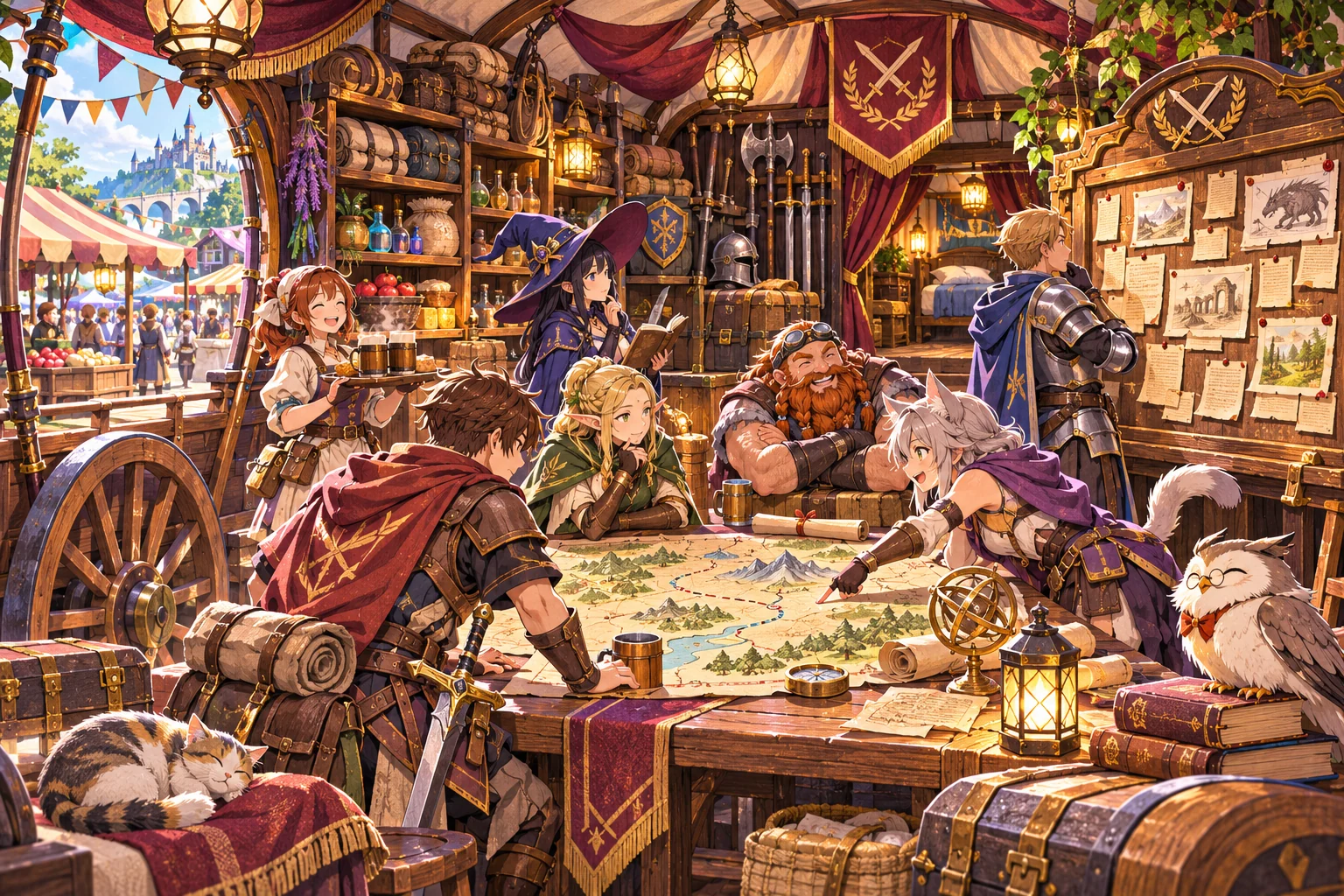
Make the roster choice matter between missions
In fictional Cedar Hall, four heroes can form two teams. A bridge repair takes two days; an herb survey takes three. Dispatch both teams together and they progress independently, but no hero can appear on two teams at once. The short mission returns its members earlier, letting the player choose whether to start a new job while the survey team remains away.
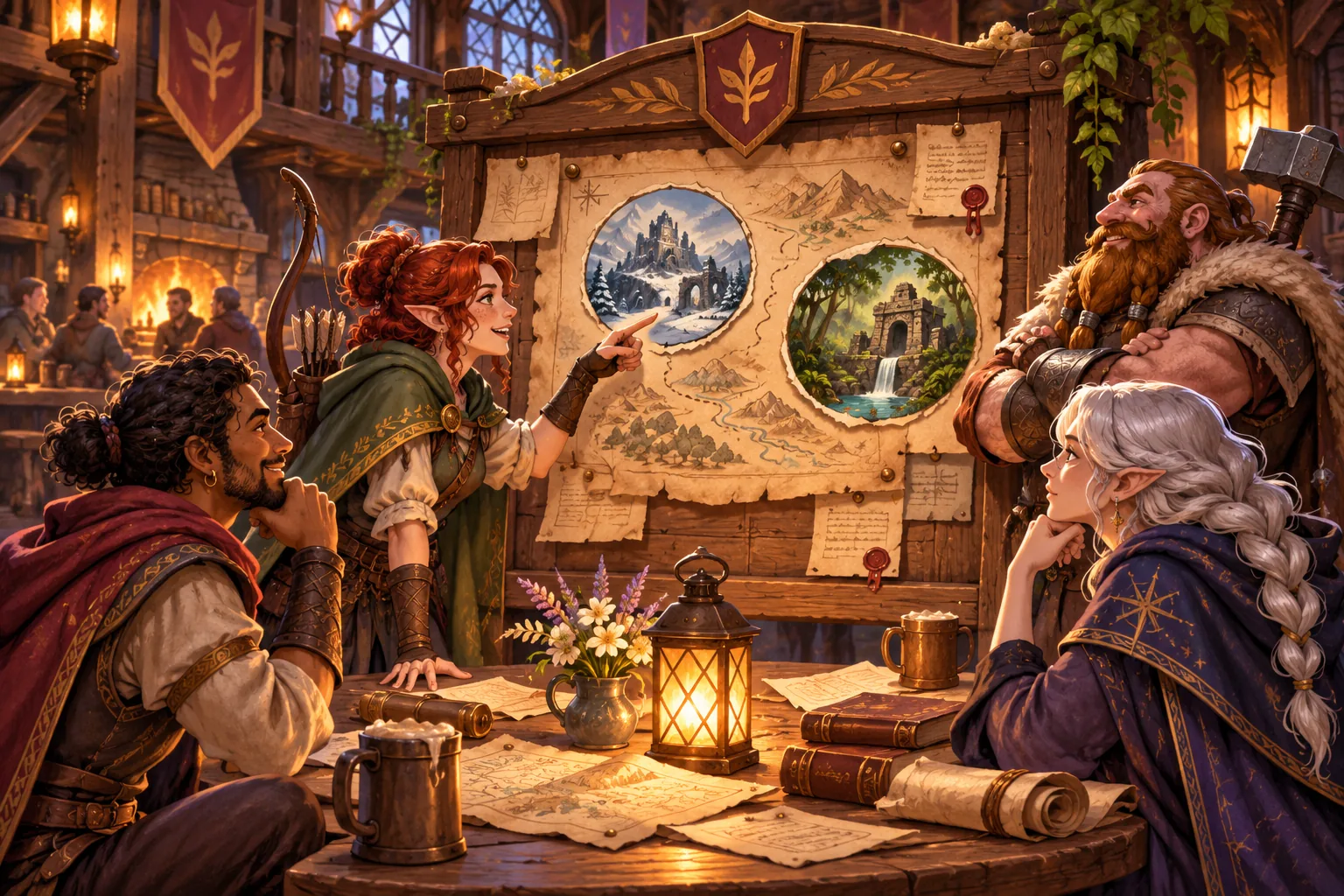
Before dispatch, show each hero's role, mission duration, expected reward and return day. Keep the mission board and roster linked so a player can see why a member is unavailable. A team should remain assigned until its mission completes or the player explicitly recalls it; otherwise the player may accidentally reuse a hero who is still away.
Advance each job on its own clock
Store a stable mission ID, assigned hero IDs, duration, start day, status and reward. Dispatch must reject a hero already assigned elsewhere. Each day advances every active mission once. When a timer reaches zero, mark that mission complete, return its heroes to the free roster and grant its reward exactly once. A short job should not pause merely because another team is still traveling.
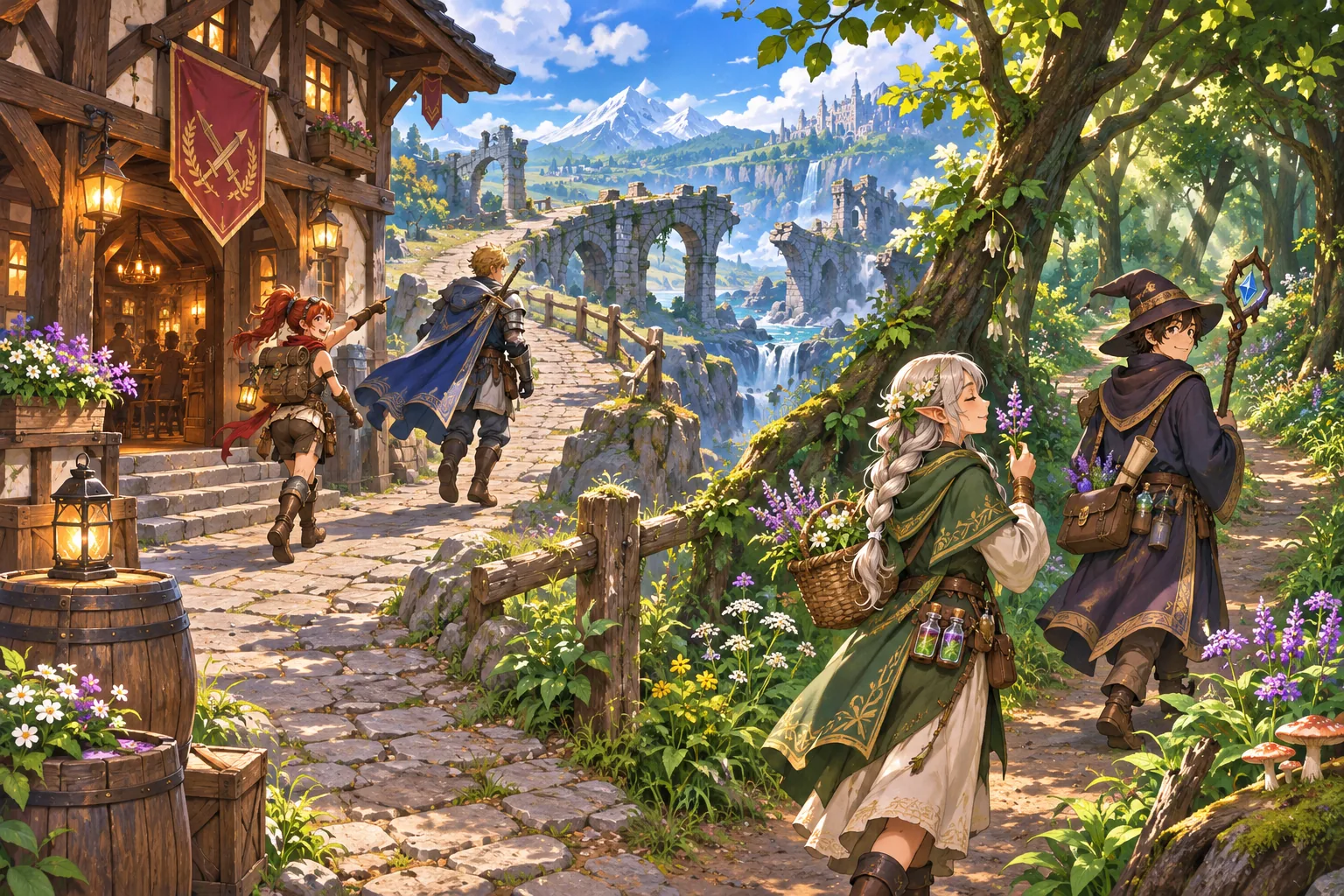
A deterministic scheduler test sends two heroes to the bridge and two to the herb survey on day zero. After day two, the bridge team returns while the survey still has one day left. After day three, the second team returns. The test rejects assigning one hero to both teams and calls mission settlement twice to confirm that rewards are granted once. It checks schedule data only, not party balance, combat, travel animation, saves or player enjoyment.
Use early returns to create the next decision
Show the free roster after each mission resolves. The player can accept a new two-day delivery job with the returned pair while the survey team finishes, or wait to reunite all four. Keep rewards attached to mission IDs, and let the journal explain completed work so players can follow parallel progress without losing the story.
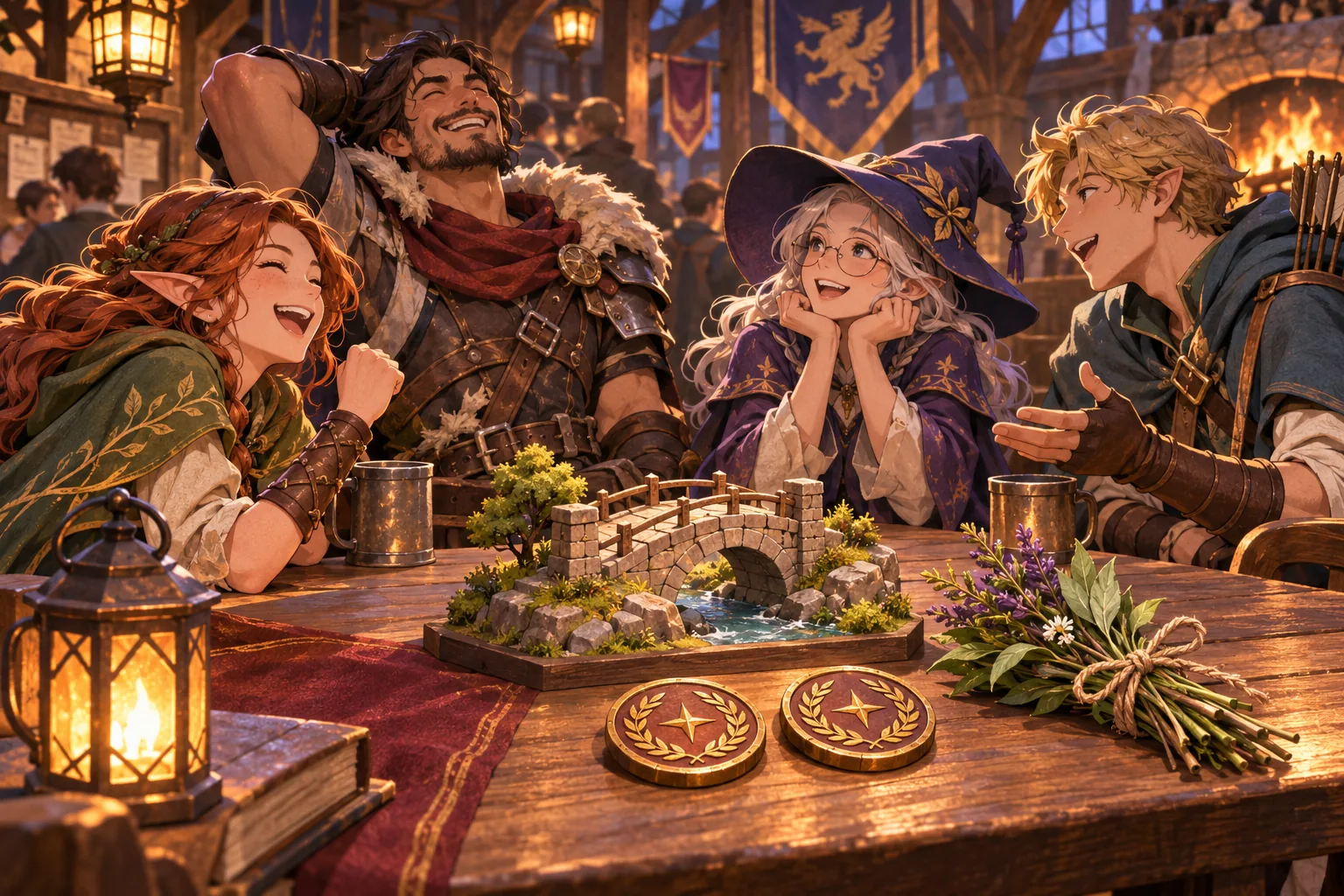
Prototype two missions before a large guild board
Start with four heroes, two two-person teams and jobs of different durations. Test dispatch, one day advancing, the first return, a second job using only free heroes, and final return. Godot Resources can store reusable mission templates; the official docs explain their use as data containers. SEELE AI Game Maker offers a prompt-based entry point for game creation. Neither source verifies Cedar Hall gameplay.
Create an original party RPG guild with four heroes and two simultaneous missions. Assign two heroes to a two-day bridge repair and two to a three-day herb survey. Advance both jobs daily, return the first team on day two and the second on day three. Reject duplicate hero assignments and grant each reward once by mission ID. Do not claim playtest validation.
Start a fictional party RPG in SEELE · Godot Resources documentation
Frequently asked questions
How many missions should advance at once?
Start with two so the player can understand independent progress and roster limits. Advance each active mission once per in-game day, even when another team returns. Add more jobs only after the board makes assigned heroes, completion day and reward clear. This keeps the first scheduler test small and lets players compare waiting against starting another job.
How do I stop heroes from being assigned twice?
Keep a single active assignment per hero and validate the full roster before dispatch. Reject the second mission if any requested hero is already away, and explain who is unavailable. Test one valid parallel dispatch and one overlapping assignment. Do not rely on the interface alone; enforce the rule in the mission scheduler state.
When should mission rewards be granted?
Grant the reward when that mission's own timer reaches zero and its status changes to complete. Record the settlement against a stable mission ID so loading or repeating the completion event cannot pay twice. Test the short and long job returning on different days, then invoke settlement a second time for each completed ID.