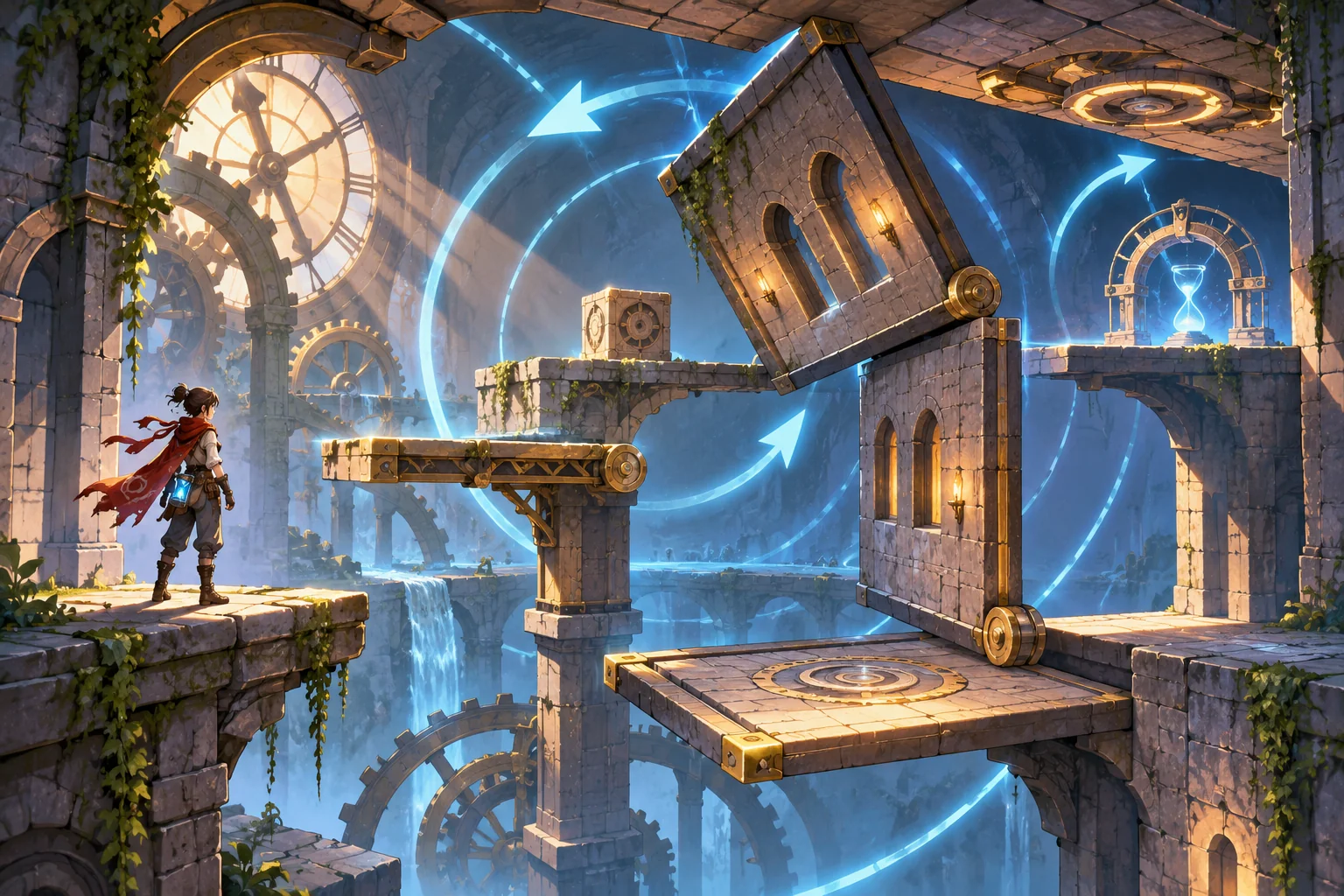
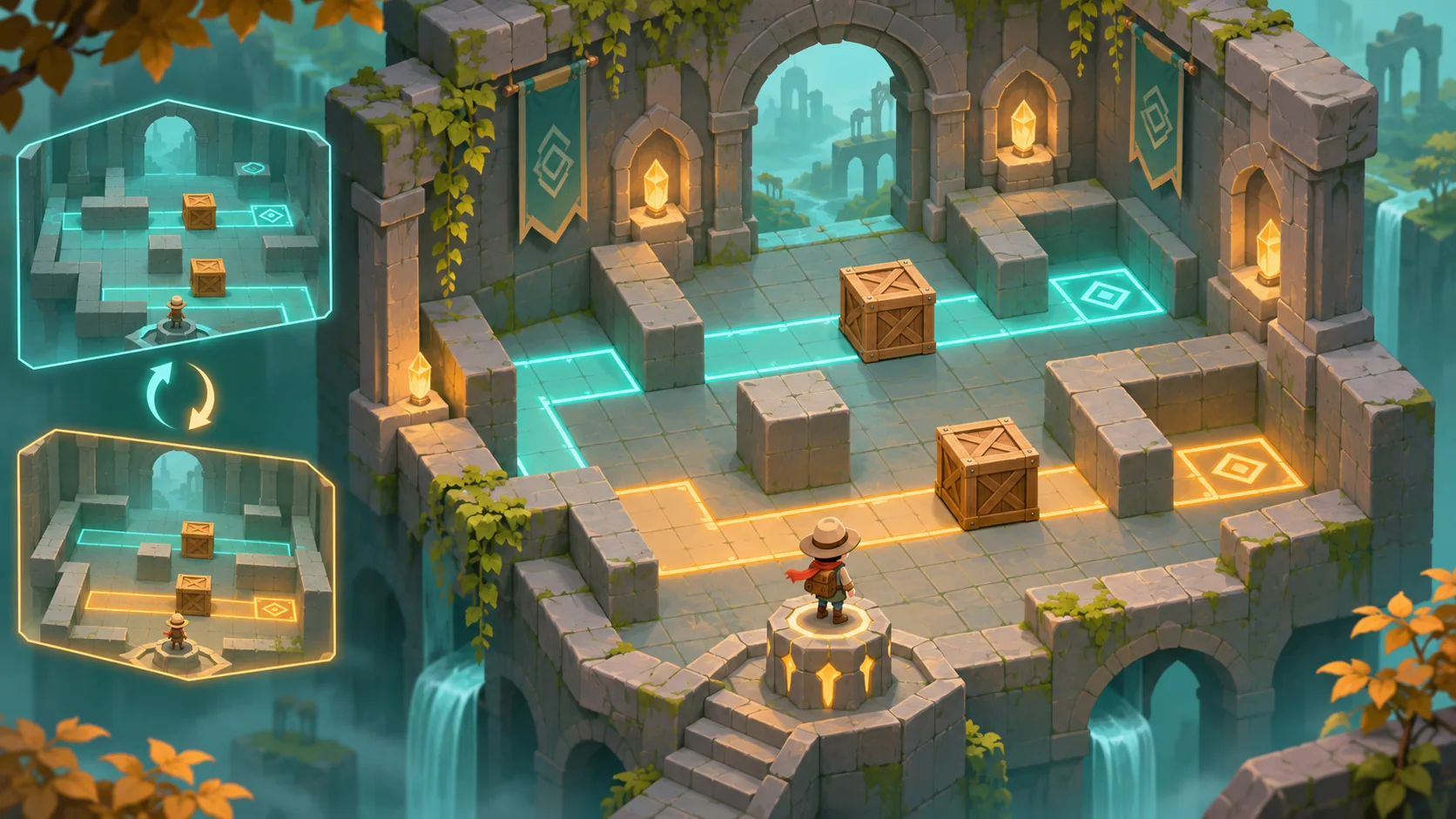
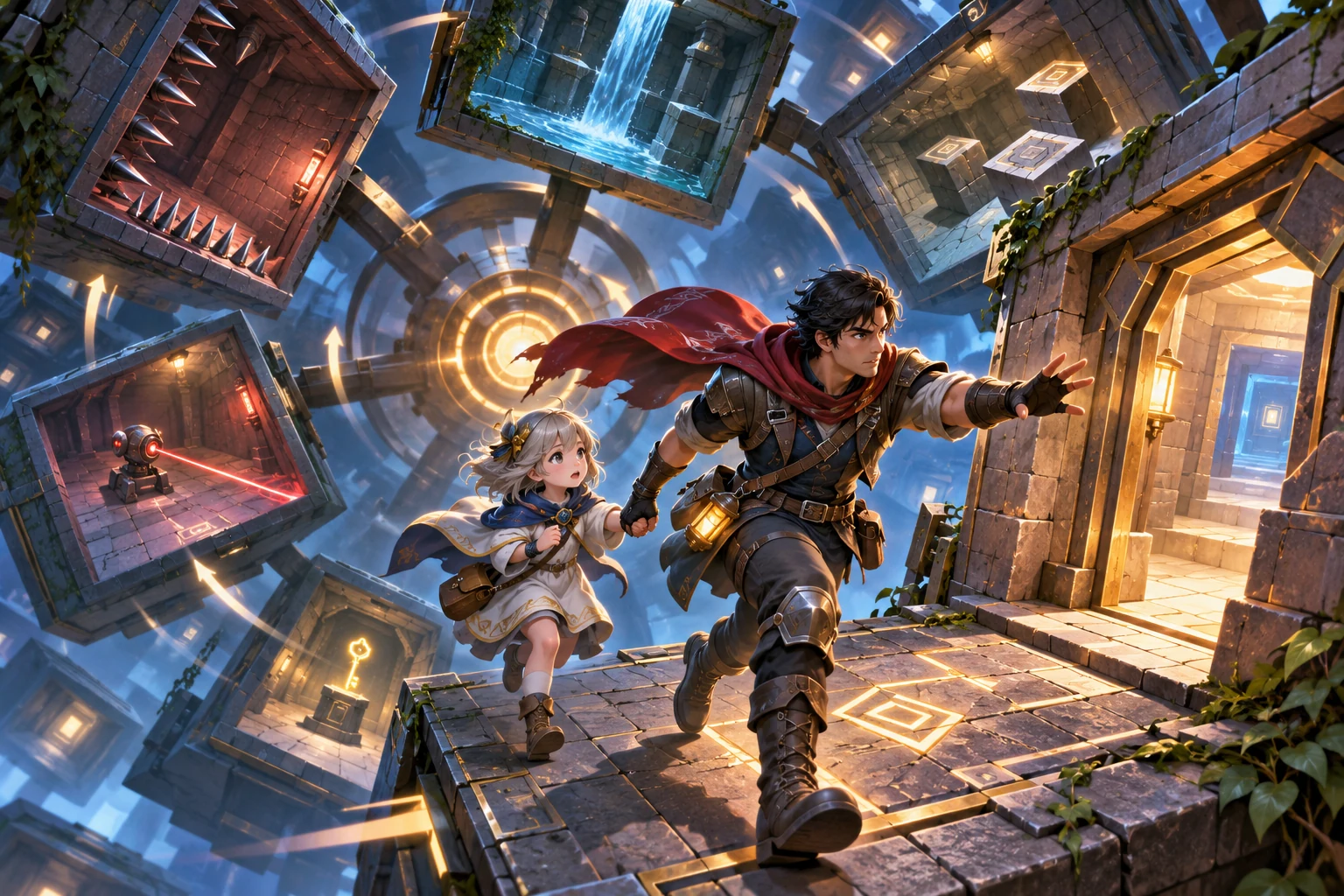
Turn one room around one visible pivot
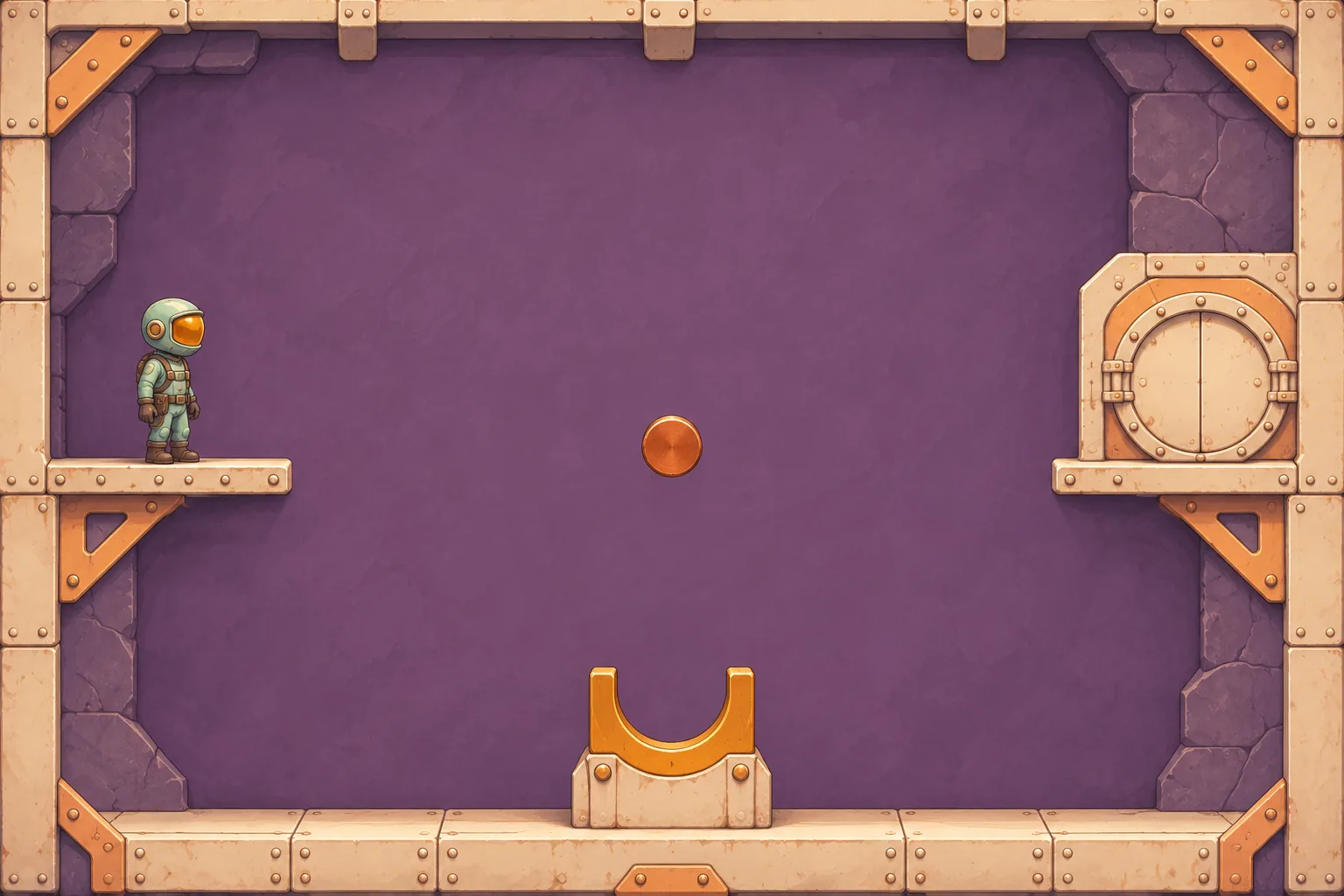
Build a side-view room with one lever, one copper cylinder, one socket, and an exit. When the mechanic pulls the lever, the chamber turns a quarter turn around its center. Keep the camera still and gravity pointing down on screen. After the turn, the cylinder can drop into a socket that was previously on a wall. Make the goal visible before the player touches the lever. The change in the cylinder's path is what solves the puzzle.
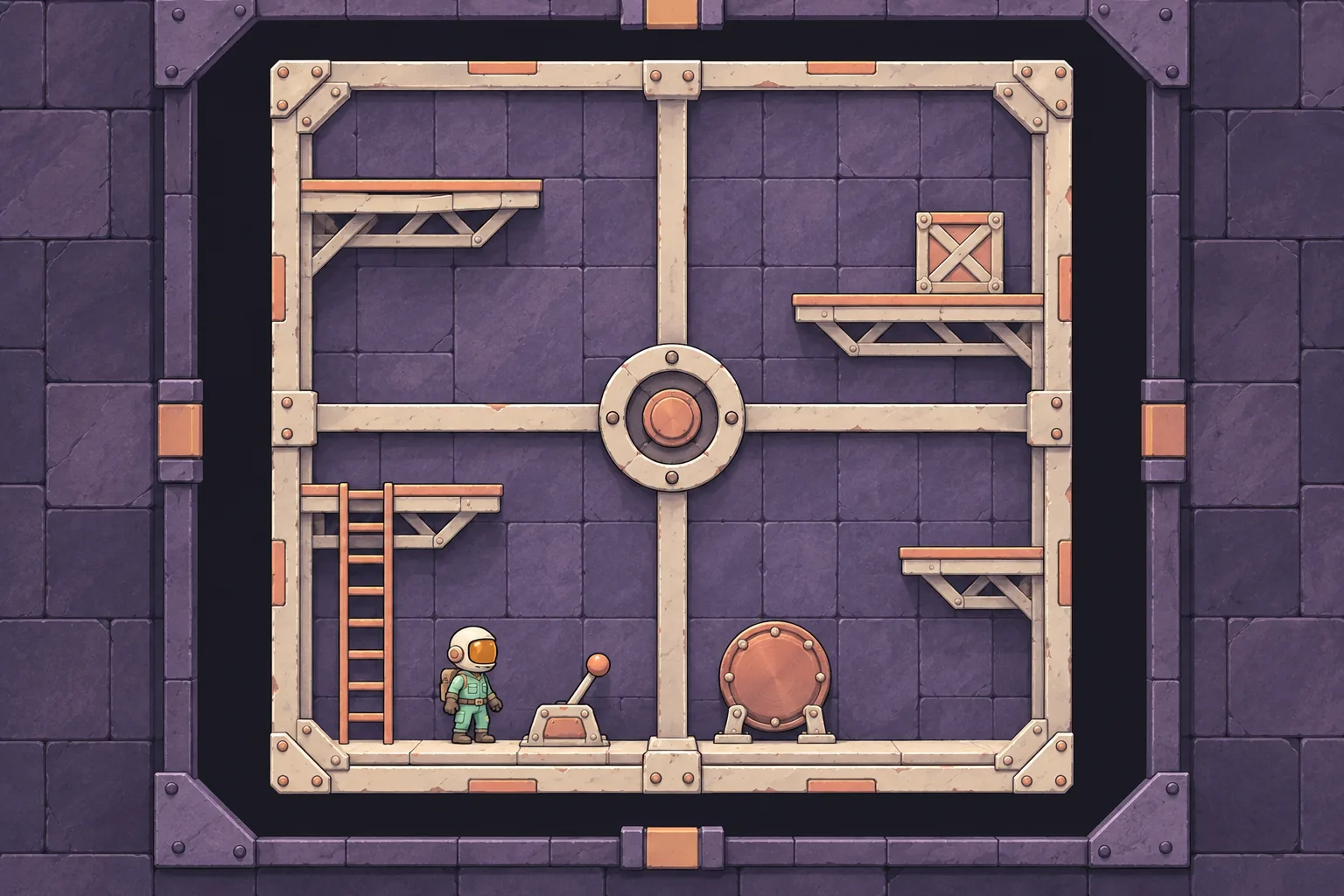
Carry the passengers through a checked turn
Start the turn from a clearly marked staging pad. Save the player and cylinder positions relative to the pivot. Block input and temporarily hold both positions relative to the moving room so they travel with it. Check the space occupied by the rotating frame and both passengers across the full quarter turn. A clear final pose gives no assurance about the arc between the start and end.
If the move is obstructed, leave the lever ready and show which obstruction blocks it. Keep the original positions and velocities. After a successful turn, restore control and let both bodies resume under world gravity. For this first puzzle, release with zero linear velocity so results depend on the new arrangement. In Godot, AnimatableBody2D can move the room geometry and affect other bodies. Add the passenger and clearance rules yourself.
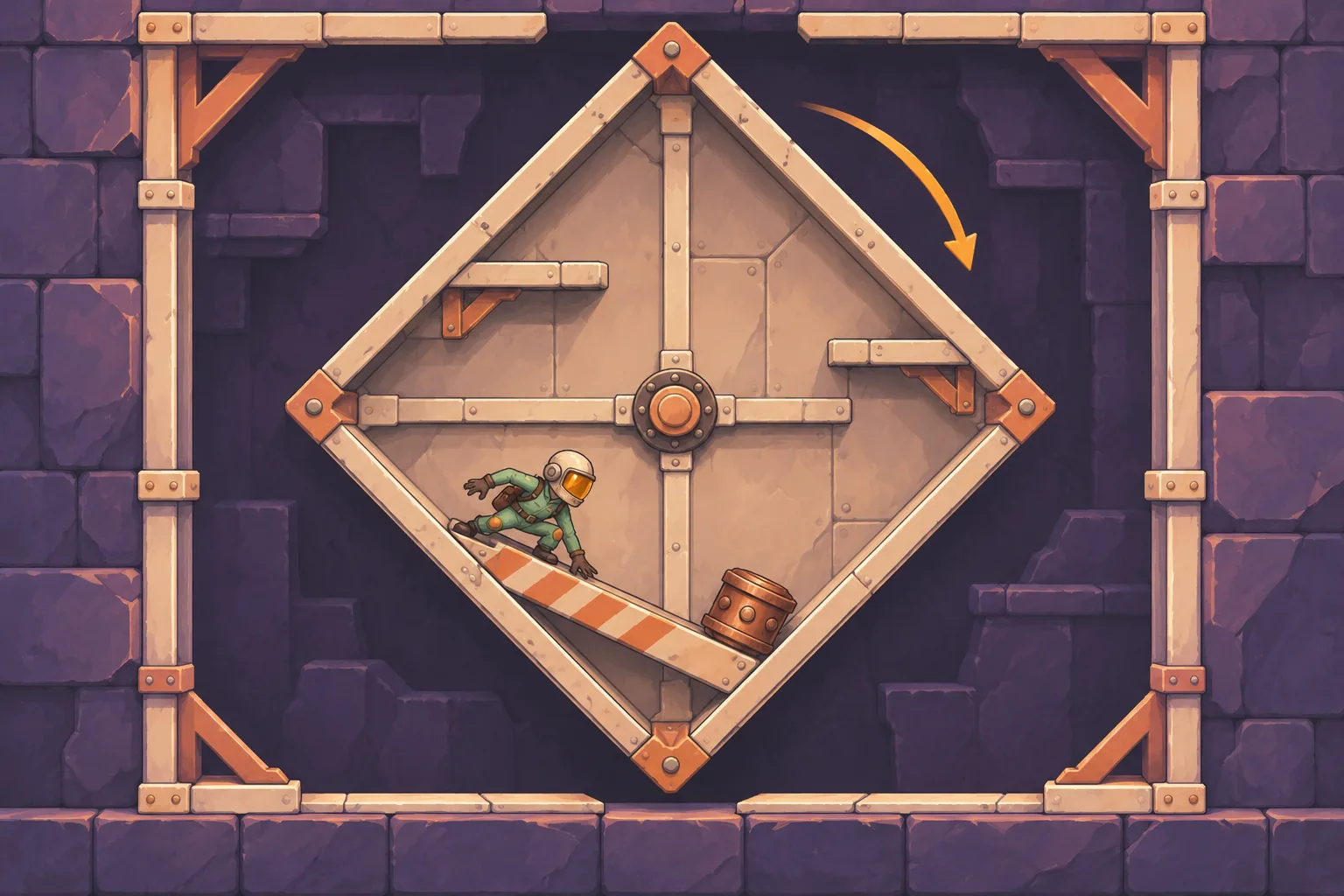
Test the middle of the arc
In a local geometry check for fictional Pivot Works, a round passenger proxy started two units from the pivot. A fixed pillar sat two units from the same pivot at 45 degrees. Both proxies had radius 0.25. The passenger cleared the pillar at the endpoints but hit it halfway through. Moving the allowed start inward to radius 1.3 left a minimum center gap of 0.7, above the required 0.5.
That result covers one pair of circular collision proxies. In your build, check the frame corners and actual player and cylinder shapes as well. Make the socket accept the cylinder only after the turn settles and the cylinder reaches it. A full restart should restore the room angle, lever, both body transforms, and empty socket state together. Try restarting during a turn to catch any delayed door-open event.
Prototype the turn before adding momentum
Tell the AI which objects turn, which stay fixed, and when gravity resumes for the passengers. SEELE AI Game Maker lets you start with a text description and refine the result with follow-up instructions. First verify a successful sweep, a blocked sweep, and an interrupted reset. When those work, try carrying momentum through a turn in a separate room and see how it changes the landing.
Build a fixed-camera 2D room with world gravity down. Add a quarter-turn pivot, lever on a staging pad, one cylinder, socket, and door. Carry the player and cylinder in room-local coordinates during a checked clockwise turn. Refuse the move if the swept shapes collide. After a successful turn, release both at zero linear velocity. Open the door when the settled cylinder enters the socket and reset all puzzle state on restart.
Prototype the rotating room in SEELE · Godot's AnimatableBody2D reference
Frequently asked questions
Why keep the camera upright during the turn?
Keep the camera fixed so players can compare the room against the world and predict where an object will fall. With camera rotation, the direction of the falling cylinder becomes harder to read. Introduce camera effects only after the puzzle reads clearly.
Should I preserve momentum while the room is rotating?
Start with zero velocity at release so the cylinder takes a predictable path and the puzzle can be reproduced. For a later room, add a deliberate release velocity and test several starting positions. Make the flight path visible enough that players can plan around it.
What should resetting the room restore?
Restore the chamber angle, lever readiness, both body transforms and velocities, the socket state, and the exit state together. If reset interrupts a turn, cancel the pending turn before restoring those values. Run the same reset from the start, mid-turn, and after a successful drop.