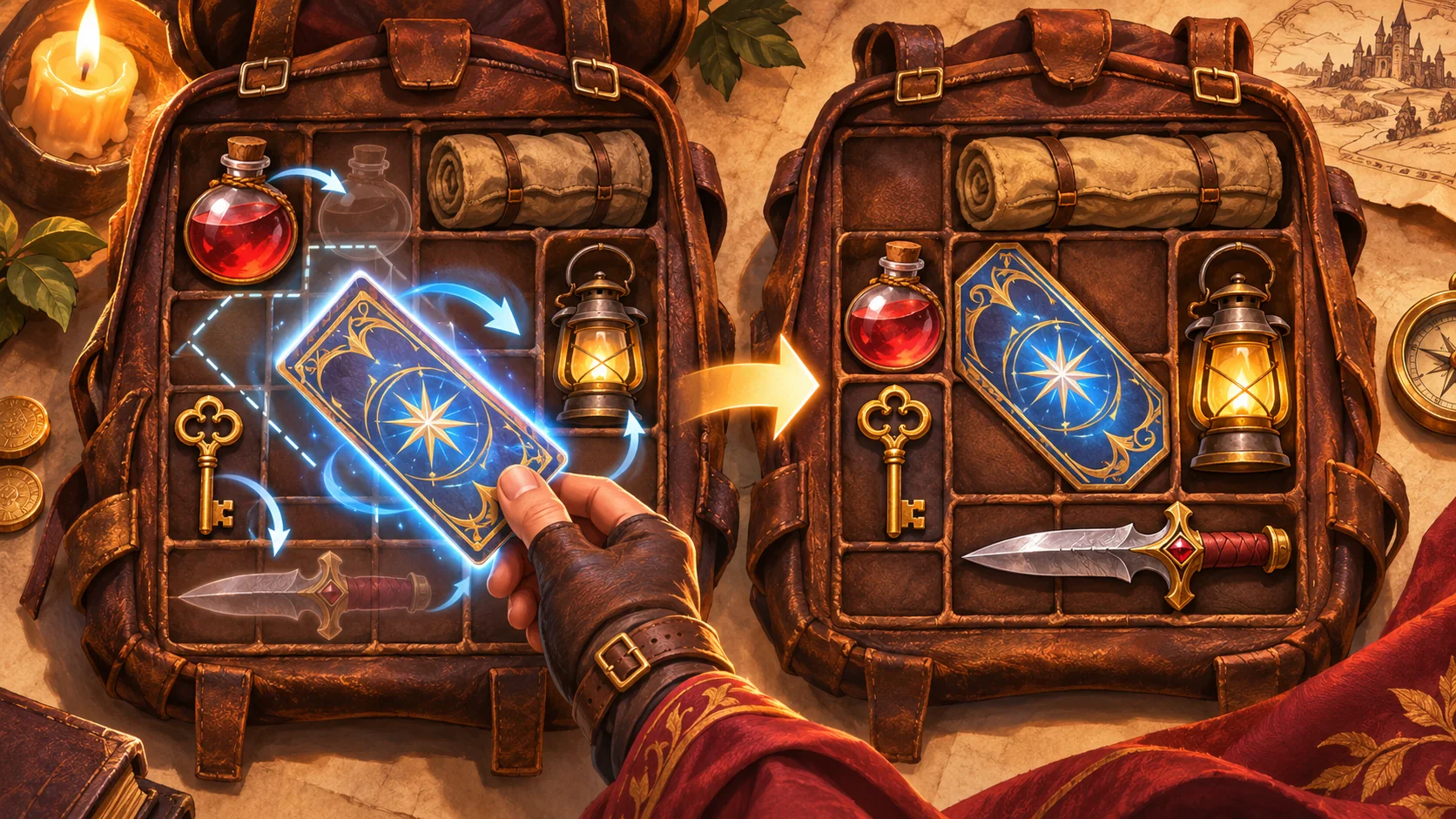
A run begins with one token and a small inventory grid. Drop the token through pegs toward one of three reward lanes. Equipped items occupy grid cells and redirect the token when it passes their column, so arranging the inventory is the main strategy decision.
Make the inventory part of the route
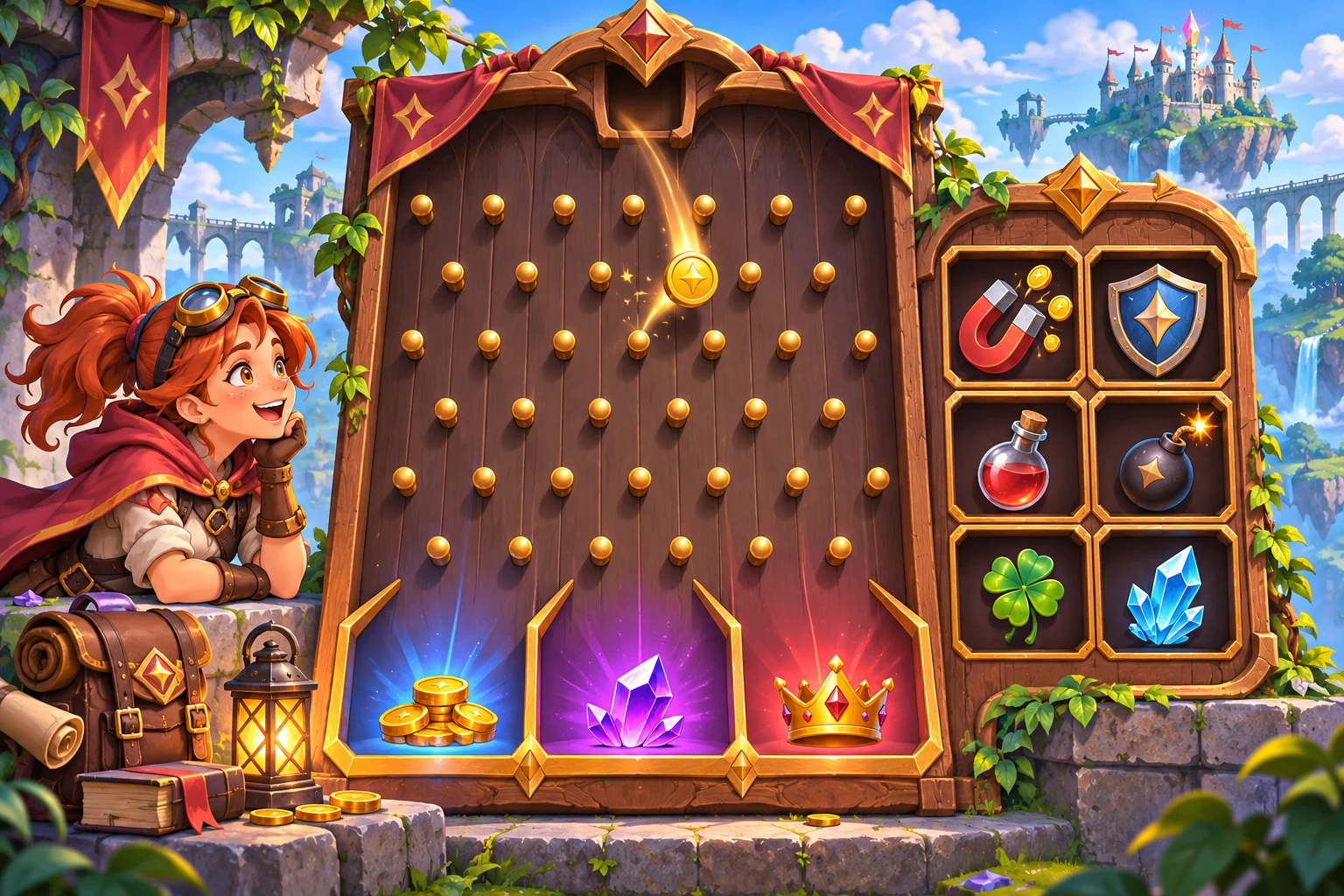
Use a seven-column peg board with three reward lanes: coins, supplies and hazard. The inventory is a two-by-three grid shown beside it. Each equipped item affects one column. A coin magnet nudges a passing token one lane toward coins; a shield redirects it away from a hazard.
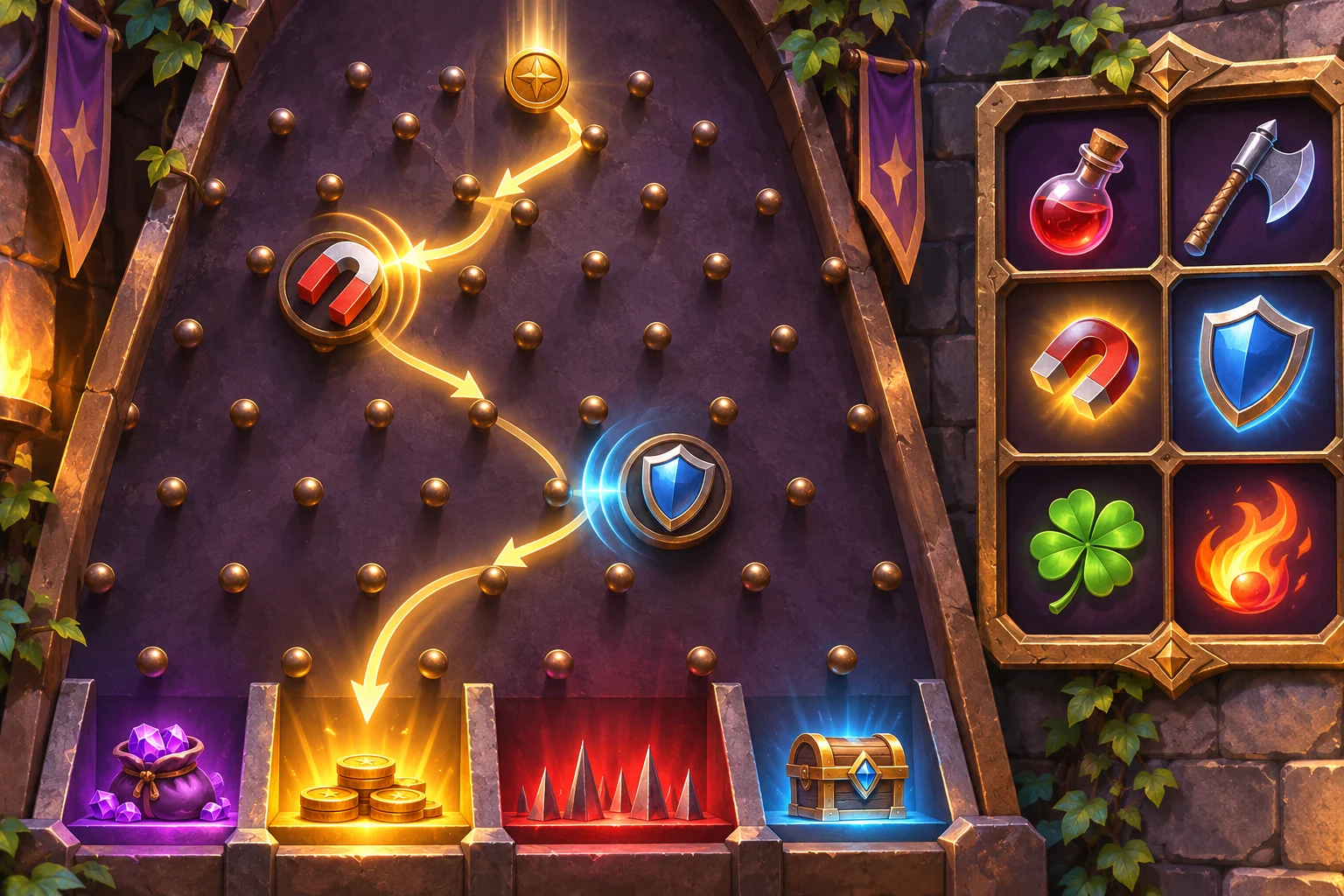
Show the token path one bounce at a time and keep the inventory visible. Do not hide item effects in a separate menu. The player should see how moving an item changes the route before spending the token.
Let item placement change the token path
The player chooses a target lane, places two items, then drops one token. When the token crosses an equipped item's column, apply its redirect before the next peg. Items stay in their slots for the drop and can be rearranged after the reward resolves.
A path preview can show likely redirects without promising a random result. Keep the actual peg sequence deterministic for the first prototype so players can learn how each slot affects the token.
Replay one peg path with two inventory layouts
The deterministic replay uses the same starting column and peg sequence for both layouts. With the coin magnet beside the center column, the token reaches the coin lane. With the shield moved beside the hazard lane, it redirects away from the hazard and reaches supplies instead. The changed reward follows the item placement.
Reset the token, target and peg sequence before each drop. The replay checks the redirect rules and lane result. A future human playtest should check whether the preview helps players plan without making the random feel disappear.
Prompt AI for one inventory-driven Plinko run
Begin with one board, two items and a short run. Add more rows and item combinations only after players can connect grid placement to the resulting lane.
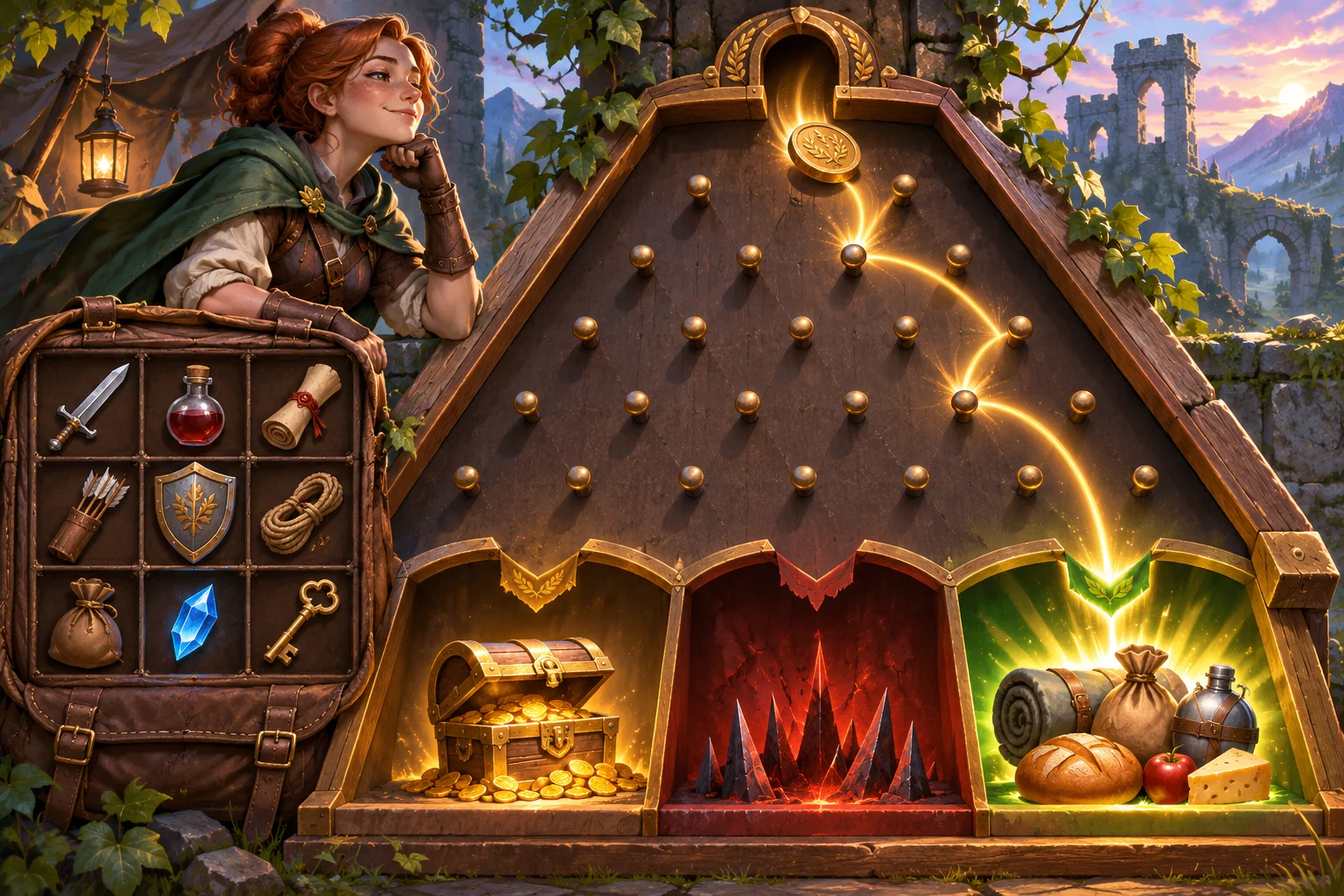
Create a Plinko roguelike with a seven-column peg board and three lanes for coins, supplies and hazard. Show a two-by-three inventory grid beside the board. A coin magnet redirects a passing token one lane toward coins; a shield redirects it away from hazard. Let the player choose a target, equip two items, drop one token and rearrange after the reward. Preview the route, show the resolved lane and add reset.
SEELE's free game maker describes starting from a text prompt and refining a first version with follow-up requests. Use this run to inspect inventory redirects and reward lanes before adding item combinations.
Start the inventory-board Plinko prototype in SEELE
Frequently asked questions
Why make the inventory the board instead of a separate menu?
When inventory cells affect the token's route, each placement becomes a visible strategy choice. Players can connect a slot to a lane outcome instead of reading a list of passive bonuses. Keep the grid beside the peg board so the cause of each redirect stays clear.
Should the token path be random?
A later run can vary peg outcomes, but begin with a repeatable sequence. That lets players learn how item placement redirects the token and gives you a stable comparison. Add randomness after the inventory rule is understandable, and show probability rather than guaranteeing a lane.
How can I tell whether item placement matters?
Replay the same starting column and peg sequence with two item layouts. Compare the resulting lane and reward. If both layouts resolve identically, move an item or change its redirect rule until the player can see why a placement affects the route.