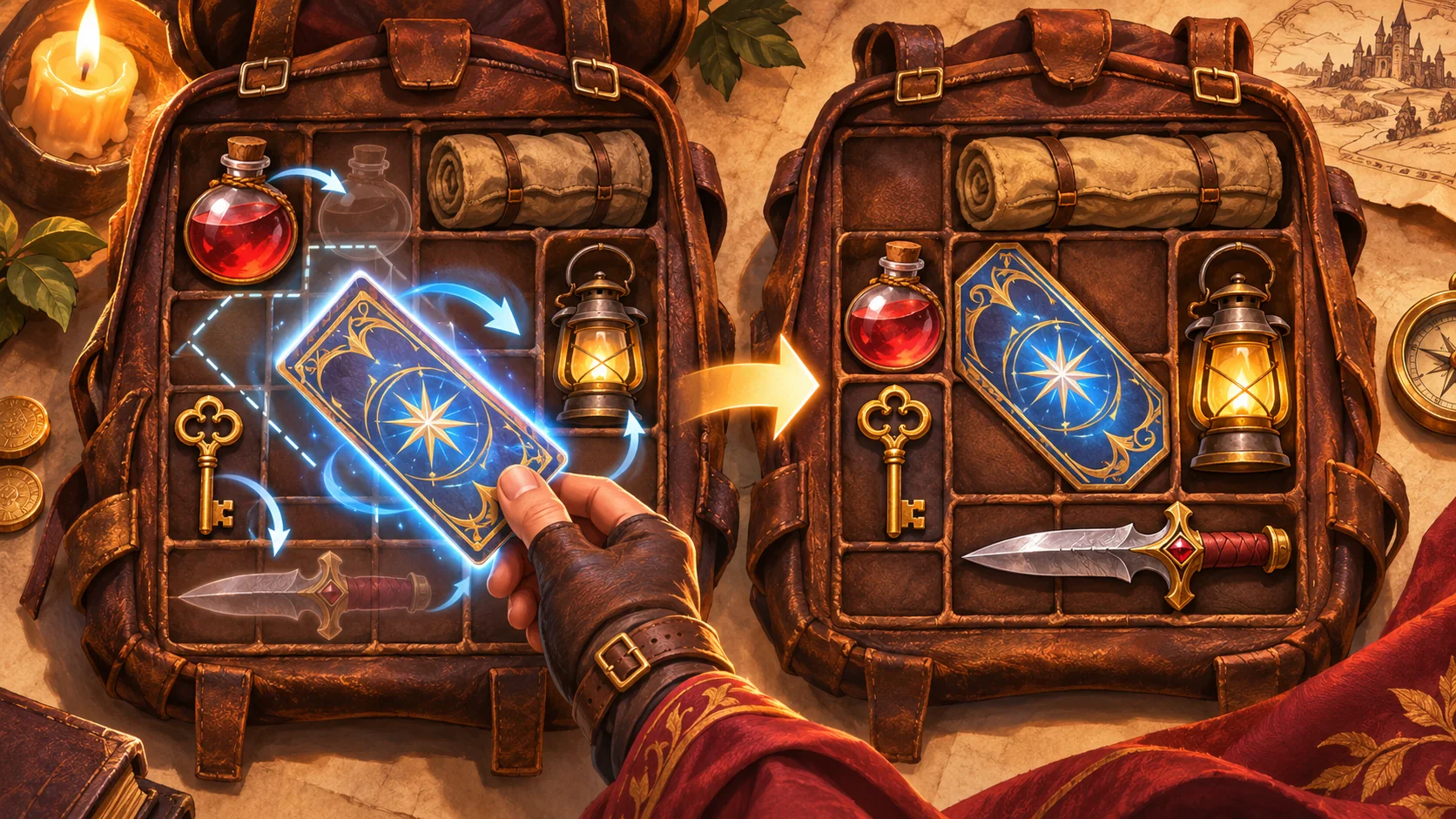
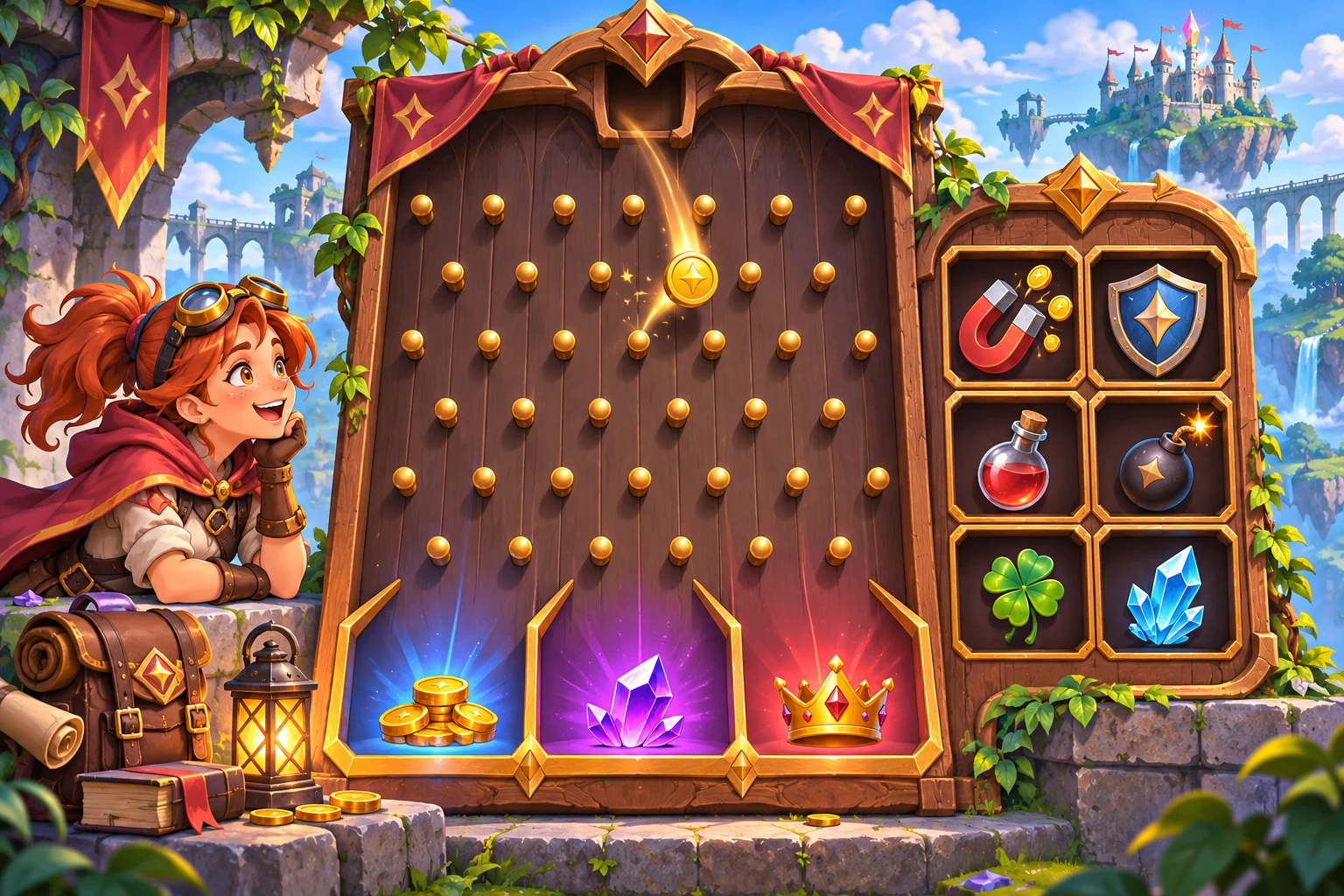
Brin is a scout entering a wind-cut pass with a 3×2 pack and a fixed base deck. A Wind Harness takes two adjacent cells. When equipped, it adds two Crosswind cards to Brin's deck; those cards let the scout slip past a gust without spending a ration. The equipment choice changes both the pack layout and the actions available in the next encounter.
That creates a linked inventory and deck puzzle. Stowing the harness leaves room for two supply flasks but keeps Crosswind out of the deck. Equipping it adds movement options while occupying valuable space. A clear prototype should show occupied cells, current deck composition, draw and discard piles, and the ration count together.
Connect pack space to the character's deck
Start with a small grid rather than a long item list. Brin's pack has three columns and two rows. A supply flask occupies one cell; the Wind Harness spans two adjacent cells and must be equipped before the pass. Show a placement preview so players can see the two spaces it will consume and which items must be moved or left behind.
Keep the base deck visible: four Step cards, two Guard cards and two Exhaust cards. Equipping the harness adds two Crosswind cards to the available deck. Stowing it removes those cards. The deck panel updates immediately when the equipment state changes, so the connection between inventory and card access is easy to inspect.
Make gear cards change a specific encounter decision
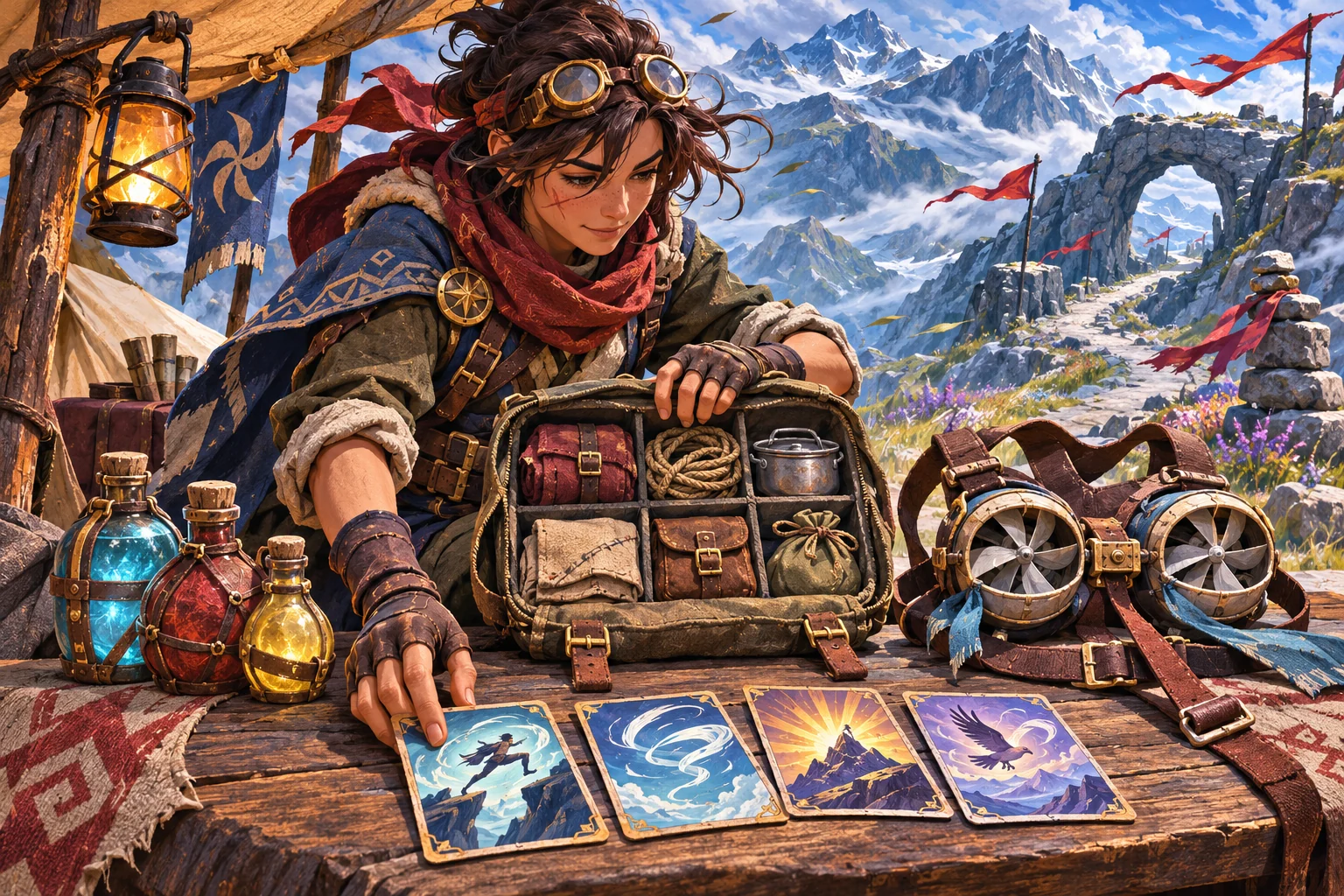
Define Crosswind precisely. It lets Brin cross the gust lane without losing a ration, then goes to the discard pile like other played cards. Without the harness, Brin can use Step to cross the lane but spends one ration to brace against the gust. The card changes a resource outcome, not just a damage number.
State how cards enter the deck, when the deck is shuffled and how the game treats a stowed item. For a small prototype, rebuilding the deck at the camp after each equip change is easier to understand than changing it mid-encounter. Show the equipped item, occupied cells and deck count on one screen.

Replay the same pass with the harness stowed and equipped
Reset Brin with the same route, gust hazard, seed, base deck and starting inventory. In the first run, leave the Wind Harness stowed and carry two flasks in the open cells. The deck has eight base cards and no Crosswind. Brin plays Step at the gust and loses one ration while bracing.
Reset again and equip the harness in two adjacent cells. Move the flasks out of the pack; the deck now contains two Crosswind cards. Use one at the same gust and keep the ration. Record pack occupancy, deck list, card played and supplies at the exit. The tradeoff is visible: a safer crossing in exchange for two cells that could have carried extra supplies.

Prompt a first run with one gear-driven deck change
Begin with one character, one six-cell pack, a short route and one hazard. Ask for an explicit base deck, item footprint, equipment transition, new card and resource consequence. Add more gear only after players can explain why the deck changed and what space they gave up.
Create a compact inventory-management roguelike starring Brin, a scout with a 3×2 pack and a fixed base deck: four Step, two Guard and two Exhaust cards. A Wind Harness occupies two adjacent pack cells. When equipped, it adds two Crosswind cards to Brin's deck; Crosswind crosses a gust lane without losing a ration. Without it, Step crosses but costs one ration to brace. Show pack occupancy, deck list, draw/discard piles and supplies. Include equip and stow actions, a reset, and a same-seed replay of the same gust hazard with the harness stowed versus equipped. Stowed harness leaves room for two supply flasks.
SEELE's free game maker describes starting from a text prompt and refining a first version through follow-up requests. Use that general workflow to inspect pack placement, deck updates and the gust result before adding more item types.
Start the gear-driven inventory roguelike in SEELE
Frequently asked questions
How can equipment change a character's deck?
Give an item a clear deck rule tied to its equipped state. Brin's Wind Harness occupies two pack cells and adds two Crosswind cards while equipped; stowing it removes them. Show the deck update immediately so players can connect the item and the new action choices.
How do I keep an inventory-deck system understandable?
Display the pack grid, equipped items and deck list together. State each item's footprint and which cards it adds or removes. Include draw and discard behavior, then test one route hazard so the player can see how the changed deck affects a resource or decision.
What should the first gear comparison measure?
Use the same character, route, seed, hazard and starting inventory, changing only whether the harness is equipped. Record occupied cells, cards available, the card played and supplies at the exit. The player should see both the benefit and the capacity cost.