Introduction
A preproduction concept game is a small playable experiment that helps a studio compare creative directions before committing to a larger production plan. For a small studio, it can make a core interaction, visual tone or pacing choice easier to discuss. It is a decision aid, not proof that a concept will attract players or fit a budget.
This guide uses Ashlight, a fictional exploration-and-puzzle concept. Its creative directions and prototype are invented; no studio, build or audience test is represented.
Frame the decision before building
Choose the question the concept must help the team answer. Is the uncertainty about the core loop, the mood, the player’s first goal or the relationship between mechanics? Keep one primary decision in scope and write down what a useful prototype could reveal. Avoid turning the concept build into a miniature production version.
Prompt 1 — preproduction decision brief
Write a brief for a fictional small studio exploring Ashlight. State the decision, core uncertainty, intended player experience, prototype duration, evidence needed, constraints and explicit exclusions. Mark all outcomes as unknown until a prototype is built and reviewed.
Define what counts as a decision: select a direction, revise a mechanic, or run another experiment. This prevents an early prototype from being judged by polish it was not meant to deliver.
Compare a few distinct creative directions
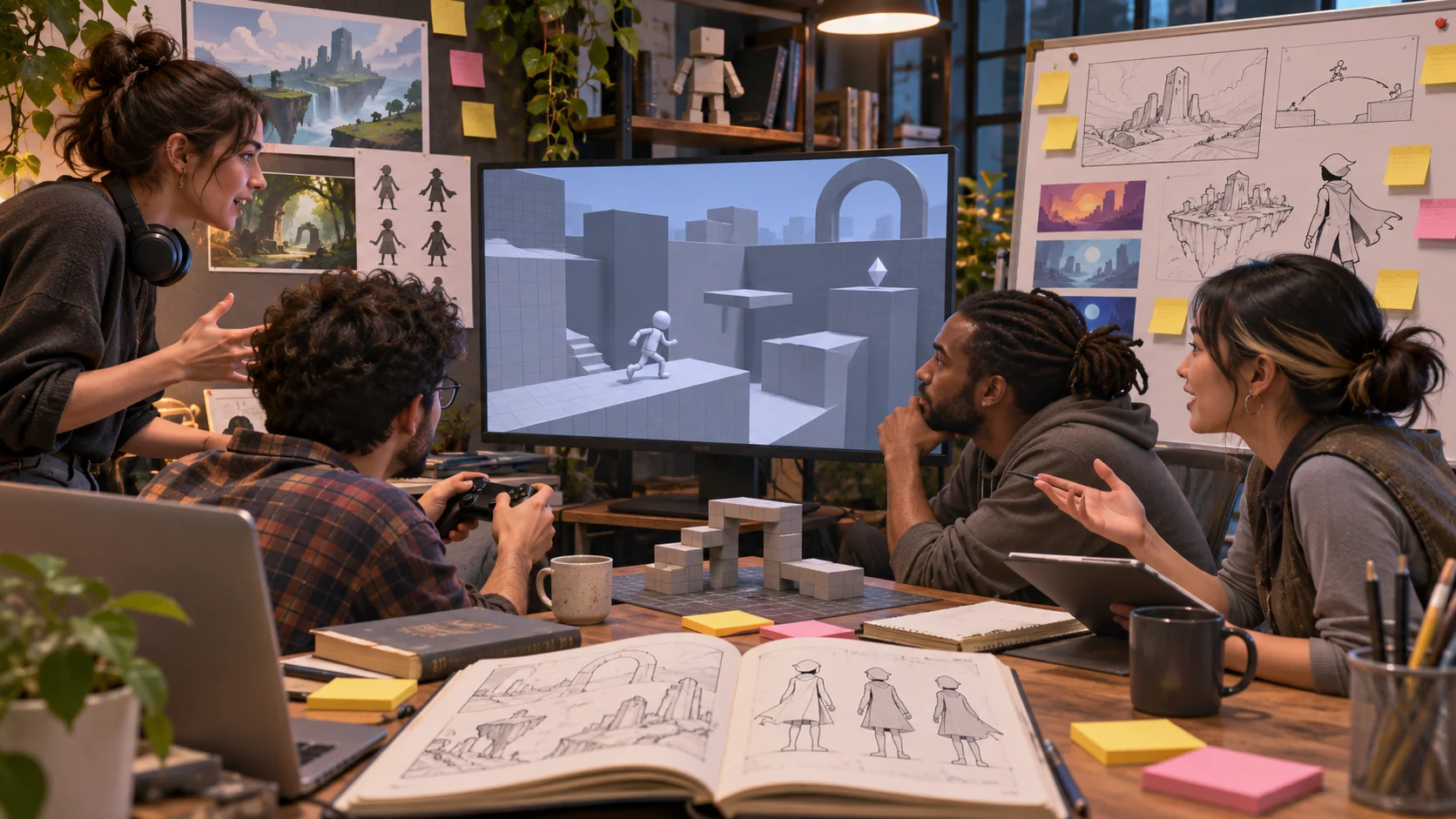
Create two or three materially different options. For Ashlight, the team might compare quiet exploration, tactile room puzzles and cooperative light-routing. Describe each in terms of player action and emotional tone rather than mood words alone. A direction should be distinct enough that the prototype can surface a real tradeoff.
Prompt 2 — direction cards
Draft three Ashlight direction cards: quiet exploration, tactile solo puzzles and cooperative light-routing. For each define player fantasy, core action, one prototype slice, production risk and the question the team should answer. Do not rank them without evidence.
| Direction | First playable slice | Decision question |
|---|---|---|
| Quiet exploration | Move through one compact space and inspect a landmark | Is discovery itself engaging enough to guide the loop? |
| Tactile puzzle | Rotate and place one light-reflecting object | Is the interaction understandable and satisfying to repeat? |
| Cooperative routing | Two players align a beam through simple objects | Does collaboration add value worth its technical cost? |
These are fictional hypotheses, not findings about player preference or feasibility.
Build the smallest experiment

Select the uncertainty that matters most and create only what is needed to explore it. Use placeholder art if it communicates the action; label it as placeholder. Keep a short decision log with the hypothesis, build version, observation and next step. If the work is static, do not describe it as a playable prototype.
Prompt 3 — prototype scope
Scope a short Ashlight prototype for one direction. List the playable space, inputs, feedback, success or stopping condition, placeholder assets, required implementation and excluded features. Define how the team will record build version and observations.
The team can use a paper sketch, graybox or interactive build depending on the question. Match the fidelity to the uncertainty instead of polishing every element by default.
Use an editable concept template
Keep the direction, prototype hypothesis, implementation status and decision record together. The JSON below is a planning template. It does not establish feasibility or audience demand.
{
  "conceptName": "Ashlight — fictional preproduction exploration",
  "status": "concept example; no studio build or test",
  "decisionToMake": "Which core interaction should be explored next?",
  "directions": ["quiet exploration", "tactile solo puzzle", "cooperative light-routing"],
  "selectedExperiment": {"direction":"pending","hypothesis":"pending","sliceDurationMinutes":5},
  "prototype": {"buildVersion":null,"controls":[],"placeholderAssets":true,"implemented":false},
  "observationPlan": ["record task behavior", "note confusion", "separate observation from interpretation"],
  "decisionLog": [{"version":"concept-0","observation":"none collected","nextStep":"choose a testable slice"}],
  "evidenceBoundary": "fictional example; no feasibility or market claim"
}
Track dependencies and risks openly. A small concept can still reveal technical unknowns such as camera behavior or multiplayer synchronization, but only implementation work can verify them.
Review and iterate without overclaiming
After a playable slice exists, ask a small group of reviewers to complete a defined task and explain what they think is happening. Record the context, build and direct observations. Do not treat a few internal reactions as representative market evidence. Separate “the control did not respond” from interpretations such as “the mechanic is boring.”
Prompt 4 — review plan
Create a future review plan for an Ashlight concept prototype. Define the task, build version, observation notes, consent, stopping rule and limitations. Leave findings blank until a real review occurs.
For a fictional customization, imagine taking the quiet-exploration direction and replacing its landmark reveal with a small light-routing puzzle. Keep the setting and camera constant, and change only the interaction. This demonstrates an editable direction change; it is not a tested improvement.
Prompt 5 — fictional direction adaptation
Adapt the Ashlight quiet-exploration card into a single light-routing puzzle. Keep setting, camera and session length constant. Identify what changed, the next uncertainty and what must be implemented before conclusions. Label this as a fictional design scenario.
Prompt 6 — studio decision review
Review the concept package for a clear decision, distinct directions, scoped experiment, placeholder labeling, technical risks, build-version tracking, evidence limits and next step. Mark each item supported, missing or not tested. Do not claim player validation.
Hand off the concept clearly
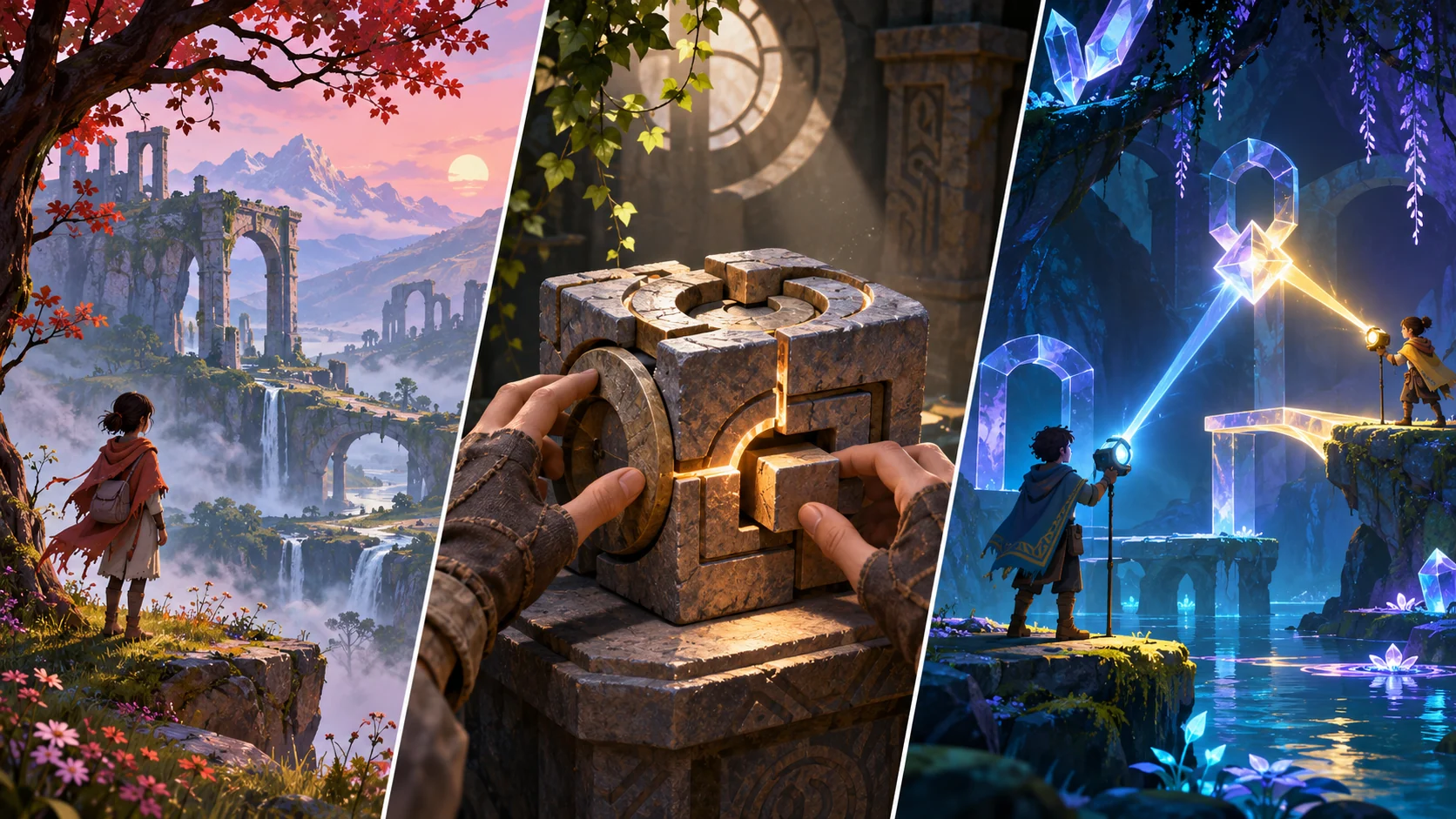
A preproduction handoff should include the question, prototype link or capture, controls, build version, what the team learned, what remains unknown and the next experiment. If no playable build exists, identify the artifact as a concept deck or static mockup. Keep staffing, schedule and budget assumptions explicit rather than implying the concept proves production cost.
Prompt 7 — handoff summary
Draft a one-page handoff for a small-studio concept experiment. Include decision question, chosen direction, build status, version, observations, technical risks, budget assumptions, unresolved questions and next experiment. Distinguish facts from estimates and leave unverified claims pending.
Conclusion
A preproduction concept game for small studios should reduce a specific uncertainty through the smallest useful prototype. Compare distinct directions, document implementation status and keep observations separate from interpretations. Ashlight is fictional; no build, studio review or audience test was conducted. Use real project evidence before making claims about feasibility, demand, cost or production readiness.
You can shape a small concept in the Free AI game maker, then compare it with the editable decision template.
FAQ
What is a preproduction concept game?
It is a small prototype or playable experiment used to explore a creative or technical question before committing to larger production.
How many directions should a studio compare?
A few distinct options are usually easier to evaluate than a long list. Each should describe a different player action or experience.
Does a concept prototype prove market demand?
No. A prototype can help a team inspect an idea, but market demand requires appropriate evidence beyond the concept build.
Should a preproduction prototype be polished?
Only enough to answer its question. The right fidelity depends on what the team needs to learn and what is already uncertain.
What should a small studio record after a prototype review?
Record the build version, task, context, direct observations, interpretations, limitations and next experiment.