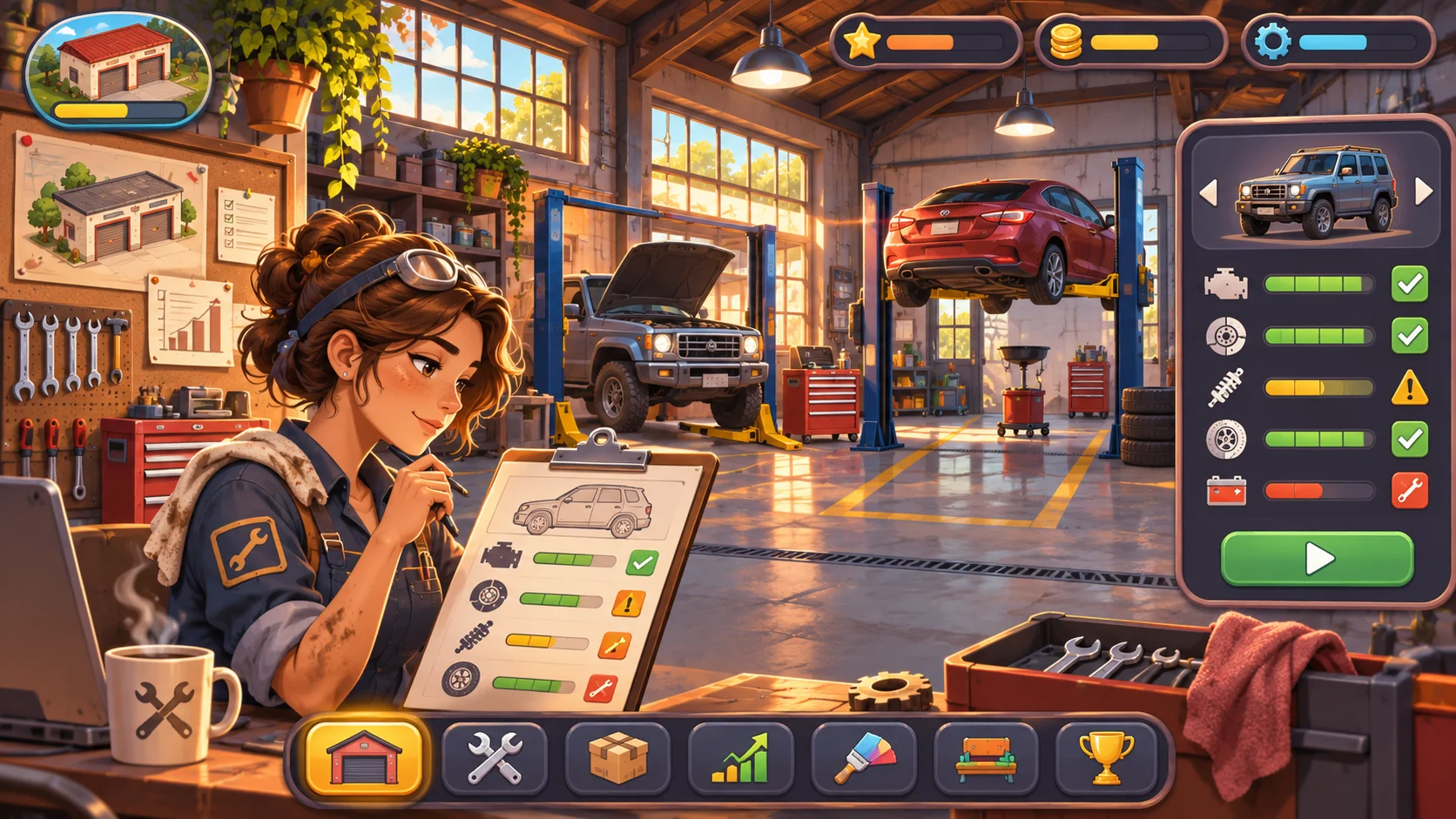
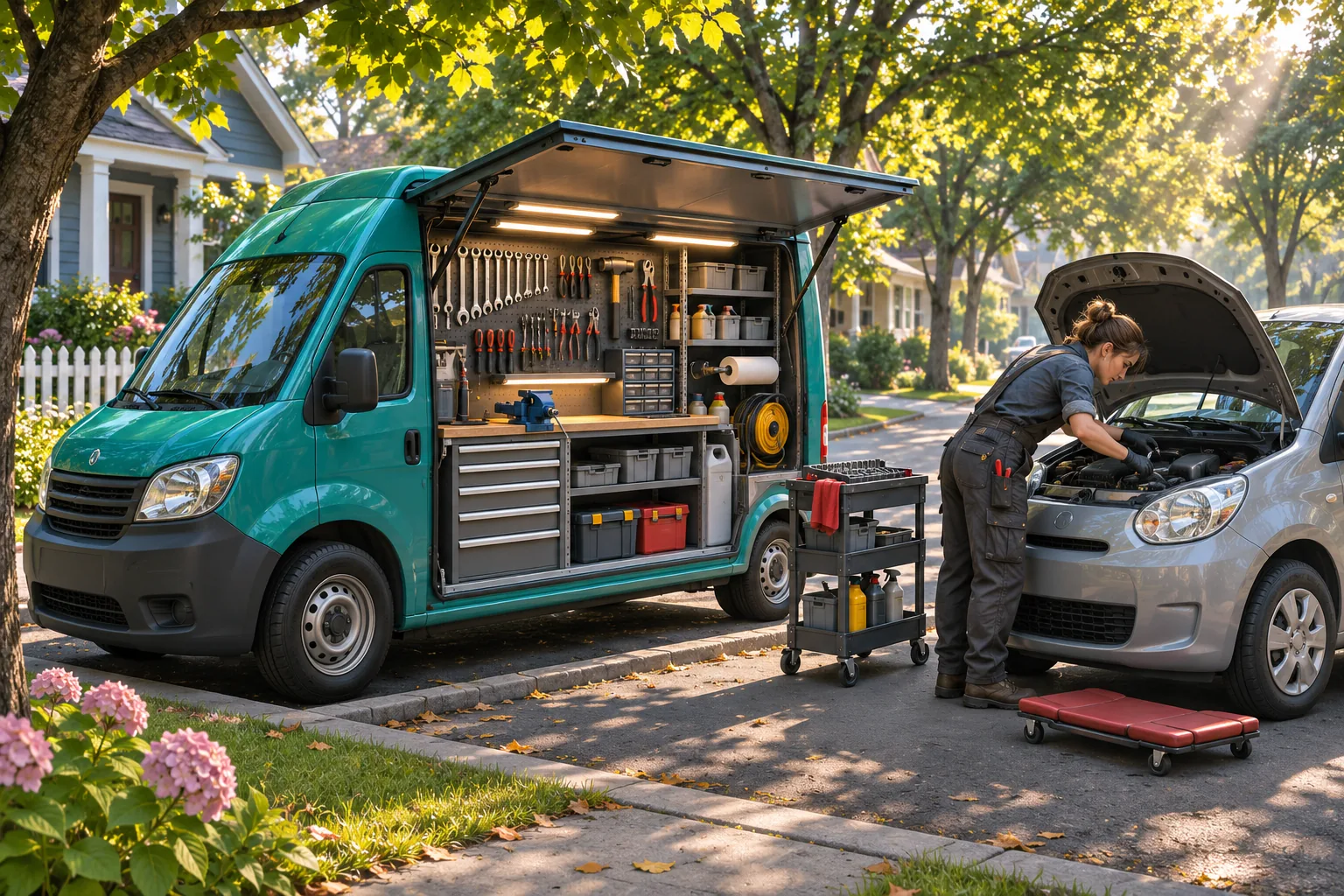
In fictional Southbank, the player manages apartments from a van that doubles as a workshop. Residents report repairs, and the player has three time blocks each day to drive and work. The van can carry enough parts for several jobs, but every move between districts uses time. Choosing where to park therefore affects both the repair queue and the supplies still on board.
Turn the van into a moving office and repair shop
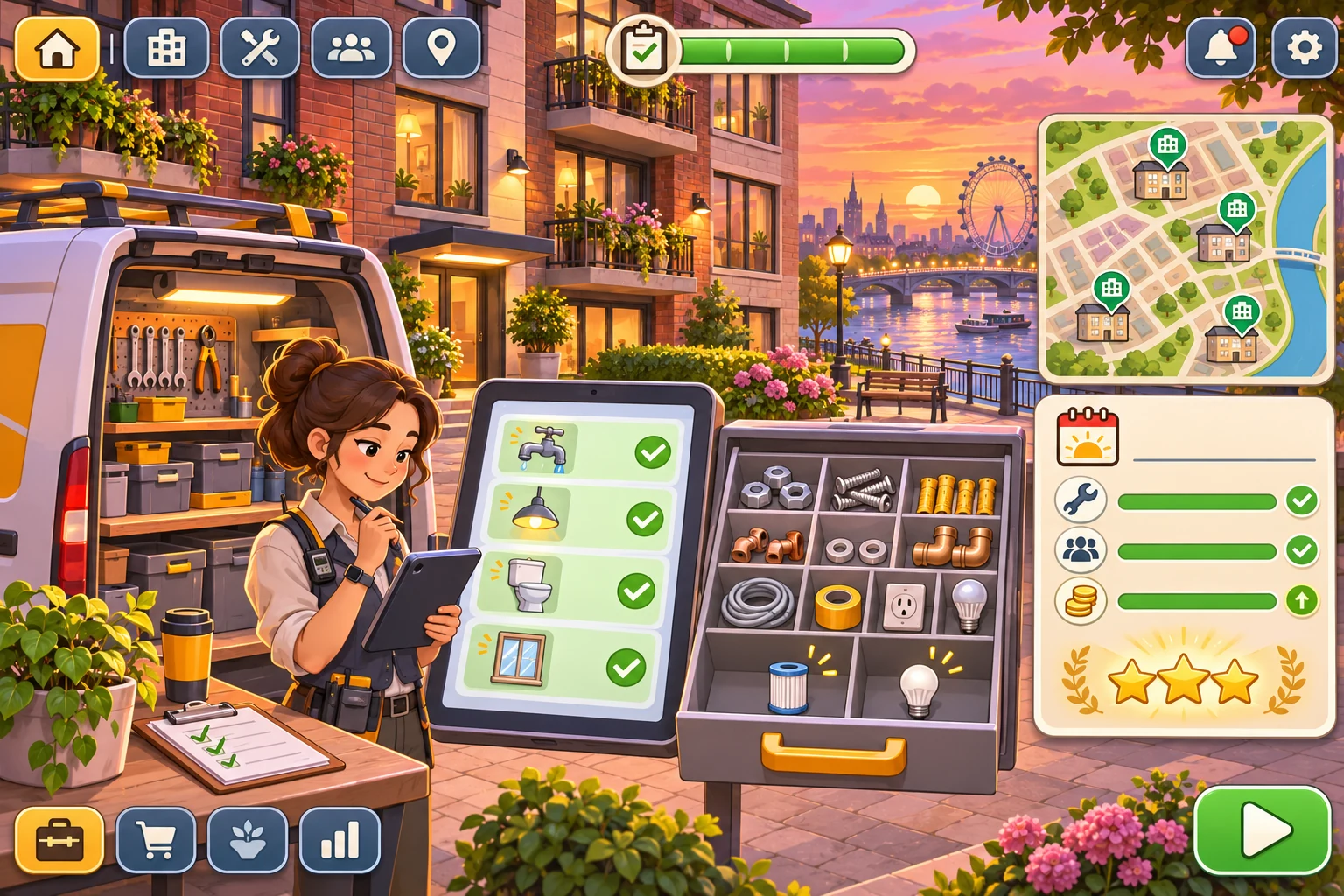
Give the van a compact workbench, parts drawers, a dispatch board, and a resident list. Each repair card shows the building, district, urgency, required part, and one work block. The player chooses whether to accept a request today or leave it in the queue. At the end of a job, update the tenant’s status and the parts drawer so the business loop stays visible.
Separate authored repair tickets from the current van state. In Godot, a Resource can hold fixed ticket data such as district, part, and work estimate. The run state tracks the van’s current district, time blocks, completed jobs, and remaining parts. This makes it easier to change a request without silently changing the vehicle inventory.

Compare nearest-address dispatch with district batching
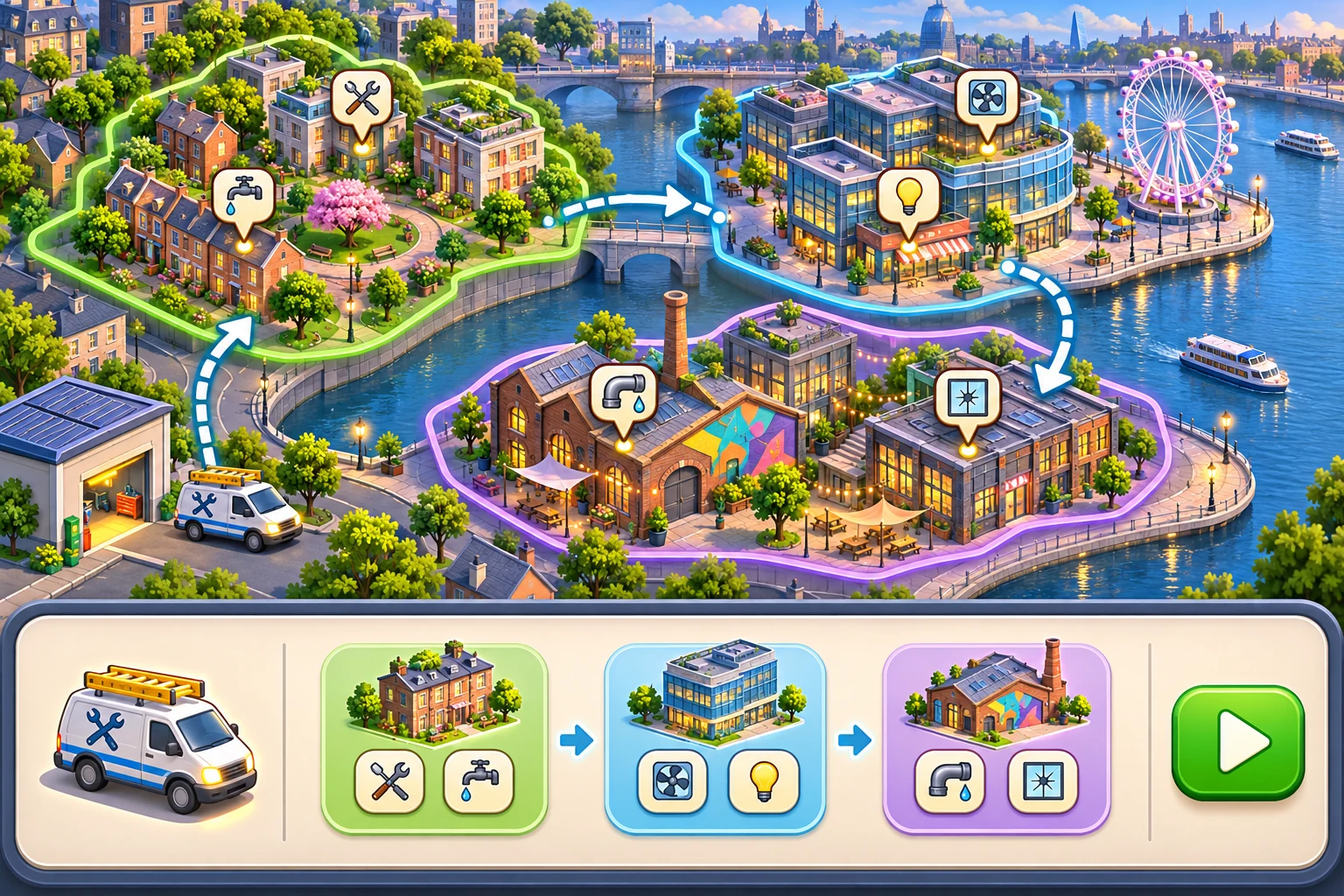
Use three districts—Canal, Market, and Hill—with two one-block repair requests each. Start each day at the yard, where moving to the first district uses one time block. Each district change also takes one block. Give the van three blocks per day for three days and six matching spare parts. The nearest-first baseline follows the fixed request order Canal, Market, Hill, Canal, Market, Hill. The revised plan groups both requests from the same district before moving on, and carries unused parts across days.
Keep urgency and work time fixed so route order is the only scheduling change. Display the travel block on the map before the player commits. Grouping is useful when residents can wait for a same-district visit; if an urgent repair cannot wait, give it a visible override and count the travel it adds.
Replay the same jobs and count time and parts
In the local three-day fixture, nearest-first dispatch uses travel blocks between every address. The van reaches its nine-block limit after four repairs; two requests are late, and two spare parts remain in the drawers. The grouped route uses one move into each district, then completes both repairs before leaving. All six requests finish within nine blocks, with no late requests and no parts remaining.
Report completed requests, late requests, travel blocks, and remaining parts separately. The local result measures only this schedule and does not claim that district batching always wins. A later version can add emergency priority, parking limits, or part restocking after the first route rule is easy to read.
Give the AI a van, three districts, and a route test
Create a property-management game in fictional Southbank, operated from a mobile workshop van. The van has three time blocks per day for three days and starts at the yard each morning. There are three districts—Canal, Market, Hill—with two one-block repair requests each and six matching spare parts. Moving from the yard to a district or between districts costs one block. Compare nearest-first fixed order Canal, Market, Hill, Canal, Market, Hill with a revised route that batches both requests in one district before moving on and carries unused parts between days. Keep request urgency, work time, part supply, and travel cost fixed. Report repairs completed, late requests, travel blocks, and parts remaining.
If batching changes request urgency or work time, restore the fixed values and rerun the same six requests. Verify that the grouped route completes all six within nine blocks and nearest-first completes only four.
FAQ
How should the player choose which repair to handle first?
Show urgency, time required, district, and part needs on every request card. Let the player compare the cost of travel with the cost of delaying a tenant’s repair. If an emergency overrides the route plan, explain which other job will move later.
Why carry unused parts between service stops?
A shared van inventory makes each repair consume a visible resource and lets players plan a useful route. Show quantities before departure and after every job. If parts expire or need replenishing, explain that rule before it can affect an accepted request.
What should a first mobile property-service prototype measure?
Track completed repairs, late requests, travel blocks, and remaining parts under a fixed schedule. These measures show whether route batching matters before adding rents, staff, or building upgrades. Record each result separately so faster travel does not hide missed repairs or unused inventory.