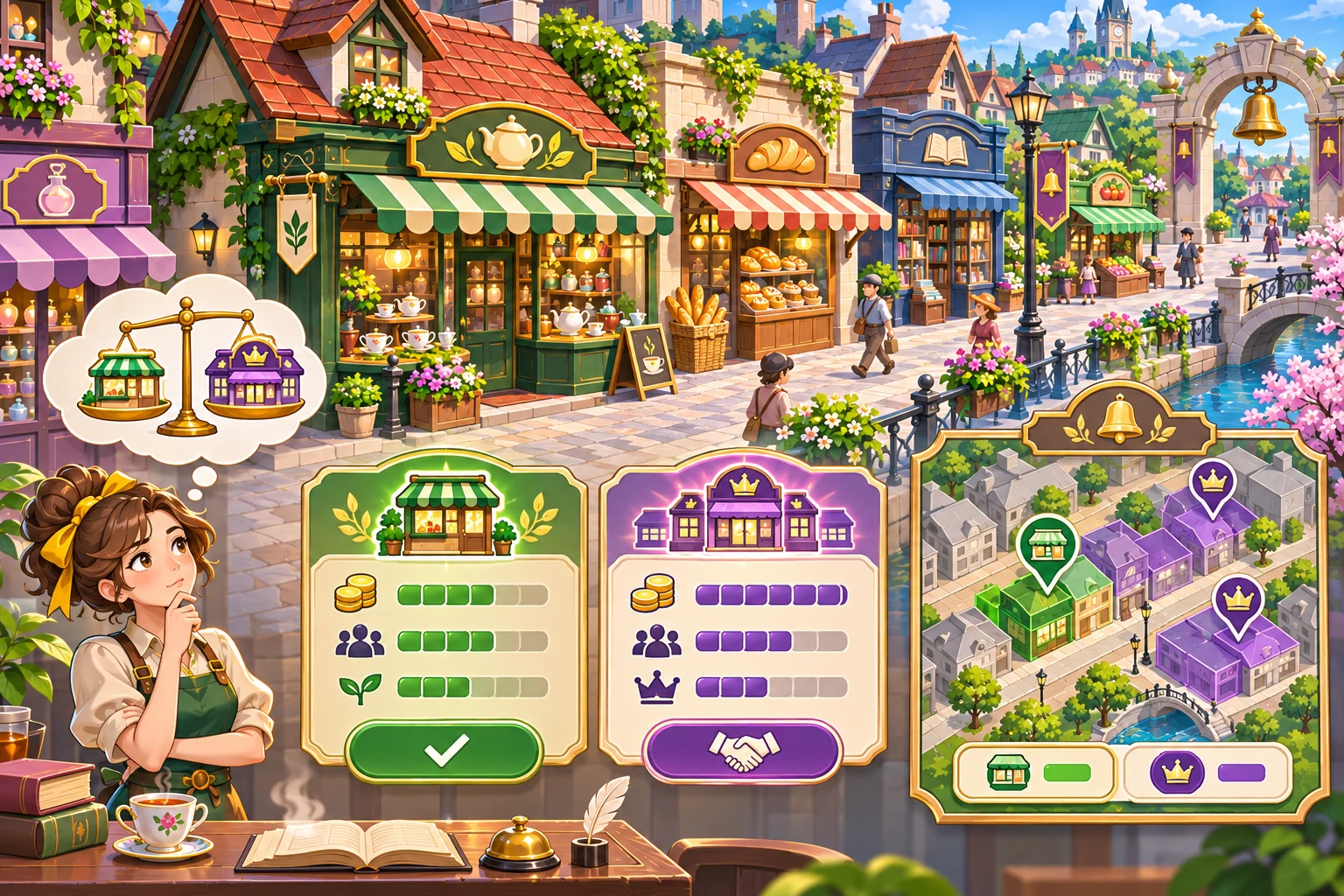
Make ownership part of the city strategy
In fictional Rivet Row, Alder Garage and Birch Motorworks are independent rivals with $130 cash each, a $30 minimum reserve and a $75 asking price. Either owner may start a deal. An acquisition should transfer ownership only when the offer meets the target ask and the buyer keeps enough cash to operate afterward.
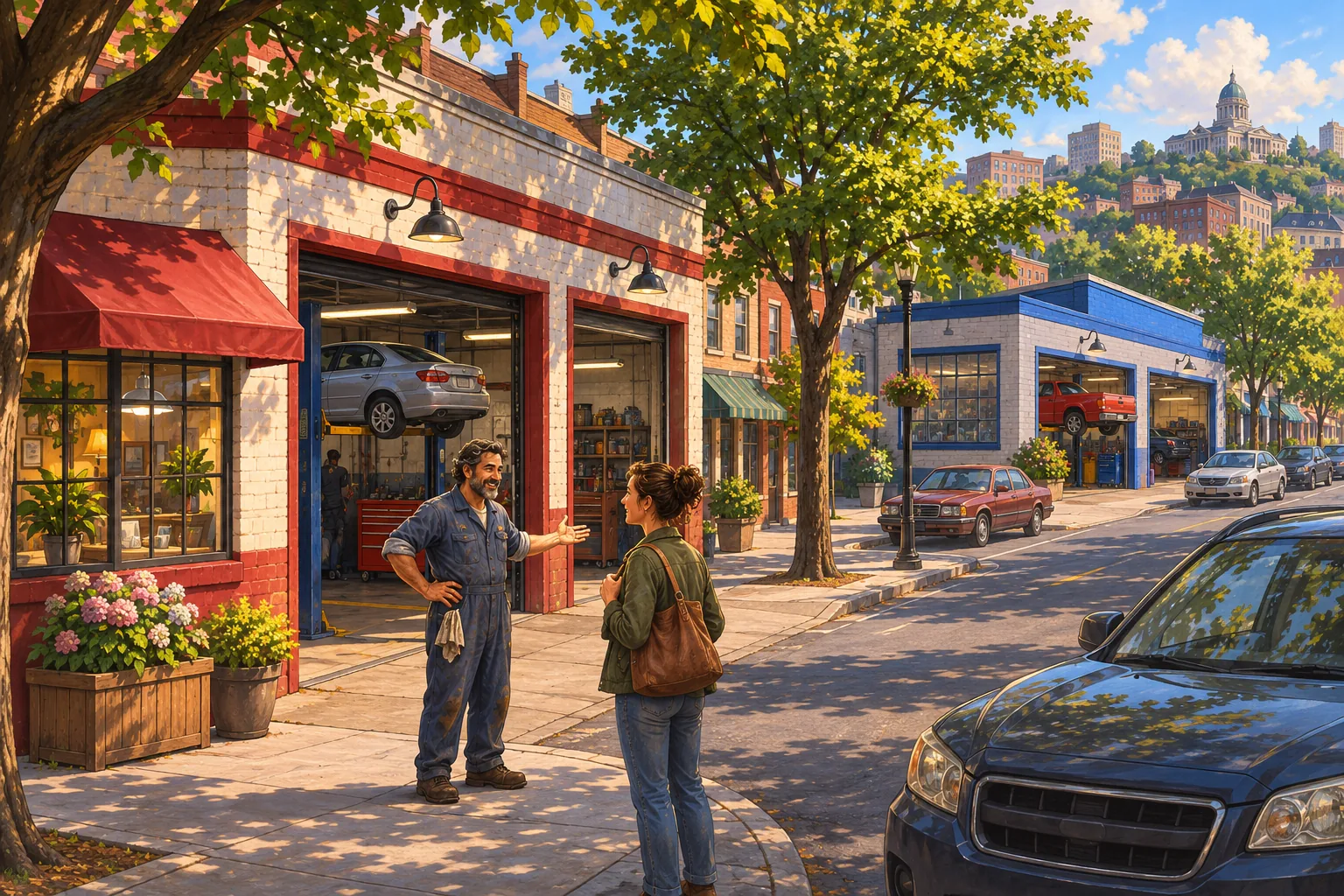
Show the offer, buyer cash after purchase, target shop and remaining service bays before confirmation. If the buyer's balance falls below the reserve, reject the bid with a clear reason. Keep the acquired shop's repair capacity visible so city ownership changes without erasing local service.
Give both rivals a fair path to propose a deal
Store each shop's cash, reserve, asking price, owner and service capacity. Check that the offer meets the asking price, then subtract it from the buyer's cash and compare the remainder with the protected reserve. Test Alder buying Birch and Birch buying Alder from equivalent independent market snapshots.

The first iteration accepts any offer a buyer can pay, even if only $10 remains. Add a $30 reserve rule: an $80 offer meets the $75 ask and leaves $50, so it passes in either direction. A $120 offer leaves $10 and is rejected; a $70 offer also fails because it is below the target ask. These fictional checks test deal gates, not real valuation or business balance.
Keep service options visible after the purchase
When a bid passes, transfer the target's ownership and combine its visible service capacity with the buyer's network. Preserve the target's name and neighborhood so consolidation has a readable effect on the city. Let the player compare a larger repair network with the cash used and the reserve left behind.
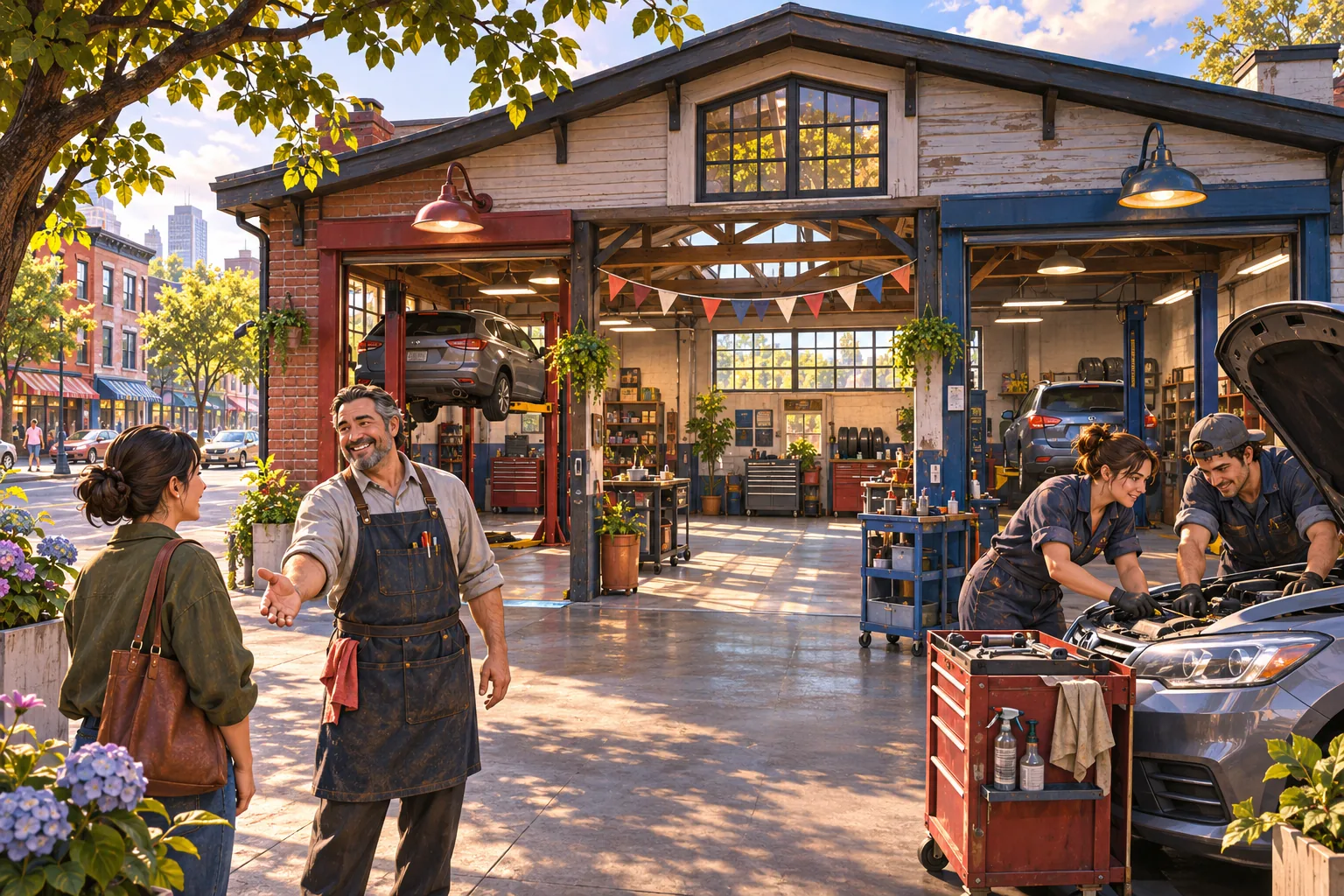
Prototype the deal rules before adding a full economy
Start with two independent shops, cash, asking prices, a minimum reserve and one deal action. Test a valid bid in each direction, an offer below the ask and one that breaks the reserve. Godot Resource is a serializable data container that can be nested and saved, making it one option for reusable shop or deal definitions. SEELE AI Game Maker offers a prompt-based entry point. Neither source validates Rivet Row's deal model.
Create an original city repair-shop simulator where rival garage owners can buy each other. Show buyer cash, target asking price, reserve and service capacity before a deal. Accept an offer only if it meets the ask and leaves the buyer's minimum reserve intact. Preserve visible neighborhood repair locations after ownership changes. Do not claim real valuation or playtest validation.
Start a fictional garage prototype in SEELE · Godot Resource documentation
Frequently asked questions
How can rival repair shops buy each other in a simulator?
Let either independent owner make an offer, then run the same checks in both directions. Compare the offer with the target's asking price and make sure the buyer retains its minimum cash reserve. Keep the example values visible as fictional rules rather than real business guidance.
What should happen to service capacity after an acquisition?
Transfer ownership and show the acquired bays as part of the new network. Preserve neighborhood locations so players can see which services remain available. The local test covers bid approval only; it does not prove how a larger network should affect repair quality or demand.
How can an acquisition system avoid runaway spending?
Show cash after the offer and require a protected minimum reserve. Reject bids that fall below the target ask or leave too little operating cash, and explain which condition failed. A playable prototype and separate balance review are still needed to tune the rule.