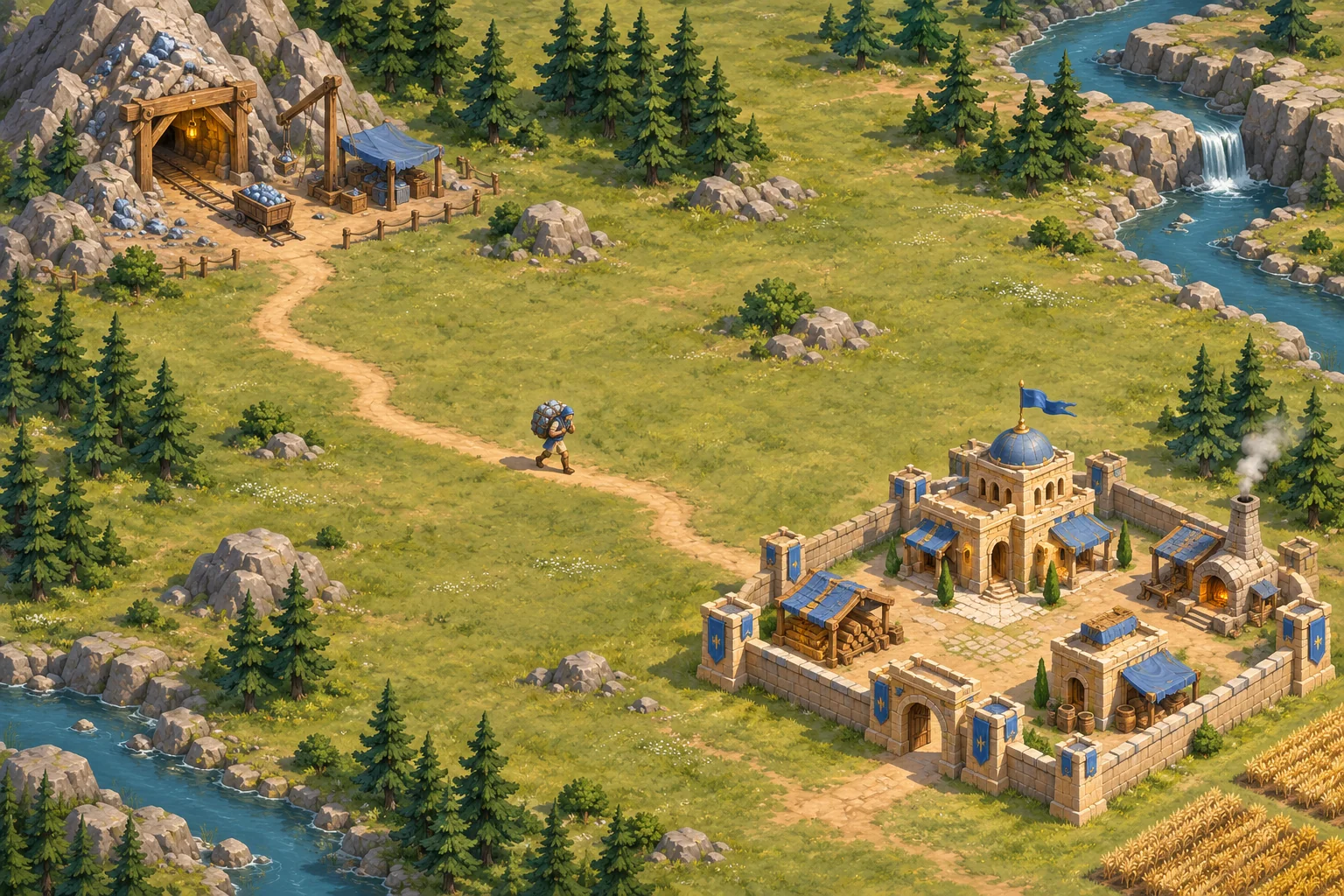
In a reverse tower-defense game, the player sends a vulnerable resource convoy through a map built to stop it. The challenge is to deliver enough cargo before time runs out, while towers threaten each route. Start with one cart, three supply units, a depot that needs two, and a five-beat deadline. That small setup is enough to test whether route choice feels meaningful.
Make the objective visible before the convoy moves
Show the cargo count, depot requirement, route length and deadline together. The cart starts with three units; the siege depot consumes two to power its gate. The direct lane takes two beats, while the covered detour takes four. Explain that exposed towers destroy two units on the direct lane, while the covered route avoids their firing line. The player can compare a quick delivery of one against a slower delivery of three.
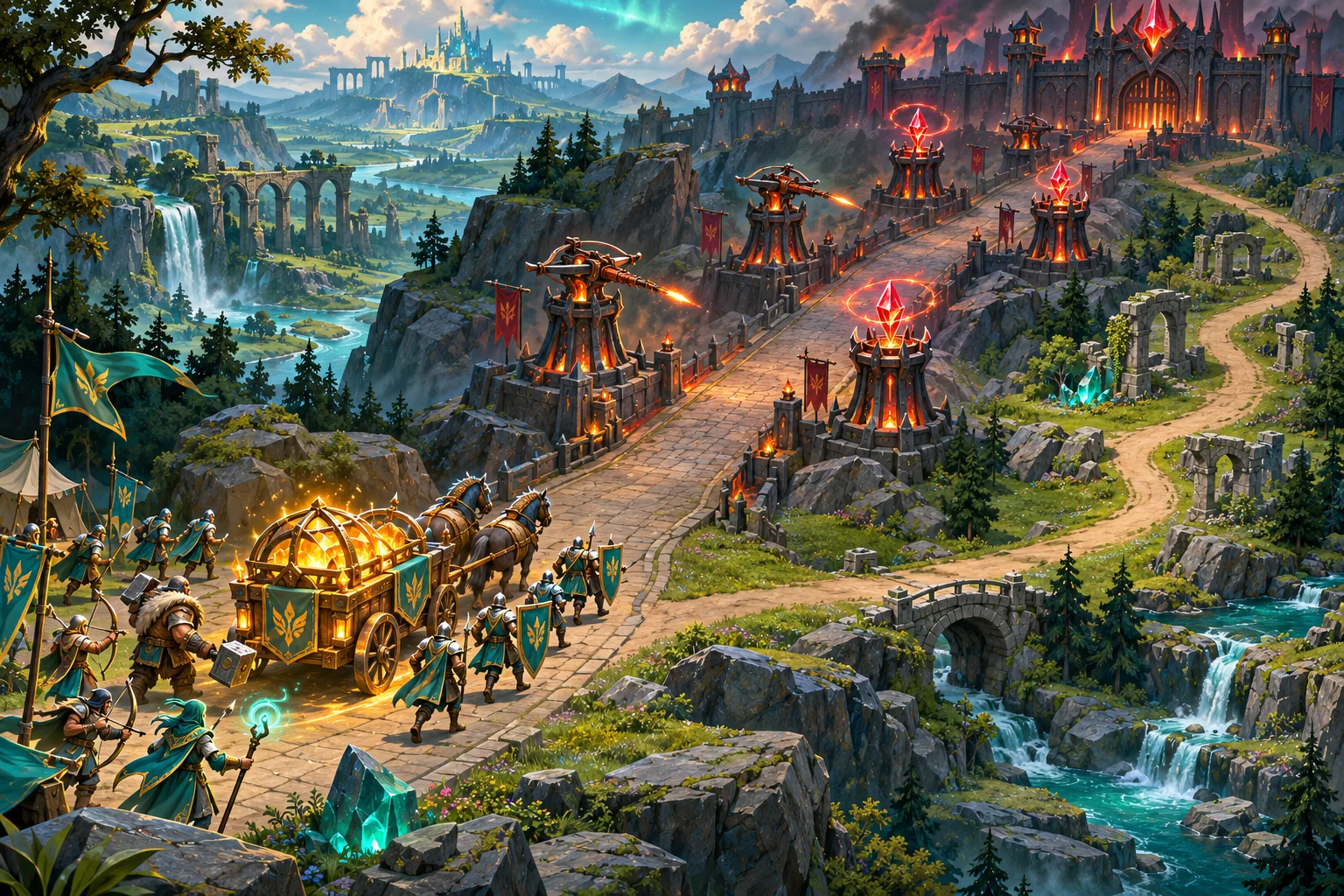
Keep the first map readable: one fork, one exposed lane, one sheltered lane and one destination. Mark the firing zone and show where the cart will be after each beat. Avoid adding upgrades, random damage or several cargo types until this decision works on its own.
Treat route and cargo as one decision
A route is useful only if enough resources survive it. On the direct lane, the cart arrives after two beats but loses two of its three units, leaving one. It reaches the depot before closing, yet cannot meet the two-unit requirement. The covered detour takes four beats and preserves all three, so two can power the gate and one remains as surplus.
Make the result legible before confirmation: preview arrival time, expected cargo loss and whether the depot requirement will be met. Keep the cart's cargo unchanged until the move resolves. If a route fails, report whether the cause was damage, insufficient cargo or the deadline; do not silently discard resources.
Replay the same map with a fixed budget
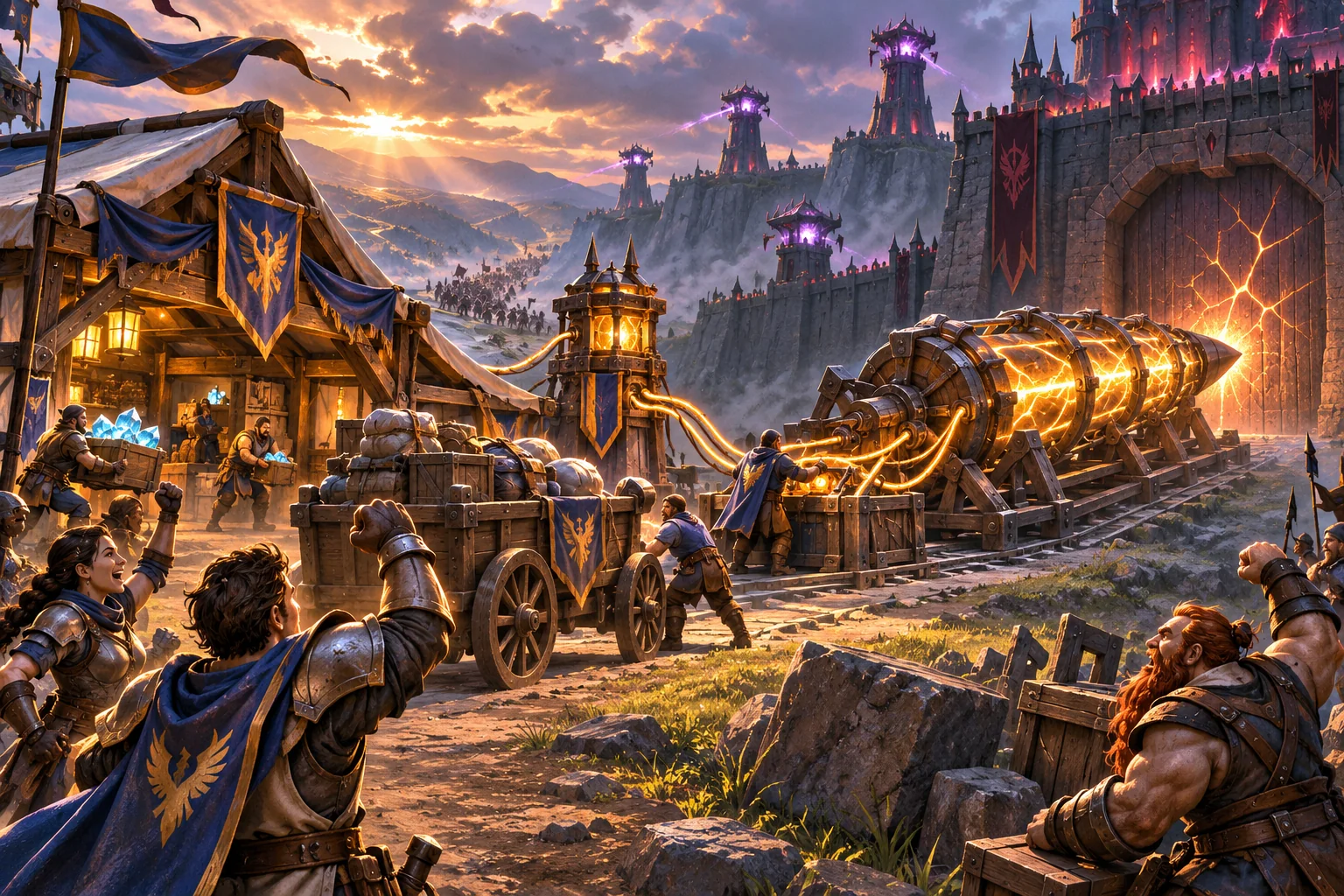
The local rules replay uses three starting units, a two-unit requirement and a five-beat deadline. The direct route costs two units and takes two beats: one arrives, so the depot stays unpowered. The covered detour costs no units and takes four beats: all three arrive before the deadline, so the depot powers. A six-beat version of that same detour arrives too late and fails.
| Route | Beats | Cargo lost | Delivered | Result |
|---|---|---|---|---|
| Direct, exposed | 2 | 2 | 1 | Fails cargo need |
| Covered detour | 4 | 0 | 3 | Powers depot |
| Covered detour, delayed | 6 | 0 | 3 | Misses deadline |
This replay checks only route cargo and timing arithmetic. It does not simulate tower targeting, animation, player input or a complete game. For the prototype, make damage deterministic so a player can learn the map and plan around it. Add uncertainty later only if it improves the decision rather than obscuring why a run failed.
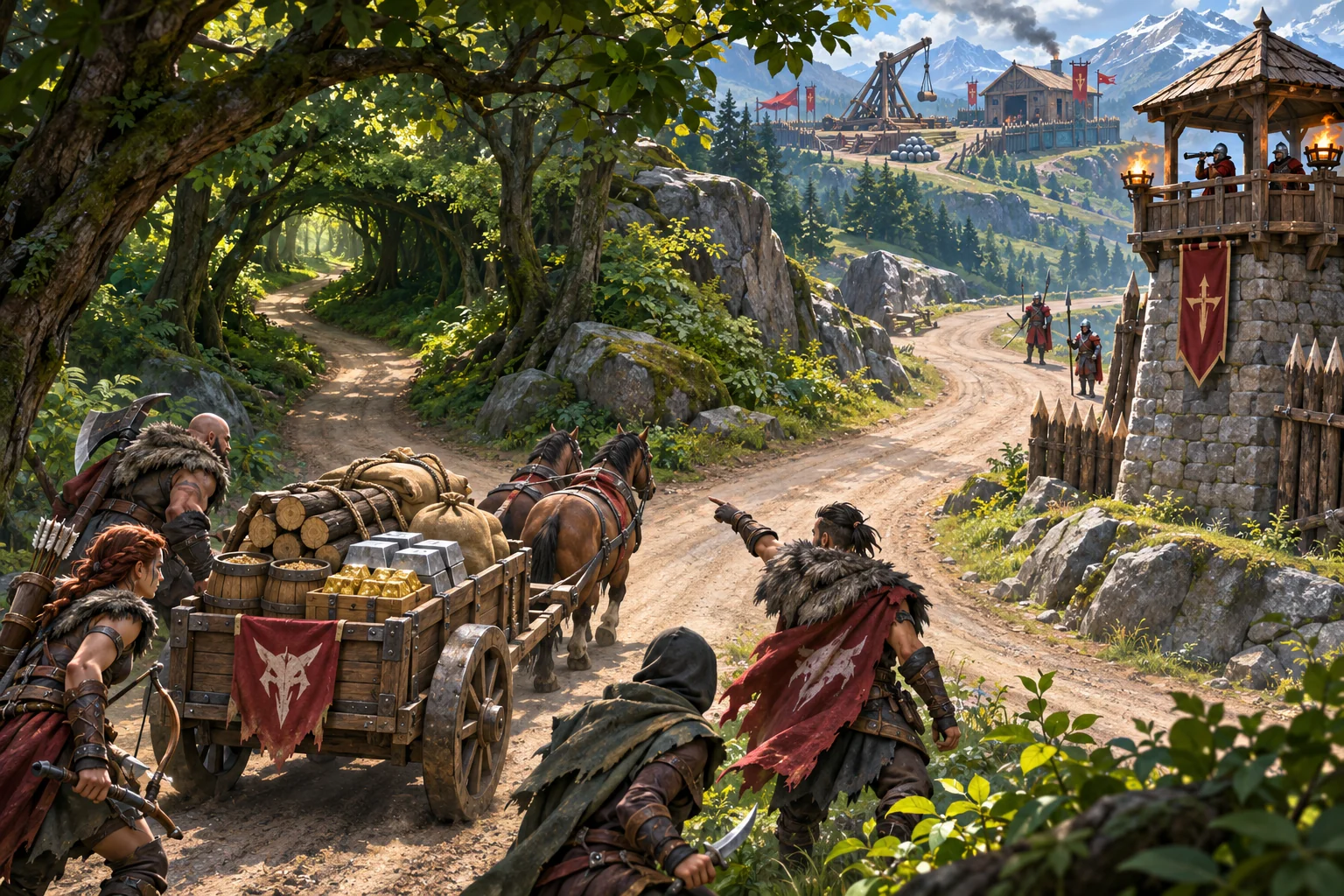
Build one route puzzle before adding defenses
Ask an AI game maker for a small playable prototype with a grid map, a draggable or selectable convoy, two marked lanes, deterministic tower damage and a visible beat counter. Add a reset button so the exact same cargo and route can be replayed. First confirm that the exposed lane is fast but under-delivers, and the covered detour is slower but meets the depot need before the deadline.
Only then add a second tower, alternate cargo requirements or a route-changing switch. Change one rule at a time and replay the same map. That makes it clear whether a new mechanic creates a choice or simply makes the outcome harder to predict.
Create a reverse tower-defense route puzzle. A cart carries 3 supply units to a siege depot that needs 2 before a 5-beat deadline. The map has a direct exposed lane taking 2 beats and losing 2 units to deterministic tower fire, plus a covered detour taking 4 beats and losing none. Show route, expected loss, delivered cargo and deadline outcome before confirming. Keep cargo until each move resolves, explain failures, and include a reset to replay the same map. Do not add random damage or upgrades yet.
Start a reverse tower-defense prototype in SEELE
Frequently asked questions
What makes this a reverse tower-defense game?
The player controls the attackers or their supply route instead of placing defenses. The challenge is to move enough resources through a defended map to reach an objective. Begin with a convoy and a clear delivery requirement, then add more lanes or units after the route puzzle is understandable.
Why can the faster route still fail?
Arrival time is only one part of success. In this example, the direct lane takes two beats but tower fire removes two of three units. The depot needs two, so the cart arrives on time with too little cargo. Show both timing and surviving resources in the route preview.
How should I tune the deadline?
Choose a deadline that leaves a real tradeoff. Here, five beats allow the four-beat detour but reject a six-beat delayed arrival. Replay the same routes after changing the deadline and verify that the faster route still fails for the intended cargo reason.