A roguelite companions game is easier to prototype when its defining rule produces a visible state change. Companions challenge a decision and the player resolves the disagreement. Build one small scenario where a player can see the inputs, make a choice and inspect what changed.
Start with two comparable states and change only the feature named in the brief. Keep the supporting conditions fixed, record the outcome and state what the check cannot prove. A deterministic model can catch logic errors, but it cannot establish whether a mechanic feels fair, believable or enjoyable.
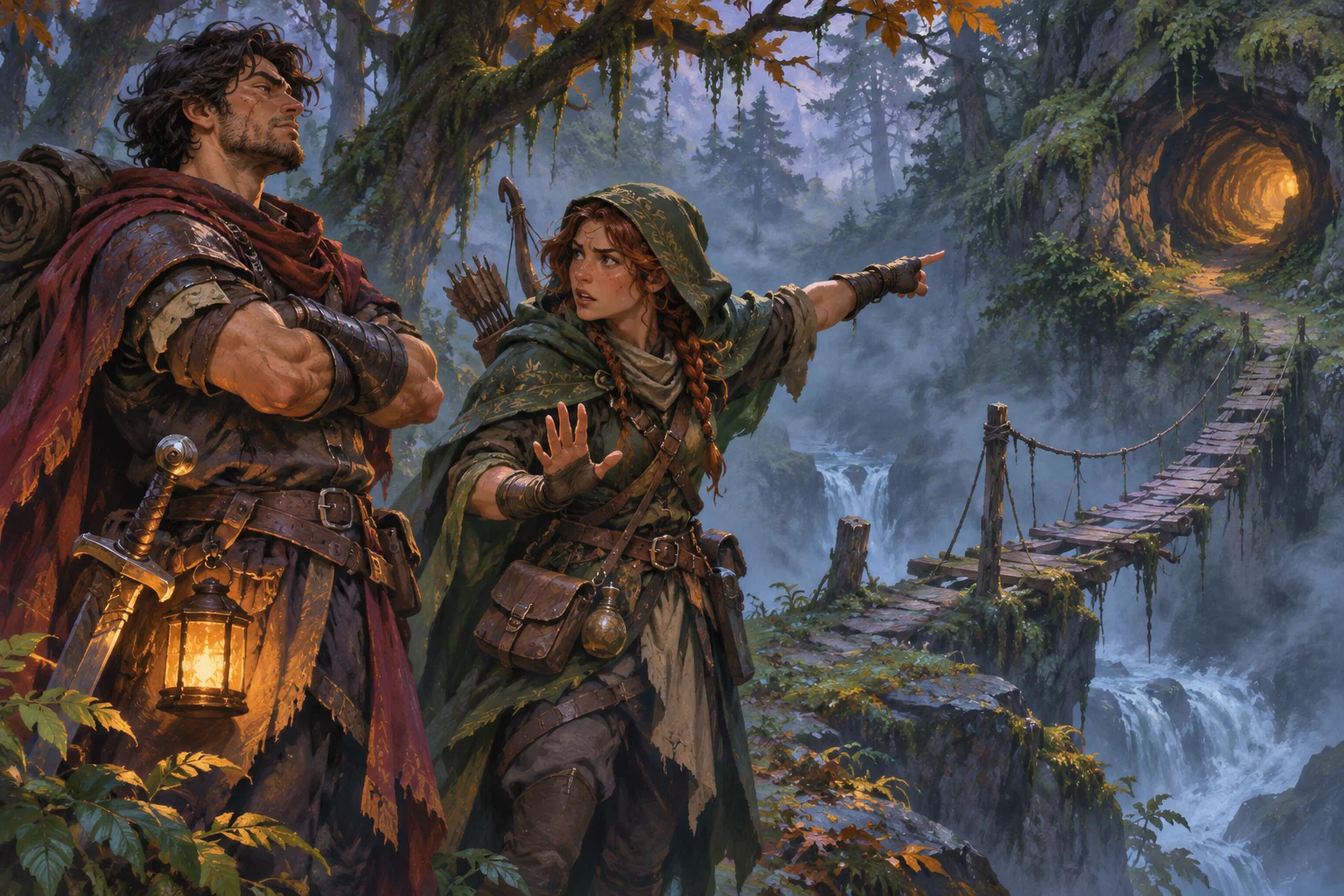
Make companion disagreement change a run decision
Give each companion a small set of values that can conflict with the player’s route choice. A cautious scout might object to a dangerous shortcut, while a loyal guard accepts risk to rescue an ally. The disagreement should point to a specific decision rather than appear as random dialogue.
Let the player respond by accepting the concern, explaining the choice or continuing. Track the response and a small relationship state, but keep the consequence legible. An objection can reveal risk or alter trust; it should not silently cancel player control.
Test one decision with a fixed companion trait and route risk. Verify that the same conditions produce the same objection and that each response changes only its documented state. This checks branching logic, not whether the companion feels believable.

Compare two versions of the defining mechanic
A run offers a short bridge route with a high ambush risk and a longer tunnel route with lower risk. The scout companion has a cautious trait. In the baseline, the player chooses the bridge and the companion’s response remains generic, so the trait has no effect.
In the revised version, the scout objects before departure, names the ambush risk and suggests the tunnel. The player can take the advice, acknowledge it and continue, or dismiss the warning. The branch records the selected route and a small trust adjustment.
The state check verifies that a trait-triggered objection and player response reach the intended branch. It cannot tell whether dialogue sounds natural, the risk feels fair or companions become annoying. Playtest repeated runs to catch excessive interruptions.

Ask AI to prototype the core mechanic
Show the initial state, player choice, rule inputs and resulting state.
Change only the defining feature between the two scenarios.
Create a small roguelite companions game prototype. Scenario A: A companion approves every route choice and has no distinct stance. Scenario B: A companion objects to a risky route and offers a concrete alternative. Keep route risk and companion trait fixed; verify objection, response choice and relationship state. Show the relevant state before and after, plus any unresolved requests or routes. Keep the result scoped to rule verification and do not claim that it proves player enjoyment or real-world accuracy.
Use a controlled check before adding more systems
Companions challenge a decision and the player resolves the disagreement. Compare the two cases with supporting conditions held constant and make the state change easy to inspect. The model can verify that the mechanic responds to its intended input. It cannot establish whether the choice is fun or balanced, so playtest the decision before adding more systems.
Prototype a roguelite companions game with SEELE’s AI game maker
Frequently asked questions
How can a companion disagree without taking control away?
Have the companion explain a specific concern and offer an alternative, then let the player choose. Record the response as a branch or relationship change, but do not silently override the selected route. This keeps disagreement meaningful while preserving player agency during a run.
How should companion traits affect dialogue?
Use a small trait set that connects to visible decisions. A cautious scout might object to a risky shortcut, while another companion accepts danger to help an ally. Keep the trigger and consequence clear so players can understand why a companion spoke and what their response changed.
Does a dialogue branch model prove companions feel believable?
No. A deterministic check can verify that traits trigger the intended objection and that responses update the correct state. It cannot judge tone, timing or whether repeated interruptions become irritating. Playtest several runs and revise lines when players cannot connect a reaction to the decision.