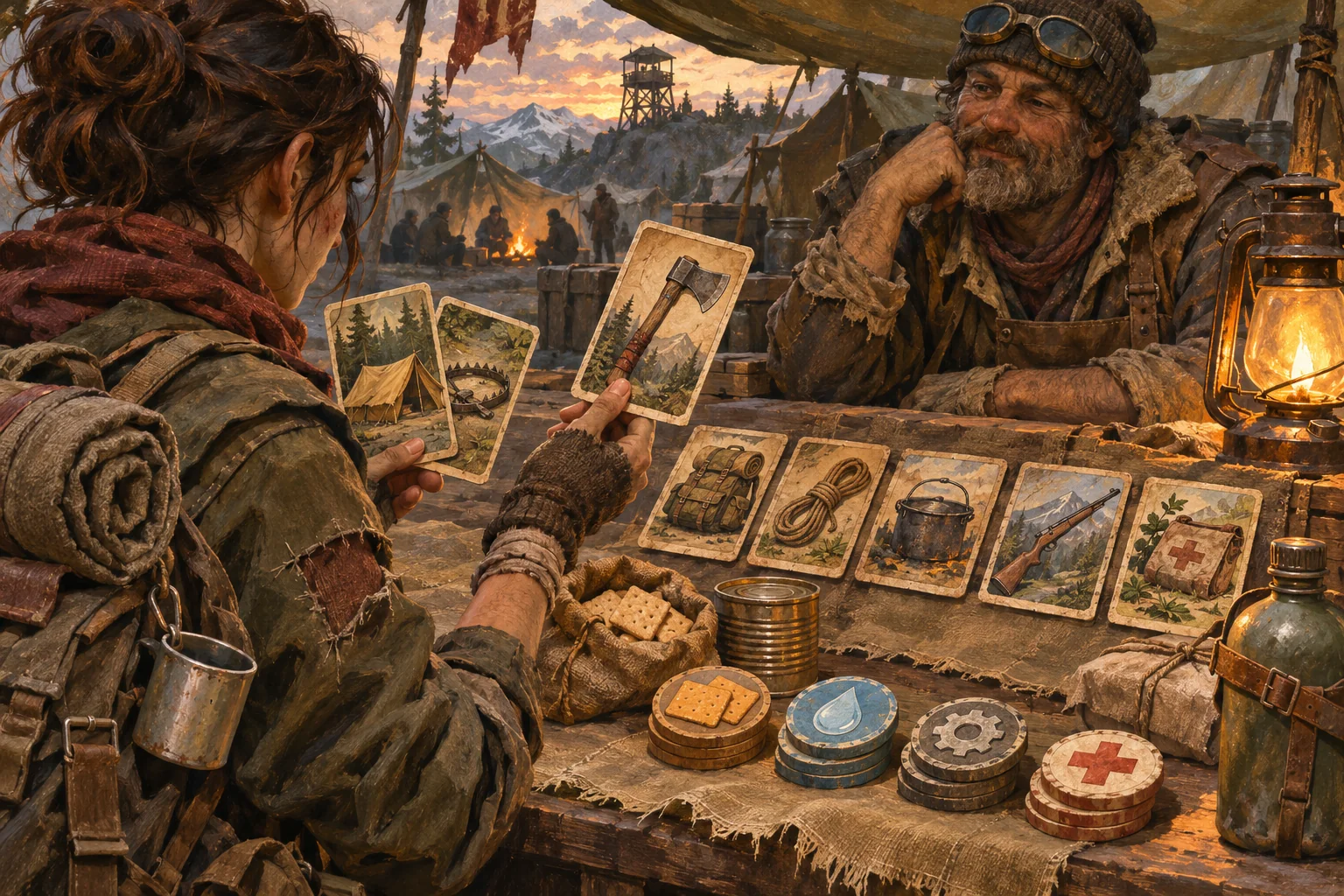
A shop-run card puzzle can keep every part of the trip on cards: the request, budget, store offers, products and receipt. In fictional solo game Pocket Errand, a Request card lists three categories—Tool, Map and Comfort. At each of three stops, reveal two Shop cards, choose one and buy exactly one product. Move paid Coin cards from Wallet to a spent pile; place the purchased Product in a Receipt row.
Each Product grants a one-use discount on a named category at the next stop. The puzzle is to fill all three request slots without exceeding the Wallet. Since the next discount depends on the product chosen now, consider the purchase chain, not just the lowest price on the current Shop card.
Represent the whole shopping trip with a few card types
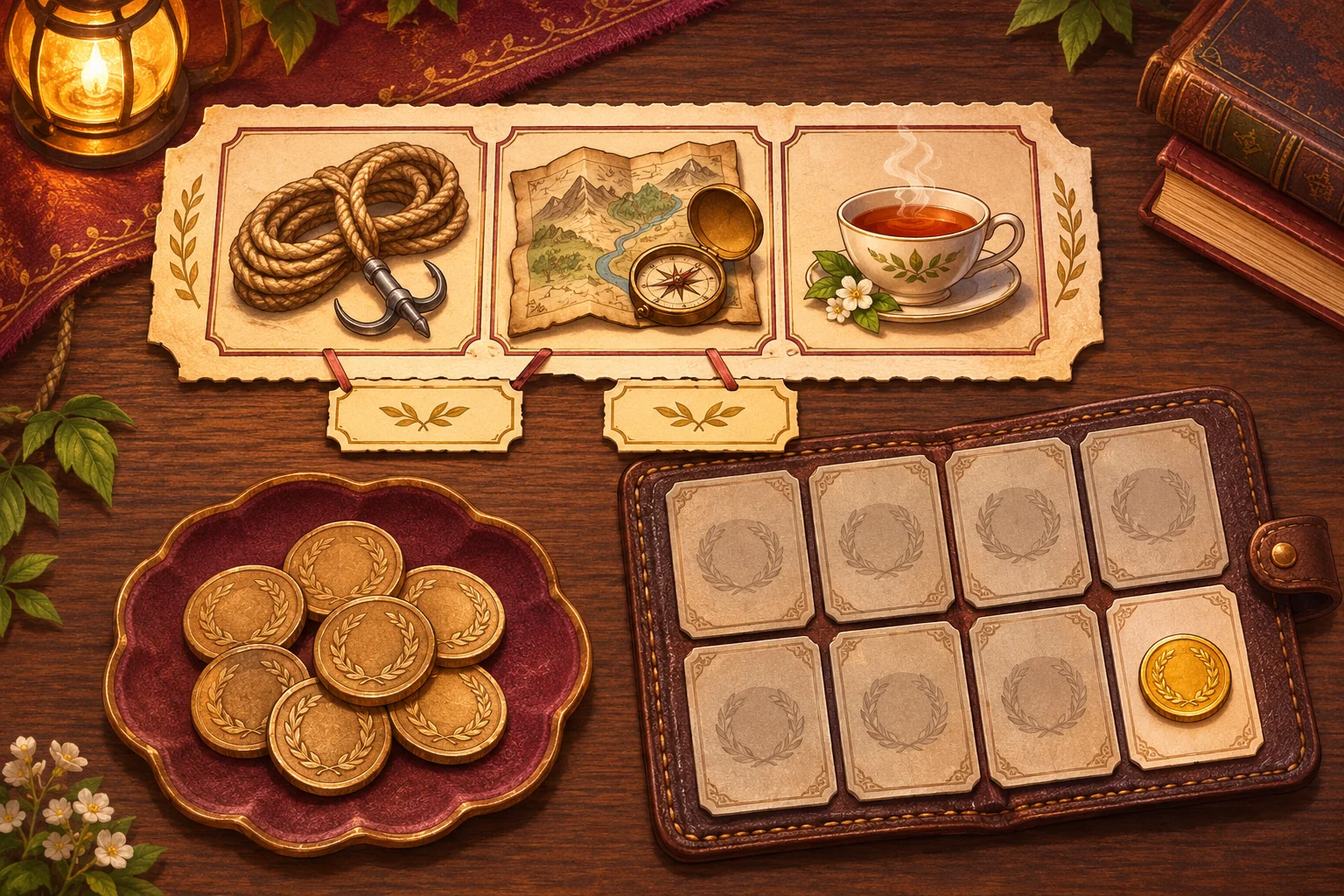
Use a Request card for required categories, Coin cards for the Wallet, Shop cards for two offers, Product cards for purchases and a Receipt row for completed buys. At each stop, reveal two Shop cards and visit one. Buy exactly one product, move that many Coin cards to the spent pile, add the Product to the Receipt and discard the other Shop.
After the third stop, check the Request. The run succeeds only if the Receipt contains one product from each category and the Wallet never went below zero. A fixed three-stop length is easy to replay. Shops, money, items and progress are all cards, so no board, die or loose tokens are needed.
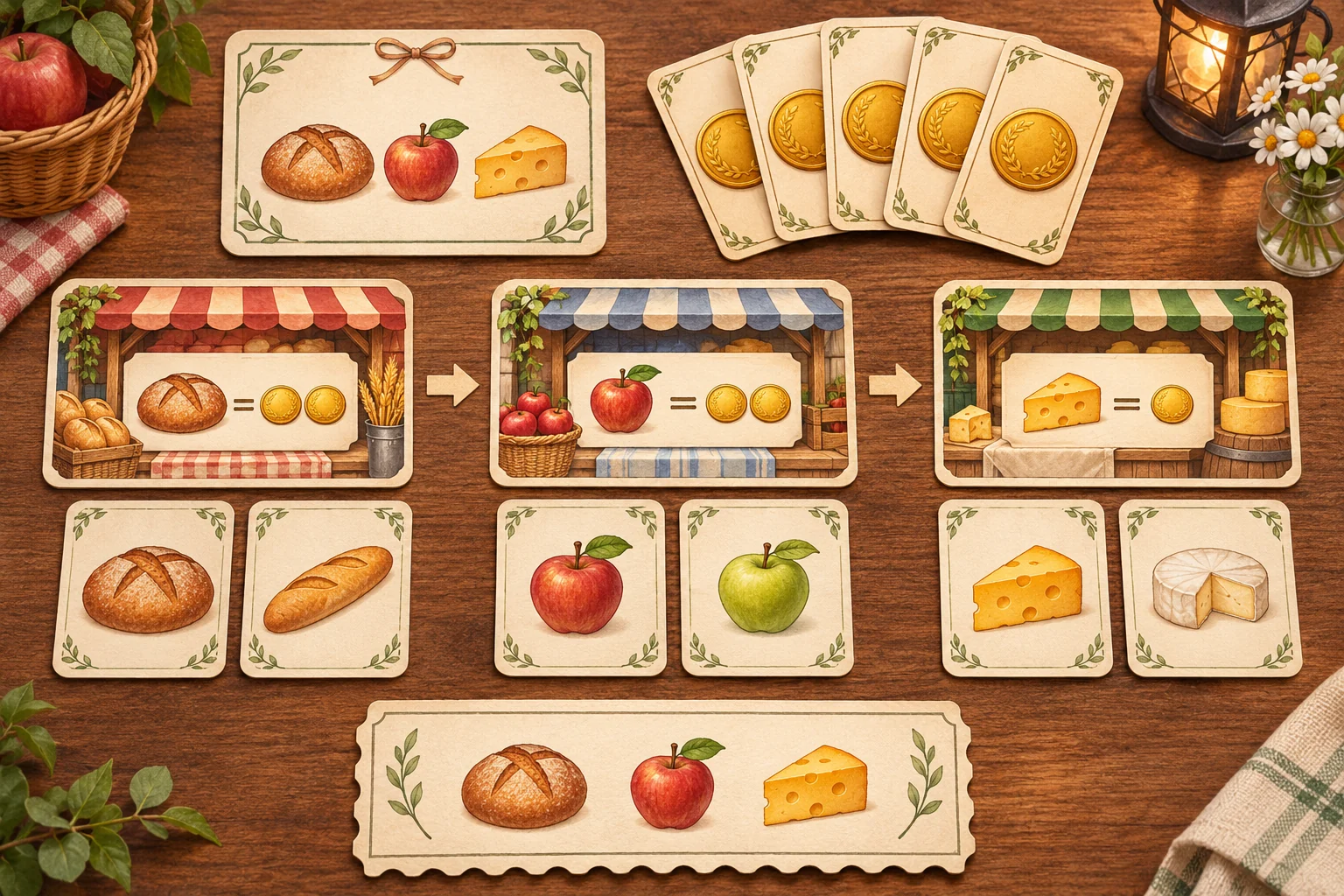
Make each purchase change the next stop’s price
Give each Product a one-use coupon for a named category at the next stop. Rope is a Tool that discounts a Map product by 1. Compass is a Map product that discounts a Comfort product by 1. Tea is Comfort and has no further coupon. A coupon changes one purchase, cannot lower a price below 1 and expires after the next stop.
Show the original cost, discount and final price before payment. Keep the coupon visible beside the Wallet or tuck the Product under the next Shop. Print category names and coupon targets consistently so players can see whether a purchase fills the Request and changes the next price.
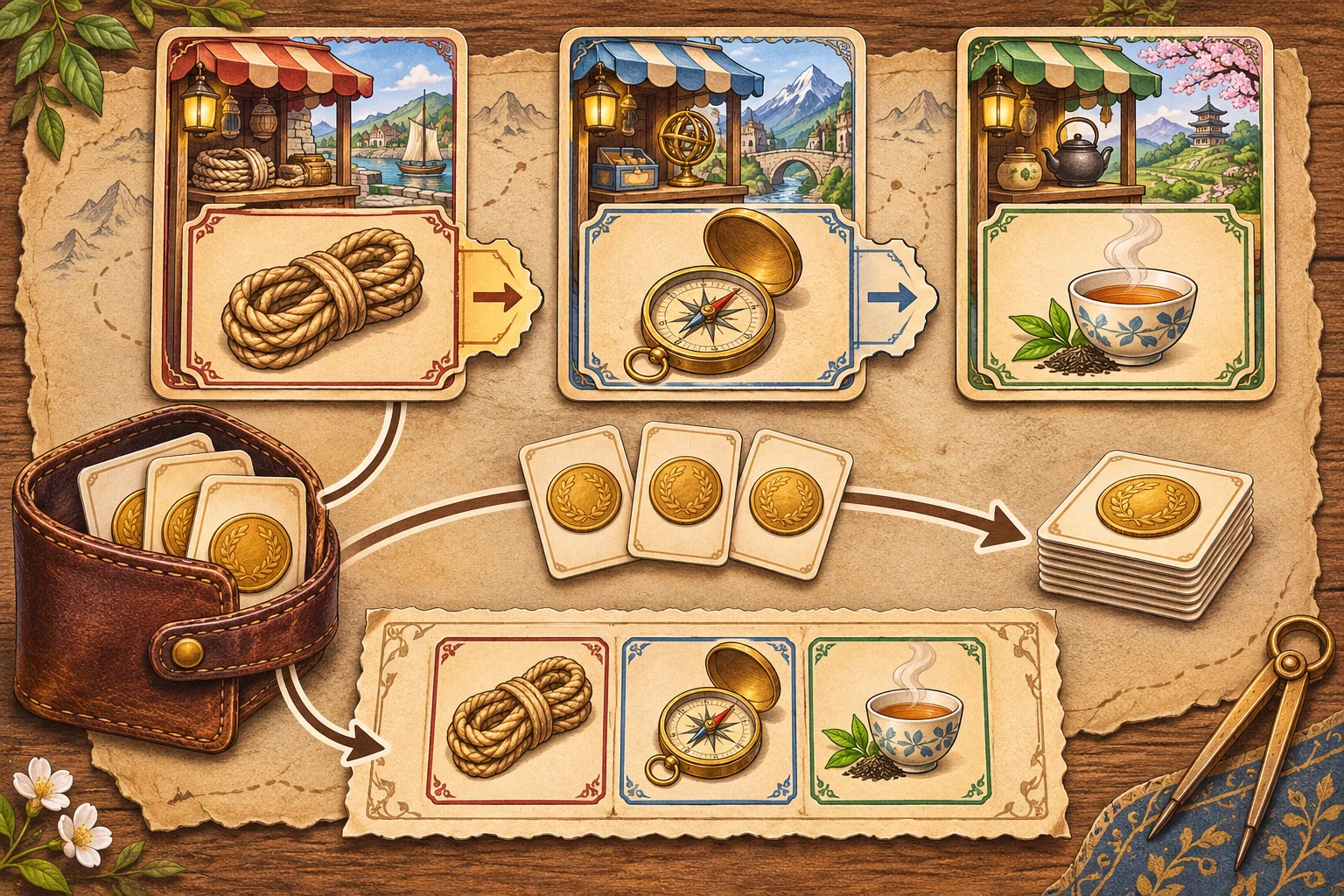
Replay one three-stop chain against the same budget
Start with eight Coin cards and a Request for one Tool, one Map and one Comfort item. At stop one, buy Rope for 3 coins. Move three Coin cards to the spent pile; five remain. Rope discounts a Map product by 1 at the next stop.
At stop two, Compass normally costs 4. Apply Rope’s coupon and pay 3, leaving two coins. Compass discounts Comfort by 1. At stop three, Tea costs 2; pay 1 and keep one Coin. The Receipt now fills all three categories at a total cost of 7. This is a rules-based paper simulation, not a measured result. Track completion, remaining coins, purchase order and coupons used. If one route always wins, change a price or coupon target.
Prototype the receipt and price preview before adding shops
Build the Request, Wallet, two-Shop offer, one purchase, coupon transfer, Receipt and three-stop check. Add a resettable fixed offer to compare first purchases under the same budget. Show legal products, category coverage, coupon target and final cost before payment. Add shops only after players can explain how a purchase changes the next stop.
Create Pocket Errand, a solo shopping card puzzle played entirely with cards. A Request card needs Tool, Map and Comfort products over three stops. Use Coin cards as Wallet; reveal two Shop cards at each stop; choose one and buy exactly one Product. Move paid Coin cards to a spent pile and add the item to a Receipt. Rope costs 3 and discounts Map by 1 at the next stop; Compass costs 4 and discounts Comfort by 1; Tea costs 2. Coupons apply once, cannot lower price below 1, and expire after the next stop. Start with 8 Coin cards. Show purchase chain, categories, Wallet, Receipt and final price. Track completion, coins left, order and coupons used.
SEELE's official page describes a general workflow: generate a playable first version from a prompt, test it in a browser and refine it with follow-up prompts. Use it to inspect card-only state, price previews and the three-stop chain; Pocket Errand and its rules are fictional design guidance.
Build the card-only shop puzzle in SEELE
Frequently asked questions
How can a shop run work entirely through cards?
Use cards for the shopping request, wallet, shop offers, products bought and receipt. Move Coin cards between wallet and spent pile to pay. A fixed number of stops and printed categories let the player track the run without a board or loose tokens.
How do discounts create a card-puzzle chain?
Let a purchased Product grant a one-use discount to a named category at the next stop. The player weighs its current cost against the future saving and whether it fills the request. Show the original and reduced price before payment.
What should I track in a solo shop-run card puzzle?
Replay the same starting Wallet and Shop offers, then record whether the Request is filled, coins remaining, product order and coupons used. Compare routes that change one purchase. If one sequence always dominates, adjust a product price or the category its coupon targets.