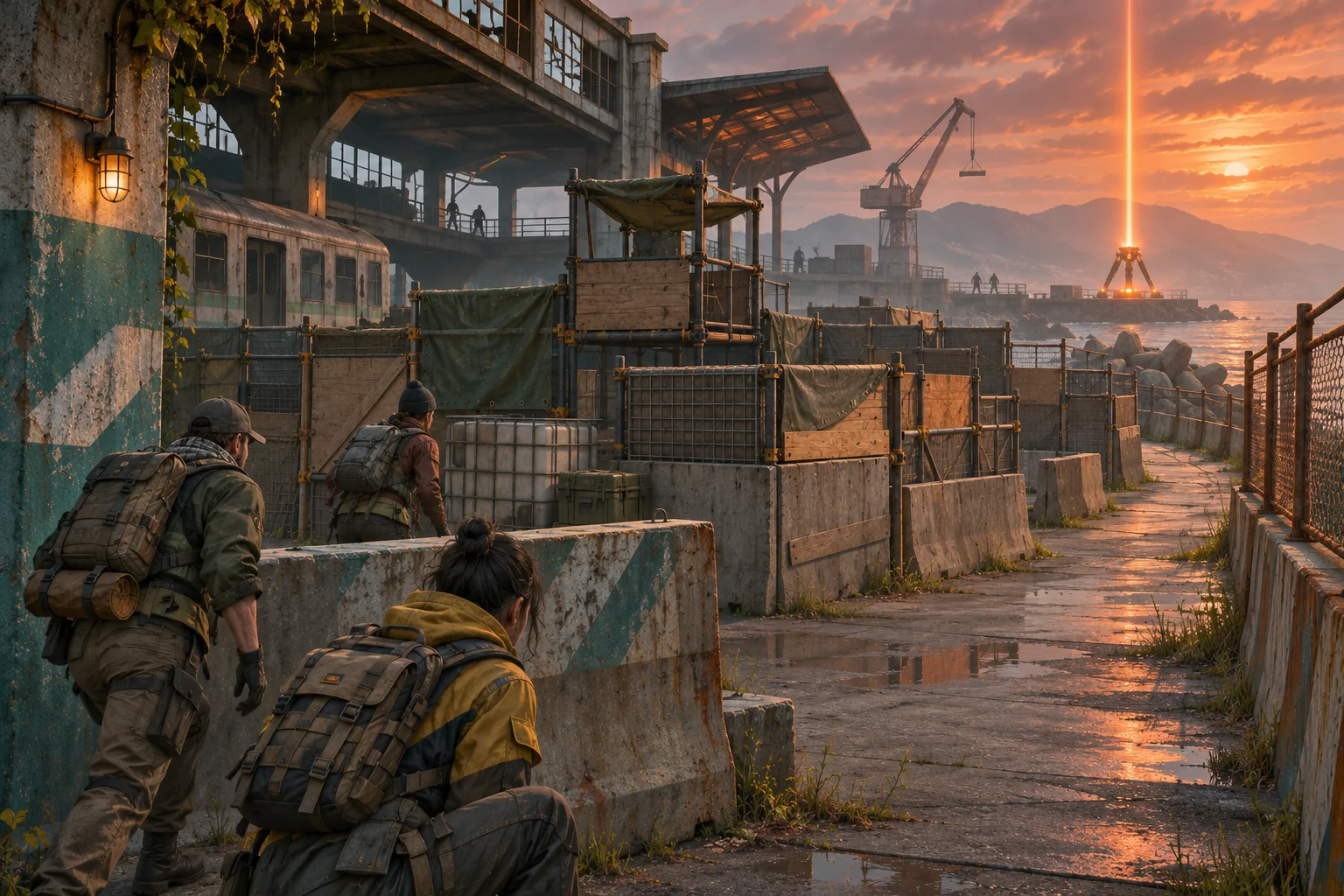
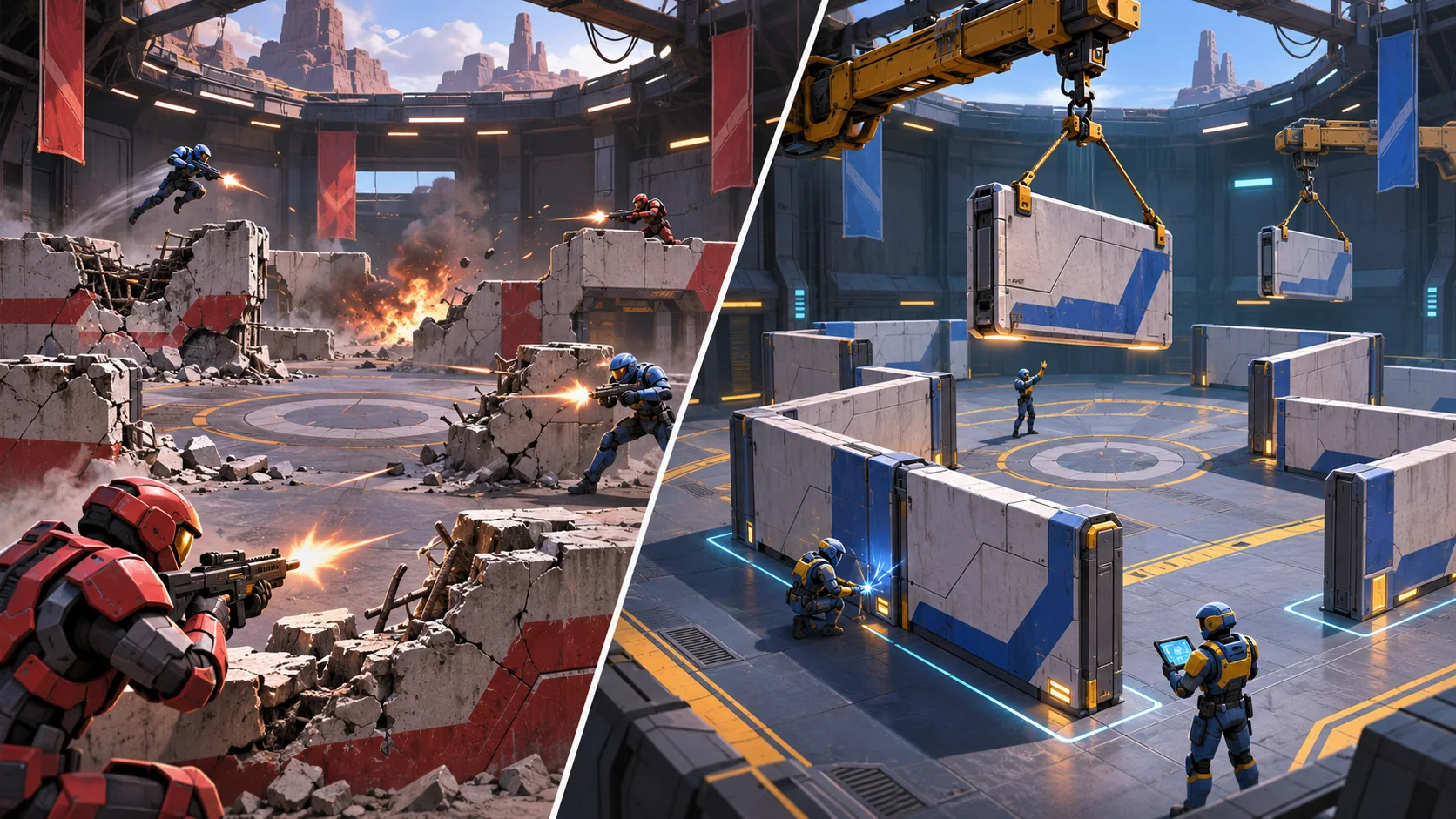
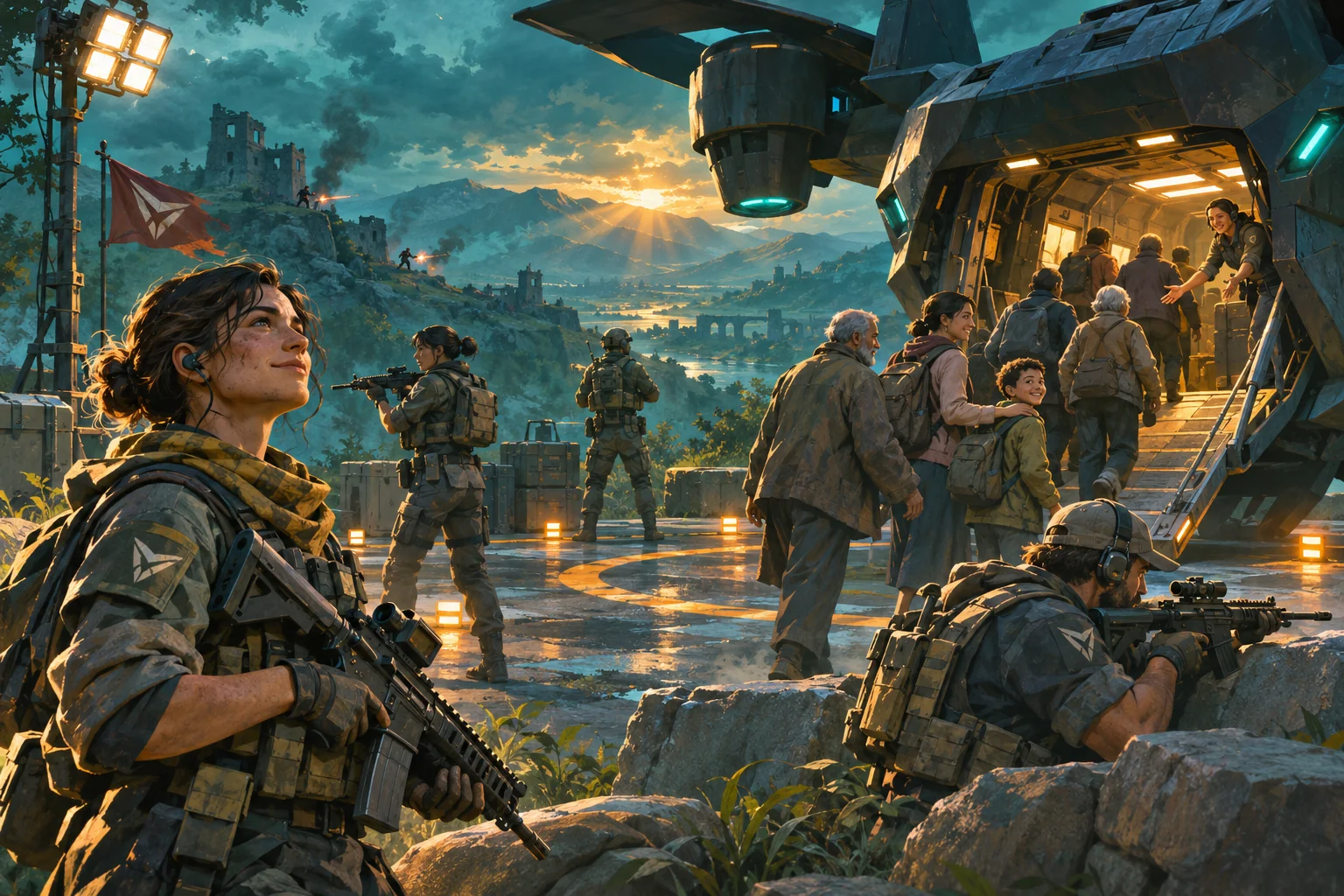
In Safe Passage, the mission succeeds when civilians reach extraction, not when the player reaches a kill count. The zone advances while civilians are inside and nearby threat is under control. This makes positioning and deliberate engagements matter: suppress a hostile, use cover to guide the group forward, or flank to open a safer route. Combat supports the rescue objective instead of replacing it.
Make extraction progress the mission goal
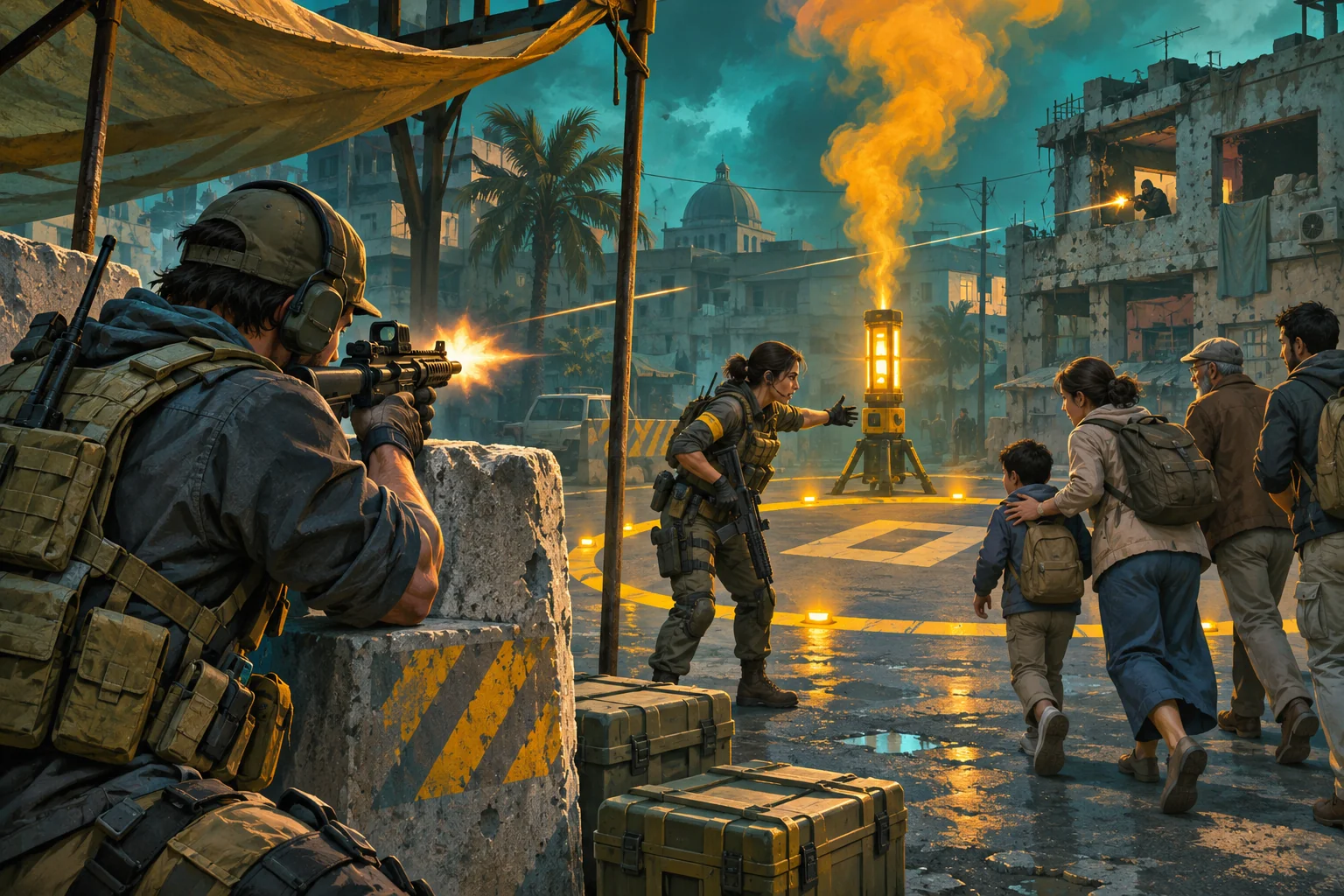
Show the civilian route, extraction status and nearby-threat count together. Keep civilians out of direct combat and provide cover positions along the approach. A mission can pause when danger is too high, but it should explain which nearby threat is holding the zone. Use a safe reset to retry the route without turning failure into a kill-score penalty.
| Mission state | Zone behavior | Player decision |
|---|---|---|
| Civilians outside | No extraction progress | Clear or guide the route |
| Civilians inside, threat high | Progress pauses | Suppress, flank or reposition |
| Civilians inside, threat controlled | Progress advances | Hold cover until boarding completes |
Treat combat as a means to create a window, not the score. A hostile outside the safety radius can remain alive while the team extracts. This keeps attention on safe passage and makes target selection serve the mission.
Set a readable threat threshold
For the prototype, define a 6-unit safety radius around the extraction zone. Nearby hostiles pause progress only when their count exceeds two. The initial rule requiring zero hostiles stalls the mission even after the squad has reduced the threat. The revised limit lets extraction continue with two distant or suppressed hostiles while three close threats still stop it. Show the count and threshold clearly.
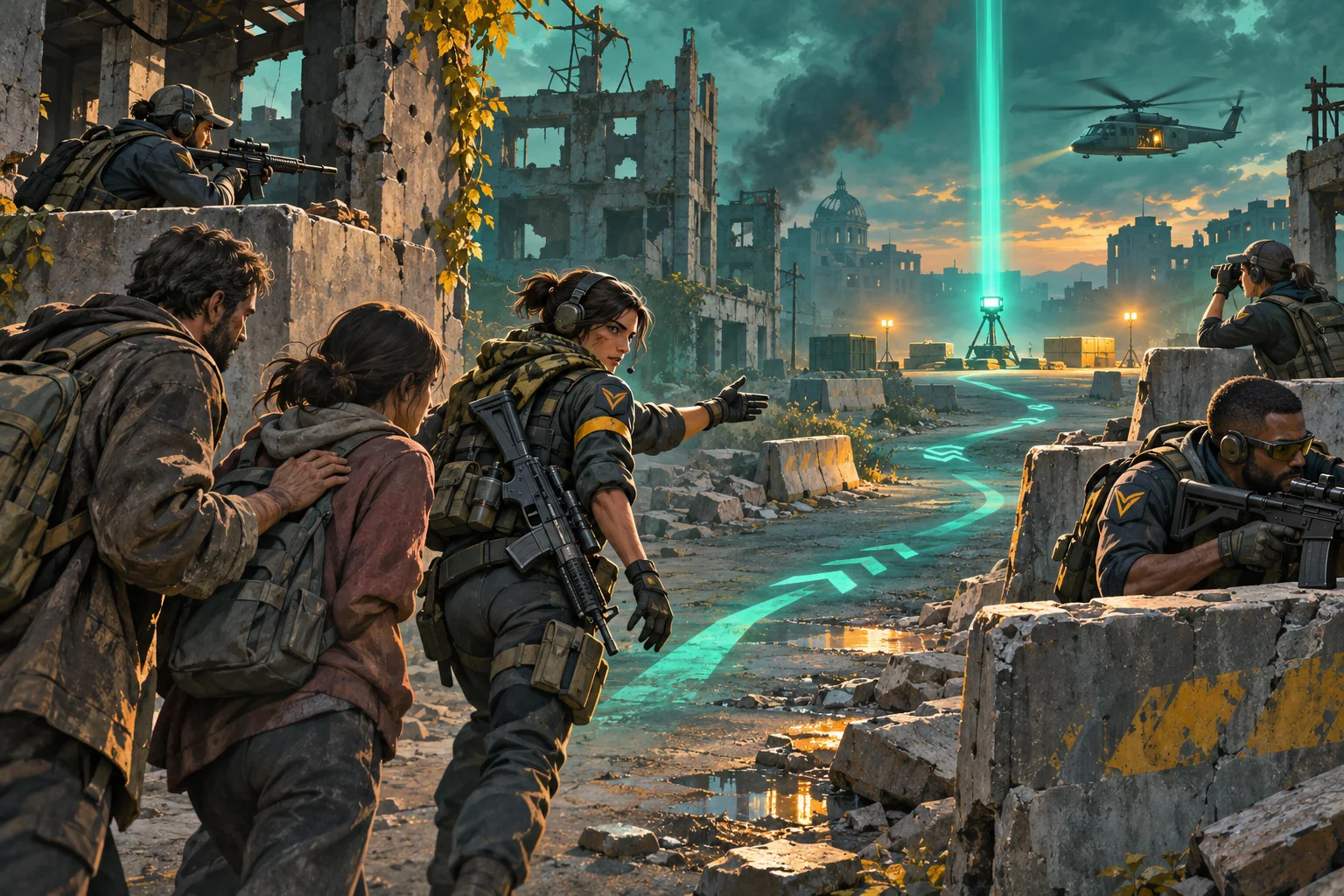
Use a visible progress indicator that pauses and resumes with the threat state. Avoid making a kill the only way to reduce pressure: suppression, a flank or moving the civilians to cover can all change the local situation. The exact options depend on the prototype, but the rule should reward safe positioning rather than clearing every enemy.
Replay the extraction-zone adjustment
The deterministic local count check begins with three hostiles inside the 6-unit radius. Under the initial zero-hostile limit, progress pauses. After one threat is cleared, two remain; the revised maximum of two allows progress to resume. Three nearby hostiles still pause it. This tests only the count threshold. It does not simulate combat, line of sight, civilian AI, weapons or mission pacing.
| Nearby threats | Initial limit: 0 | Revised limit: 2 |
|---|---|---|
| Three hostiles | Paused | Paused |
| Two hostiles after one is cleared | Paused | Progress advances |
Test in a playable build whether civilians follow the route, extraction feedback is legible and a paused zone feels fair. Tune radius, suppression duration and hostile pressure after observing runs. The local count check cannot establish combat balance or rescue pacing.
Start with one rescue route
Ask an AI game maker for a compact street approach, two cover positions, a small civilian group and one extraction zone. Begin with a clear route and one threat threshold. Add a flank or suppression option after players understand why progress pauses. Keep the success state tied to evacuation, and show that remaining enemies do not count as a failure by themselves.
Create Safe Passage, a tactical-shooter prototype where the objective is to escort civilians to extraction instead of reaching a kill count. Build one urban route with a small civilian group, two cover positions and a marked extraction zone. Show nearby hostile count and rescue progress. Civilians advance only while they are in the zone and no more than two hostiles remain within a 6-unit safety radius. Three nearby hostiles pause progress; after one is cleared, two remain and progress resumes. Include a safe reset, a flank route and readable suppression feedback. Do not make total kills the win condition.
Start a tactical-shooter prototype in SEELE
Frequently asked questions
How can a tactical shooter reward rescue instead of kills?
Tie mission progress to civilian safety and extraction status, then make combat one way to create a safe window. Show the route and local threat clearly. A hostile who is not blocking the zone can remain alive, so players focus on positioning and escort decisions rather than clearing the entire map.
Should extraction stop whenever an enemy is nearby?
Set a visible threat limit around the zone instead of requiring every hostile to be defeated. The threshold should leave room for suppression or movement to matter while still making close danger pause the mission. Test it with fixed enemy counts before tuning the wider encounter.
What should I test in a rescue mission prototype?
Check that civilians follow the route, progress pauses and resumes for understandable reasons, and players can use cover or alternate paths. A local count rule can verify the threshold, but only a playable mission reveals AI behavior, combat feel and whether the rescue pacing is fair.