The ride empties, and six visitors are about to pass the kiosk. Four want a keepsake from the ride. Two are looking for something with a seaside motif. In a prototype of the fictional theme park Brightwater Pier, you can afford to make four copies of just one design. Give the player a reason to look at the crowd before choosing what goes on sale. A shop is part of this management loop when the product the player makes changes what sells and what can be made tomorrow.
Put one kiosk at the ride exit
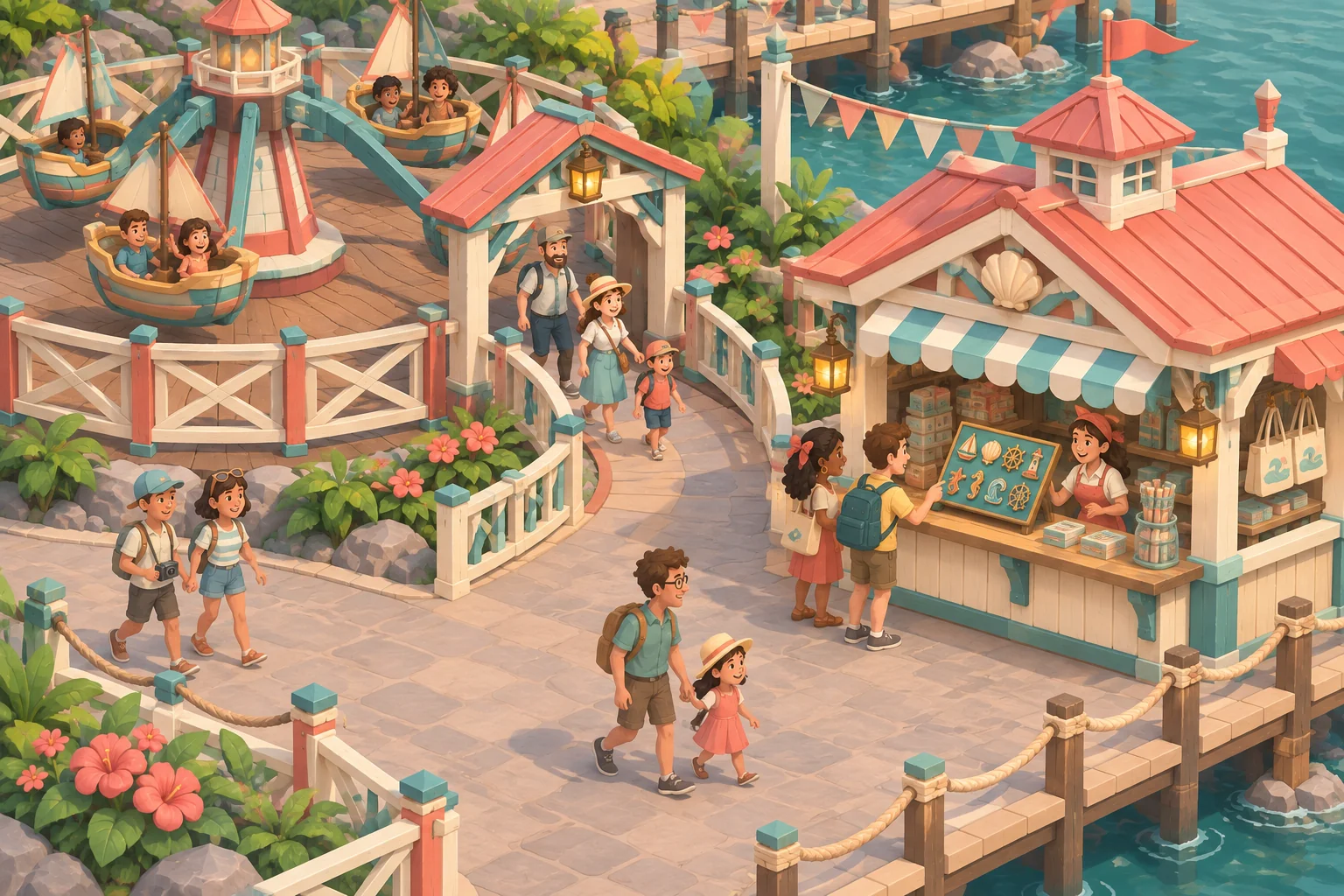
Set up a one-way path from the ride. Give the player a pin and a shell-shaped lamp to edit. Let them pick a color and a motif for each, then choose the one design to feature today. Treat the motif as a tag the guest can match. Color can stay cosmetic while you check whether motif alone creates a worthwhile decision. Stock one batch of four copies. Each costs two coins to make and sells for five.
| Choice | When it happens | What changes |
|---|---|---|
| Motif | Before production | Which guests want the item |
| Featured design | Before the ride opens | Which four copies go on the shelf |
| Run the ride | After stocking | When the six test guests walk past |
Let visitors buy at most one item. Count uninterested guests separately from interested guests who arrive after it sells out. These are different problems. The first calls for a design change or a different audience. The second tells you that more units might sell at the same price.
Preview the crowd before spending
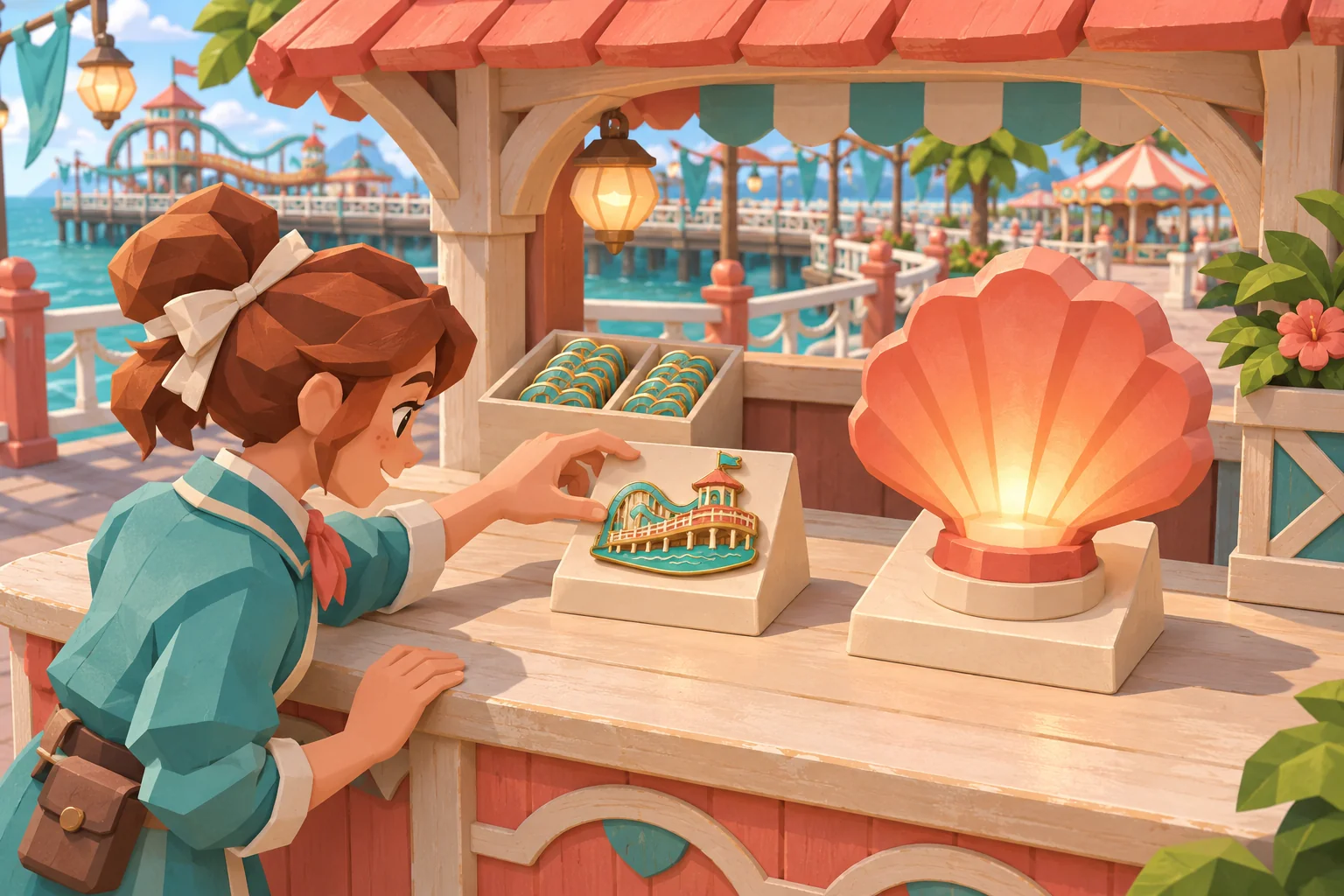
Display tomorrow's scheduled mix before the player commits to the batch. For the first draft, show the exact counts of ride and shore fans. Put a small icon on each design that matches a visitor interest. Charge the eight-coin production cost when the player confirms. Lock the design for that day and show a report with sales, unsold units, and both reasons guests passed the kiosk. For an initial two-day test, clear old stock between days and charge the next batch again. Reserve a starting balance of eight coins so the player can run the first day.
Replay the same six visitors
We ran a local command-line simulation twice with the same six visitors, four units of stock, an eight-coin batch cost, and a five-coin price. In the first draft, every visitor bought if any stock remained. In the revised rule, a visitor only bought if the featured motif matched their interest and stock remained.
| Design | First draft sales and margin | Revised sales and margin |
|---|---|---|
| Ride pin | 4 sales, 12 coins | 4 sales, 12 coins |
| Shell lamp | 4 sales, 12 coins | 2 sales, 2 coins |
Margin here is sales revenue minus the full cost of making the batch. In a second replay with four shore fans and two ride fans, the revised lamp led by ten coins. That reversal is the behavior to protect. It means the design choice follows the crowd, and neither product wins on price. The simulation checks demand logic. In a playable build, watch for players who overlook the forecast or misunderstand why a guest left.
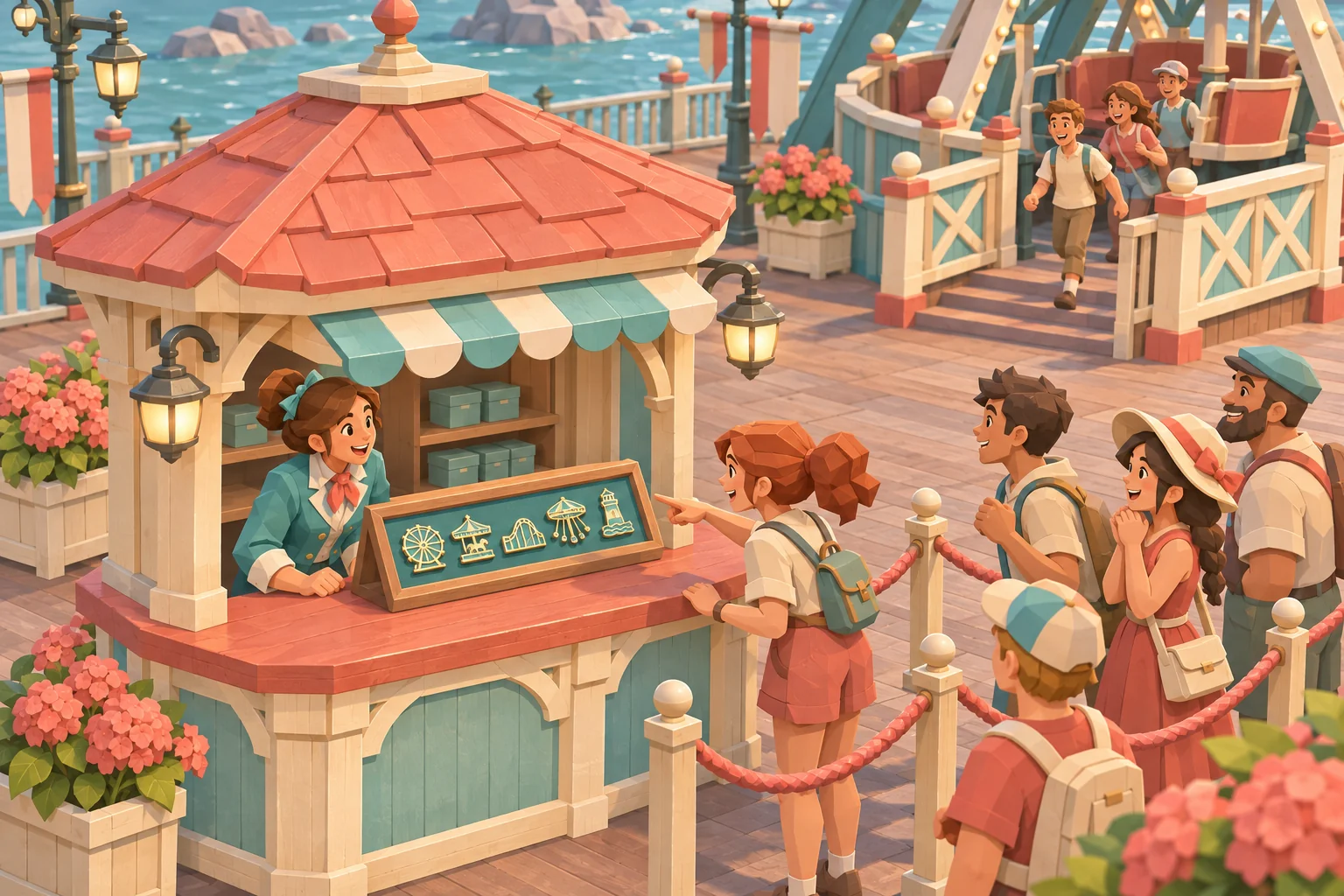
Ask for a one-kiosk build
Use SEELE AI's prompt-led browser prototyping workflow to request the path, design controls, demand rule and close-of-day report in one pass. Run the two visitor mixes before adding custom geometry or promotions. If the same item wins every time, check whether arrival data, motif matching, or the stock limit was ignored.
Make a small park management prototype called Brightwater Pier. Place one ride and one kiosk on a one-way exit path. Let me pick a color and motif for one souvenir, then feature either a ride pin or a shell lamp. Show a forecast of six guests with ride or shore preferences. One batch has four units, costs eight coins total, and sells at five per unit. A matching guest can buy one item while stock lasts. Show sales, unsold stock, lack of interest and missed sales from selling out. Give me both visitor mixes and a reset button.
Start your theme park prototype in SEELE
Frequently asked questions
Should changing the color affect sales?
Keep it cosmetic while you test the motif decision. Later you can attach a color preference to one group and see whether it changes the expected sales. Add that preference only when you can explain it before production as clearly as the current motif rule.
Can the next shift carry over unsold stock?
Yes. You will need to decide whether old units occupy production or display capacity and whether the player can liquidate them. Give inventory its own test after the two visitor mixes work. The next day should show which units came from yesterday before the player plans the new batch.
When can I make the forecast less certain?
Start with exact counts so players learn which signals to read. Once they can use that information, replace a count with a range or a ticket trend. Compare the new version against the direct forecast to see whether uncertainty creates a decision the player can explain.