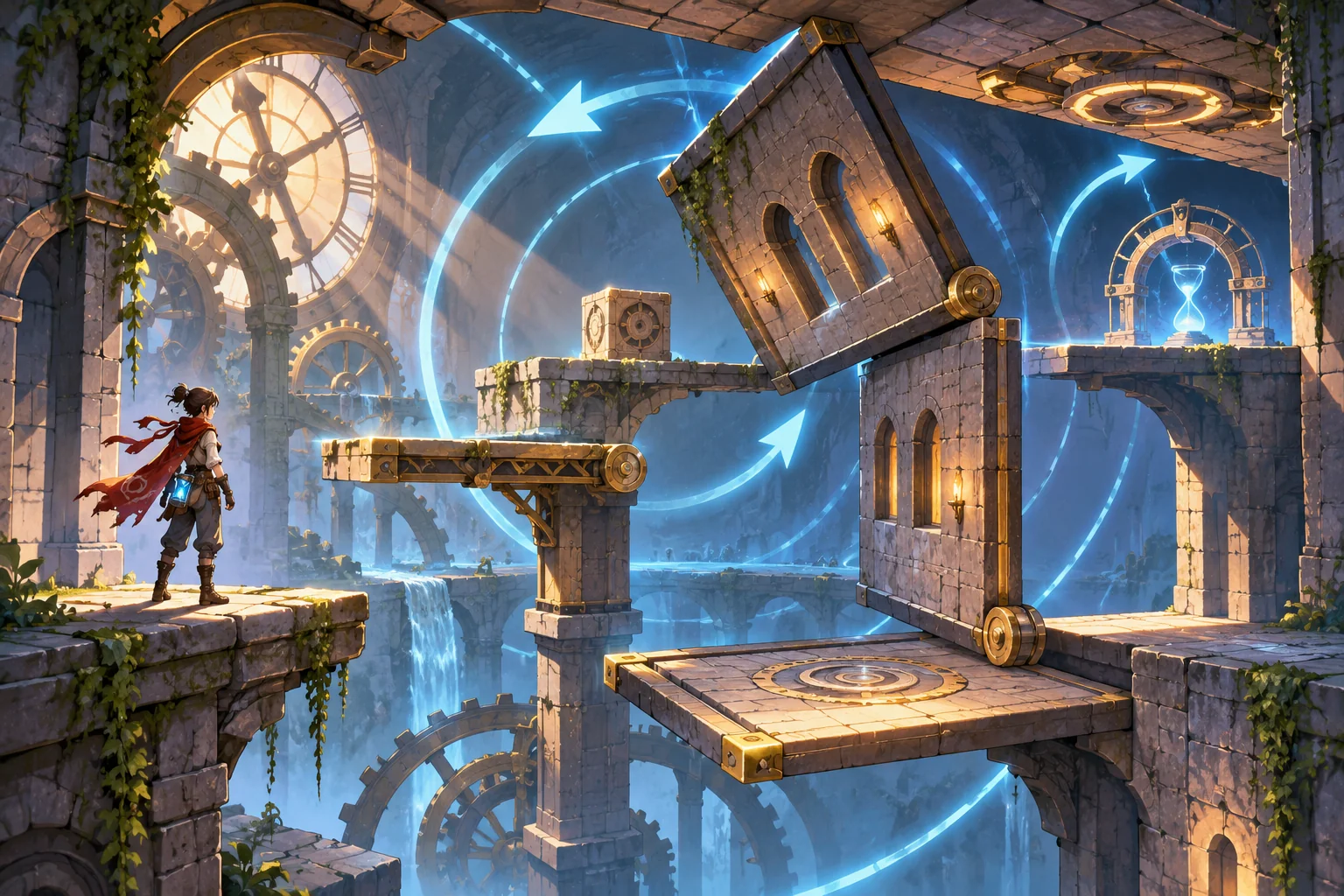
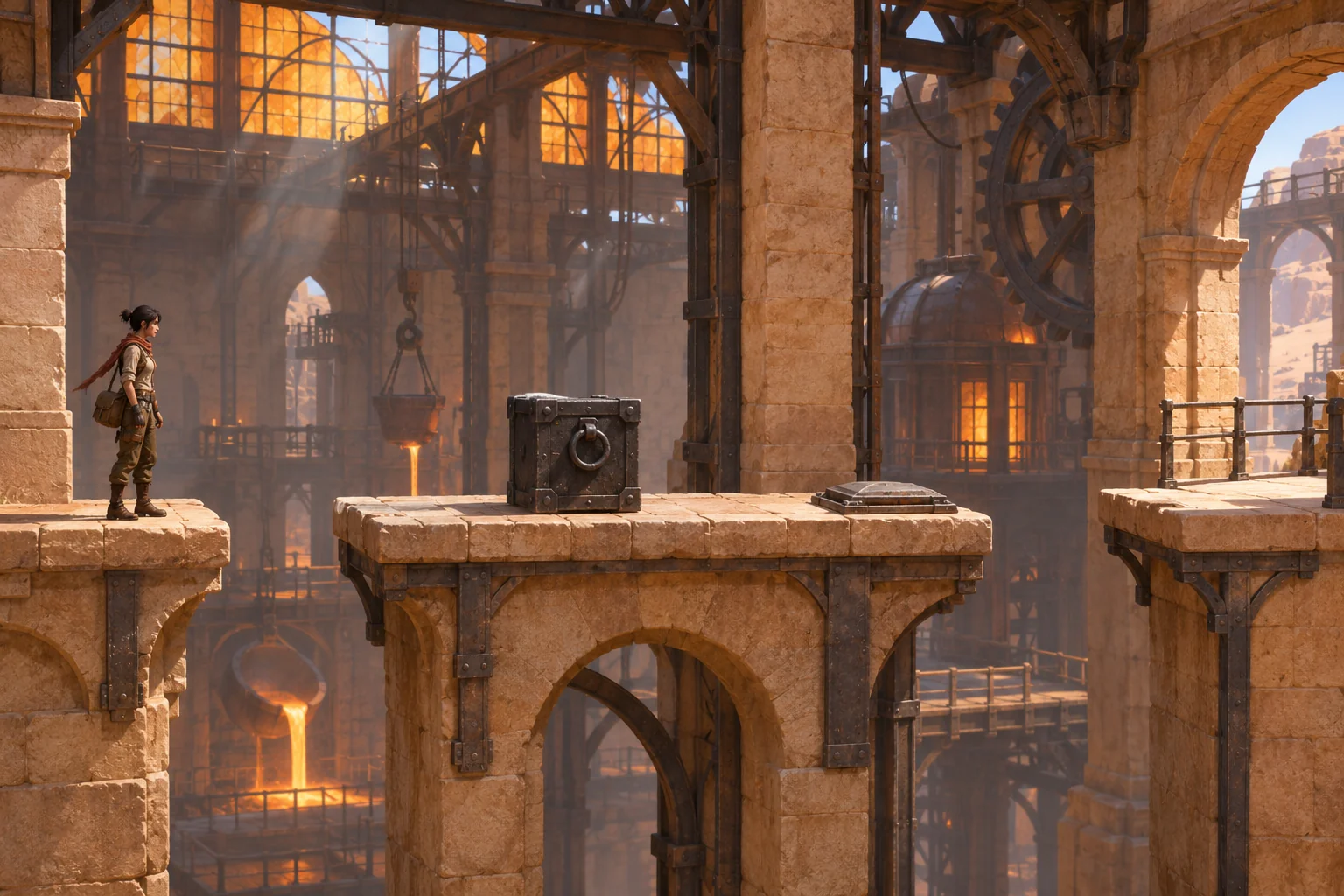
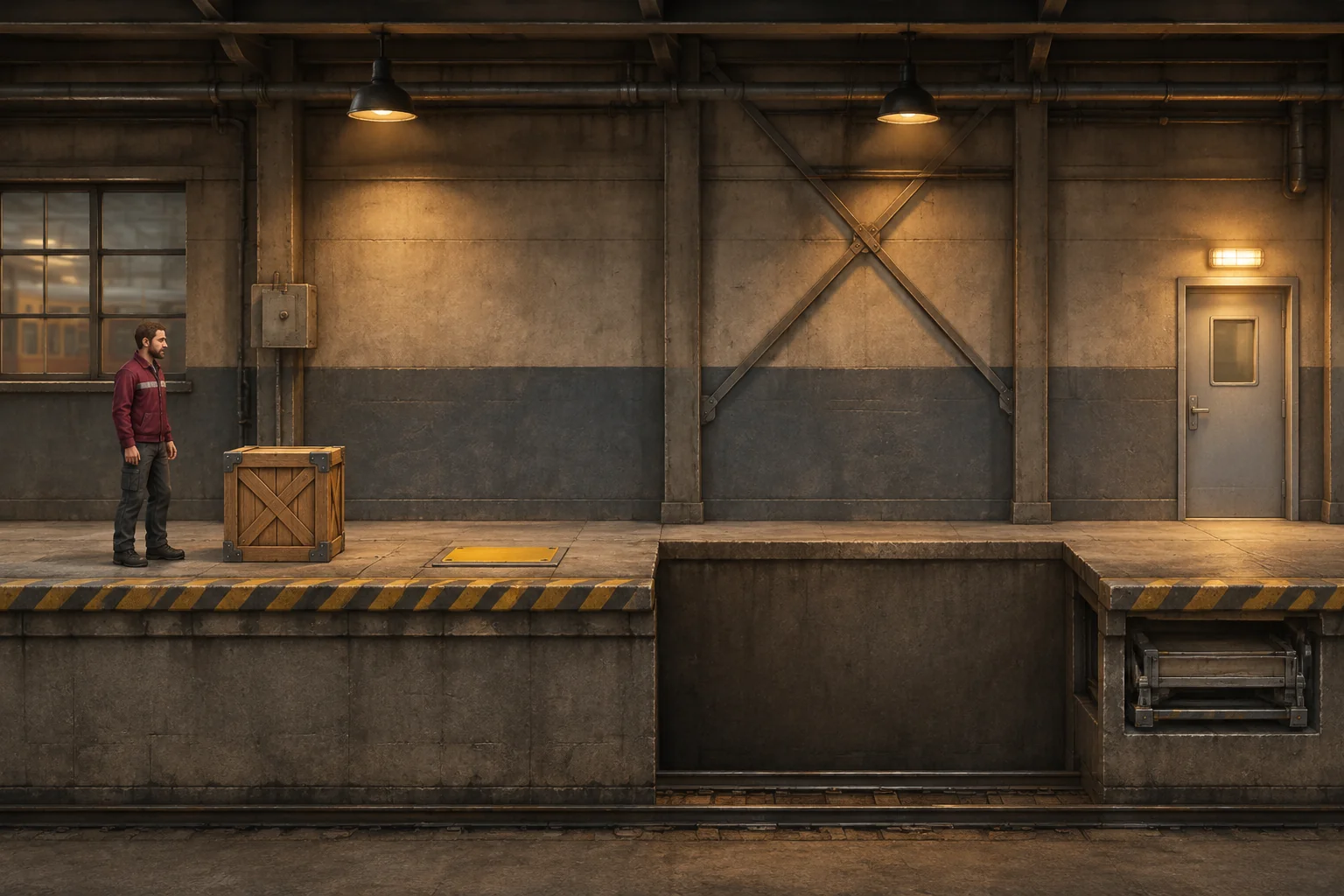
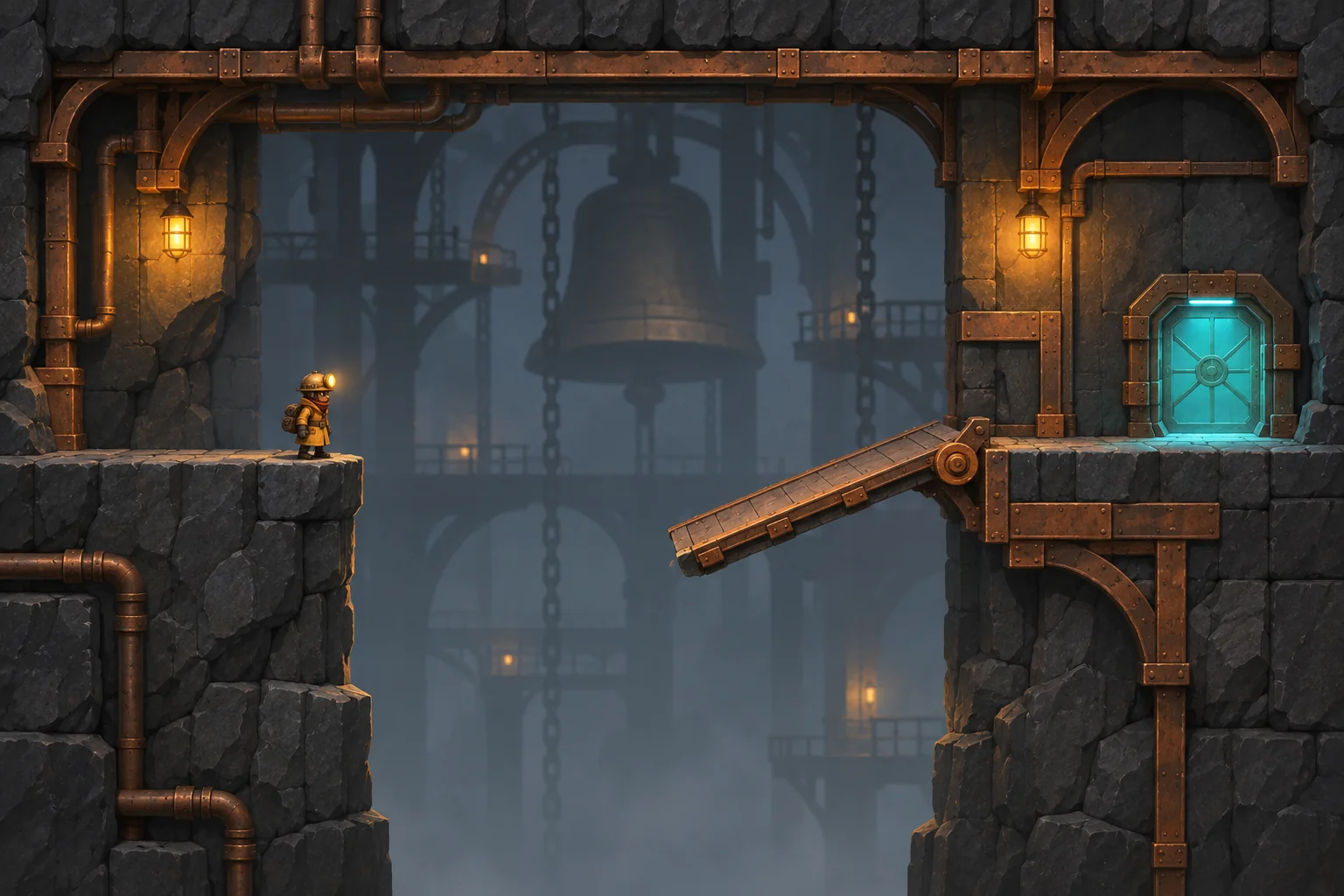
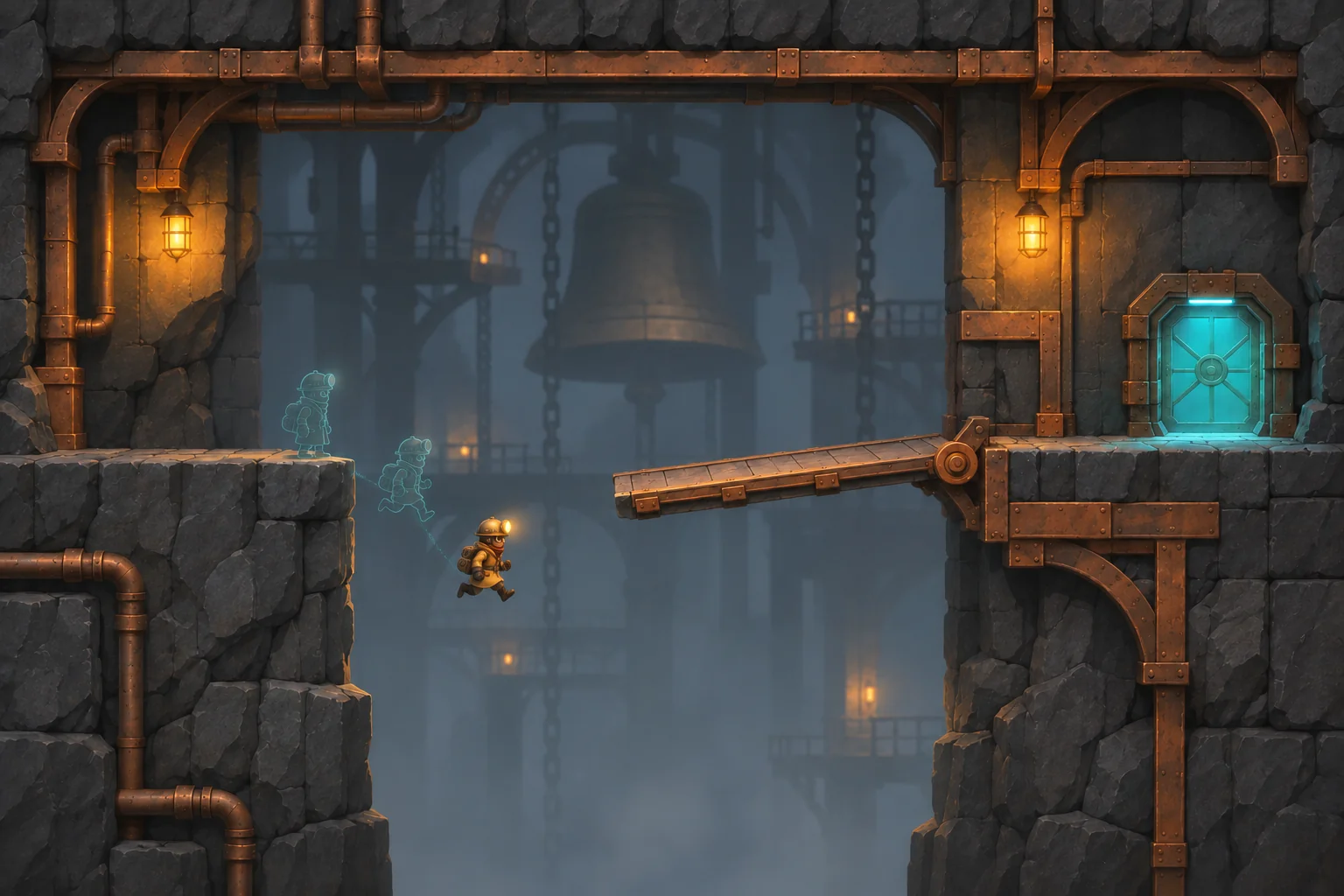
Give the player one bad jump they can undo. In Bellshaft, a fictional platformer room, an engineer races a hinged bridge as it tips into a shaft. If the player jumps too late, holding a rewind button moves both the engineer and the bridge back through the same moments. Releasing the button from the ledge gives them another attempt at the crossing.
Start with that one room. You need a stable ledge, a bridge whose tilt affects collision, and a visible exit. The first design question is whether the player can reach a frame where their feet and the floor agree. Use a small state trace to answer it before adding rooms or moving platforms.
Restore the engineer and the bridge from the same tick
Save a snapshot after every forward simulation tick. Give it the tick number, the engineer’s position and velocity, the grounded flag, the bridge angle and timer, and the checkpoint state. A good first rule is to save any value that can change what happens on the next tick. Screen shake can expire on its own. The bridge timer has to travel back with its angle or the panel can snap as soon as forward play resumes.
During rewind, stop the forward update. Step back one snapshot at a time, apply the bridge transform and collision shape before checking ground contact, and display the engineer from that snapshot. On release, use the recorded velocities and resume input at the next tick. Discard snapshots from the abandoned future so a second rewind follows the new jump.
If you build in Godot, the physics documentation explains the fixed-step callback and the limits of deterministic physics. A stored pose makes the recovery rule inspectable even when rerunning the same inputs would be a poor substitute.
Read the Godot physics-step documentation
Try a longer history on the same failed jump
In the Bellshaft design, the last safe tick is 90 and the player falls at tick 240. Use a 60 Hz simulation and count the window in earlier ticks, with the current snapshot stored separately. The last safe ledge is 150 ticks back. That puts a two-second window 30 ticks short.
A headless rule model of the fictional crossing returned the earliest available frame, tick 120, for the two-second buffer. The engineer was airborne and the bridge was angled. With a three-second buffer the same scripted failure could rewind as far as tick 60. Stopping at the first grounded frame returned tick 90, with the bridge level. This model checks history and release rules. For the playable prototype, check whether a person can see when to let go.
Keep the jump arc, bridge timer, and failure tick fixed while comparing the two settings. Watch the ground indicator and bridge angle together. If the image looks right but the player falls through the level bridge, inspect the collision transform on the release tick. If the trace never reaches a grounded frame, check the oldest retained tick before changing jump strength.
Give the AI one room and a trace you can read
Use SEELE’s prompt-to-first-build workflow for the room and its controls. Include observable acceptance conditions from the start. A trace of tick, grounded status and bridge angle gives you something more specific to fix than a jump that feels wrong.
Try the two settings from the same checkpoint. At the oldest retained snapshot, hold rewind for another moment and confirm the scene stays there. Then release on solid ground, jump with a different input and rewind again. The trace should follow the new jump. If the earlier failed route reappears, ask for a fix to future-snapshot truncation while keeping the level and controls fixed.
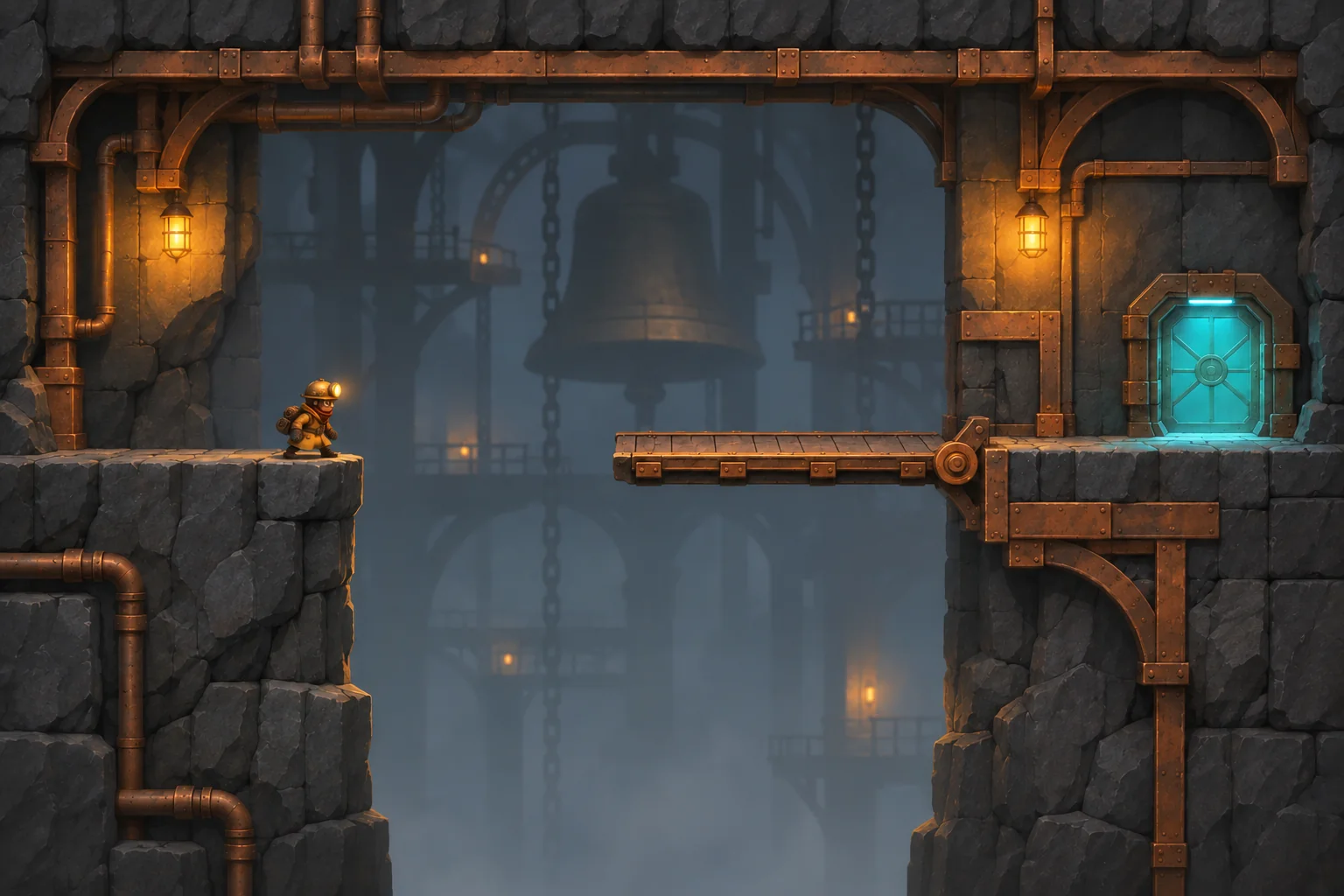
Build one side-view 2D platformer room called Bellshaft. Put a stable ledge on the left, a timed hinged bridge over a shaft, and a cyan exit on the right. Let the engineer move and jump, hold R to rewind, and release R to resume. Use a 60 Hz state history. Save the player pose, velocity and grounded status, plus bridge angle, bridge timer and checkpoint state, each tick. Freeze forward updates while rewinding. Restore bridge collision with its saved pose and clear abandoned future snapshots on release. Use a two-second starting window and allow me to switch to three seconds without altering the room. Add a developer trace for tick, grounded state and bridge angle so I can compare the same missed jump. Stop at the oldest saved frame when the buffer runs out.
Make the second attempt count
The rewind is useful when it puts a new decision within reach. Start with one crossing and make the ledge, bridge and player agree on the release frame. Extend the buffer only when the trace shows the player is reaching its edge before solid ground. Once a second jump follows the input you actually gave, you can add a more ambitious room without losing the ability to diagnose a bad release.
Start your one-room prototype with SEELE’s AI game maker
Frequently asked questions
How much memory does rewind need?
Measure the size of one snapshot and multiply by the number of frames you retain. A single room with one character and one bridge can use a compact record of numbers and flags. If the cast grows, give objects stable IDs and record only state that affects a future tick.
Should the player see the rewind buffer?
Give the player a visible cue when they reach the oldest frame, such as a small meter that stops moving. Use the tick trace for development. During play, the scene itself can communicate recovery through the character’s feet touching a ledge or the bridge returning to a usable angle.
What happens when the history contains no safe frame?
Let the player reach the oldest frame and provide a clear restart option. Jumping back to an unrelated checkpoint inside the rewind animation makes the limit harder to understand. If players regularly exhaust the buffer, inspect the timing of the last safe frame and the first recognizable failure cue.
How should new inputs work after the player releases rewind?
Read movement and jump input on the next forward tick, using the restored position and velocity as the starting state. Clear any queued one-shot jump event left over from before rewind. If you support held inputs, decide which ones may take effect immediately and keep that rule consistent across attempts.