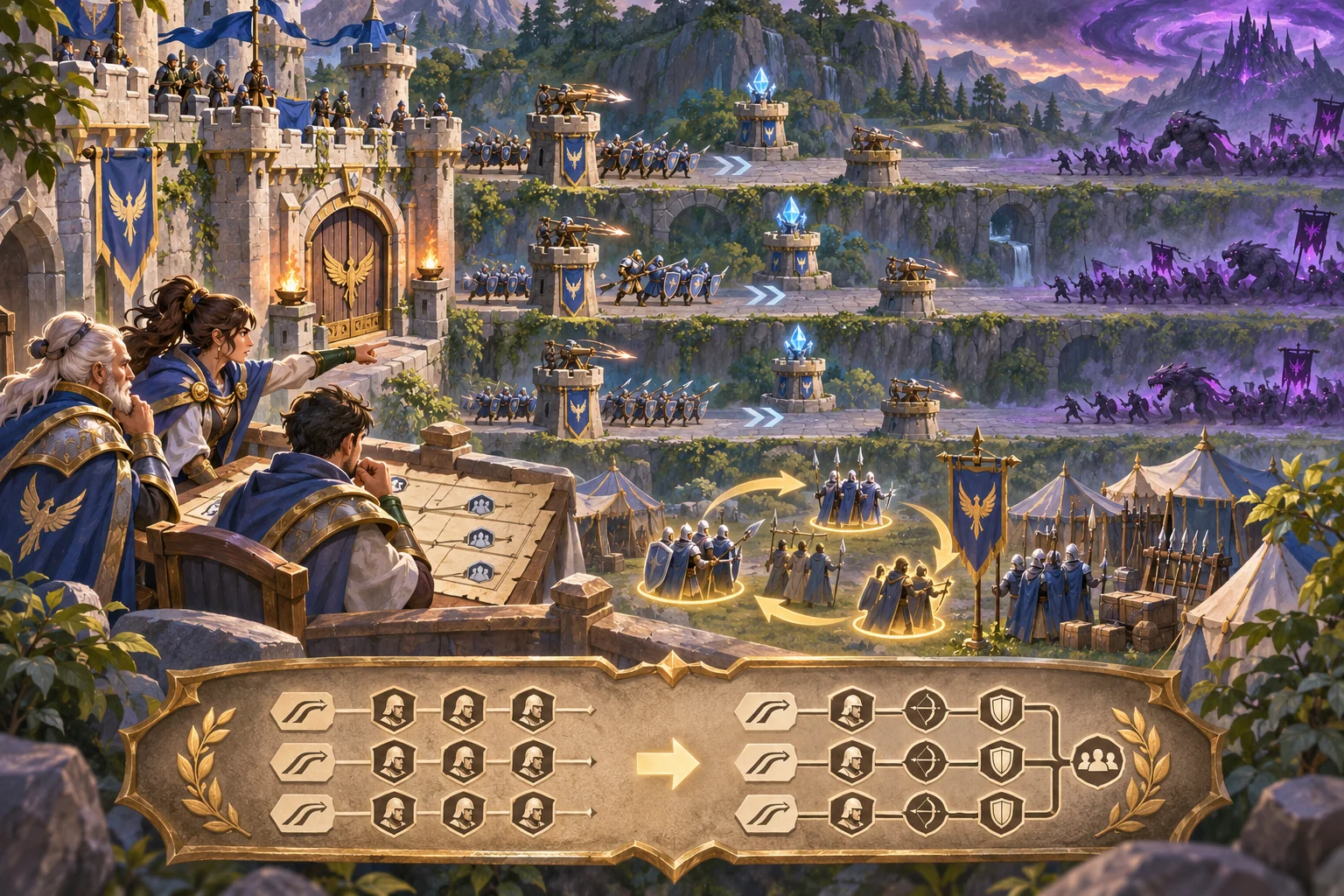
At the three-lane Stonepass, two commanders defend one gate with one roster: four towers, three shield squads and a shared supply purse. The Engineer places or rotates towers and sets their target priorities. The Marshal moves the mobile squads and chooses their formation. Neither can create a second copy of a unit, and both spend from the same treasury.
That division makes cooperation part of the defense loop. A fast planning phase gives each player one command lane and a single shared handoff token for emergencies. If a rammer threatens the center, the Engineer may slow it with a tower while the Marshal shifts a shield squad into the lane. Test that split against a solo-control replay using the same wave, roster and seed.
Keep one army roster and one supply purse
Represent every tower and squad as one persistent unit with a lane, health and upgrade level. The Engineer can place or rotate towers; the Marshal can move shield squads and set their formation. A four-tower limit and three-squad roster keep both players working with the same pieces. The shared purse starts each wave at 8 supply: a new tower costs 3, an upgrade costs 2 and a squad move costs 1.
Display the roster and purse in the center of the planning board. Each order previews its cost and the unit it changes. When both commanders act, subtract from the same balance immediately; if an order no longer fits, show which earlier spend used the supply. A shared army should create coordination, not invisible accounting.
Give each commander a useful, bounded authority
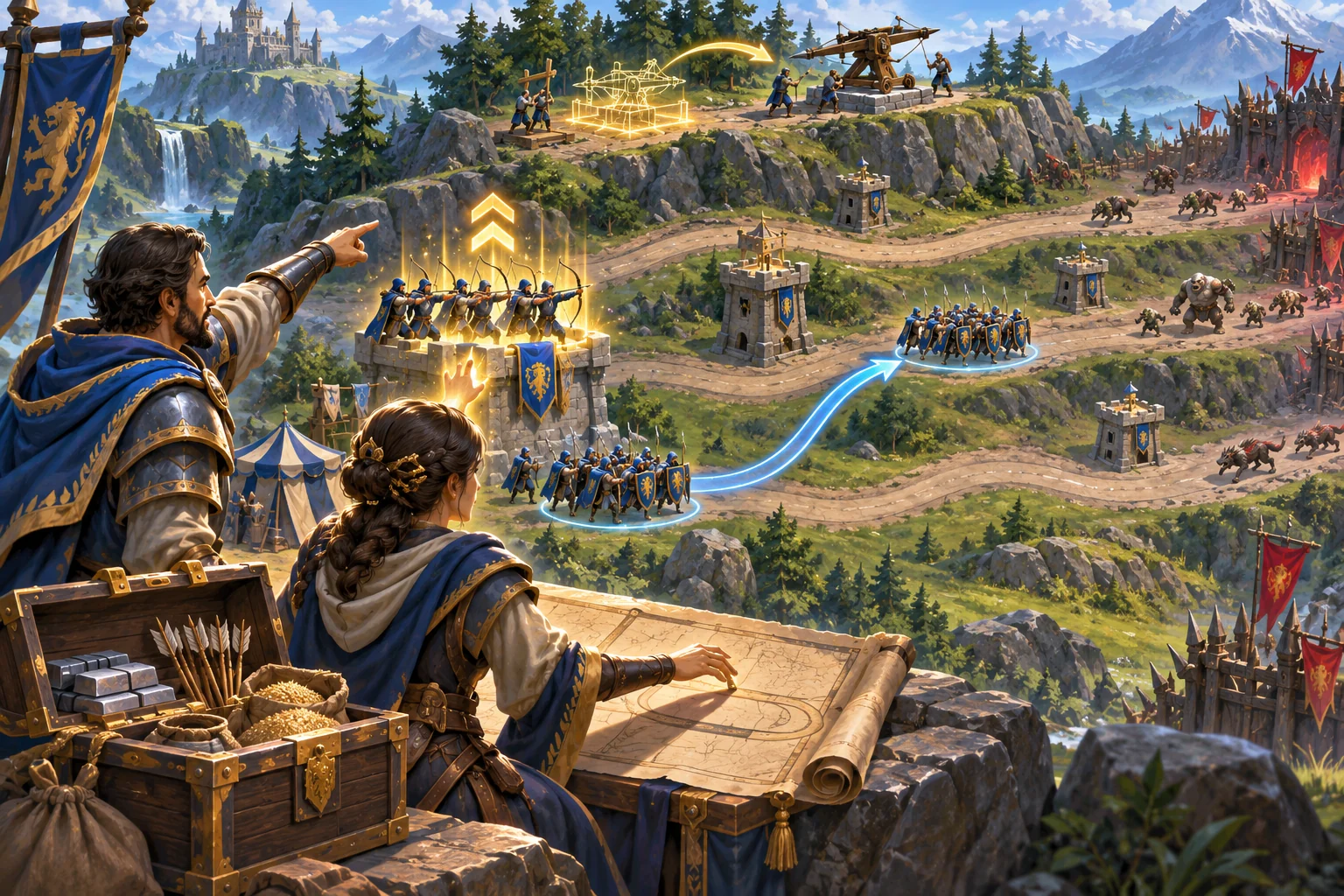
The Engineer owns tower placement, rotation and target priorities. The Marshal owns squad movement, formation and retreat. During the 20-second planning phase, both can inspect the same lane pressure preview and queue one legal order. A commander cannot overwrite the other's unit category. One shared handoff token per wave lets either player request one cross-role emergency order; both players must accept it before it resolves.
Keep the handoff visible beside the wave timer. It can move one shield squad or rotate one tower, but it cannot add a unit or create supply. If the commanders disagree, they may let the timer expire and keep the current plan. This preserves a real choice without freezing the defense behind an endless vote.

Replay the same pressure wave with solo and shared command
Set a fixed wave with two fast raiders on the left lane and one armored rammer entering center. Start with the same four towers, three shield squads, 8 supply and seed. In the solo replay, one player controls every order and spends 3 supply on a second left tower; the center squad remains in the side lane and the rammer reaches the gate with 1 gate damage.
Reset. In the shared-command replay, the Engineer spends 2 supply to upgrade the center slow tower while the Marshal spends 1 to move a shield squad into center. The raider towers remain unchanged. The rammer is stopped before the gate and no gate damage is recorded; 5 supply remains. This paper-simulated iteration changes command structure and resulting legal orders, not the wave or roster. Log queued orders, shared spend, lane pressure and gate damage. If role split feels restrictive, test the handoff token before adding more roles.
Prompt a compact two-commander defense prototype
Start with three lanes, one roster, one supply purse and two command categories. Confirm that each order updates the same army and that an accepted handoff resolves once. Add more lanes only after the planning log makes shared decisions easy to follow.
Create a compact three-lane tower-defense game with two commanders sharing exactly one army. Start each wave with four towers, three mobile shield squads and 8 shared supply. The Engineer may place or rotate towers and set their target priorities; the Marshal may move squads and choose formations. A new tower costs 3 supply, an upgrade costs 2 and a squad move costs 1. During a 20-second planning phase, each commander queues one legal order from their role. Add one shared handoff token per wave: either commander may request one cross-role emergency order, and both must accept it. Play a fixed wave with two fast left-lane raiders and one center-lane armored rammer. Add reset and compare solo control against shared roles using the same roster, wave and seed. Log orders, shared supply, lane pressure and gate damage. Do not duplicate units or give either commander a private army.
SEELE's official AI Game Maker page describes generating a playable first version from a prompt, testing it in a browser and refining it with follow-up prompts. Use that general flow to inspect role permissions, the shared purse and the matched wave; these game rules are fictional design guidance.
Build the shared-army tower defense in SEELE
Frequently asked questions
How can two commanders share one tower-defense army?
Keep one persistent roster and assign each commander a distinct action category. The Engineer controls towers while the Marshal moves mobile squads; both spend from the same supply purse, and neither player can create or own a duplicate unit between players.
How do I prevent command roles from feeling unfair?
Give both roles useful decisions every wave, show the same lane-pressure information, and make costs and legal actions visible. Add one limited, consent-based handoff for emergencies so role boundaries do not become a dead end or let one player take over.
What should the first shared-command test measure?
Replay the same roster, wave and seed under solo and split command. Record queued orders, shared supply spent, pressure in each lane and gate damage. If the roles do not change decisions, revise their authority before adding more units or waves.