Introduction
A workplace simulation game for training designers should let a participant rehearse a bounded decision and see the consequence. Start with one process that can be represented safely, define what information the player receives and explain how the debrief will work. The fictional Northstar Dispatch example in this guide asks a player to route a delayed parcel after a weather disruption. It is not a real employer, operating procedure or training result. Use it to plan a prototype, then involve subject-matter experts before adapting any real workplace process.
Bound the skill before building the scenario
A simulation is easier to review when its objective names an action: “Choose which delivery exception to resolve first using the information on screen.” That is more useful than “improve operations.” Decide what a participant should notice, what choices they can make and what feedback the simulation can support. Do not turn a fictional game score into a claim about workplace competence.
Pick a low-risk process that can be simplified without changing its essential decision. Northstar Dispatch uses three fictional parcels: one has an unclear address, one has a time-sensitive contents label and one has a route delay. The player sees a short status note and chooses a next step. The activity does not teach transport law, workplace safety or a real company policy; those would need qualified review and current source material.
| Process stage | Simulation input | Decision to practice |
|---|---|---|
| Notice | Three exception cards with different details | Which information matters first? |
| Prioritize | Choose one parcel to handle | What is the reason for that order? |
| Act | Select a fictional next step | Does the action follow the scenario rule? |
| Review | See an outcome and explain the choice | What would the player inspect next? |
The table turns a broad “workplace game” into a bounded task. If a stage cannot be explained or observed, it may not belong in the first scenario.
Prompt 1 — simulation brief
Write a fictional workplace-simulation brief for training designers. Define audience role, bounded objective, scenario context, decisions, feedback, debrief, what is simplified, and what must be reviewed by a subject-matter expert. Exclude real policy claims and unverified performance outcomes.
Give each decision enough context
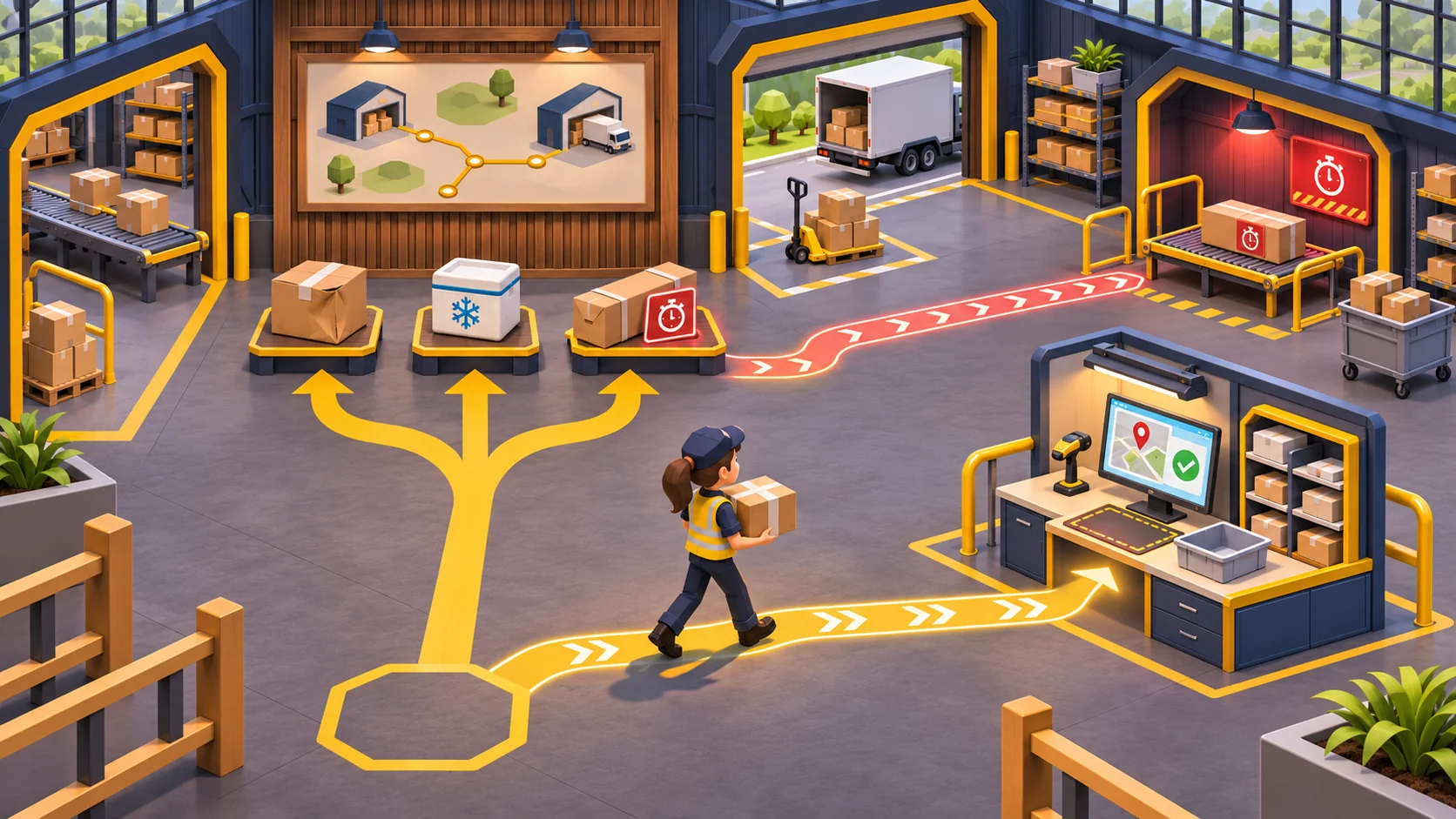
A player cannot make a useful decision if the scenario hides the relevant information. Each option should have a reason to consider it and a visible consequence. In Northstar Dispatch, resolving the unclear address first may prevent an avoidable route attempt, while checking the time-sensitive parcel may change the dispatch sequence. Neither choice should be presented as universally correct without a real process rule.
Separate the prompt from the scoring rule. If the game asks players to prioritize, show how the simulation interprets each choice and why. A debrief can explain tradeoffs, but a simple prototype should not claim to evaluate professional judgment. Show the decision, the information available at that moment and what the scenario does next.
Prompt 2 — decision map
For the fictional Northstar Dispatch scenario, create three exception cards with distinct information, two reasonable prioritization choices, the simulated consequence of each and a debrief question. Identify assumptions that would need operational expert review before adapting this to a real workplace.
A useful simulation may intentionally simplify a process. Make those simplifications visible to the designer and facilitator. If a real employee would consult another person, policy or system, do not replace that step with a fictional “correct answer” unless an expert approves the rule.
Choose how much realism the prototype needs

Realism is not a single slider. A scene can look like a familiar workplace while simplifying the actual workflow, or it can be visually abstract while preserving the decision structure. Choose the kind of fidelity that serves the learning objective. A close copy of a real system can introduce privacy, security, policy and maintenance obligations without improving the prototype.
| Design choice | Useful when… | Review before adding… |
|---|---|---|
| Fictional names and data | The goal is to rehearse a generic decision | Any resemblance to real customer records |
| Simplified interface | The mechanic matters more than tool navigation | Claims that it reproduces a live system |
| Branching outcome | A decision changes what happens next | Whether the branch reflects approved process rules |
| Timed response | Timing itself is part of an approved objective | Whether a time limit creates the wrong behavior |
Start with only the details necessary to make the decision understandable. Add realistic controls or sensitive information only when the project owner can approve and maintain them.
Keep the scenario editable
Separate situation facts, choices, consequences and facilitator notes. A training designer should be able to change the fictional scenario without rewriting the simulation logic. The JSON below describes an invented planning exercise and is not a real dispatch procedure.
Prompt 3 — editable scenario template
Convert the Northstar Dispatch brief into an editable simulation template. Include role, scenario, three exception records, decision options, consequence notes, debrief questions, fictional-data label and expert-review flags. Keep evaluation outcomes blank until observed.
{
  "simulationName": "Northstar Dispatch — fictional exercise",
  "status": "concept; no workplace trial",
  "objective": "prioritize one exception using displayed context",
  "records": [
    {"id":"parcel-a","issue":"address needs clarification","priority":"not assigned"},
    {"id":"parcel-b","issue":"time-sensitive label","priority":"not assigned"},
    {"id":"parcel-c","issue":"route delay","priority":"not assigned"}
  ],
  "choiceRule": "scenario-specific; requires expert approval if adapted",
  "feedback": "show fictional next step and rationale",
  "debrief": ["what information mattered?", "what would you verify?"],
  "evidenceStatus": "fictional and untested"
}
Keep facilitator guidance separate from what the player sees. This helps a reviewer distinguish the intended process from the story wrapper and identify any rule that needs operational review.
Build a playable slice and debrief it
A first prototype can include a start screen, one decision, a consequence and a debrief prompt. A game creation tool can help explore a playable starting point from a concise scenario; SEELE’s current capability catalog describes one-line game creation and playable-game categories. Check the actual prototype against the brief and mark any static or simulated screens. The catalog does not verify Northstar Dispatch or provide workplace training evaluation.
Prompt 4 — build checklist
Create a fictional Northstar Dispatch prototype with three exception cards, one prioritization choice, a visible simulated consequence, restart and facilitator debrief question. Mark each behavior implemented, static, simulated or not tested. Do not present the game as a real workplace system.
Then inspect the decision path. Does the player see the relevant detail before choosing? Does the consequence follow from the scenario rule? Can the player return to the start? A local walkthrough can check interface behavior; it cannot establish that employees will perform better at work.
Prompt 5 — facilitator debrief
Write a facilitator debrief for the fictional dispatch exercise. Ask what information the participant noticed, why they chose a response, what they would verify in a real workflow and where the simulation is simplified. Avoid grading professional competence from one game choice.
Plan the review around observable decisions
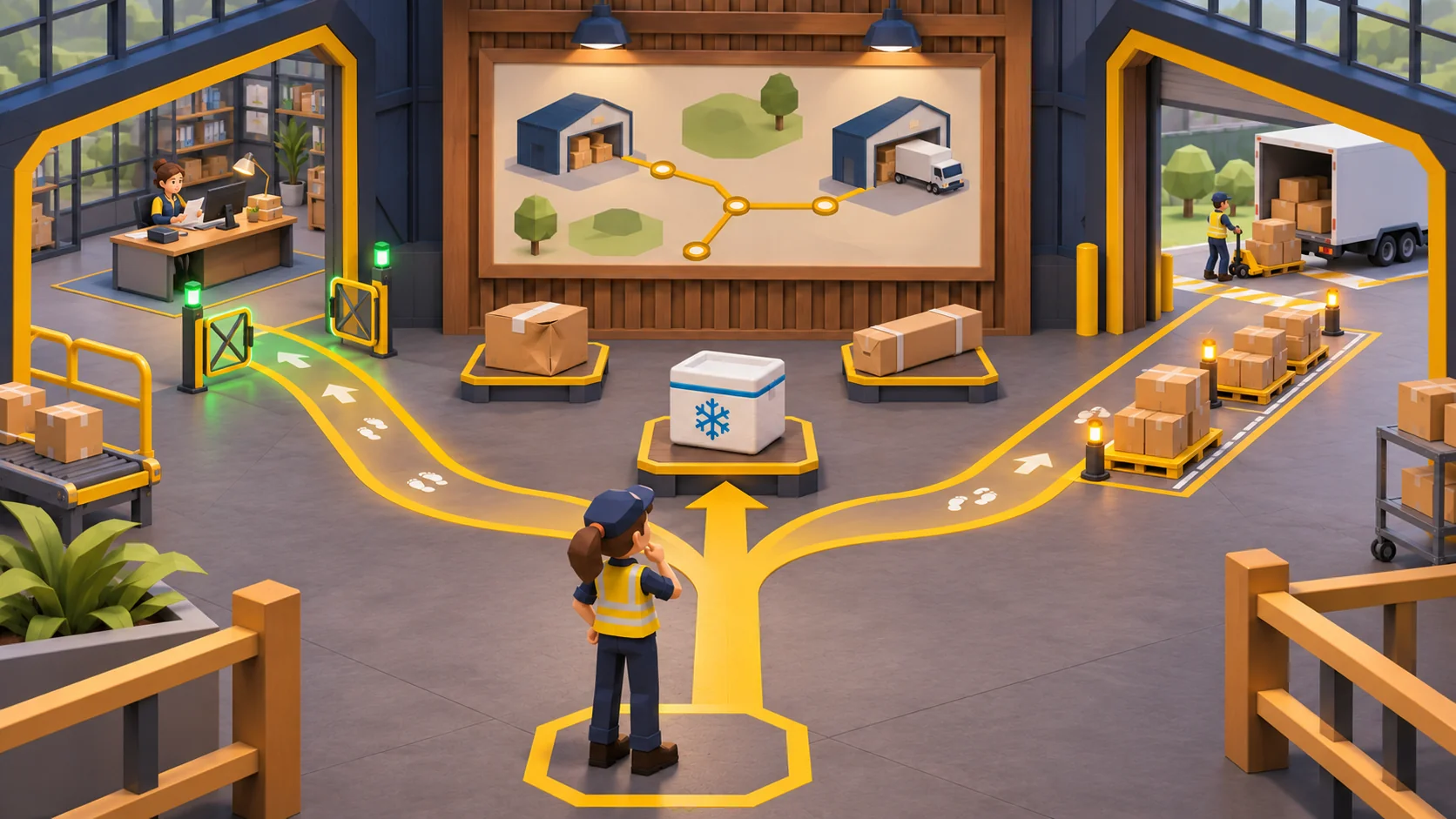
A review can examine whether the scenario is legible and whether the feedback is useful. Record the exact build and task, then separate what the participant did from what the facilitator thinks it means. A small prototype review may expose a missing instruction or confusing branch. It does not validate a real work procedure or show that training transfer occurred.
| Review item | Record | Keep the conclusion limited to… |
|---|---|---|
| Information visibility | Which details were noticed before choice | This screen and task, not all job situations |
| Choice rationale | Participant explanation in their own words | That one decision context |
| Feedback | Whether the stated consequence appears | Prototype behavior, not learning transfer |
| Simplification | Questions raised for an expert | Items requiring approval, not approved policy |
Prompt 6 — review plan
Create a review plan for a fictional workplace simulation. Include build version, participant task, data/privacy approach, observation notes, accessibility, facilitator prompts, domain-expert review and limits. Leave results blank until collected and distinguish usability from job performance.
Conclusion
Build one safe, bounded work decision with visible context, a consequence and a debrief. Use editable fictional data until a subject-matter expert approves any real process detail, and keep prototype observations separate from job-performance claims. Northstar Dispatch is invented and has no workplace evidence. Use the Free AI game maker to explore the game concept, then review the actual interaction against the approved training objective.
FAQ
What is a workplace simulation game?
It is a game-like scenario in which a participant makes decisions in a work-related context and sees the simulation respond. The scenario can help a designer inspect whether a process is clear, but it is not automatically a replica of a real job or a validated training method. Define the task and the limits before building.
How realistic should a workplace simulation be?
Use enough detail to make the intended decision understandable, then add realism only when it supports the objective. A fictional interface may be safer for early exploration than copying a live system or using customer information. Real policies, operational rules and safety steps need review by qualified stakeholders before they appear as instructions.
Can a game score measure job competence?
Not by itself. A score reflects choices made within a particular scenario and rule set. It does not establish how a person will perform in a real workplace, especially when the game simplifies tools, pressure or context. If competence matters, define an appropriate assessment and review process with the organization responsible for the role.
Should simulation choices have one correct answer?
Only when the objective and approved process define a clear rule. Some workplace decisions involve tradeoffs or require checking additional information. In those cases, show the scenario assumptions and use a debrief to explain the reasoning rather than rewarding a hidden answer. A fictional prototype should not invent a rule and present it as company policy.
What should training designers test first?
Check whether participants can see the relevant information, understand the choice, observe the stated consequence and restart or debrief. Record the build version and the exact task. This review can expose interface or wording problems; it does not prove training effectiveness or validate a real operating process.