In a player-built arena fighter, obstacle placement becomes part of the matchup. In fictional game Ringwright, both players place obstacle cards on a small grid before the duel. A wall can block movement and attacks; a low barrier can be crossed with a vault. The arena becomes a shared tactical puzzle instead of a static backdrop.
Keep the rules readable: each fighter moves up to two orthogonal cells, then may attack a target within Manhattan range three if no blocking obstacle interrupts line of sight. Before combat, players alternate obstacle placements; reject any layout that seals every walkable path between the starting edges.
Let both fighters build the course before the duel
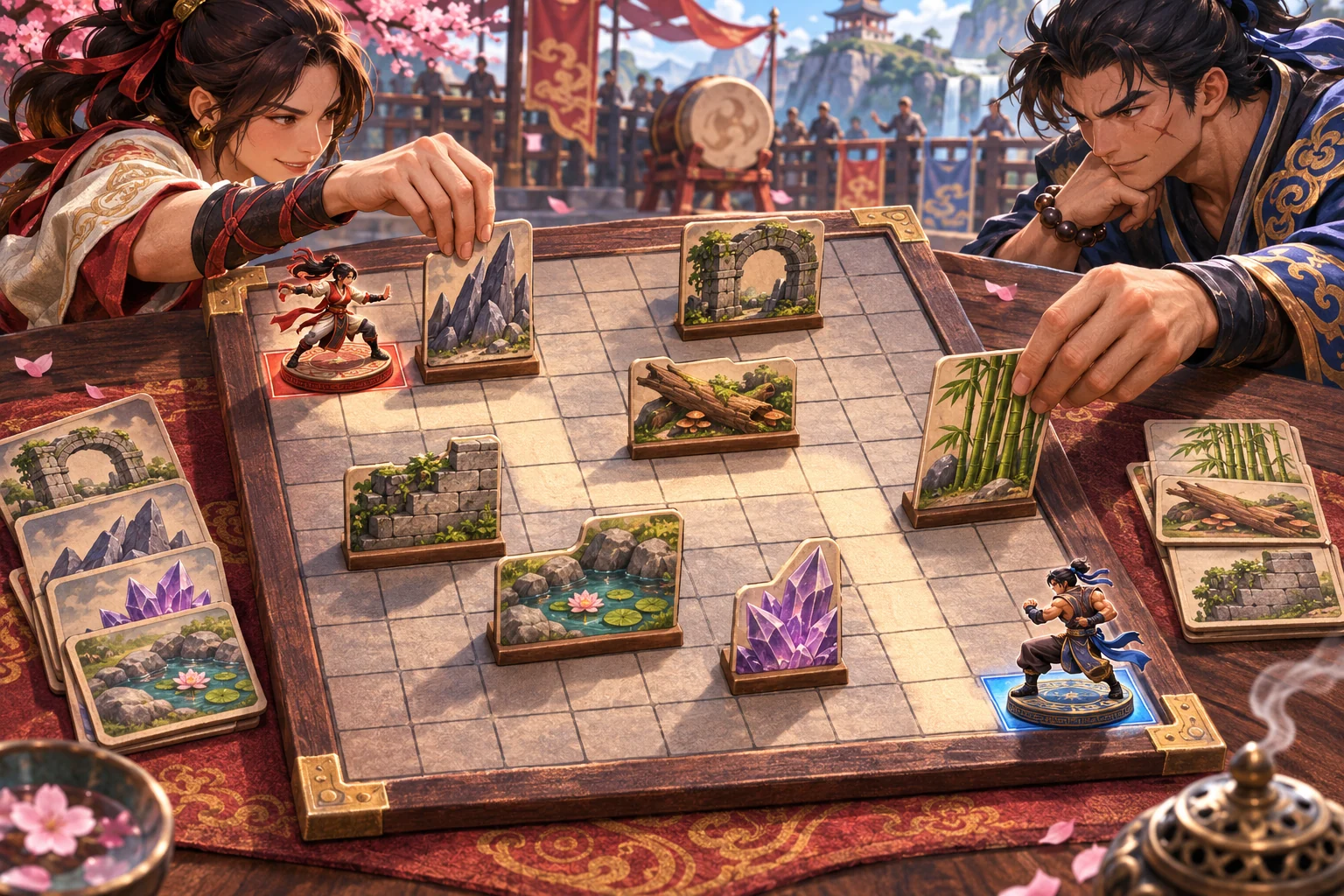
Use a 7×5 grid with fighters starting on opposite edges. Each player alternates placing two obstacle cards, for four placements total. Pillar blocks movement and line of sight; Low Rail blocks movement but can be crossed with a vault; Cover Crate blocks attacks through its cell but can be passed around.
Validate the course after each placement. At least one walkable route must remain between starts, and no obstacle may cover a start cell. Show legal cells and a route preview before confirming a card. Alternating placement lets both players shape the arena and respond to a growing choke point.
Connect obstacle types to movement and attack rules
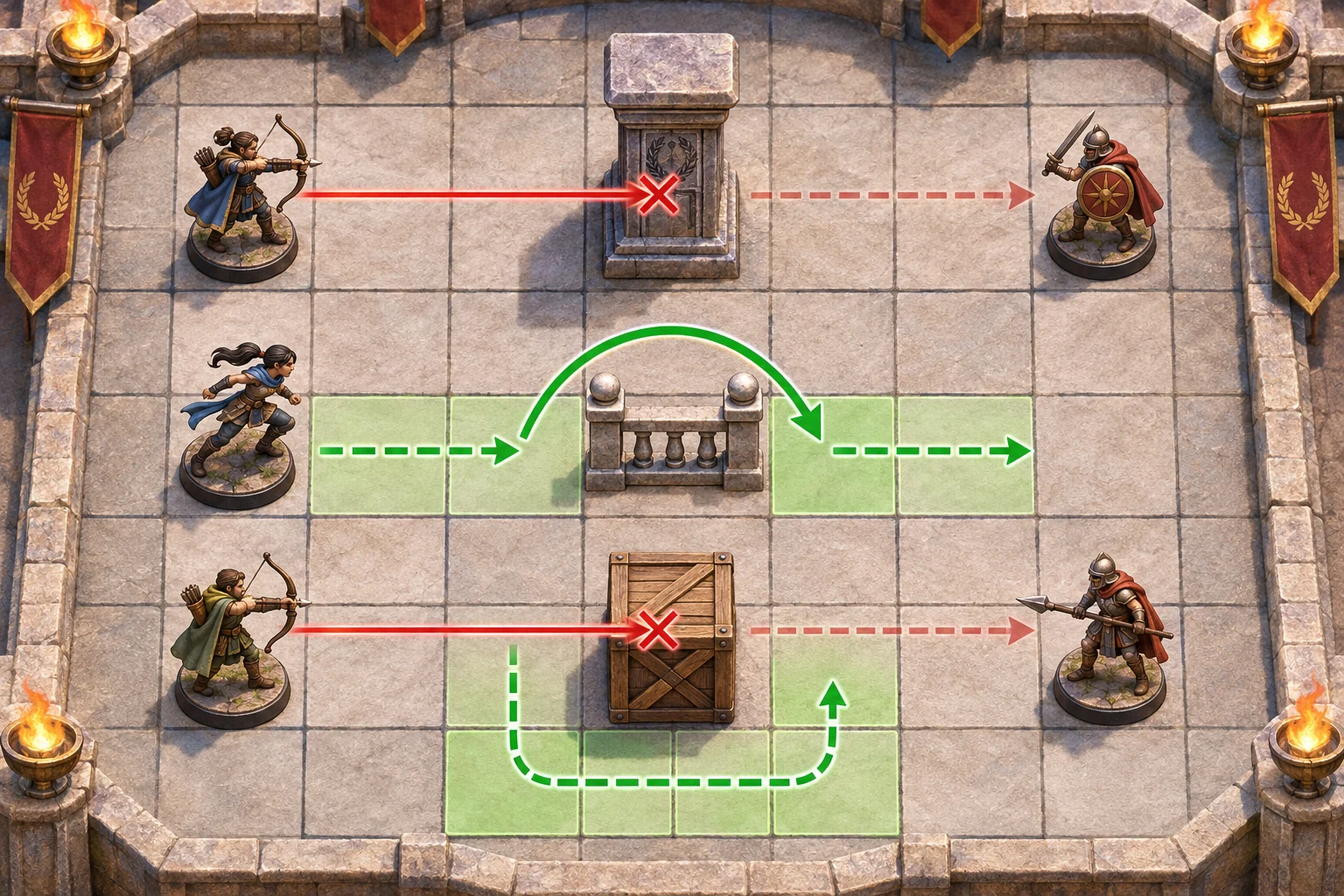
On a turn, move up to two orthogonal cells, then make one attack. A basic strike reaches a target at Manhattan distance three or less. It also needs line of sight: a Pillar or Low Rail on the traced row or column blocks it; Cover Crate blocks attacks through its own cell. Preview attacks from the fighter’s new position after moving.
Do not make every obstacle do everything. Pillars shape routes and sight lines; Low Rails create a vault choice; Cover Crates interrupt a shot without sealing movement. Put the rule on each card and outline affected cells when selected. That ties arena construction to visible tactical decisions.
Replay the same matchup with a central pillar
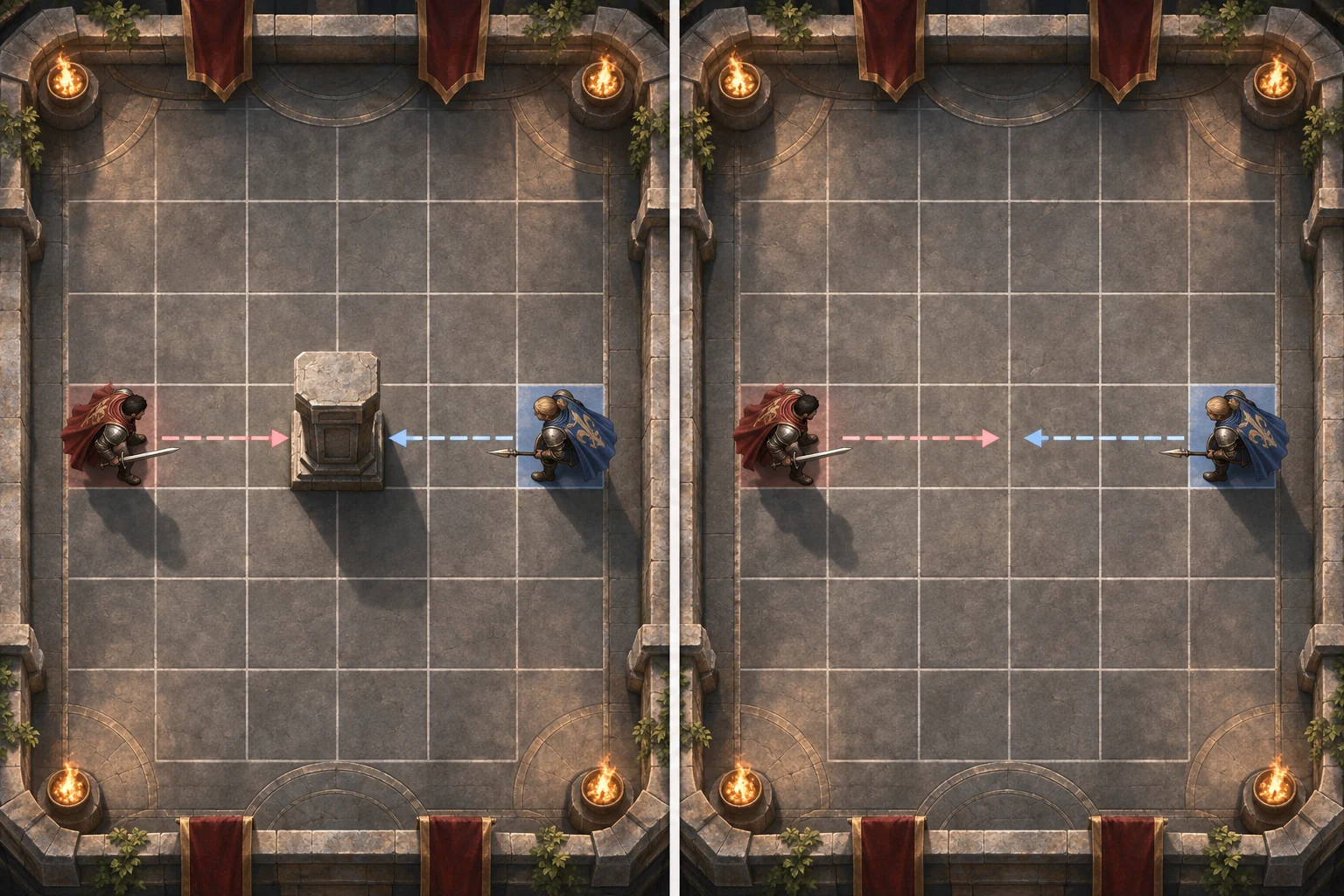
Place Fighter A at (1,3) and Fighter B at (7,3) on the 7×5 grid. Put one Pillar at (4,3). Their direct row is blocked, so neither has a clear attack line along row three from the starting cell. Each must move around the center before that line opens. Record the blocked line and legal approaches.
Reset without the Pillar. The direct path is clear, but the fighters are six cells apart, so neither can strike immediately at range three. The obstacle changes approach and sight without changing fighter stats. This is a paper comparison, not a measured match. Track routes, turns before first attack, obstacle picks and possible traps in playtests.
Prototype the course validator before adding fighters
Build the grid, four obstacle placements, start cells, route validation, two-cell movement and line-of-sight preview. Add a resettable arena to compare the same matchup with and without a center blocker. Explain invalid placements and show the resulting route before a card is committed. Add special attacks only after players can explain how the course changed their approach.
Create Ringwright, a top-down arena fighting game where two players build the obstacle course before a duel. Use a 7×5 grid with opposite-edge starts. Players alternate placing two obstacle cards each; keep at least one walkable route and never cover a start. Pillar blocks movement and line of sight. Low Rail blocks movement but can be crossed with a vault. Cover Crate blocks attacks through its cell but can be passed around. Fighters move up to two orthogonal cells and attack within Manhattan range 3 if line of sight is clear. Compare a resettable center-Pillar layout with one without it. Preview legal placements, routes and attack lines. Track turns to first attack, routes, obstacle picks and traps.
SEELE's official page describes a general workflow: generate a playable first version from a prompt, test it in a browser and refine it with follow-up prompts. Use it to inspect course validation, movement and attack previews; Ringwright and its rules are fictional design guidance.
Build the player-built arena fighter in SEELE
Frequently asked questions
How can players build an obstacle course for a fighting game?
Let players alternate placing obstacle cards before combat, with a validator that preserves at least one path between starts. Each card should have a clear footprint and distinct movement or sight-line effect. Preview legal placements before confirming them. This keeps placements testable in repeated runs.
How should obstacles affect arena combat?
Give obstacles separate rules for movement, vaulting, cover and line of sight. Show the path and available attacks from a selected position. This helps players understand how course construction changes approach choices instead of relying on hidden collision rules. Show this before each move.
What should I measure in an obstacle-course fighter test?
Replay the same fighter matchup with one obstacle layout changed. Track legal routes, turns before the first attack, obstacle picks and whether either player can trap the other. If one setup blocks every approach or has no tactical effect, adjust its footprint or card rule.