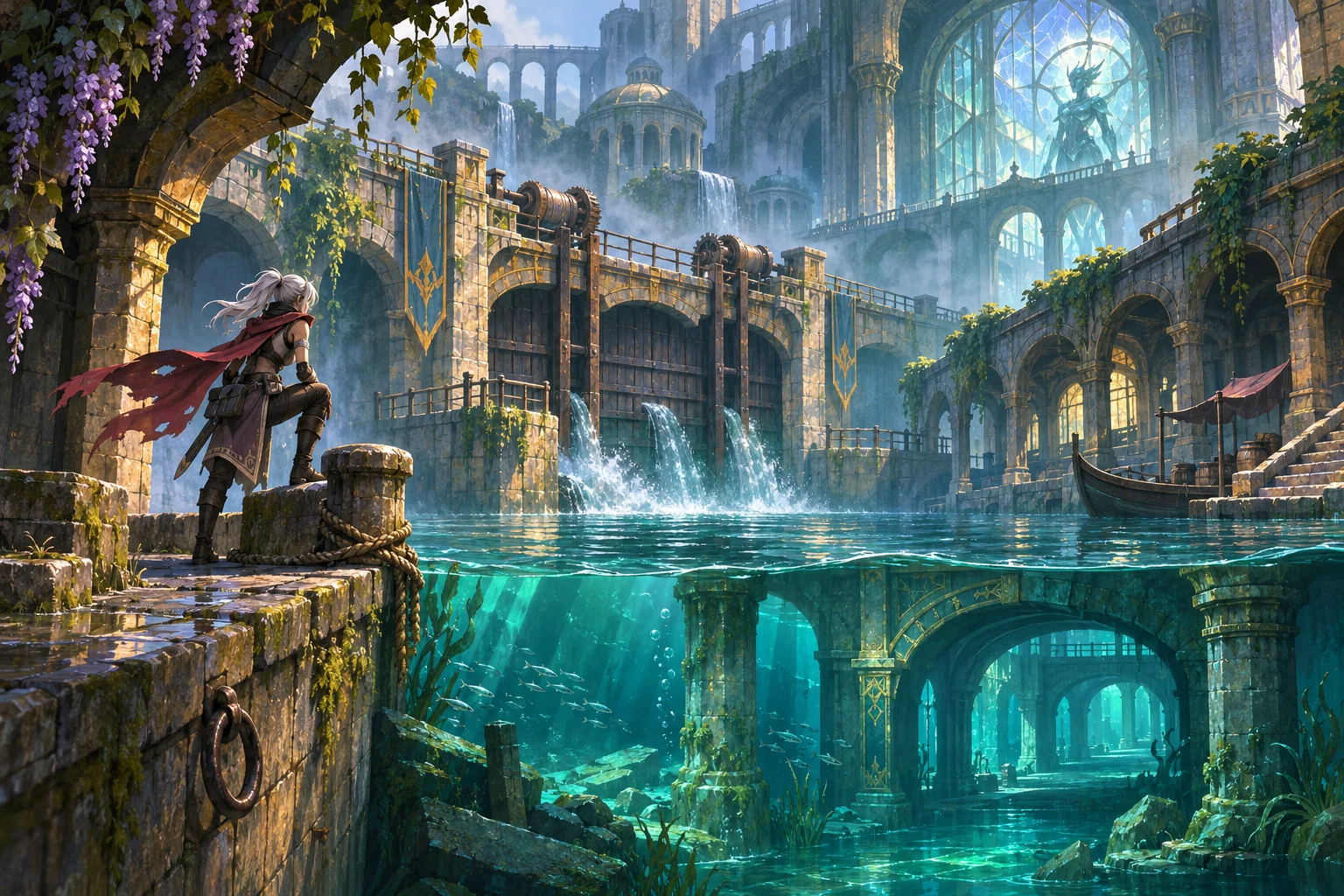
Two teams enter the same flooded causeway, but they do not receive the same map notes. Team A's scout reports that the east ridge loses its high-ground bonus after round 2. Team B's surveyor reports that the west bridge safely holds only two units. Both teams can see the center ford will flood after round 1. Each side locks a formation, then automatic combat resolves without mid-battle commands.
That gives map information a job before the fight begins. The report should change lane assignments or unit roles, and the combat log should show what each team knew when it chose. Keep the underlying map and battle seed identical so players can tell whether intel helped them prepare rather than changing the terrain itself.
Separate public terrain from each team's private report
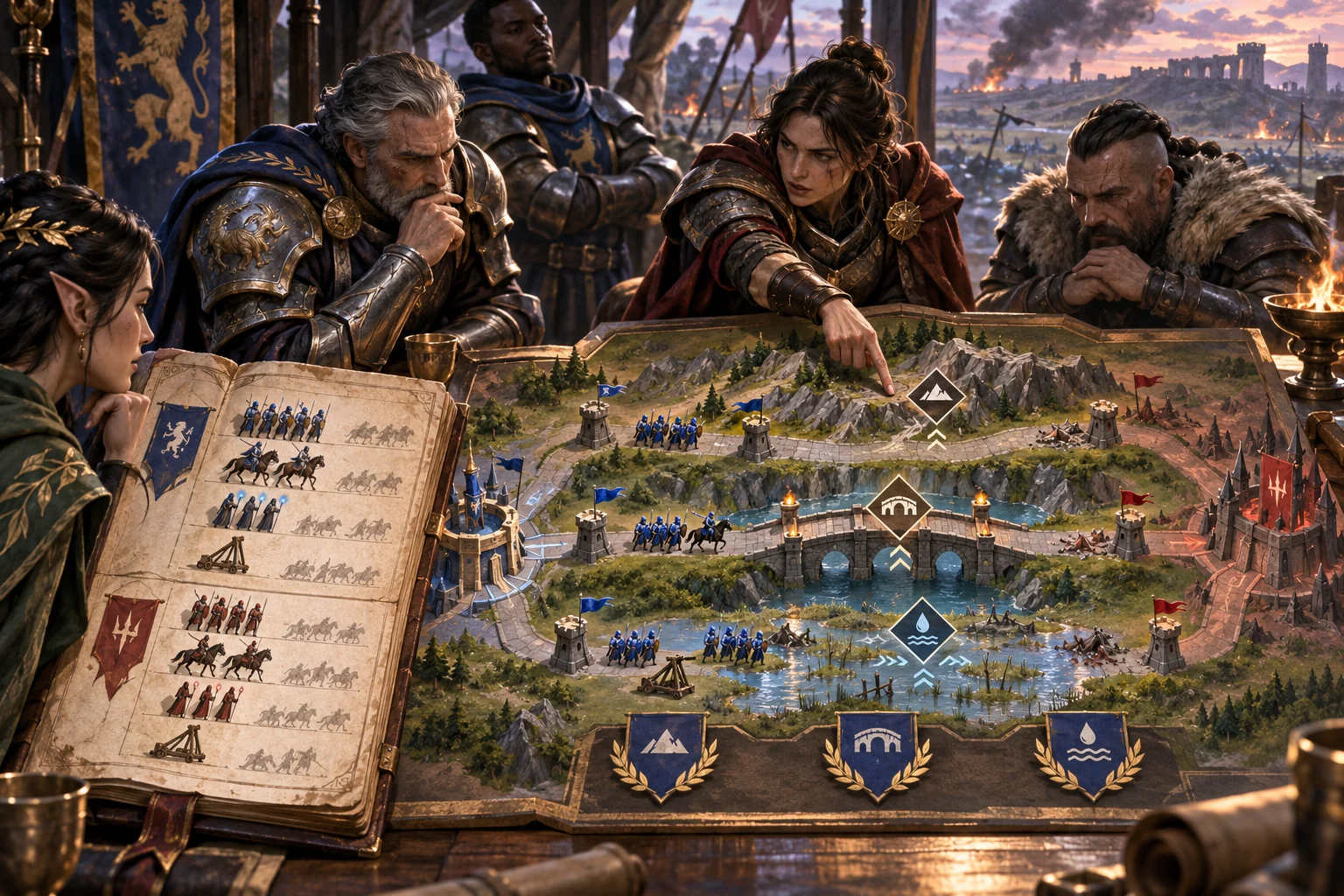
Use a three-lane map with three specific rules. The east ridge grants ranged units a high-ground bonus until the end of round 2. The west bridge safely holds two units; each extra unit there takes collision damage. The center ford is public information and floods after round 1. Show the common map to both sides, but deliver one private report to each team before formation lock.
Team A receives the ridge timing and can choose a short-range reserve or place ranged units where the bonus matters early. Team B receives the bridge capacity and can spread a third unit to another lane instead of risking a collision. Identify the source and confidence of each report. A report can be reliable but partial: the scout knows the timing, not which enemy units will use the ridge.
Make map knowledge affect lane assignments
Provide formation slots and a lock-in step before automatic combat. If Team A has the ridge report, a ranged squad can take the east lane for the first two rounds while a mobile reserve waits to rotate after the bonus ends. Without that timing, the team might leave the ranged units exposed there for the full battle. The report changes planning, not the auto-battle rules.
For Team B, the bridge report warns against stacking three units on the west lane. Place two defenders there and send the third unit through the center or east. Keep the shared flood warning visible to both teams so nobody mistakes private intel for a hidden map change. Once formations lock, resolve the same turn order for every replay and log collision, high-ground and flood effects.
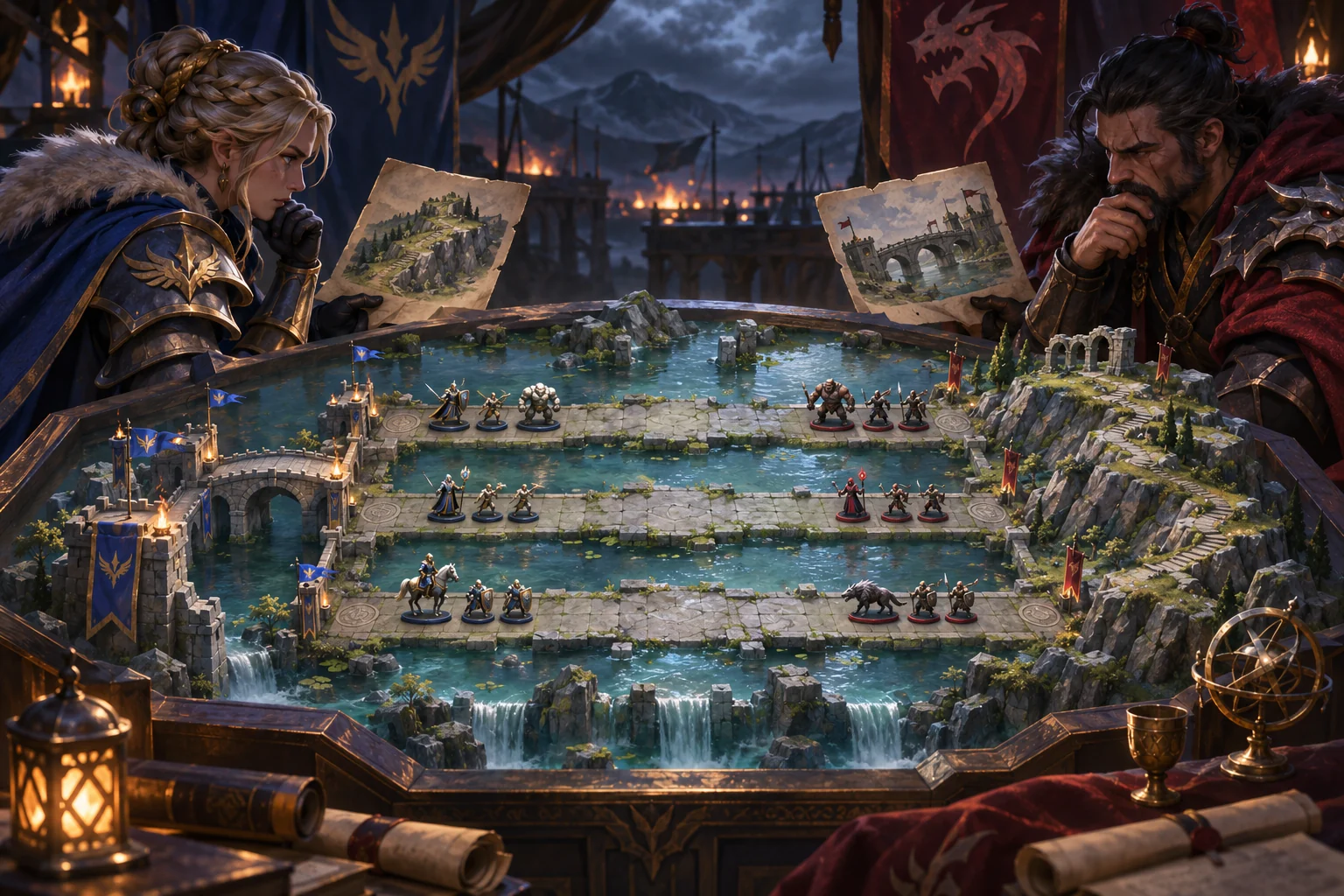
Replay the same map with reports shown and hidden
Reset both rosters, terrain, seed and automatic turn order. In the first replay, show Team A the ridge timing and Team B the bridge capacity. A places ranged units east with a planned rotation; B limits west to two units and avoids collision damage. The public ford warning remains visible to both. Record lane assignments and the combat effects each report anticipated.
Reset again and hide the private reports while leaving the terrain unchanged. Use the same formation defaults for the comparison: Team A leaves its ranged squad on the ridge after the bonus expires, and Team B stacks three units on the west bridge, triggering collision damage. Compare surviving units and lane control at the end of round 3. If intel does not change a visible outcome, adjust the formation options or terrain rules before adding more reports.
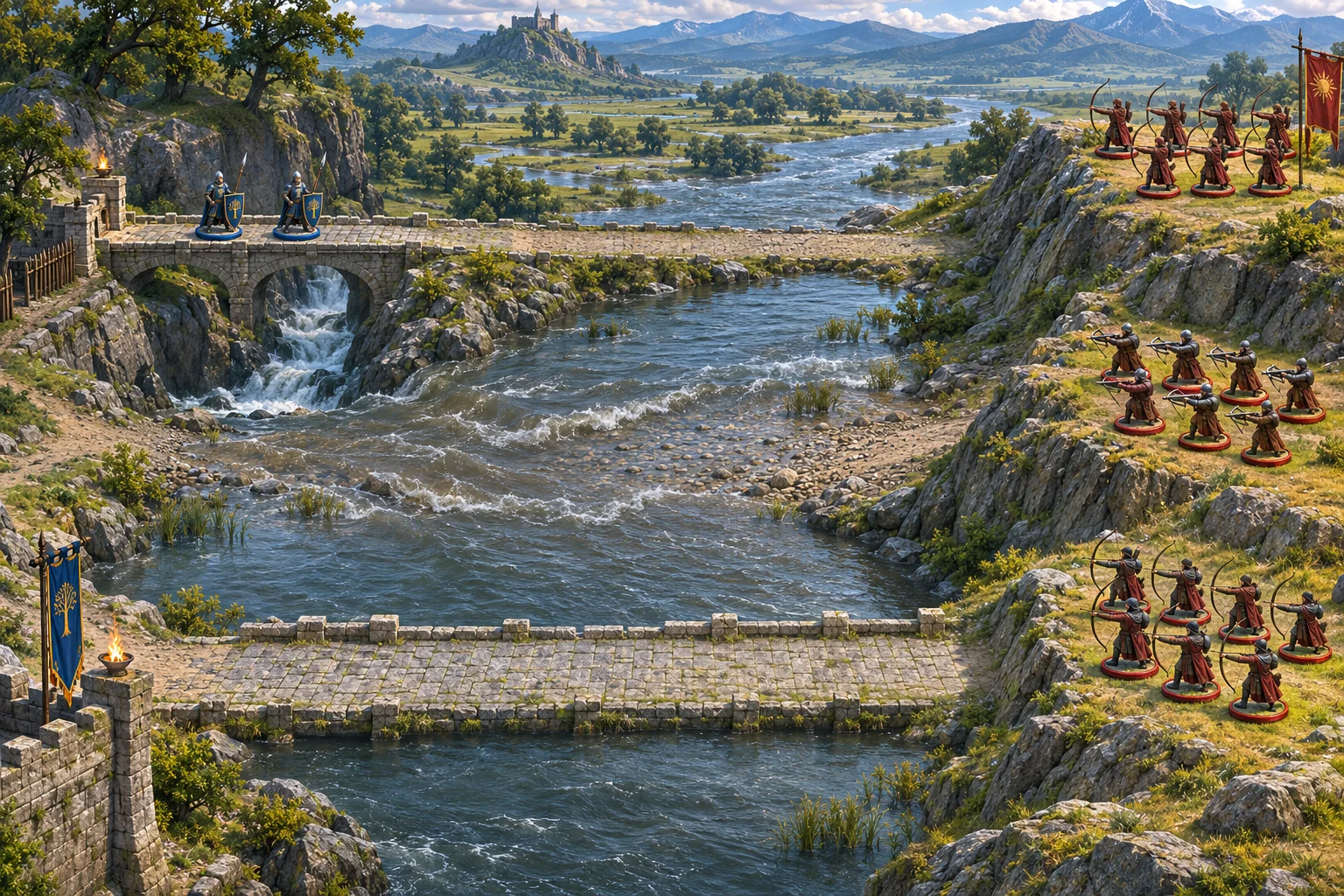
Prompt a first auto-battle with asymmetric terrain reports
Start with two teams, three lanes, one shared hazard and one private report per side. Ask for a formation lock, deterministic turn order and a combat log that records each team's knowledge. Add more terrain and scouts only after a report leads to a visible deployment decision.
Create a compact auto-battler on a three-lane flooded causeway. Shared map rule: the center ford floods after round 1. Team A privately learns that the east ridge gives ranged units high ground until the end of round 2. Team B privately learns that the west bridge safely holds two units and extra units take collision damage. Let both teams see the shared map, receive their own partial report, assign lanes and lock formations, then resolve automatic combat with fixed turn order. Include a reset and compare the same rosters, terrain and seed with reports shown versus hidden. Log each team's intel, lane choices, ridge timing, collision and flood effects.
SEELE's free game maker describes starting from a text prompt and refining a first version through follow-up requests. Use that general workflow to inspect report visibility, formation lock and the combat log before adding more map features.
Start the asymmetric-map auto-battler in SEELE
Frequently asked questions
How can an auto-battler use different map information for each team?
Give both teams the same underlying terrain but deliver different partial reports before formation lock. One side might learn when a ridge bonus ends; the other might learn a bridge's safe capacity. The reports change preparation, while automatic combat follows the same rules.
How do I keep private terrain reports fair?
Give each team useful information of comparable value and show the shared map facts to both. Mark each report's source and confidence, then let teams choose formations before combat. Avoid changing the actual terrain based on who received a report.
What should a first intel replay measure?
Hold map, rosters, seed and turn order fixed, then compare runs with reports shown and hidden. Record lane assignments, collision or terrain effects, surviving units and lane control. If formations and outcomes remain identical, make the report more actionable or revise the terrain rules.