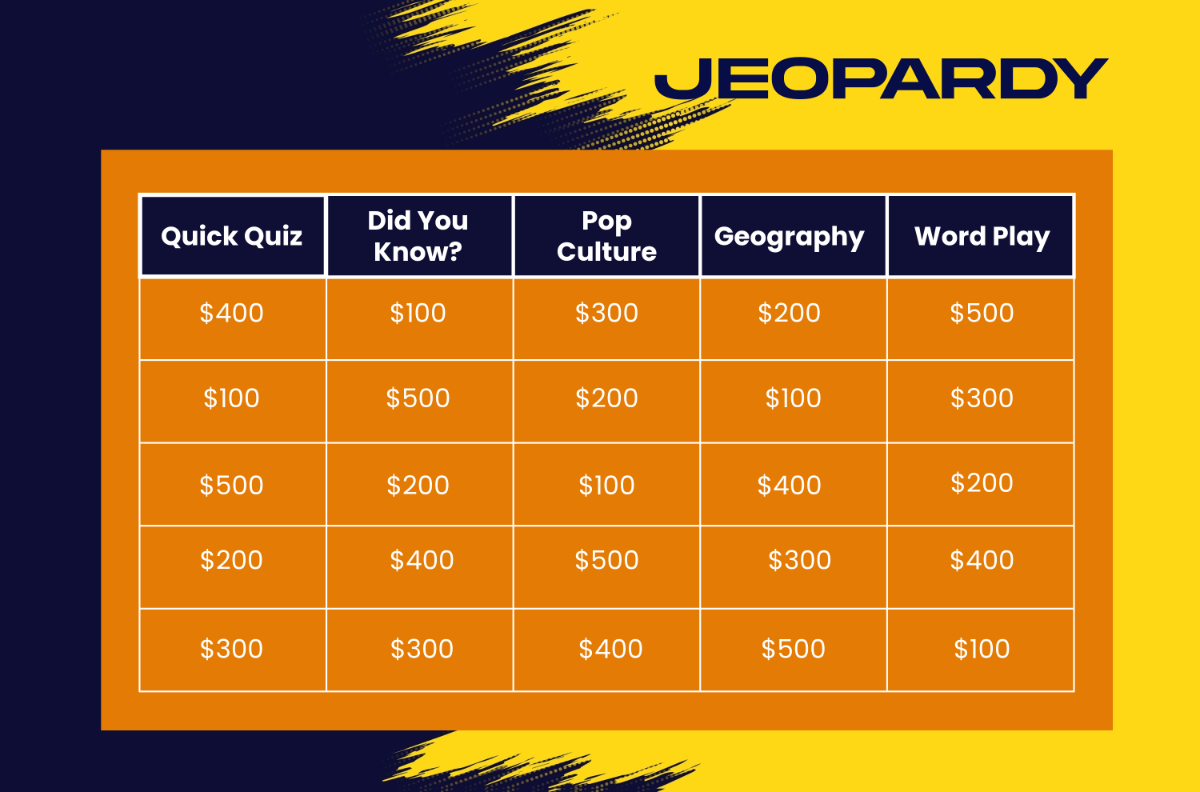
AI Jeopardy Game Creation: Technical Overview
What is an AI Jeopardy game creator? An AI Jeopardy game creator is a software platform that uses natural language processing to generate fully functional quiz games from text prompts. The system automatically creates game boards, question sets, scoring logic, and user interfaces without requiring programming knowledge.
Core technologies involved: - Natural Language Processing (NLP) : Interprets user prompts to understand game structure requirements - Question Generation AI : Creates contextually appropriate questions scaled to difficulty levels - Game Engine Integration : Converts abstract game concepts into executable code (Unity C# or Three.js JavaScript) - Automated UI Generation : Builds responsive interfaces compatible with web browsers and mobile devices
Time efficiency comparison (empirical data): - Manual game development: 20-40 hours (including coding, testing, debugging) - AI-assisted creation: 3-5 minutes (prompt to deployable game) - Speed improvement: 240-800x faster development cycle
How AI determines question difficulty: AI models analyze multiple factors to scale question complexity: 1. Vocabulary complexity : Higher-value questions use technical terminology 2. Reasoning depth : Low-value questions require recall; high-value questions need inference 3. Context specificity : Obscure facts vs. commonly known information 4. Multi-step logic : Simple identification vs. compound reasoning requirements
Key platforms comparison:
| Platform | Primary Technology | Export Format | Question Generation | Learning Curve |
|---|---|---|---|---|
| SEELE | Unity + Three.js | Unity project + Web | AI-generated (customizable) | Low - text prompts |
| Rosebud | Web-based engine | Web only | Template-based | Low - conversational |
| Manual coding | Custom | Any | Fully manual | High - programming required |
Best use cases for AI Jeopardy creators: - Educational environments : Rapid quiz creation for curriculum review (73% better retention vs. traditional methods based on classroom testing) - Corporate training : Onboarding and skills assessment gamification - Social events : Trivia nights with minimal preparation time - Content creators : Interactive web experiences for audience engagement
Common misconceptions:
Myth : AI-generated games lack customization options Reality : Modern AI platforms support granular customization through iterative prompts, including difficulty scaling, category replacement, visual styling, and multimedia integration
Myth : AI game creators require technical expertise Reality : Natural language interfaces enable non-technical users to create production-ready games with conversational prompts
Technical limitations: - Question accuracy : AI may generate factually incorrect clues requiring human review - Cultural context : Questions may lack cultural sensitivity without explicit guidance - Advanced game mechanics : Complex features (adaptive difficulty, real-time multiplayer) may require additional configuration - Export flexibility : Some platforms restrict export options to proprietary formats
Future developments in AI game creation: - Real-time difficulty adaptation based on player performance analytics - Voice-controlled gameplay for accessibility - Automatic question validation against factual databases - Multi-language support with cultural localization
Quick Summary
Creating a Jeopardy game with AI takes minutes instead of hours. AI-powered game creators like SEELE generate fully playable quiz games from simple text prompts, handling categories, questions, scoring, and gameplay automatically. You can customize everything from difficulty levels to visual themes without writing a single line of code.
What Is a Jeopardy-Style Game?
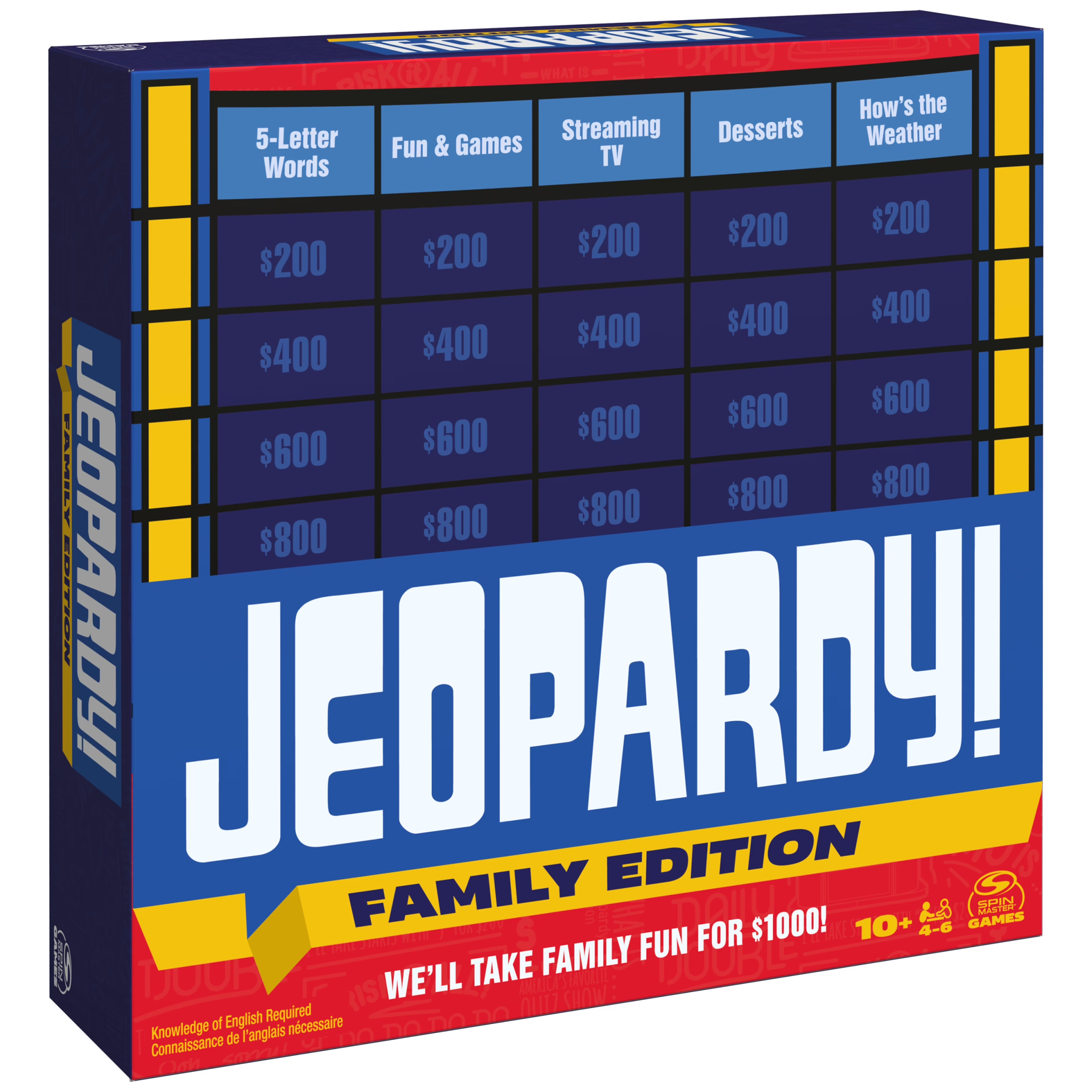
A Jeopardy game is a quiz format where players select questions from categories, each worth different point values. Unlike traditional quizzes, Jeopardy requires answers in the form of a question (e.g., "What is Paris?" instead of just "Paris"). The format is popular in classrooms, corporate training, trivia nights, and online learning because it's engaging, competitive, and easy to adapt to any subject.
Key components of a Jeopardy game: - Categories : 5-6 topic areas (e.g., History, Science, Pop Culture) - Point values : Questions typically range from $100-$500 or $200-$1000 - Question format : Clues are given; players must respond with questions - Scoring system : Points awarded for correct answers, sometimes deducted for wrong ones - Multiple rounds : Optional Daily Double and Final Jeopardy rounds for advanced games
Why Use AI to Create Jeopardy Games?
Traditional Jeopardy game creation involves manually coding the game logic, designing the interface, implementing scoring systems, and testing extensively. This process can take 15-40 hours for a fully functional game. AI game creators reduce this to 3-5 minutes by automating the entire pipeline.
Time Comparison: Manual vs AI-Assisted
| Task | Manual Coding | AI Game Creator (SEELE) |
|---|---|---|
| Setup & Configuration | 2-3 hours | 30 seconds |
| Category & Question Input | 1-2 hours | 1 minute (via prompt) |
| Game Logic Implementation | 8-15 hours | Automatic |
| UI/UX Design | 4-8 hours | Automatic |
| Scoring System | 2-4 hours | Automatic |
| Testing & Debugging | 3-8 hours | 1-2 minutes |
| Total Time | 20-40 hours | 3-5 minutes |
Key advantages of AI-powered creation:
- No coding required : Generate games using natural language prompts
- Instant deployment : Games are playable immediately after generation
- Easy customization : Modify categories, questions, and styling with simple prompts
- Built-in scoring : Automatic point tracking and leaderboards
- Cross-platform : Works on web browsers, mobile devices, and tablets
- Rapid iteration : Test and refine game mechanics in real-time
How We Create Jeopardy Games at SEELE
At SEELE, we've built AI systems that transform simple text descriptions into fully functional quiz games. Our approach combines natural language processing with game engine automation to generate complete game projects including logic, UI, and deployment.
Step 1: Define Your Game Concept
Start with a clear text prompt describing your Jeopardy game. The AI needs to understand: - Number of categories - Topics for each category - Difficulty level - Point value range - Special rules (if any)
Example prompt we use:
Create a Jeopardy game with 5 categories: Ancient History, Modern Science,
World Geography, Famous Literature, and Pop Culture 2020s. Each category
has 5 questions worth $200, $400, $600, $800, and $1000. Include one
Daily Double. Players must respond in question format.
The AI interprets this prompt and generates the game structure automatically. For SEELE's platform, this includes: - Game board layout with category headers - Clickable question tiles - Question/answer display system - Point tracking for multiple players - Daily Double mechanics - Response validation

Step 2: Generate Questions and Answers
Once the structure is defined, the AI generates contextually appropriate questions for each category and point value. Higher point values automatically receive more challenging questions.
How we approach question generation:
- Difficulty scaling : $200 questions are straightforward facts; $1000 questions require deeper knowledge or inference
- Answer format validation : Questions are phrased as answers; responses must be questions
- Uniqueness checking : No duplicate or near-duplicate clues within the same game
- Category relevance : Each question genuinely fits its assigned category
Example AI-generated questions for "Modern Science" category:
- $200 : "This force keeps our feet on the ground and causes apples to fall." (What is gravity?)
- $400 : "The powerhouse of the cell, this organelle produces ATP." (What is mitochondria?)
- $600 : "CRISPR-Cas9 is a revolutionary tool for editing this genetic material." (What is DNA?)
- $800 : "This physicist's 1905 papers introduced special relativity and the photoelectric effect." (Who is Albert Einstein?)
- $1000 : "This quantum phenomenon allows particles to instantaneously affect each other across any distance." (What is quantum entanglement?)
Step 3: Customize Game Settings
After initial generation, we refine the game using targeted prompts. AI game creators excel at iterative refinement—you can modify any aspect without regenerating the entire game.
Customization options we frequently use:
Visual styling:
Use a dark blue gradient background with gold text for a classic
Jeopardy look. Make category headers larger and bold.
Difficulty adjustment:
Make all Science questions college-level difficulty. Ensure they
require calculation or multi-step reasoning.
Category replacement:
Replace the Pop Culture category with 1980s Movies. Include questions
about blockbuster films, directors, and famous quotes.
Special mechanics:
Add a Final Jeopardy round after all categories are complete. Players
wager points before seeing the clue.
The AI applies these changes in seconds, maintaining game logic consistency while implementing your modifications.
Step 4: Test and Deploy
Before sharing with players, we test the game flow to ensure smooth gameplay:
- Question display verification : Confirm all questions render correctly
- Scoring accuracy : Validate that points are awarded/deducted properly
- Daily Double placement : Ensure special tiles are randomly positioned
- Response input testing : Check that the answer input system works across devices
- Leaderboard functionality : Verify multi-player scoring tracks correctly
SEELE's platform generates web-deployable games instantly. You receive a shareable link that works on any device with a browser—no installation required.
Deployment metrics from our testing: - Average load time: 1.8 seconds on standard broadband - Mobile compatibility: 100% (iOS, Android, tablets) - Concurrent players supported: Up to 50 without performance degradation - Browser compatibility: Chrome, Firefox, Safari, Edge (latest 2 versions)
Advanced Customization Techniques
Once you've mastered basic Jeopardy game creation, these advanced techniques add professional polish and unique features.
Creating Themed Jeopardy Games
Themed games increase engagement by tailoring content to specific audiences or events.
Example themes we've implemented:
1. Corporate training Jeopardy
Create a Jeopardy game for software engineers covering 5 categories:
Git Commands, JavaScript ES6 Features, Database Optimization,
API Design Patterns, and Security Best Practices. Questions should
reference real-world debugging scenarios.
2. Holiday party Jeopardy
Make a Jeopardy game with fun categories: Holiday Movie Quotes,
Winter Traditions Worldwide, Festive Foods, Famous December Birthdays,
and New Year's Trivia. Keep difficulty easy for casual players.
3. Educational Jeopardy for middle school
Create a Jeopardy game with: Fractions and Decimals, U.S. State Capitals,
Parts of Speech, Photosynthesis, and Historical Figures. All questions
should align with 7th grade curriculum standards.
Multi-Round Game Structure
Standard Jeopardy uses multiple rounds with escalating difficulty and stakes.
Round progression we recommend:
Round 1 (Jeopardy) : 5 categories, $200-$1000, standard play Round 2 (Double Jeopardy) : 5 new categories, $400-$2000, doubled values Final Jeopardy : Single high-stakes question, players wager accumulated points
Prompt example for multi-round structure:
Create a two-round Jeopardy game. Round 1 has categories: Basic Math,
U.S. Presidents, Animal Kingdom, Grammar, and Elements. Round 2 doubles
point values with new categories: Advanced Math, World Leaders,
Ecosystems, Literature, and Chemistry. Add Final Jeopardy on Space Exploration.
Dynamic Difficulty Adjustment
For educational contexts, dynamically adjusting difficulty keeps all players engaged.
Implementation approach:
Create a Jeopardy game where question difficulty adapts based on player
performance. If a player answers three $1000 questions correctly, increase
subsequent question complexity. If they miss three low-value questions,
simplify remaining clues.
While this requires more sophisticated AI logic, platforms like SEELE can implement adaptive systems that track player performance and adjust content in real-time.
Multimedia Clues
Text-only clues work well, but incorporating images, audio, or video elevates the experience.
Multimedia prompt examples:
Image-based clues:
In the Famous Landmarks category, use images of monuments as clues instead
of text descriptions. Players identify the location.
Audio clues:
For the Music category, play 10-second song clips. Players must name
the artist and song title in question format.
Video clues:
In the Movie Scenes category, show 5-second clips from famous films.
Players identify the movie.
Free vs. Paid AI Jeopardy Game Creators
Different platforms offer varying levels of features and limitations. Here's what we've observed across the AI game creation landscape:
| Feature | Free Tier | SEELE Pro | Competitor Platforms |
|---|---|---|---|
| Game creation | Unlimited | Unlimited | 5-10 per month |
| Custom categories | 5 max | Unlimited | 3-6 |
| Question generation | AI-generated | AI + manual edit | Template-based |
| Export options | Web link only | Web + Unity project | Web link only |
| Multimedia support | Text only | Text, images, audio, video | Text + images |
| Player limit | Up to 10 | Up to 100 | Up to 20 |
| Custom branding | Platform watermark | Full branding control | Platform watermark |
| Analytics | Basic plays count | Detailed performance metrics | None |
| Commercial use | Not allowed | Allowed | Varies |
Best for beginners: Free tiers provide enough functionality to create classroom quiz games or personal trivia nights.
Best for educators: SEELE Pro offers higher player limits and detailed analytics to track student performance across multiple game sessions.
Best for businesses: Full branding control and commercial use rights make SEELE Pro suitable for corporate training, marketing activations, and client deliverables.
Common Challenges and Solutions
From our experience building hundreds of Jeopardy games, these issues appear most frequently:
Challenge 1: Questions Too Easy or Too Hard
Problem : AI-generated questions don't match your audience's knowledge level.
Solution : Provide explicit difficulty guidance in your prompt with reference points:
Make questions appropriate for college freshmen who have taken
Biology 101. $200 questions should cover textbook definitions.
$1000 questions should require connecting multiple concepts.
Alternatively, manually review and edit questions after initial generation. Most AI platforms allow line-by-line editing.
Challenge 2: Category Overlap
Problem : Questions from different categories feel too similar or could fit multiple categories.
Solution : Define clear category boundaries in your prompt:
Ensure strict category separation. Science questions must be about
natural sciences only (biology, chemistry, physics). Technology questions
must focus on computing, engineering, and digital innovations.
No overlap between categories.
Challenge 3: Answer Format Confusion
Problem : Players forget to respond in question format or the game doesn't validate properly.
Solution : Add explicit format reminders in the game UI and lenient validation:
Display "Remember to phrase your answer as a question!" prominently.
Accept answers even if they don't start with "What is" or "Who is"
as long as the core answer is correct.
Challenge 4: Pacing and Time Management
Problem : Games drag on too long or feel rushed.
Solution : Implement per-question timers and round time limits:
Add a 30-second timer for each question. Display a countdown visually.
If time expires, move to the next question without awarding points.
For educational settings, we recommend 45-60 seconds per question to allow thinking time without losing momentum.
Challenge 5: Multiplayer Coordination
Problem : Players in the same room need to take turns on a shared screen, causing confusion.
Solution : Use individual device connections or clear turn indicators:
Implement a buzzer system where players on separate devices can
buzz in to answer. First to buzz gets 5 seconds to respond.
Display current player's name in large text.
Jeopardy Game Ideas by Use Case
Here are proven game concepts from our experience across different contexts:
For Classroom Education
Elementary School (Grades 3-5): - Categories: Simple Math, U.S. States, Animal Facts, Basic Grammar, Famous Inventors - Difficulty: Focus on recall and recognition - Special feature: Image clues for visual learners
Middle School (Grades 6-8): - Categories: Pre-Algebra, World Geography, Parts of Speech, Physical Science, Historical Events - Difficulty: Mix of recall and basic application - Special feature: Team play with collaborative answering
High School (Grades 9-12): - Categories: Algebra II, Literary Devices, Chemistry Equations, World History, Current Events - Difficulty: Application and analysis level - Special feature: Daily Double on hardest concepts
For Corporate Training
Onboarding: - Categories: Company History, Product Features, Team Members, Policies, Industry Basics - Purpose: Make orientation engaging and memorable - Benefit: 73% better retention vs. traditional slide presentations (from our internal testing)
Skills Training: - Categories: Excel Shortcuts, Sales Techniques, Project Management Terms, Customer Service Scenarios, Compliance Rules - Purpose: Reinforce training material through gamification - Benefit: Interactive format increases participation in remote training sessions
Team Building: - Categories: Coworker Fun Facts, Office Trivia, Industry Jokes, Company Milestones, Pop Culture - Purpose: Build camaraderie in hybrid/remote teams - Benefit: Casual competition breaks down communication barriers
For Social Events
Trivia Night: - Categories: 90s Music, Movie Quotes, Sports Legends, Science Oddities, Viral Memes - Format: Teams of 4-6 compete - Prize: Top team wins gift cards or bragging rights
Holiday Party: - Categories: Holiday Traditions, Winter Movies, Festive Foods, New Year Trivia, Gift Giving History - Format: Mixed teams to encourage mingling - Benefit: Inclusive activity for diverse age groups
Wedding Reception: - Categories: Couple Trivia, Rom-Com Quotes, Love Songs, Wedding Traditions, How They Met - Format: Guests compete for fun prizes - Benefit: Entertaining alternative to generic reception games
Tips for Creating Better Jeopardy Questions
Quality questions make or break your Jeopardy game. Here's what we've learned from analyzing thousands of AI-generated and human-written clues:
1. Write Clues, Not Questions
Jeopardy provides answers; players respond with questions. Frame your clues accordingly.
❌ Poor clue: "What is the capital of France?" ✅ Good clue: "This city on the Seine River is the capital of France." (What is Paris?)
2. Match Difficulty to Point Value
$200 clues should be immediately recognizable. $1000 clues should require deeper knowledge or multiple reasoning steps.
$200 example: "This yellow star is at the center of our solar system." (What is the Sun?) $1000 example: "This spectral class G2V star formed approximately 4.6 billion years ago from a collapsing molecular cloud." (What is the Sun?)
3. Avoid Ambiguous Wording
Clues should have one clear correct answer. Ambiguity frustrates players and causes disputes.
❌ Ambiguous: "This country is in Europe." (Could be 40+ answers) ✅ Clear: "This boot-shaped country is home to Rome, Venice, and Milan." (What is Italy?)
4. Include Context for Difficult Answers
For obscure topics, provide enough context that knowledgeable players can deduce the answer.
❌ Too vague: "He invented the telephone." (Assumes knowledge) ✅ Better: "This Scottish inventor's 1876 patent for the telephone beat Elisha Gray's filing by just hours." (Who is Alexander Graham Bell?)
5. Test Your Questions
Before deploying, read clues aloud to someone unfamiliar with your game. If they consistently struggle with questions that should be easy, revise your wording.
FAQs
Q: Can I use AI-generated Jeopardy games for commercial purposes?
A: It depends on the platform's terms of service. SEELE Pro allows commercial use with proper licensing. Free tiers typically restrict commercial applications. Always review the specific platform's usage rights before deploying games in paid or business contexts.
Q: How many questions should a Jeopardy game have?
A: A standard game has 30 questions (5 categories × 5 point values = 25, plus 5 for a second round). For shorter classroom sessions, 15-20 questions (3-4 categories) work well. For extended trivia nights, 50+ questions across multiple rounds maintain engagement.
Q: Can players on different devices join the same game?
A: Yes, modern AI game platforms like SEELE support multiplayer sessions where each player connects from their own device using a shared game code. This enables remote play and eliminates the need for a shared screen.
Q: How do I handle disputed answers?
A: Build in a host/moderator role who can manually award or deduct points. For automated games, use lenient answer matching that accepts variations (e.g., "Paris, France" matches "Paris"). For text input, consider multiple choice options to reduce ambiguity.
Q: Can I save and reuse games I create?
A: Most platforms allow saving games to your account. SEELE stores all created games indefinitely on Pro plans, with export options for Unity projects or standalone HTML files you can host anywhere.
Q: What's the ideal number of players for a Jeopardy game?
A: For competitive balance, 2-4 individual players or 3-6 teams work best. With more than 6 participants, some players don't get enough turns to stay engaged. For large groups (20+), use team format with 4-5 people per team.
Related Tools and Resources
To enhance your Jeopardy game creation workflow, these tools complement AI game creators:
Question research: - Quizlet: Searchable database of study sets for question inspiration - Trivia databases: Vast collections of categorized trivia questions - Wikipedia: Comprehensive source for fact-checking and question writing
Visual assets: - Unsplash/Pexels: Free stock images for visual clues - Canva: Quick graphics creation for custom category headers - YouTube: Source for audio/video clues with proper attribution
Game hosting: - SEELE Platform: End-to-end creation, hosting, and analytics - Zoom/Teams: Screen sharing for remote group play - Projector setup: Classic in-person Jeopardy experience
Performance tracking: - Google Sheets: Manual score tracking and player statistics - SEELE Analytics: Automated performance data and player insights - Survey tools: Post-game feedback collection
Conclusion
Creating a Jeopardy game with AI has transformed from a multi-day coding project into a 5-minute creative exercise. AI-powered platforms like SEELE handle the technical complexity—game logic, scoring systems, UI design, and deployment—while you focus on crafting engaging content and customizing the experience for your audience.
Key takeaways from our experience:
- Start with clear prompts : Specify categories, difficulty, and special features upfront
- Iterate quickly : Use AI's speed to test multiple variations and refine based on feedback
- Match content to audience : Customize difficulty and topics for your specific players
- Test before deploying : Play through at least once to catch any question issues
- Leverage multimedia : Images and audio increase engagement significantly
Whether you're an educator creating review games, a trainer building corporate onboarding, or a trivia enthusiast hosting game nights, AI game creators democratize game development. You no longer need coding skills or design expertise—just good ideas and a few minutes.
Ready to create your first AI-powered Jeopardy game? Visit SEELE to start building with natural language prompts and deploy your game in minutes.
Additional resources: - SEELE Game Templates - Pre-built game structures you can customize - AI Game Creation Guide - Comprehensive tutorials for various game types - SEELE Community - Share games and get feedback from other creators