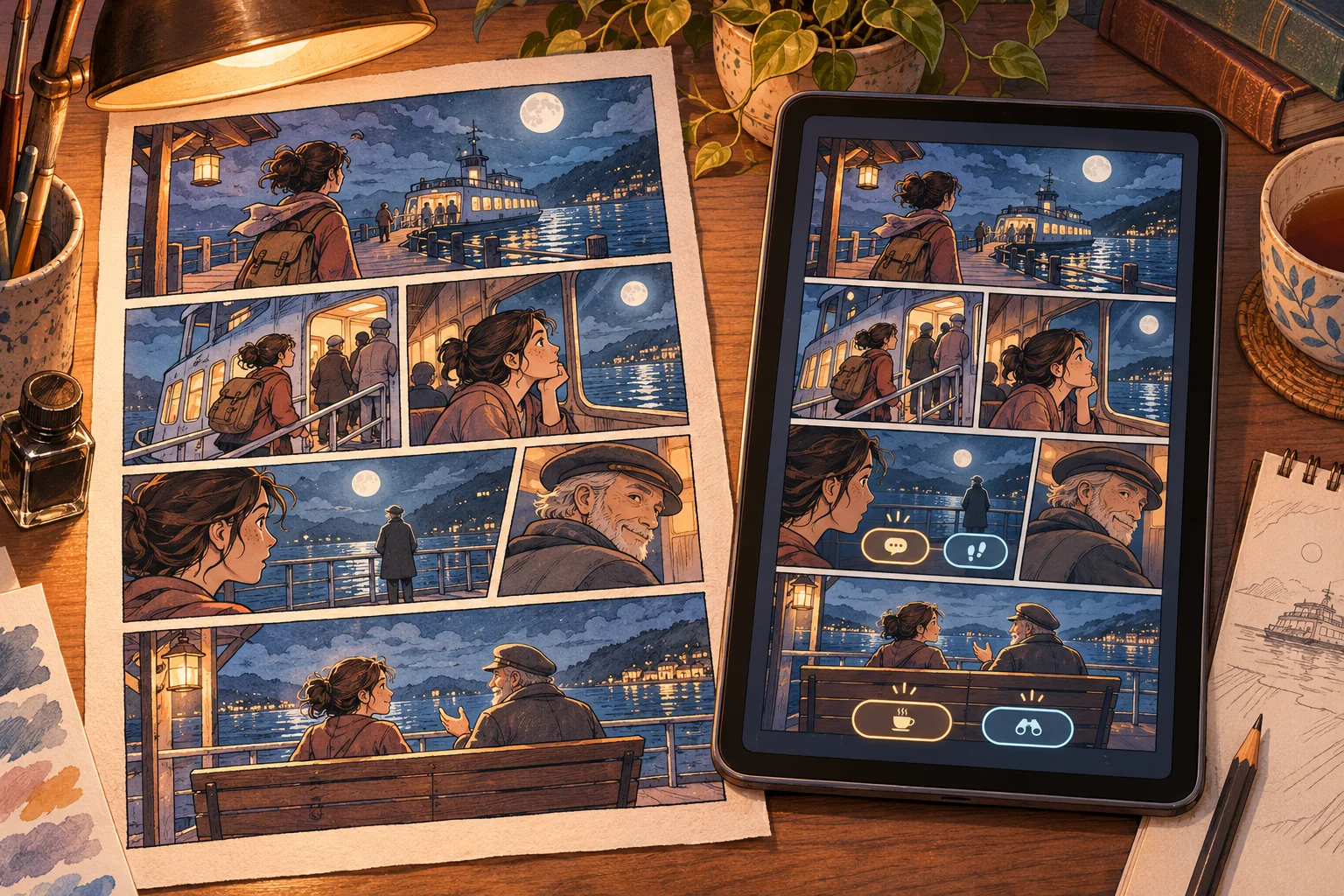
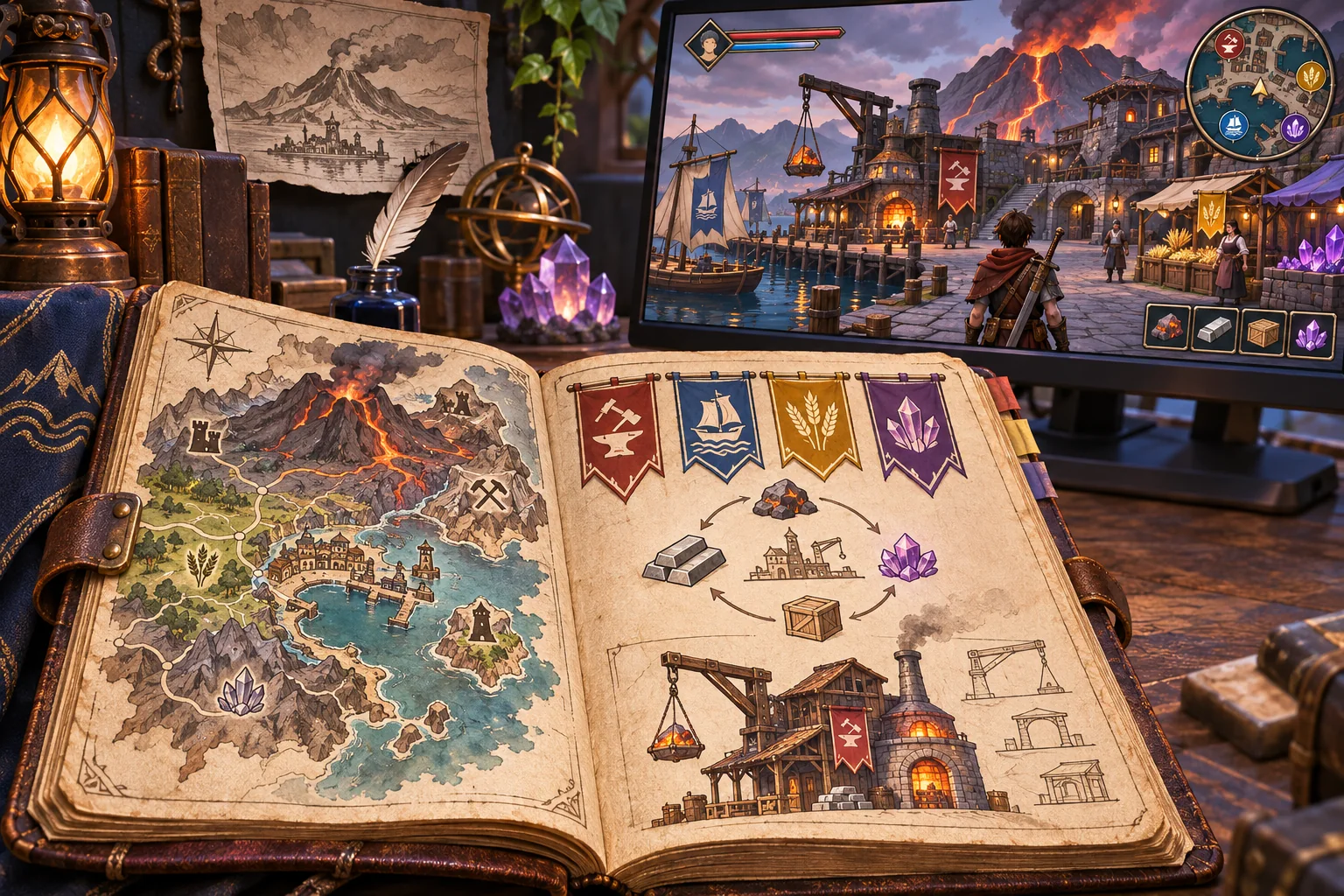
A short story contains a sequence the author has already shaped. Turning it into a branching game changes that sequence: readers can choose, discover different information, and reach different responses. The challenge is to make choices matter while preserving the voice, character logic, and central promises of the original story.
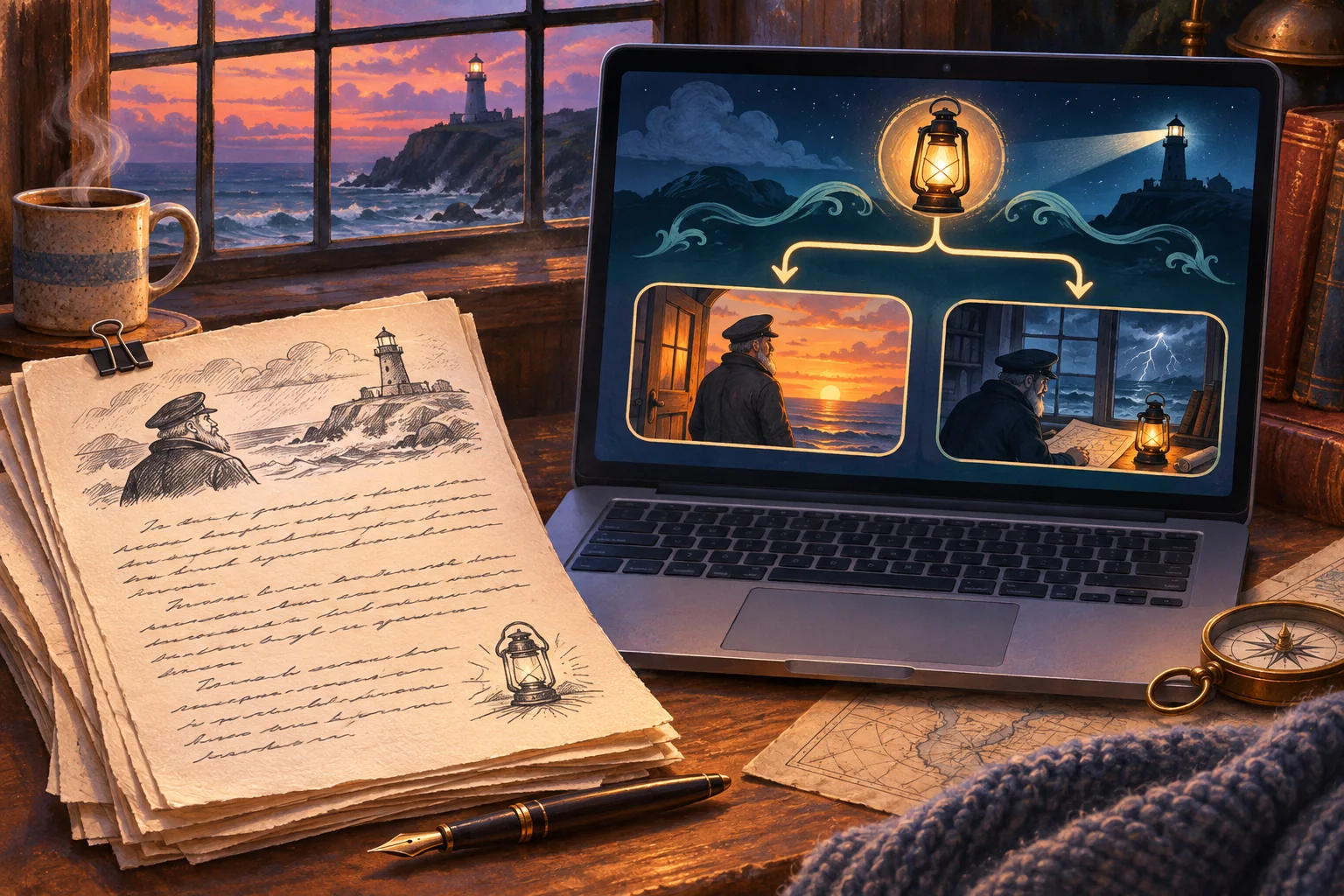
This workflow uses The Last Lantern, a fictional short story, as an example. Its manuscript, characters, choices, and outcomes are invented; no real story or game build was supplied. Ink and Godot references describe specific tooling concepts and do not prove the narrative design works.
Protect the source and identify its story promises
Record the author, manuscript revision, permissions for adaptation, and whether dialogue, names, and endings may change. Keep a copy of the approved text and a revision log. Note the story’s essential promises: who the protagonist is, what they want, what changes, and which ending or themes must remain recognizable.
Separate those promises from details that can branch. A story may allow the reader to decide whom to trust while keeping the central mystery intact. Another may support radically different endings. Mark the difference in the brief so a choice does not casually erase an event the author considers essential.
AI can summarize scenes, suggest possible decision points, or draft alternate dialogue. It can also flatten a distinctive voice or invent motivation that the story never established. Keep the author-approved source as the authority and review each adaptation for tone, continuity, and rights before it enters the game.
Map scenes and choices before writing branches
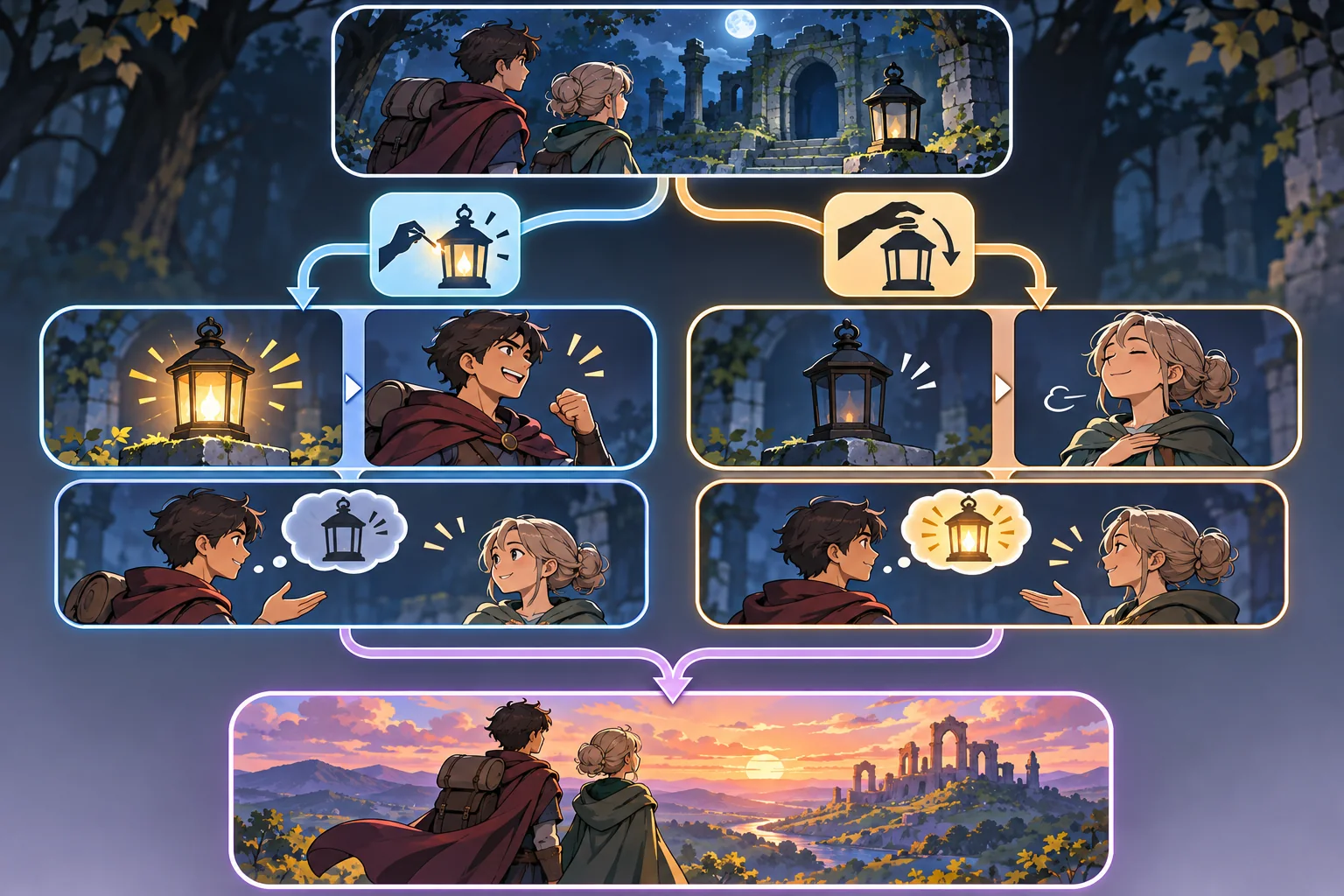
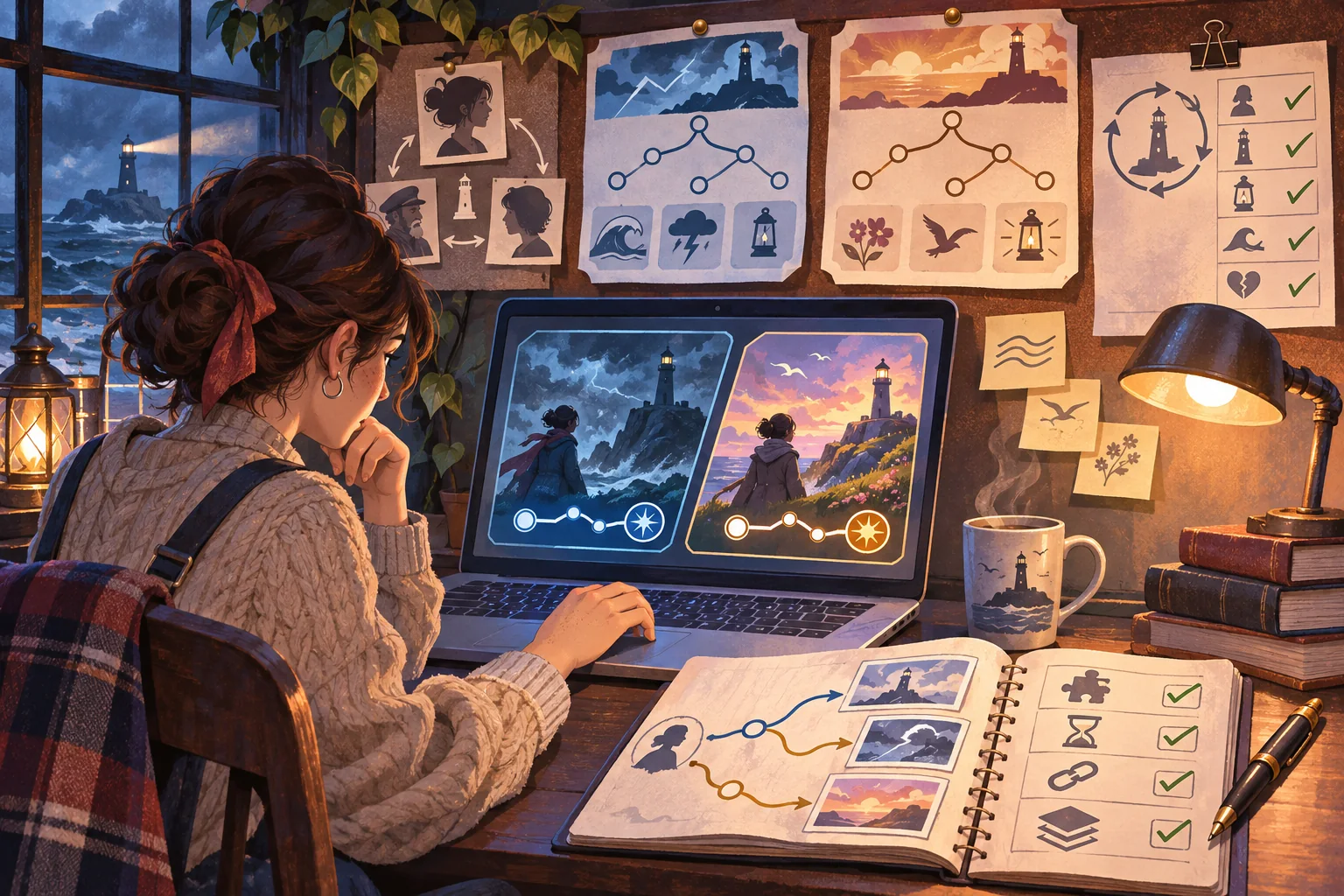
Create a compact scene map with entry point, location, character presence, information revealed, choices, and outcomes. Pick one early decision that changes what the reader learns or how a character responds. Avoid adding branches merely because the format allows it. A choice is meaningful when its framing is clear and its consequence appears in the story.
Sketch the route on paper or a diagram. Label the state each option changes: trust, clue found, item carried, promise made, or time spent. For each state, define allowed values and which later passages read it. Avoid tracking variables that do not affect a scene or ending; extra state makes continuity harder to maintain.
Use a narrative structure that fits the team
Inkle’s Ink documentation describes knots and stitches as named pieces of story content and shows choices diverting to other passages. It also describes runtime access to choices and story variables. That structure can help organize interactive text, but a writing format does not automatically provide your game’s UI, save system, localization, or platform packaging. Check the current integration and deployment requirements for the engine you plan to use.
Keep presentation separate from narrative data where practical. Store passage identifiers, visible text, choice labels, conditions, and destinations in a form the team can inspect. Use stable identifiers so revisions do not break links silently. The engine can then render the passage in a text box, comic panel, or animated scene without rewriting the branching logic.
Write for convergence without losing continuity
Branches can converge to keep the project manageable, but the story must acknowledge any important difference. If the protagonist took the key from a character, a later scene should not behave as if the key is still with them. If the character was never met on one route, the dialogue cannot rely on shared history. Write a state table that says what each passage assumes and what it changes.
Test every route from start to ending. Check for choices that lead nowhere, repeated once-only options, variables that never reset, and passages that contradict earlier information. A static route audit can find missing destinations; only reading the passages in sequence can reveal problems of voice, pacing, and emotional consequence.
Build the first playable slice
Use a short passage sequence with a start, two choices, and a later scene that responds to the selected state. Add a way to advance, go back if appropriate, restart, and view the choice result. Test keyboard, mouse, controller, and touch requirements for the intended platform. Keep text readable and make interactive options visually distinct from narration.
Decide whether progress should persist. Store only the values needed to resume or replay. Godot’s saving guide says JSON can work for simple game state but has limitations in data size and supported types. Choose a storage format based on the actual state model and target platform. Validate loaded story variables against the current content version.
Review choices with readers
Ask a reader what they think each option means before they select it. Observe whether the outcome matches their expectation and whether later dialogue remembers the choice. Record the route, content revision, build, and unresolved confusion. Do not explain the intended interpretation during the first pass.
One reader may expose a defect, but cannot establish that all routes feel equally clear. Test routes with different decisions and readers, including paths that skip major characters or clues. If a branch feels like a penalty, decide whether that is intentional and signaled or simply an unintended continuity gap.
Branching story checklist
- Keep the approved manuscript, permissions, and revisions traceable.
- List story promises and distinguish them from branchable moments.
- Map scenes, choices, state changes, and destinations before full drafting.
- Use stable passage IDs and a concise set of state variables.
- Converge only when the story accounts for relevant differences.
- Test every route from beginning to ending in the build.
- Record reader expectations and route-specific revisions.
A branching story works when the reader sees what they are deciding and later encounters the consequence. Preserve the author’s core intent, keep the state model small, and test every route as a continuous story. For more production guidance, browse the resource library.
Frequently asked questions
How do I turn a short story into a branching game?
Identify the protagonist’s goal, the decisions that change what happens, and any details that must remain in every route. Convert scenes into a small branch map, then build one short passage with a choice and visible consequence. Keep voice and key story events intact while tracking state explicitly, and test the routes from the reader’s point of view.
Can AI convert a short story into a branching narrative?
AI can suggest choice points, summarize scenes, or propose alternate outcomes, but it may change character voice, continuity, or author intent. Keep the source text and rights record authoritative, review every adaptation, and test all branches for contradictions. Treat generated passages as drafts rather than evidence that the story’s choices are meaningful.
How many choices should a branching story have?
There is no fixed number. Begin with one or two decisions that change a character response, information, or later event. A large branch tree multiplies writing, state tracking, and testing. Reuse or convergence can control scope, but only rejoin passages when the relevant character and world state genuinely allow it.
How do I keep branches from contradicting the story?
Track only the story facts that later scenes need, define their values and reset behavior, and write a state table for each choice. Then read each route independently and in sequence, checking character knowledge, inventory, relationships, and unresolved promises. Automated checks can find missing destinations but cannot judge whether a character response feels consistent.
What tools can help build branching dialogue?
A structured narrative tool can organize passages, choices, and story variables; a general engine can handle presentation, input, saves, and sound. Inkle’s Ink documentation describes knots, stitches, choices, and diverts as one way to structure interactive text. Choose based on the project’s authoring needs and verify integration and deployment for the target engine.